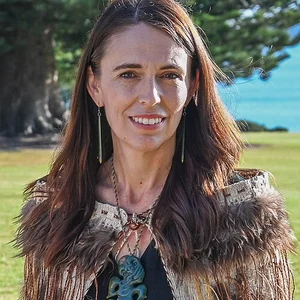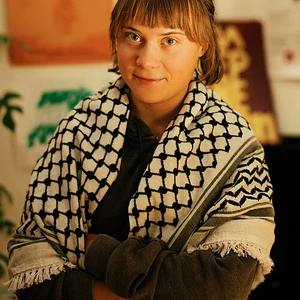

Swedish climate activist, born in 2003. In 2018 she launched a school strike in front of the Swedish Parliament, inspiring the global Fridays for Future movement. A symbol of youth commitment in the fight against climate change.
Greta Thunberg(2003 — ?)
Greta Thunberg
Suède
8 min read
Frequently asked questions
Famous Quotes
« Our house is on fire.»
« I want you to panic. I want you to feel the fear I feel every day.»
« You say you love your children above all else, and yet you are stealing their future in front of their very eyes.»
Key Facts
- 2003: born in Stockholm, Sweden
- August 2018: beginning of the school strike for the climate in front of the Riksdag (Swedish Parliament)
- 2019: launch of the global Fridays for Future movement, bringing together millions of young people
- September 2019: famous 'How dare you' speech before the UN in New York
- 2019: named Person of the Year by Time magazine
Works & Achievements
A global school strike movement for the climate, founded de facto by Greta Thunberg. It brings together millions of young people in over 180 countries and stands as one of the largest youth mobilizations in contemporary history.
A collection of Greta Thunberg's major speeches, translated into more than twenty languages and sold in several million copies. It distills her thinking and makes her addresses accessible to the general public.
A speech that went viral before the United Nations General Assembly, in which she confronts world leaders with raw moral outrage. This address is studied in many schools as an example of committed rhetoric.
A militant act of refusing to fly to reach New York, Greta crossed the Atlantic over two weeks aboard a zero-emission racing sailboat. The voyage was a concrete demonstration of consistency between words and practice.
A sweeping anthology coordinated by Greta Thunberg, bringing together contributions from over a hundred scientists, economists, and activists. The book aims to provide a comprehensive account of the climate crisis and the solutions available.
Anecdotes
In August 2018, at just 15 years old, Greta Thunberg stood alone outside the Swedish Parliament holding a hand-painted sign reading 'Skolstrejk för klimatet' (School Strike for Climate). Her parents tried to talk her out of it, but she persisted. Within three weeks, thousands of students around the world were following her lead.
Greta has been diagnosed with Asperger's syndrome, obsessive-compulsive disorder, and selective mutism. Far from seeing these as disabilities, she describes these traits as 'superpowers' that allow her to focus with rare intensity on the causes she cares about. She publicly embraces her neurodivergent identity.
In 2019, flatly refusing to fly due to the carbon footprint of air travel, Greta crossed the Atlantic aboard the racing yacht Malizia II to attend the UN Climate Summit in New York. The crossing took fifteen days, sometimes under difficult conditions, with no toilet or shower. This powerful gesture was covered by media around the world.
In September 2019, before the UN General Assembly, Greta delivered a speech that became famous for the line 'How dare you!' — directed at world leaders whom she accused of inaction in the face of the climate crisis. Her intense gaze and voice trembling with indignation circled the globe within hours.
In December 2019, the American magazine Time named her 'Person of the Year,' making her, at 16, the youngest person ever to receive that honor in the magazine's history. On the cover, she appears from behind, facing the ocean — a vision of youth looking toward the future.
Primary Sources
You say you love your children above all else, and yet you are stealing their future in front of their very eyes.
Our house is on fire. I am here to say, our house is on fire. […] I want you to panic. I want you to feel the fear I feel every day.
You have stolen my dreams and my childhood with your empty words. […] How dare you! We are in the beginning of a mass extinction, and all you can talk about is money and fairy tales of eternal economic growth.
Some say I should study to become a climate scientist so that I can 'solve the climate crisis'. But the climate crisis has already been solved. We already have all the facts and solutions. All we have to do is to wake up and change.
I don't want you to listen to me. I want you to listen to the scientists. And I want you to unite behind the science.
Key Places
Greta Thunberg's hometown, where she grew up and became aware of climate issues from the age of 8. It is here that she decided to take action after suffering from depression linked to eco-anxiety.
In front of this building on the island of Helgeandsholmen, Greta began her historic school strike on August 20, 2018. This is the birthplace of the Fridays for Future movement.
The site of her "How dare you!" speech in September 2019 before the United Nations General Assembly, which definitively launched Greta onto the world diplomatic stage.
The city that hosted the 24th Conference of the Parties on climate in December 2018. Greta delivered her first major international speech there, directly challenging world leaders.
Host city of COP26 in November 2021. Greta took part in the outside demonstrations and described the results of the official conference as "blah blah blah," symbolizing her distrust of climate diplomacy.
Typical Objects

Hand-painted in white on black, this sign is the founding object of the movement. Greta held it up during her first strike in August 2018 outside the Swedish Parliament; it has become one of the most recognizable visual symbols of contemporary climate activism.

Greta Thunberg is often photographed wearing a bright yellow raincoat at her rainy-day demonstrations. That vivid color, paired with her recognizable braided-pigtail silhouette, has become an iconic image reproduced in countless portraits and caricatures.

This zero-carbon-emission yacht carried Greta Thunberg from Plymouth, England, to New York in fifteen days in August 2019, allowing her to attend the UN Climate Summit without flying. The voyage is a concrete illustration of her refusal to compromise on her ecological principles.

Greta uses Twitter, Instagram, and Facebook as direct mobilization tools, sharing her speeches, strikes, and travels in real time. These digital platforms are at the heart of the Fridays for Future movement's global outreach strategy.

Greta writes her own speeches with great rigor, drawing on scientific reports from the IPCC. Her addresses have been translated into dozens of languages and compiled in the collection *No One Is Too Small to Make a Difference*.

The Fridays for Future logo — stylized FFF initials or an hourglass symbolizing climate urgency — is worn on the clothing and bags of millions of young protesters around the world, turning political commitment into a badge of shared identity.
School Curriculum
Vocabulary & Tags
Key Vocabulary
Daily Life
Morning
During strike periods (every Friday from 2018 onward), Greta wakes up early, prepares her sign or checks her things, then walks or takes public transport to the Swedish Parliament. She reads IPCC reports and climate news with intense concentration, characteristic of her neurodivergent way of processing information.
Afternoon
On days without demonstrations, Greta studies or prepares her next speeches, often with help from her parents. She responds to requests from international organizations and writes posts on her social media accounts, followed by tens of millions of people. She refuses to fly, which means long train or boat journeys for her travels across Europe.
Evening
Family evenings in their Stockholm apartment are simple and understated. Greta is vegan and follows a low-carbon lifestyle: limited consumption, no animal products, secondhand purchases preferred. She reads and talks with her parents — her mother, singer Malena Ernman, and her father, actor Svante Thunberg — both of whom have become activists themselves.
Food
Greta has been vegan for several years, convinced that intensive livestock farming is one of the leading sources of greenhouse gas emissions. She eats locally grown and seasonal foods as much as possible, and avoids ultra-processed products. For her, this dietary choice is a direct extension of her climate convictions.
Clothing
Greta favors a functional, understated style: jeans, a sweater, a yellow raincoat in wet weather. She does not follow fast fashion trends, whose environmental impact she openly criticizes. Her signature braids, plaited by her mother, have become an integral part of her globally recognized public image.
Housing
The Thunberg family lives in an apartment in Stockholm. The household is organized along ecological principles: strict waste sorting, reduced energy consumption, no car. Since Greta rose to worldwide fame, the family receives a considerable volume of mail, requests, and sometimes threats, which has required security measures.
Historical Timeline
Period Vocabulary
Liens externes & ressources
Références
Œuvres
Mouvement Fridays for Future
2018 — en cours
No One Is Too Small to Make a Difference
2019
Discours 'How dare you!' à l'ONU
23 septembre 2019
Traversée de l'Atlantique à la voile
Août 2019
The Climate Book
2022