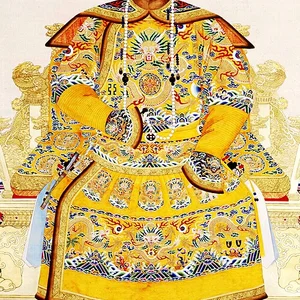

Guangxu (1871–1908) was the eleventh emperor of the Qing dynasty. In 1898, he attempted to modernize China through the "Hundred Days' Reform," but Empress Dowager Cixi seized power and placed him under house arrest until his death.
Frequently asked questions
Key Facts
- 1875: Becomes Emperor of China at age 4, under the regency of Cixi
- 1894–1895: China's defeat against Japan in the First Sino-Japanese War accelerates the empire's crisis
- 1898: Launches the Hundred Days' Reform (June 11 – September 21), aiming to modernize the state, the military, and education
- 1898: Cixi's coup — Guangxu is arrested and confined to the Palace on the Lake of Zhongnanhai until his death
- 1908: Dies the day before Cixi; DNA analysis (2008) confirmed he was poisoned with arsenic
Works & Achievements
More than 100 imperial edicts aimed at modernizing Chinese education, the military, the economy, and administration along Japanese and Western lines. Although annulled by Cixi, they formed a coherent reformist program that inspired revolutionaries for decades to come.
Established during the Hundred Days' Reform, this university introduced the teaching of modern sciences, mathematics, and foreign languages into Chinese higher education. It is the direct ancestor of the prestigious Peking University.
Guangxu decreed that science, mathematics, and modern political studies be incorporated into the imperial examinations, challenging a system that had been based almost exclusively on Confucian classics for centuries.
Drawing lessons from the defeat against Japan in 1895, Guangxu ordered the reorganization of the armed forces along European lines, the establishment of modern military academies, and the adoption of new tactics and weaponry.
Anecdotes
Guangxu ascended the throne at the age of four in 1875, chosen by Empress Dowager Cixi — his own aunt by marriage. Too young to rule, she held real power for decades, keeping the young emperor in a form of guardianship he never truly managed to escape.
In 1898, Guangxu launched a sweeping series of reforms inspired by the intellectuals Kang Youwei and Liang Qichao: over the course of 103 days, he issued more than a hundred edicts aimed at modernizing the military, education, the economy, and public administration. This movement, known as the "Hundred Days' Reform," was abruptly cut short when Cixi seized power in a coup on September 21, 1898.
His favorite, the concubine Zhen Fei (known as the "Pearl Concubine"), shared his reformist ideas and his enthusiasm for Western innovations, including photography. When foreign troops approached Beijing during the Boxer Rebellion in 1900, Cixi had her thrown into a well within the Forbidden City before fleeing the capital, claiming that the young woman must not be allowed to fall into the hands of the invaders.
Guangxu died on November 14, 1908, just one day before Cixi. Long considered a natural death, the circumstances were finally resolved in 2008 through scientific analysis of his remains: researchers detected concentrations of arsenic in his hair and bones some 2,000 times above normal levels, confirming that he was in all likelihood poisoned.
Fascinated by Western technology, Guangxu learned to read French and English, studied European works on constitutional law, and had a telephone installed in the Forbidden City. These intellectual pursuits stood in sharp contrast to Cixi's deep suspicion of foreign influence, and illustrated the profound rift between the two rulers.
Primary Sources
The Emperor orders that all provinces establish modern schools, that the imperial examinations be reformed to include sciences and practical studies, and that the ministries adopt more efficient methods of administration in order to strengthen the Empire.
Your Majesty must understand that China can only survive by adopting constitutional reforms and modernizing its institutions along the model of Meiji Japan. Without this, our enemies will devour us as they have devoured India and Annam.
The Emperor, suffering from a grave illness, has beseeched us to take affairs of state into our hands. We therefore resume the regency in accordance with dynastic rules, for the good of the Empire and its people.
Emperor Guangxu appears genuinely desirous of reforming his empire along modern lines. However, real power remains in the hands of the Empress Dowager and the conservative elements of the court, who view these reforms as an existential threat.
The Emperor received us in secret and told us that he wished with all his heart to transform China, but feared that the conservatives, backed by the Dowager, would prevent him from doing so. His sadness and helplessness were palpable.
Key Places
The official residence of the Qing emperors, the Forbidden City was the setting for Guangxu's entire life, from his accession to his imprisonment. It was here that he issued his reforms in 1898 before being placed under house arrest.
Following Cixi's coup in September 1898, Guangxu was confined to Yingtai Island within the Zhongnanhai complex, surrounded by water and under constant guard. This palace became his gilded prison until his death in 1908.
Cixi's favorite residence, this palace was rebuilt after the sacking of 1860 and partly funded by diverting money intended for the imperial navy — a symbol of the conflict between modernization and lavish imperial spending.
During the Boxer Rebellion in 1900, the imperial court — including Guangxu, who was forced to follow Cixi — fled Beijing and took refuge in Xi'an. This hasty departure came to symbolize the humiliation of the Empire at the hands of foreign powers.
Founded by Guangxu in 1898 as part of the Hundred Days' Reform, this institution evolved into today's Peking University (Beida), one of China's most prestigious universities. It remains the most enduring legacy of Guangxu's reformist reign.
Typical Objects
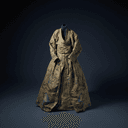
Crafted from imperial yellow silk, this robe adorned with the five-clawed dragon — the exclusive symbol of the Emperor — was worn by Guangxu during major ceremonies. It embodied his dynastic legitimacy as the Son of Heaven.

An essential instrument of government, the jade seal was affixed to every edict issued by Guangxu, most notably during the Hundred Days' Reform. Its possession symbolized the holder's supreme power over the Empire.
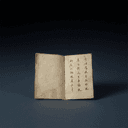
Guangxu carefully studied Chinese translations of European texts on law, science, and constitutional government. These books, brought to court by reformers such as Kang Youwei, shaped his vision of a modernized China.
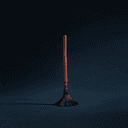
The Emperor annotated administrative memorials using a brush dipped in red ink — a color reserved exclusively for the sovereign. These handwritten notes were the direct expression of imperial will on matters of state.

A symbol of his fascination with Western inventions, Guangxu collected pocket watches imported from Europe. These objects captured the tension between China's millennia-old dynastic tradition and the Emperor's desire to embrace the modern world.

Photography, introduced to the Qing court in the late 19th century, captivated both Guangxu and his favorite consort, Pearl Concubine. The photographic portraits of the Emperor that survive today are precious historical records of his reign.
📷 Domaine public · Wikimedia Commons ↗School Curriculum
Vocabulary & Tags
Key Vocabulary
Daily Life
Morning
The Emperor rose before dawn, following the immutable imperial ritual. After ablutions and a solemn dressing ceremony assisted by eunuchs, he proceeded to the throne room to receive senior officials who came to present their reports and memorials written in red ink.
Afternoon
Afternoons were devoted to study: Guangxu read the Confucian classics, but also, with great passion, translated works on constitutional reforms and modern science from the West. He sometimes received reformist advisors such as Kang Youwei in secret to discuss China's future.
Evening
Evenings were spent in the inner apartments, practicing calligraphy and playing Chinese chess (xiangqi). After 1898, his evenings passed in near-total isolation on Yingtai Island, under close surveillance by Cixi's guards, unable to leave his lake palace.
Food
The Emperor's diet followed strict rules: dozens of dishes were prepared at each meal by the imperial kitchens — roasted meats, delicate soups, stir-fried vegetables, and sweets made with red beans or sesame. Guangxu was known for his modesty and small appetite, preferring simple preparations over lavish culinary spectacle.
Clothing
Guangxu wore imperial yellow silk robes embroidered with five-clawed dragons for official ceremonies. In everyday life, he dressed more simply in blue or grey silk with understated patterns. In winter, the robes were lined with fox or mink fur.
Housing
Guangxu resided in the inner palaces of the Forbidden City, a labyrinth of courtyards and pavilions with glazed yellow roof tiles and red lacquered columns. After 1898, he was confined to Yingtai Island in Zhongnanhai — a palace surrounded by water, a true gilded prison whose bridges were guarded day and night.
Historical Timeline
Period Vocabulary
Visual Style
Esthétique de la cour Qing fin XIXe siècle : jaune impérial, dragons brodés sur soie, colonnes laquées rouge vermillon — avec, çà et là, les objets occidentaux rapportés par la curiosité réformatrice de Guangxu, créant une atmosphère de grandeur mélancolique.
Sound Ambience
Ambiance sonore de la Cité Interdite à l'époque de Guangxu : musique de cour sur erhu et guqin, cloches cérémonielles scandant les heures, froissement de soie — et le tic-tac discret d'une montre européenne symbolisant la tension entre tradition et modernité.
Liens externes & ressources
Références
Œuvres
Édits des Cent Jours de réforme (戊戌變法)
Juin – septembre 1898
Fondation de l'Université impériale de Pékin (Jingshi Daxuetang)
1898
Réforme du système des examens impériaux
1898
Programme de modernisation de l'armée impériale
1898