 Flip the card
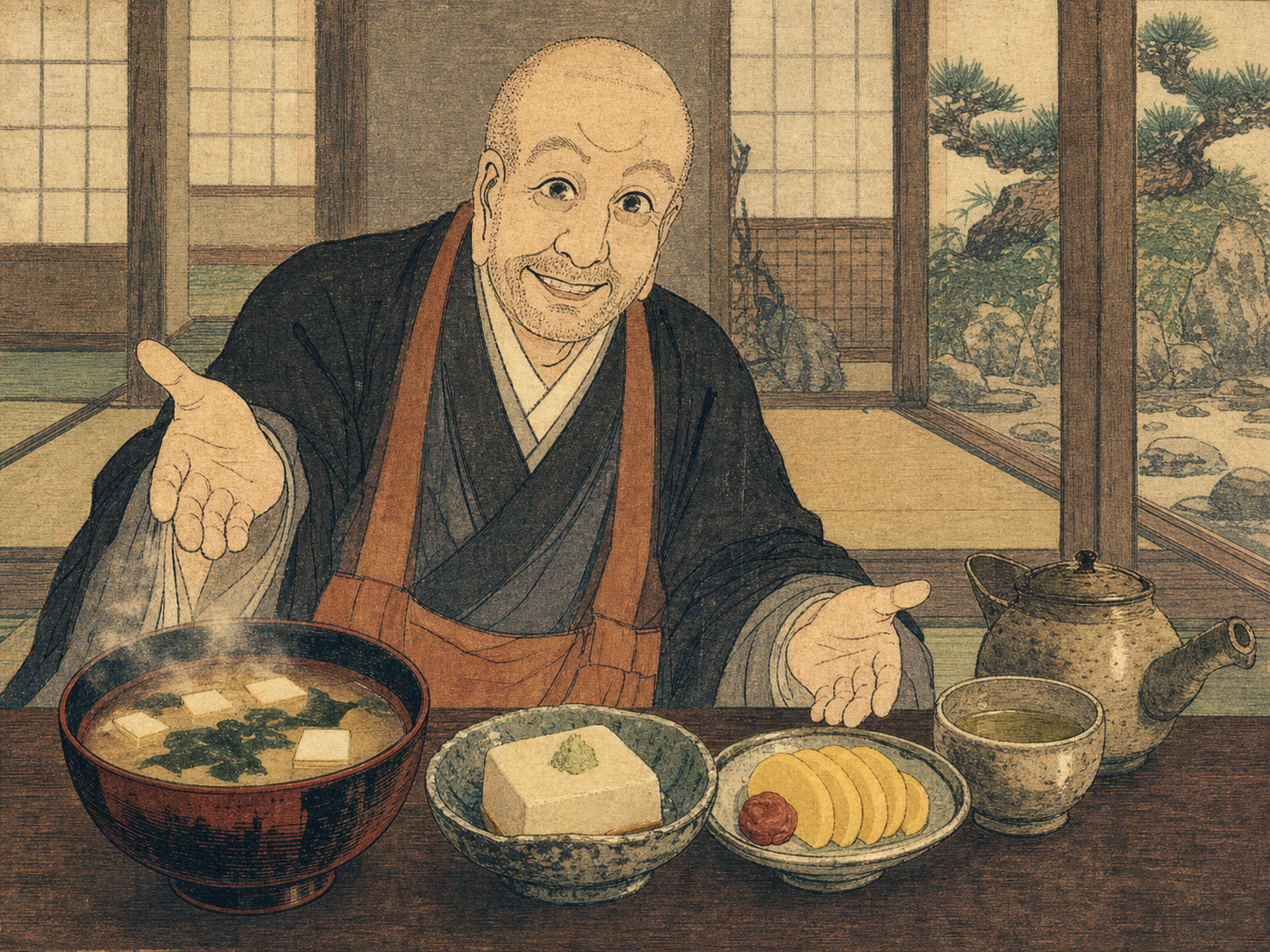
Hakuin at the table
1685 — 1768
On the menu
Shōjin ryōri in ōryōki
Buddhist devotional cuisine (shōjin ryōri), entirely vegetarian, served in Zen monasteries of the Edo period. The meal is organized not as starter-main-dessert but around the ritual ōryōki bowl: a bowl of rice, a soup (shiru), and one to three side dishes (sai) — vegetables, tofu, pickles. One eats in silence, leaving not a single grain, and rinses one's bowl with a little hot water which one drinks to waste nothing. Tea and fermented beverages punctuate the day and the welcoming of pilgrims.
Signature : Miso and kōji
Fermented soybean paste (miso) and rice seeded with kōji mold (Aspergillus oryzae) are the soul of this cuisine: they give deep umami to the daily soup, transform rice into a sweet drink, and allow vegetables to be preserved all winter. At Shōin-ji temple in Hara, frugality never meant blandness.
click to flip back
Hakuin at the table
1685 — 1768
5 period recipes
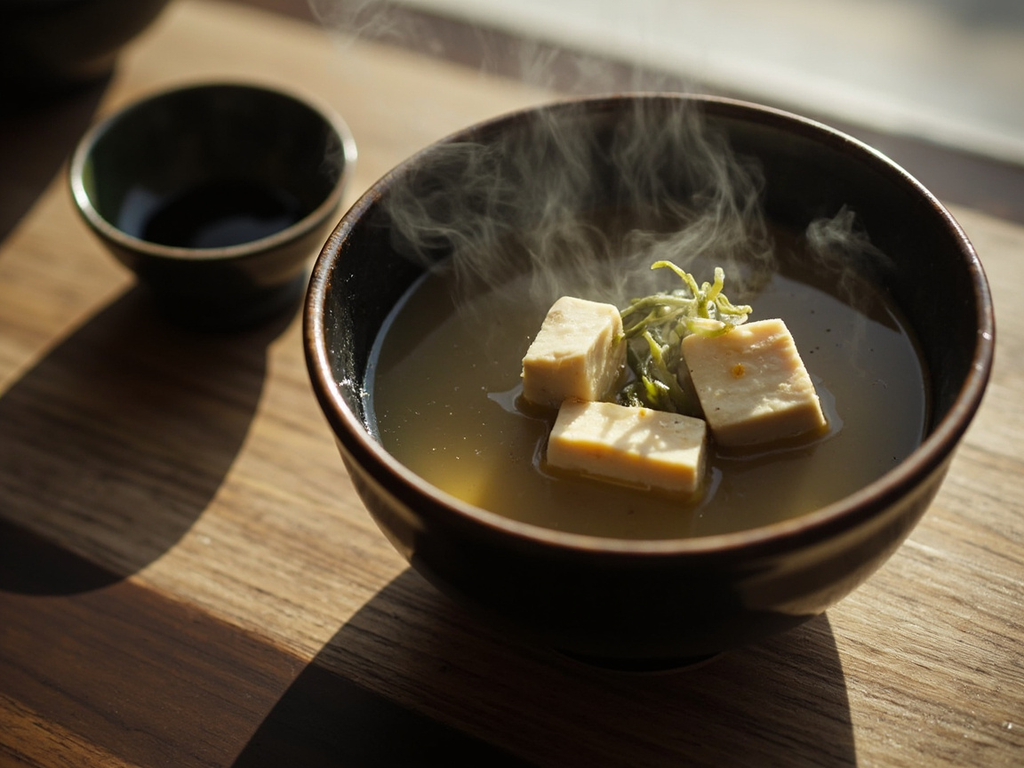 Everyday
Morning miso soup with tofu and wakame
Shiru (the base soup of the ōryōki bowl)
🍄 🧂 🫙· 40 min (excluding soaking)
View the recipe
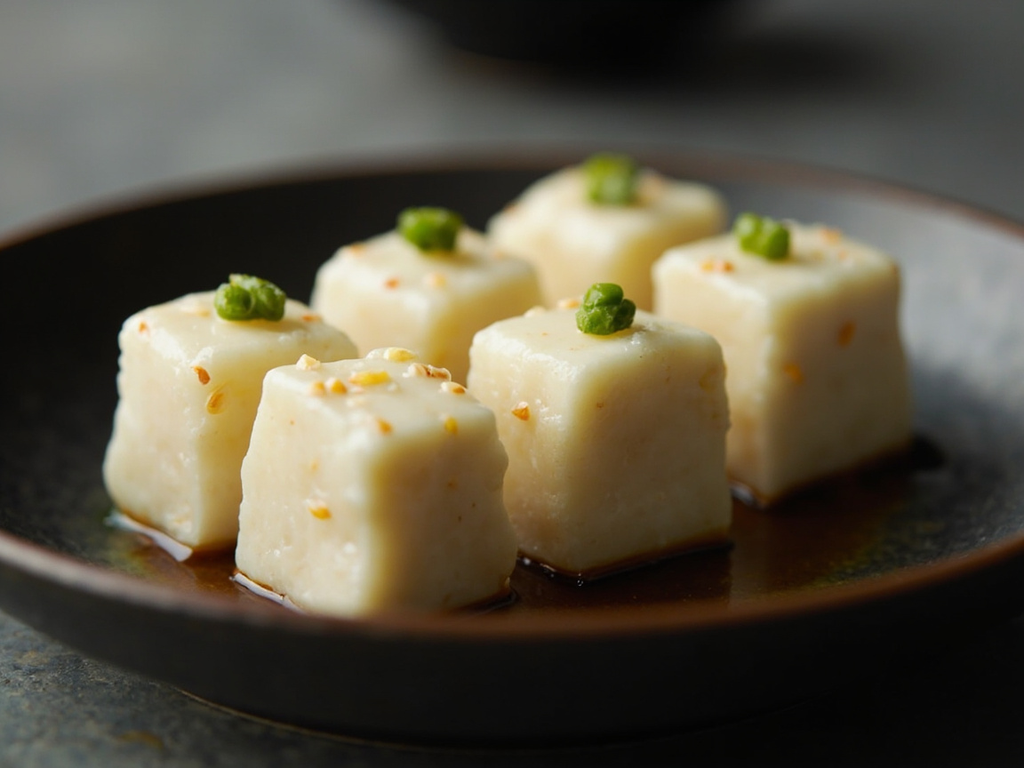 Festive
Gomadōfu, sesame "tofu" with kuzu
Sai (refined side dish for guests' meal)
🍄 ☕· 45 min + 2 h resting
View the recipe
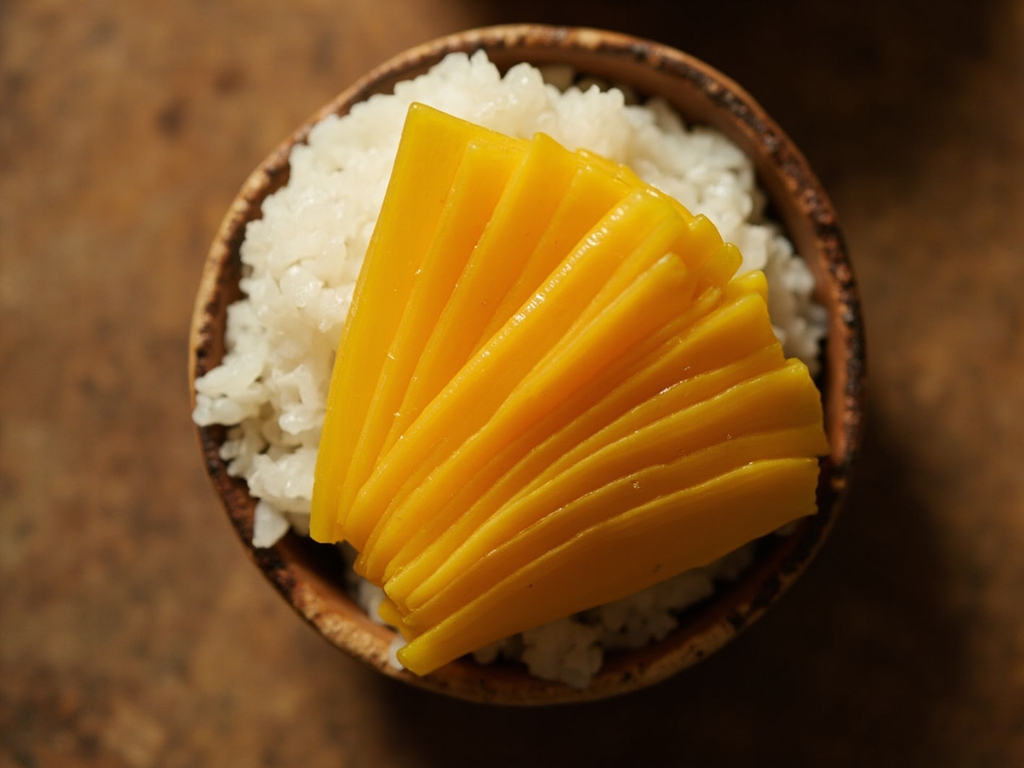 Preserving
Takuan-zuke, daikon pickled in rice bran
Kō-no-mono (pickles that close the meal)
🫙 🍋 🧂· 30 min preparation + 3 to 6 weeks fermentation
View the recipe
 Drink
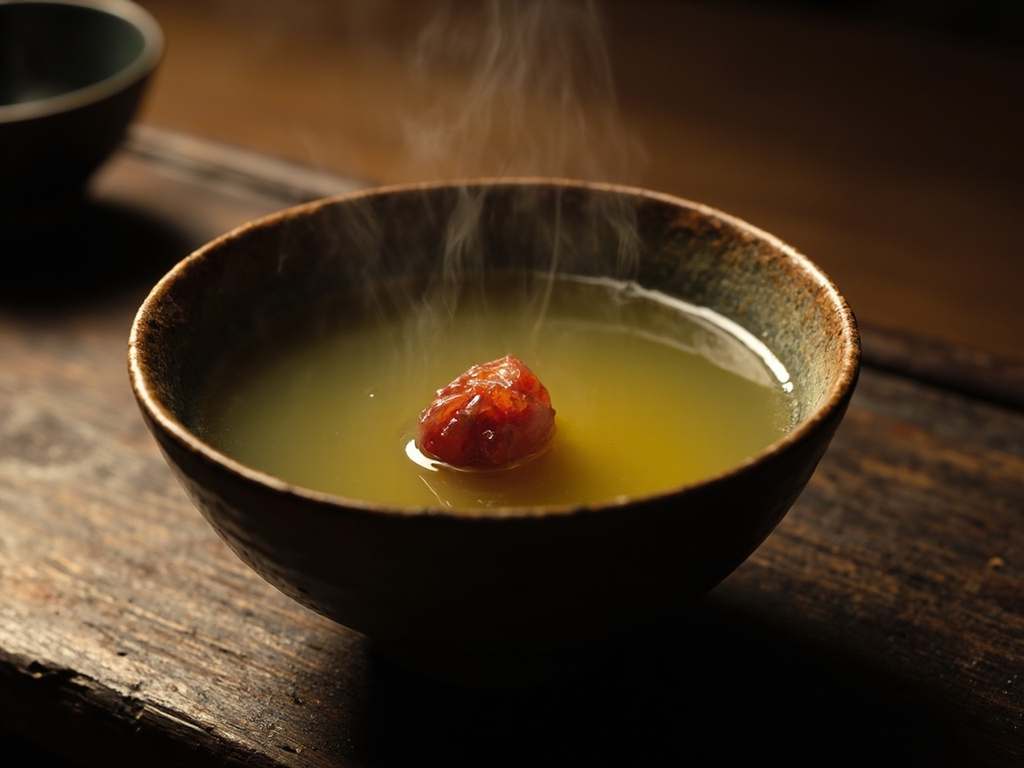
DrinkToasted bancha with umeboshi
Cha (the tea that punctuates the monastic day)
☕ 🍋· 5 min
View the recipe
 Offering
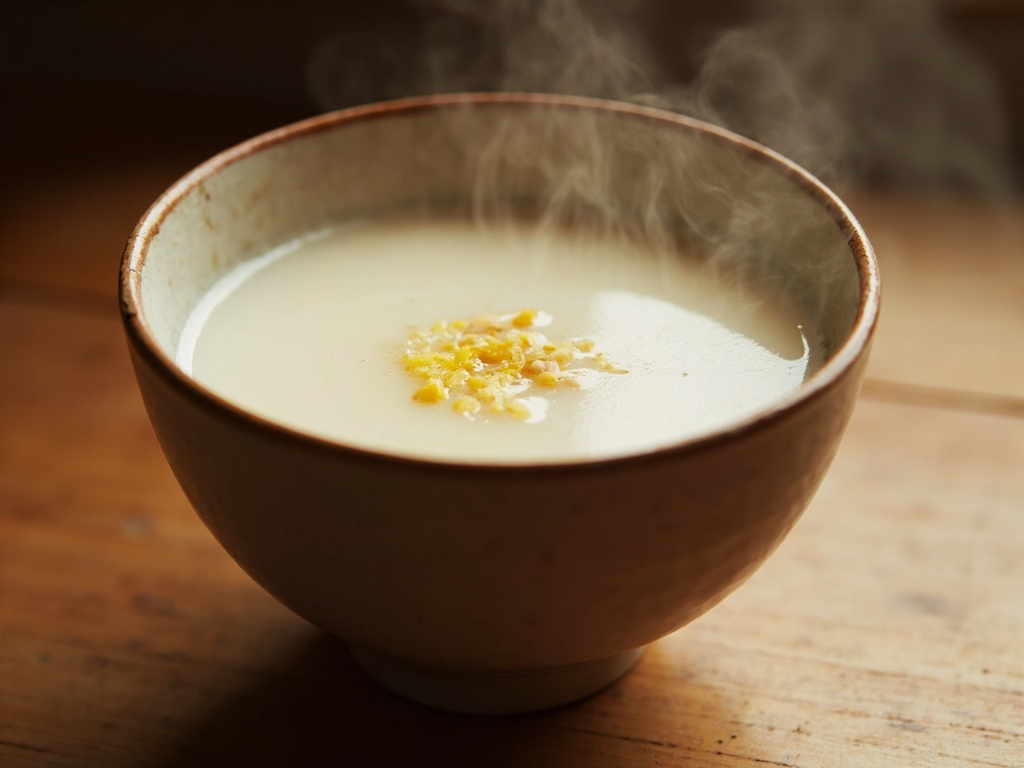
Amazake, sweet nectar of fermented rice
Furumai (the welcome drink offered to pilgrims)
🍯 🫙· 20 min + 6 to 10 h fermentation
View the recipe