 flip
flipGomadōfu, sesame "tofu" with kuzu
Gomadōfu, sesame "tofu" with kuzu
Why this dish? Emblematic dish of great Zen temples, served when receiving an important visitor or during a ceremony. For a master like Hakuin, a calligrapher sought after throughout the country, this was the quintessential welcoming dish: humble in its ingredients, but of a finesse that demands patience and mastery — like practice itself.
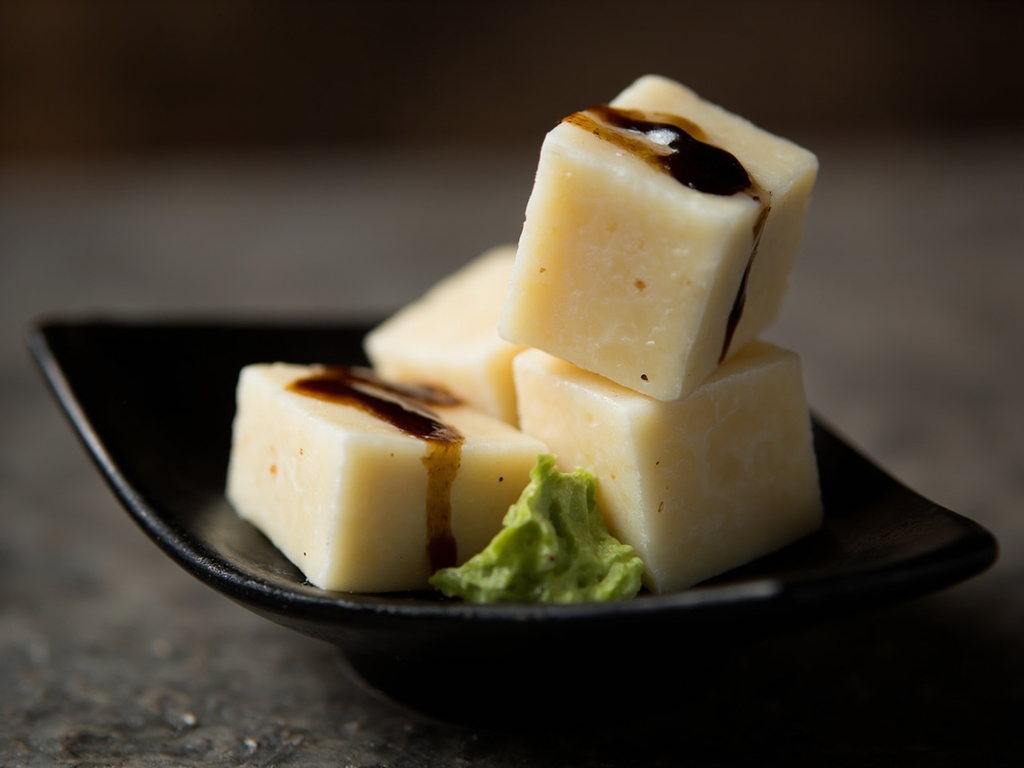
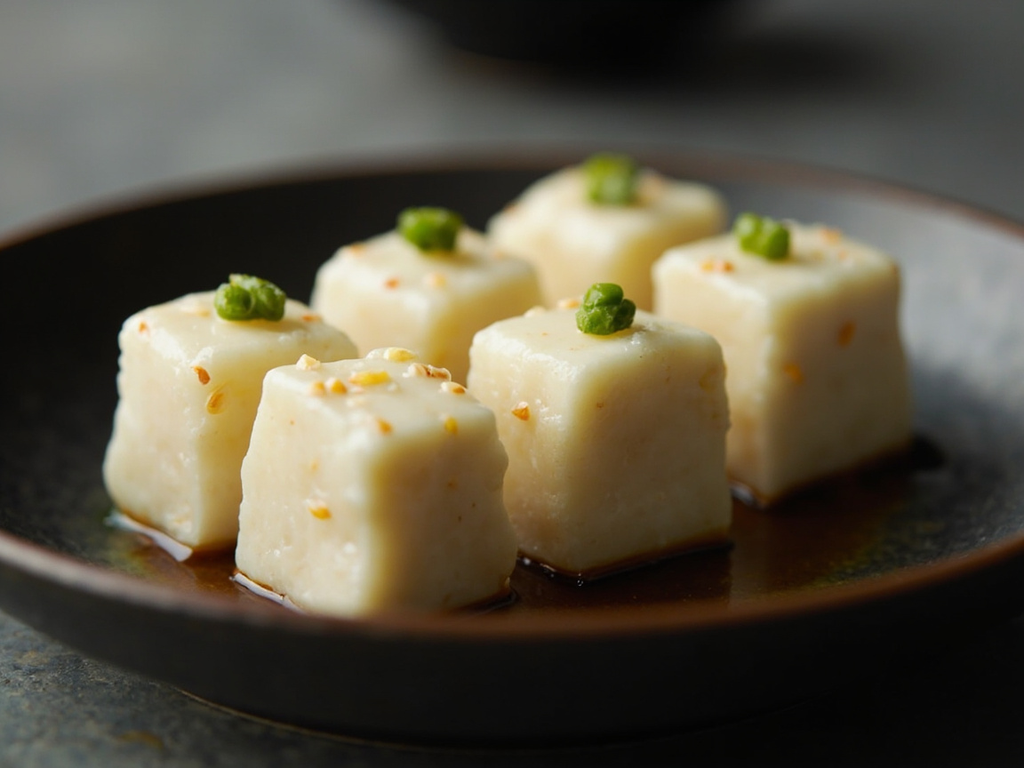
A faux tofu without soy: white sesame paste and kuzu starch cooked and stirred at length until it takes on a silky, trembling texture, cooled into a block, then served cold with a dab of wasabi and a drizzle of sweet soy sauce.
Ah, you think a poor monk has nothing beautiful to offer you? Look at this gomadōfu: sesame, kuzu root, and the rest is my arm turning, turning, turning in the pot without stopping — exactly as one digs into a kōan! He who lets go of the whisk too soon gets a lumpy porridge; he who perseveres gets this trembling, smooth flesh. The sweetness of sesame and the green bitterness of wasabi: that is the whole teaching in one bite.
- •White sesame seeds — one bowl (body and roasted flavor)
- •Kuzu root starch — two handfuls (binder that sets into jelly)
- •Spring water — as needed (liquid)
- •Fresh grated wasabi — a tip (sharp vegetal bitterness)
- •Soy sauce — a drizzle (salty umami)
Gomadōfu, sesame "tofu" with kuzu
A faux tofu without soy: white sesame paste and kuzu starch cooked and stirred at length until it takes on a silky, trembling texture, cooled into a block, then served cold with a dab of wasabi and a drizzle of sweet soy sauce.
Why this dish? Emblematic dish of great Zen temples, served when receiving an important visitor or during a ceremony. For a master like Hakuin, a calligrapher sought after throughout the country, this was the quintessential welcoming dish: humble in its ingredients, but of a finesse that demands patience and mastery — like practice itself.
Ah, you think a poor monk has nothing beautiful to offer you? Look at this gomadōfu: sesame, kuzu root, and the rest is my arm turning, turning, turning in the pot without stopping — exactly as one digs into a kōan! He who lets go of the whisk too soon gets a lumpy porridge; he who perseveres gets this trembling, smooth flesh. The sweetness of sesame and the green bitterness of wasabi: that is the whole teaching in one bite.
Ingredients (period version)
- White sesame seeds — one bowl (body and roasted flavor)
- Kuzu root starch — two handfuls (binder that sets into jelly)
- Spring water — as needed (liquid)
- Fresh grated wasabi — a tip (sharp vegetal bitterness)
- Soy sauce — a drizzle (salty umami)
Ingredients
- White sesame paste (light tahini) or ground sesame — 100 g (base)
- Kuzu starch (kudzu) — 60 g (gelling agent)
- Water — 500 ml (liquid)
- Wasabi — to taste (garnish)
- Soy sauce — 1 to 2 tsp (seasoning)
- Sugar (optional mirin) — 1 tsp (balance)
Method
- Dissolve kuzu starch in cold water until completely smooth, with no lumps.
- Add sesame paste and mix well while cold.
- Pour into a thick-bottomed saucepan and heat over medium-low heat, stirring WITHOUT STOPPING with a spatula.
- Continue stirring for 15 to 20 minutes: the mixture thickens, becomes translucent and glossy, and pulls away from the sides.
- Pour into a moistened mold, smooth the top, let cool, then refrigerate for 2 hours until set.
- Unmold, cut into cubes, serve cold with a little wasabi and a drizzle of lightly sweetened soy sauce.
How it was made : Gomadōfu originated in monasteries, especially those on Mount Kōya. Kuzu, extracted from the root of the same-named plant, was also used as a remedy in traditional medicine. Everything is done by arm strength, without rest, making it a dish of respect.
The contemporary twist : Serve as quenelles on a dark slate with a brushstroke of soy sauce — a direct homage to Hakuin the painter and calligrapher.
Hakuin · Charactorium