 Flip the card
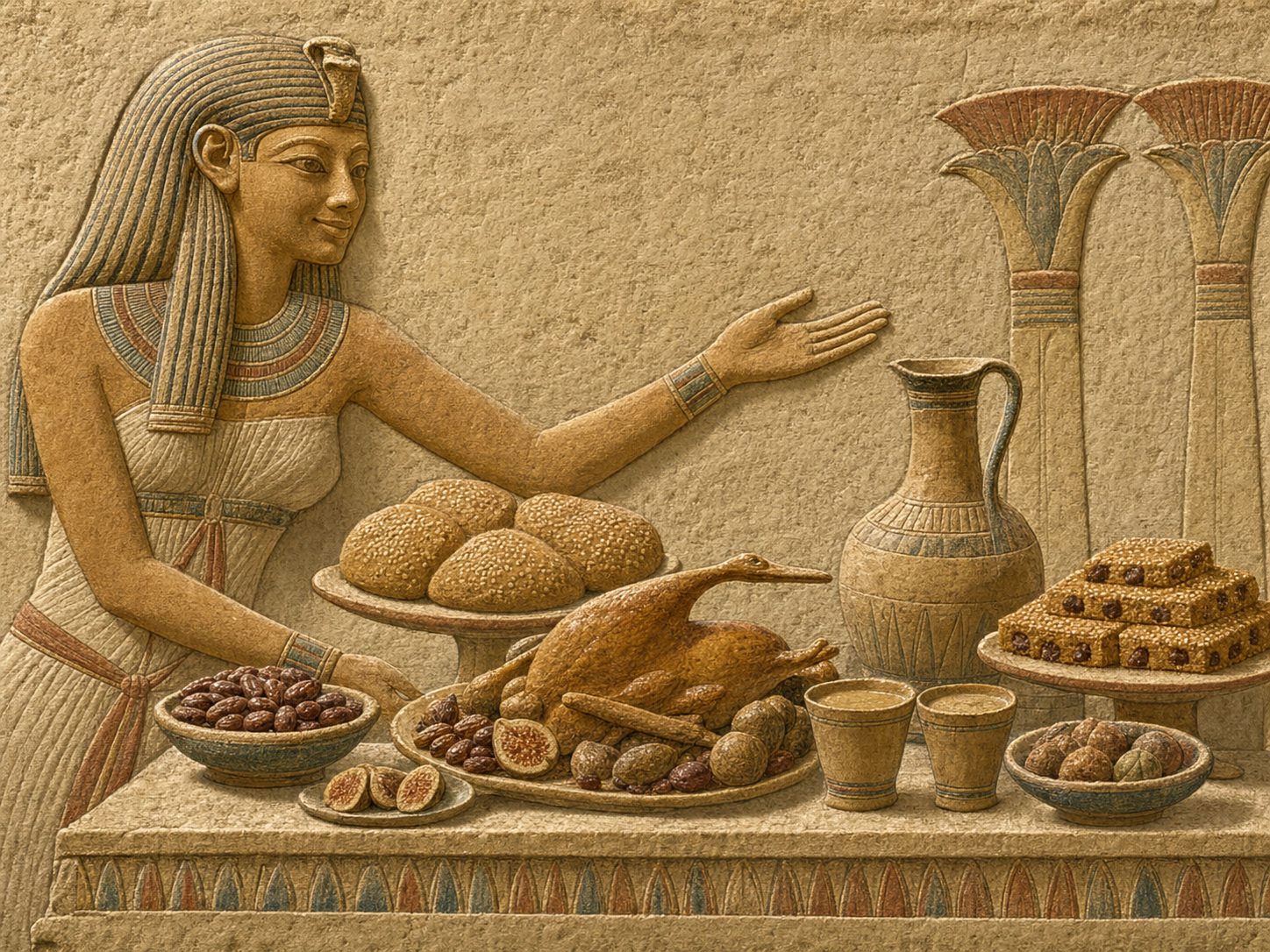
Hatshepsut at the table
1506 av. J.-C. — 1457 av. J.-C.
On the menu
The Service of the Royal Table (The Offering of Bread and Beer)
In New Kingdom Egypt, the meal is not divided into starter, main course, and dessert. Everything revolves around two sacred pillars: bread (ta) and beer (heqet), considered the very gifts of the gods. Around this foundation are arranged "relishes" — onions, fish, meats, fruits, and honey sweets — all placed together on low mats or tripod tables. Sweet and savory coexist on the same platter, with no imposed order. At the table of a pharaoh as at that of Amun, the banquet and the temple offering follow the same grammar: feeding the living and the divine with the same foods.
Signature : Honey and Date
Egypt knew neither sugar nor cocoa: its sweetness came from the honey of the Nile hives and sun-candied dates. This golden sweetness, present even in meats and offering breads, is the true signature of pharaonic cuisine.
click to flip back
Hatshepsut at the table
1506 av. J.-C. — 1457 av. J.-C.
5 period recipes
 Everyday
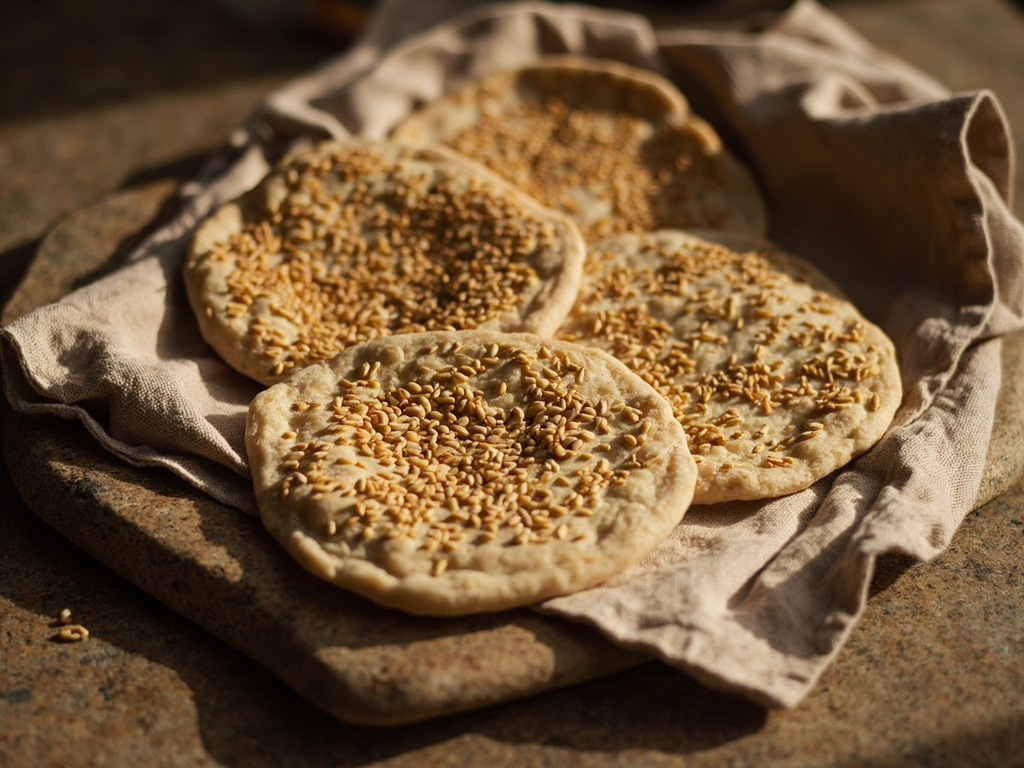
Ta — Emmer Bread with Sesame
Foundation of the Table (daily bread, base of every meal)
🧂· 3 h 30 (including resting)
View the recipe
 Festive
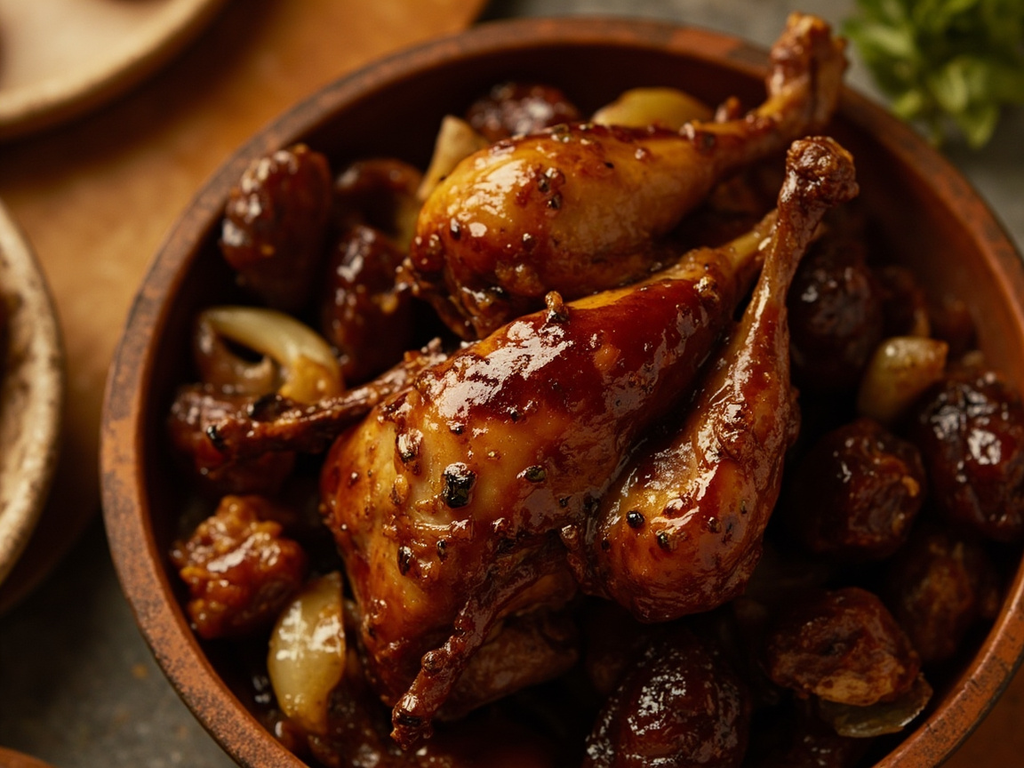
Honey-Roasted Goose with Dates and Figs
Noble Accompaniment of the Banquet (festive relish placed on the feast platter)
🍯 🧂 🍄· 1 h 50
View the recipe
 Drink
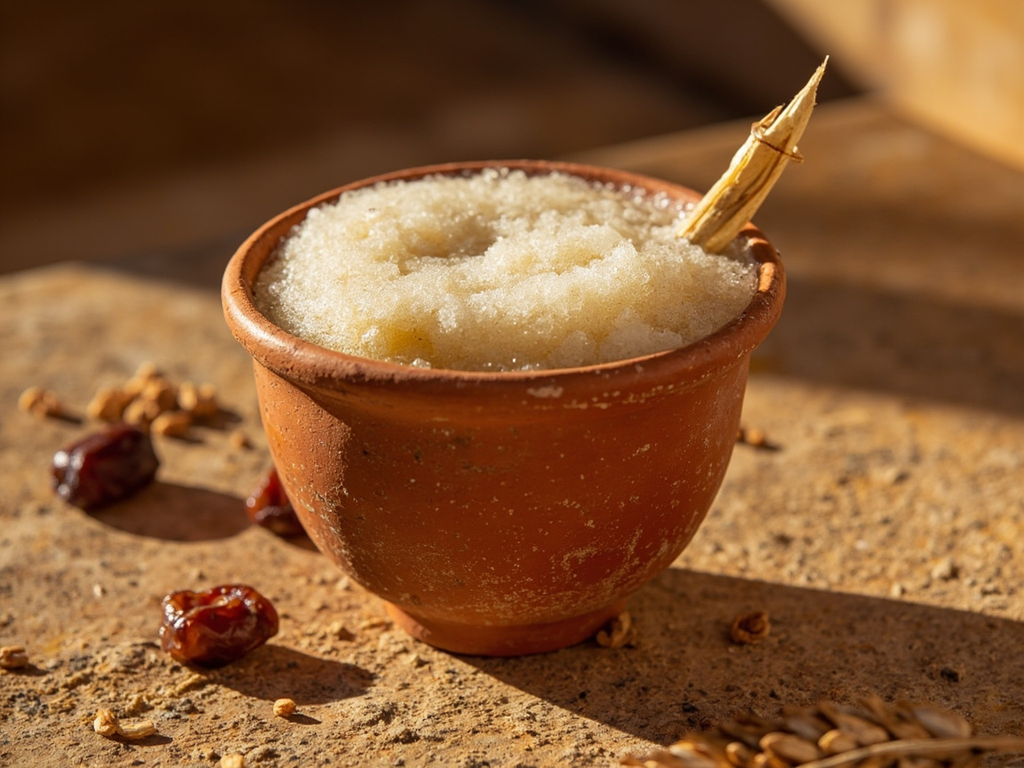
DrinkHeqet — Sweet Beer of Bread and Dates
Foundation Drink of the Table (consumed by all, from the people to the pharaoh)
🫙 🍯· 3 days (fermentation) — 1 h active work
View the recipe
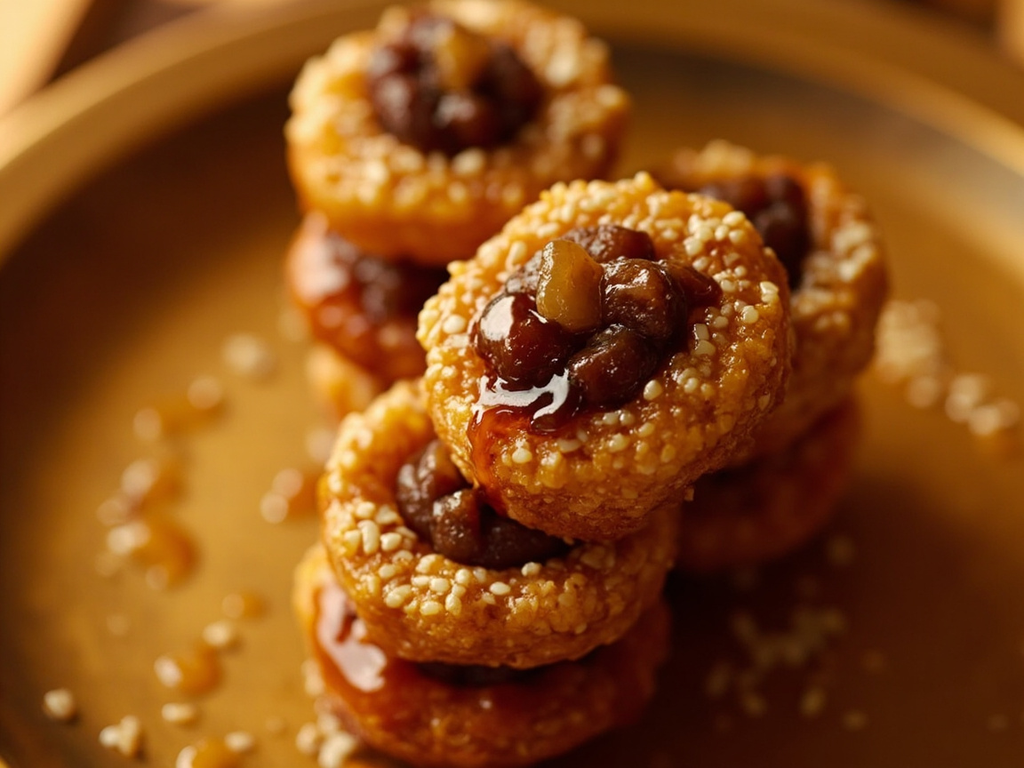 Offering
Chenes — Honey, Date and Sesame Cakes for Amun
Sweet Offering Bread (placed on the altar, later shared by the priests)
🍯· 45 min
View the recipe
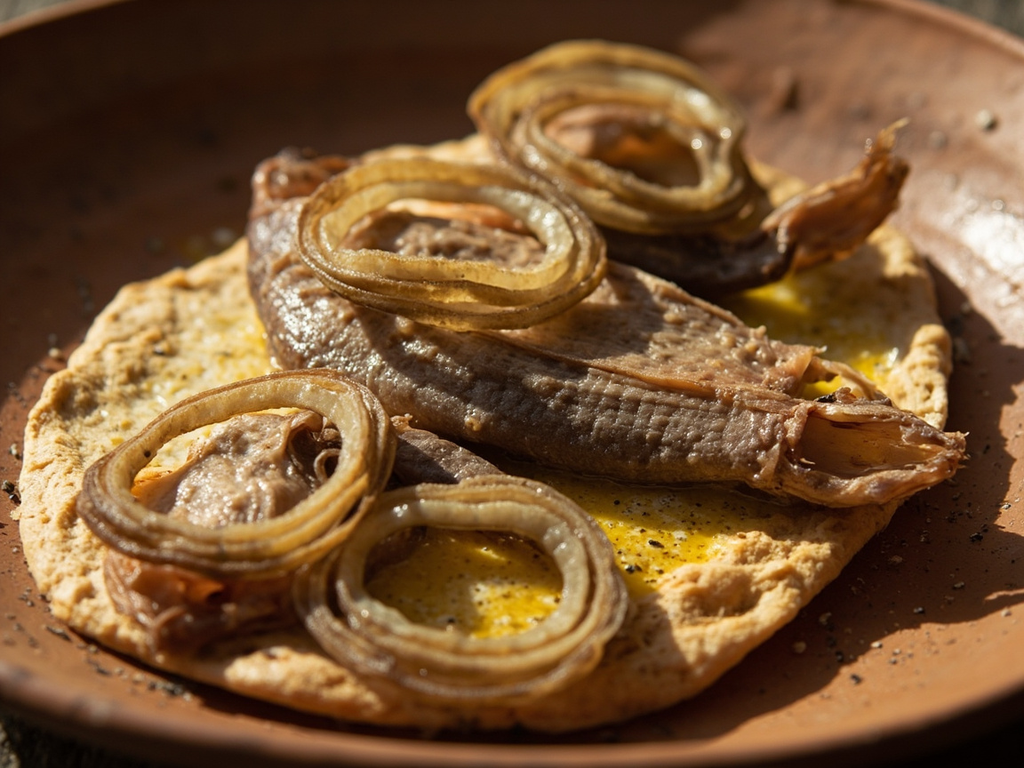 Preserving
Dried and Salted Nile Fish
Pantry Reserve (salted preserve, long-lasting bread accompaniment)
🧂 🍄 🫙· 2 to 3 days (salting + drying) — 30 min active work
View the recipe