 flip
flipTa — Emmer Bread with Sesame
Ta — Emmer Bread with Sesame
Why this dish? Emmer bread was the daily food, from the workers of the Aswan quarries who carved its obelisks to the table of Hatshepsut herself. The bread ovens and molds found at Thebes and Deir el-Bahari attest to its omnipresence.
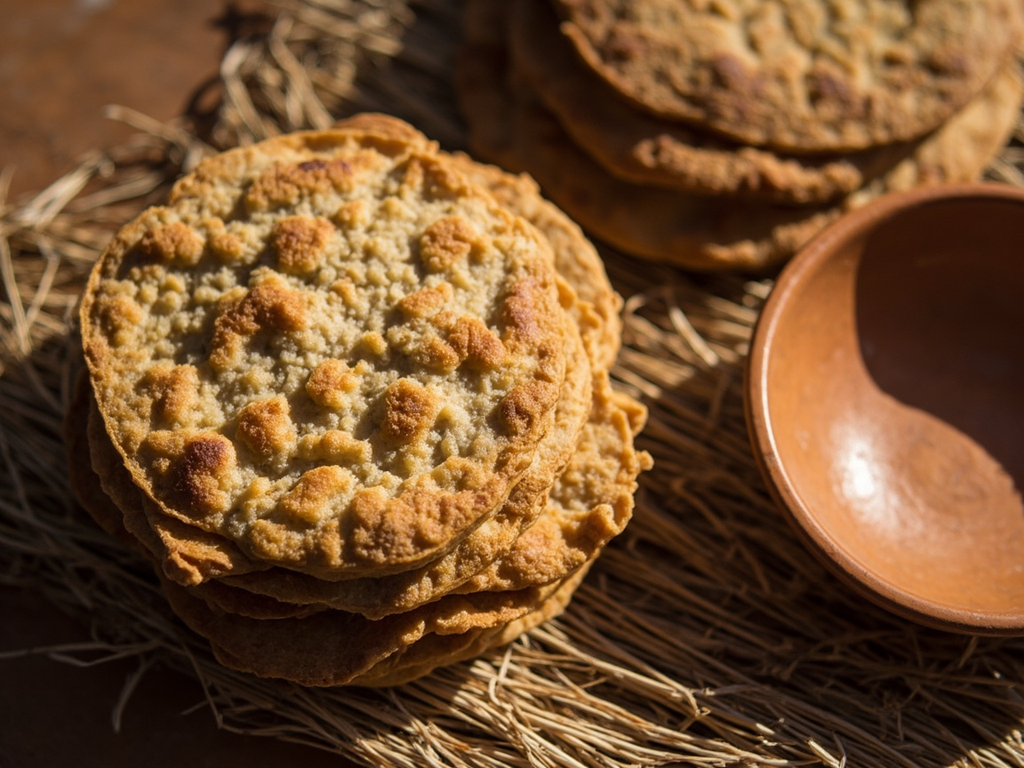
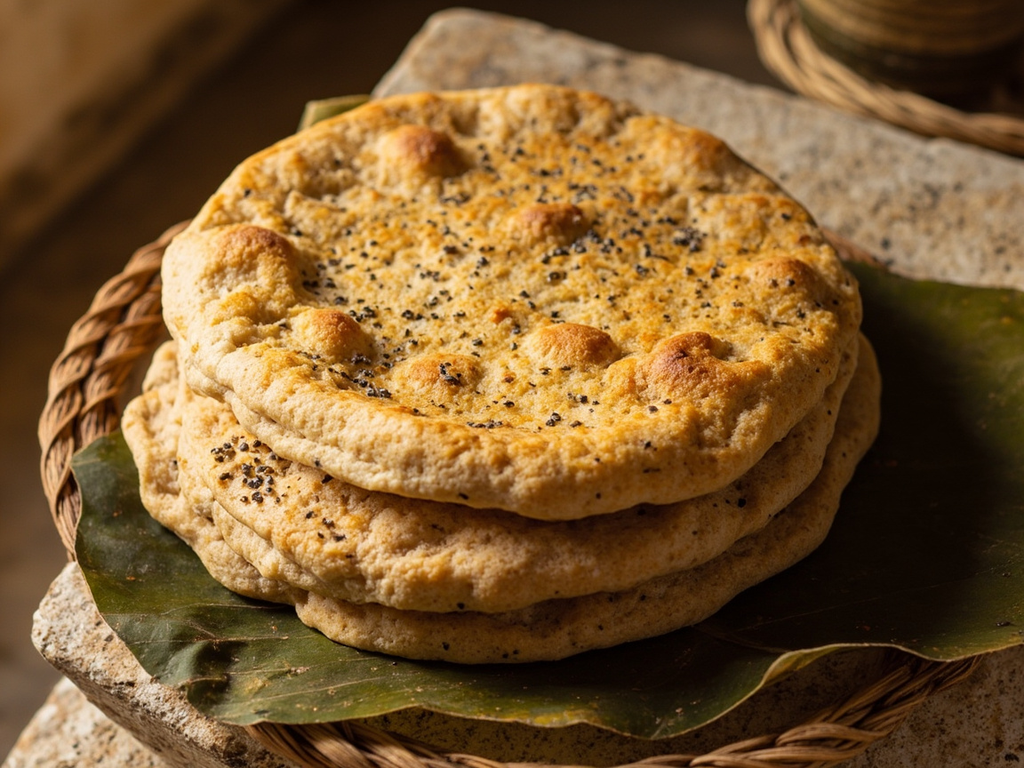
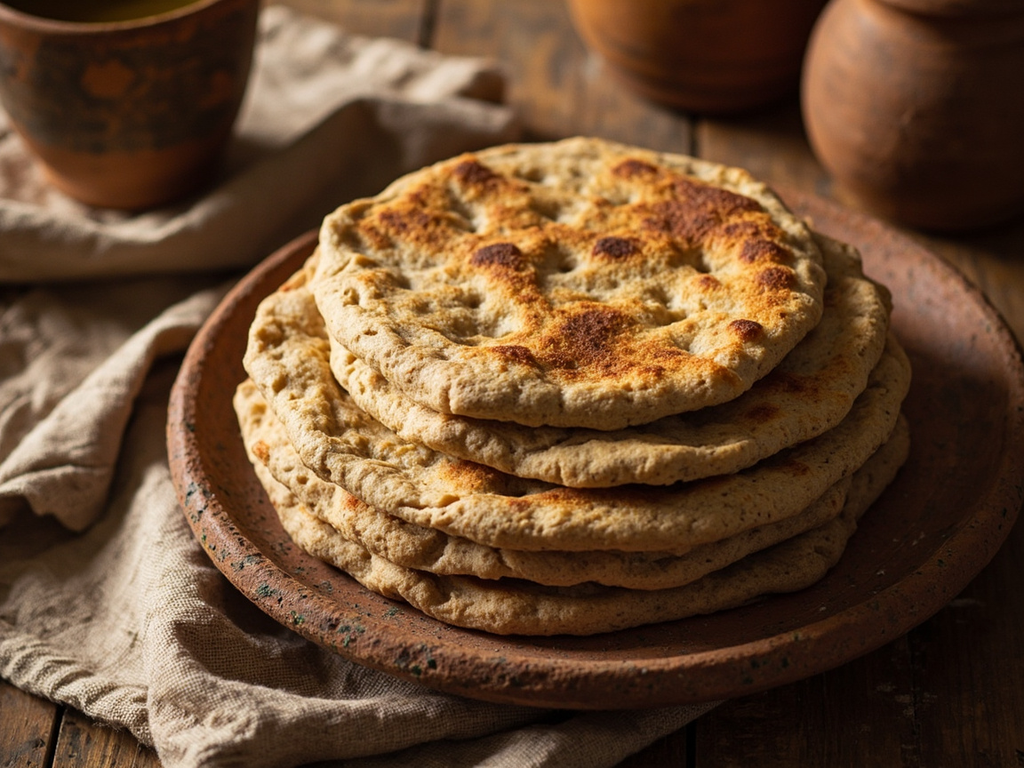
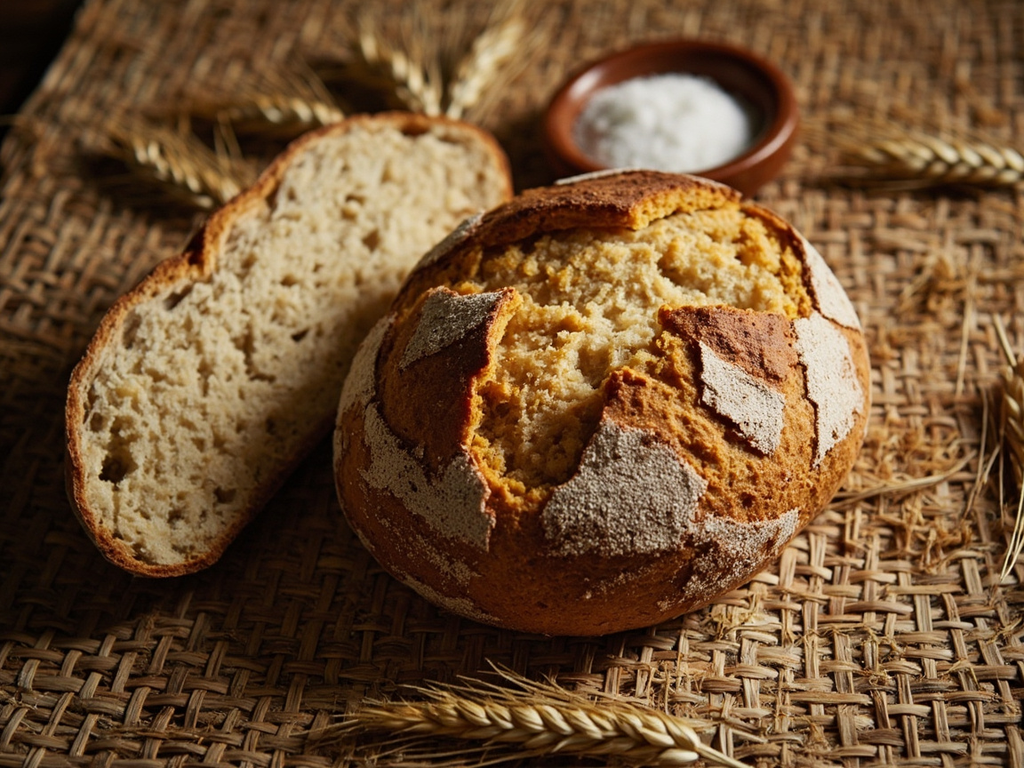
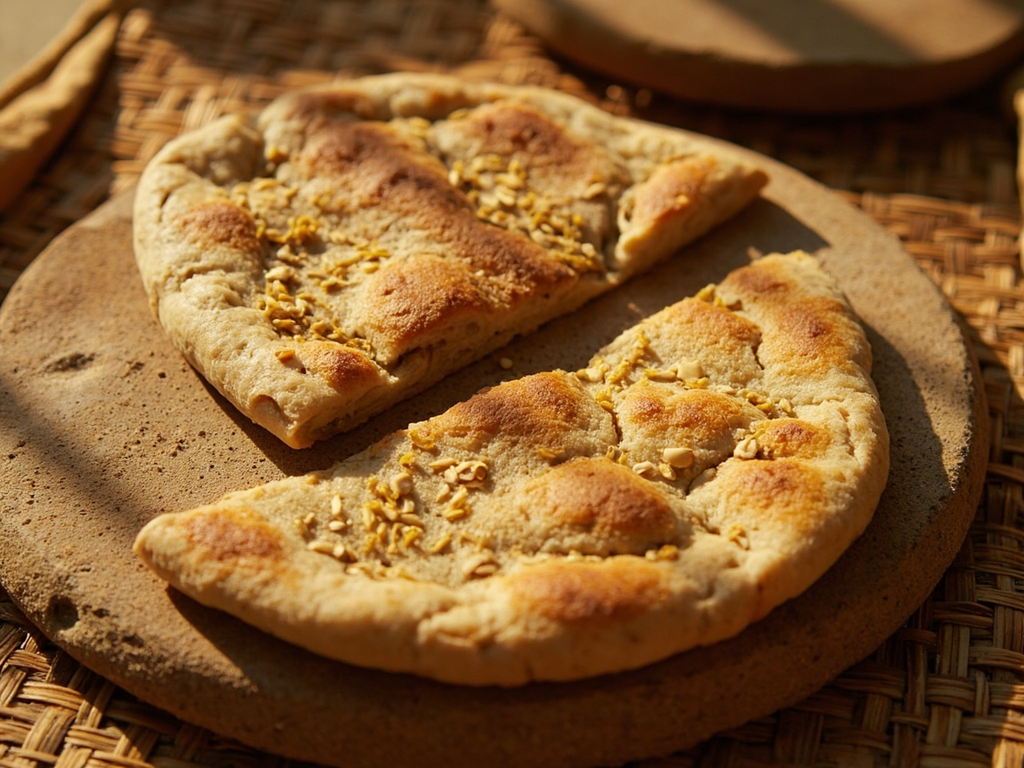
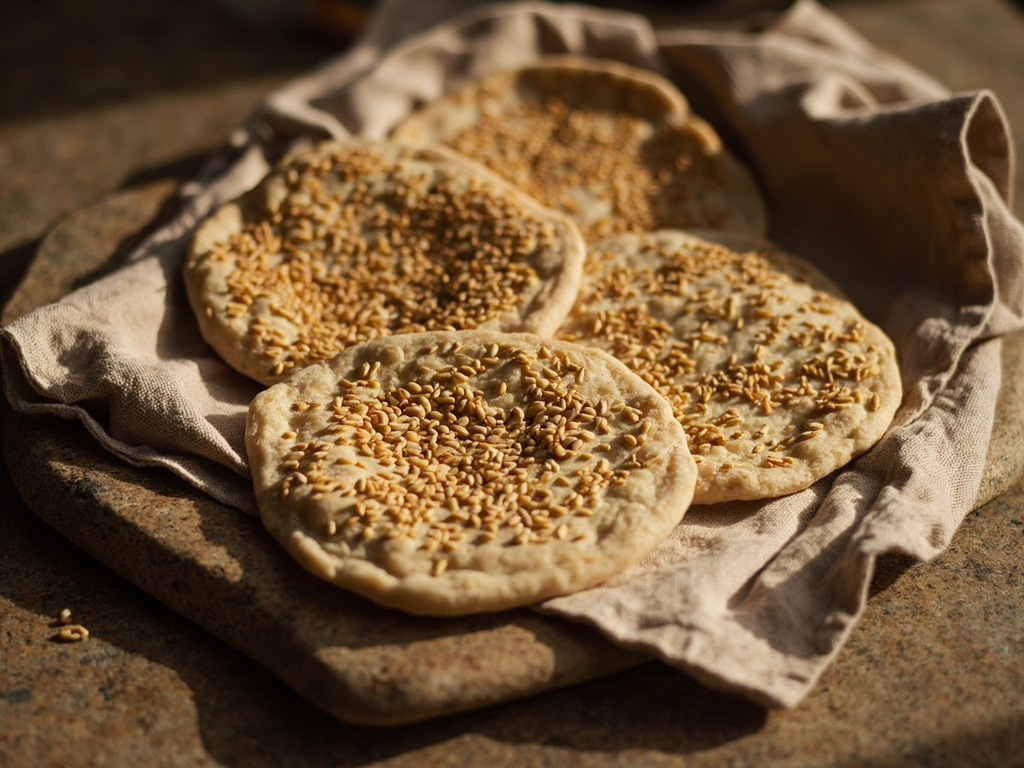
A dense and nourishing flatbread made from emmer flour, sometimes perfumed with sesame, baked against the walls of a clay oven. It is the bread that satisfies the people and is also offered to the gods.
I, Maatkare, daughter of Amun, tell you: before gold and before obelisks, there is bread. On my table as on the altar of the temple of millions of years, the ta is first broken. My bakers ground the emmer grain on stone at dawn, kneaded the dough with their palms, and baked it in hot molds until it sang. Sprinkle it with sesame seeds, eat it warm, and remember that even a pharaoh lives on the same grain as his stonecutters.
- •Freshly ground emmer flour — as needed (base of the dough)
- •Nile water — as needed (binder)
- •Natural sourdough (yesterday's dough) — a handful (fermentation)
- •Salt — a pinch (seasoning)
- •Sesame seeds — a pinch (flavor and crunch)
Ta — Emmer Bread with Sesame
A dense and nourishing flatbread made from emmer flour, sometimes perfumed with sesame, baked against the walls of a clay oven. It is the bread that satisfies the people and is also offered to the gods.
Why this dish? Emmer bread was the daily food, from the workers of the Aswan quarries who carved its obelisks to the table of Hatshepsut herself. The bread ovens and molds found at Thebes and Deir el-Bahari attest to its omnipresence.
I, Maatkare, daughter of Amun, tell you: before gold and before obelisks, there is bread. On my table as on the altar of the temple of millions of years, the ta is first broken. My bakers ground the emmer grain on stone at dawn, kneaded the dough with their palms, and baked it in hot molds until it sang. Sprinkle it with sesame seeds, eat it warm, and remember that even a pharaoh lives on the same grain as his stonecutters.
Ingredients (period version)
- Freshly ground emmer flour — as needed (base of the dough)
- Nile water — as needed (binder)
- Natural sourdough (yesterday's dough) — a handful (fermentation)
- Salt — a pinch (seasoning)
- Sesame seeds — a pinch (flavor and crunch)
Ingredients
- Spelt or einkorn flour (close to emmer) — 400 g
- Warm water — 260 ml
- Active sourdough (or 5 g baker's yeast) — 80 g
- Salt — 8 g
- Sesame seeds — 2 tbsp
Method
- Mix the flour and salt, add the sourdough dissolved in warm water.
- Knead for 10 minutes until a supple dough forms, cover and let rise for 2 to 3 hours.
- Shape into round, thick flatbreads about 2 cm thick, sprinkle with sesame seeds, pressing lightly.
- Let rest for 30 minutes, then bake at 240 °C on a stone or hot baking sheet for 15 to 18 minutes.
- Serve warm, torn by hand.
How it was made : The Egyptians ground grain between two stones (the saddle quern and the handstone), which mixed sand into the flour — tooth wear on mummies testifies to this. The dough was baked in preheated conical clay molds (bedja) or stuck to the walls of a beehive oven.
The contemporary twist : Present the torn bread on a piece of unbleached linen with a drizzle of honey and a few toasted sesame seeds, like a contemporary offering.
Hatshepsut · Charactorium