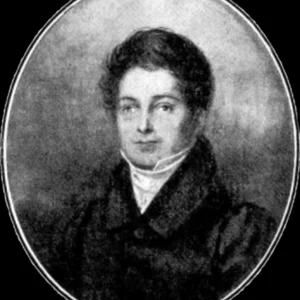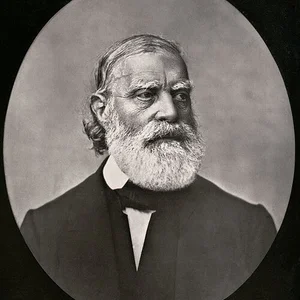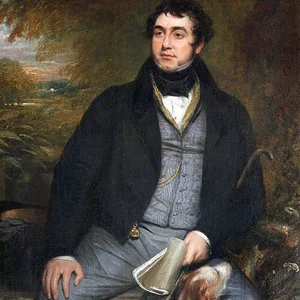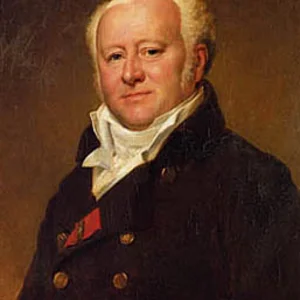

French physician (1755–1821), first personal physician to Napoleon I and professor at the Collège de France. He popularized chest percussion as a diagnostic method and trained a generation of clinicians who laid the foundations of modern medicine.
Jean-Nicolas Corvisart(1755 — 1821)
Jean-Nicolas Corvisart
France
7 min read
Frequently asked questions
Key Facts
- Born in 1755 in Dracé (Ain), died in 1821
- Appointed first physician to Napoleon I in 1804
- Introduced Leopold Auenbrugger's chest percussion method to France by translating and disseminating it (1808)
- Professor at the Hôpital de la Charité and the Collège de France, he notably trained René Laennec, inventor of the stethoscope
- A Paris Métro station on Line 6 bears his name
Works & Achievements
The first French clinical cardiology treatise, grounded in the correlation between symptoms observed in living patients and lesions discovered at autopsy. This work laid the foundations of the anatomo-clinical method and remained a standard reference for several decades.
An annotated translation of Auenbrugger's *Inventum Novum*, enriched with twenty years of Corvisart's personal experience. This publication revived a forgotten technique and spread it across Europe, revolutionizing thoracic diagnosis.
An innovative bedside teaching program conducted at the patient's side rather than in lecture halls. These lessons trained an entire generation of clinicians — including Laennec, Dupuytren, and Bayle — who went on to build modern French medicine.
A late collection of clinical reflections covering a range of pathologies. A testament to Corvisart's eclecticism and rigorous powers of observation right to the end of his career.
Anecdotes
For fifty years, the chest percussion method invented by Austrian physician Leopold Auenbrugger in 1761 had been almost entirely ignored by the medical world. It was Corvisart who revived it, translated it, and popularized it in France in 1808, publicly crediting Auenbrugger with a rare honesty for the era. This technique — tapping the chest to detect abnormalities by their sound — became the foundation of cardiac and pulmonary diagnosis.
Napoleon, suspicious by nature and little inclined to trust doctors, extended exceptional confidence to Corvisart. He called him simply "my doctor" and accepted his advice without argument. It is said that Corvisart was one of the few men who could contradict the Emperor without provoking his anger — something he did on several occasions to protect Napoleon's health.
At the Hôpital de la Charité, Corvisart trained an entire generation of great physicians, including René Laennec. It was by learning percussion and clinical observation under Corvisart that Laennec developed, in 1816, the idea of the stethoscope. The master had thus prepared the ground for the auscultatory revolution that would transform nineteenth-century medicine.
After Napoleon's fall in 1815, the Emperor — exiled to Saint Helena — asked Corvisart to accompany him. The physician declined, citing his age and failing health. Napoleon died in 1821 of stomach cancer — a disease that Corvisart, who passed away that same year in Paris, had once mentioned as a hereditary risk in the Bonaparte family.
Primary Sources
Diseases of the heart are more common than is generally believed; they are often unrecognized during life, and it is only after death that the lesions which produced them are discovered.
I present to the public the method of percussion that I have practiced for twenty years in the wards of the Hôpital de la Charité, and whose accuracy I have verified on a great number of patients.
Citizen Corvisart is one of the foremost physicians in Europe; his talent, his zeal, and his attachment to my person have long been known to me.
It is in the school of M. Corvisart that I learned to observe the patient at the bedside, to affirm nothing without having first examined, and to correlate symptoms with lesions discovered at autopsy.
Key Places
Corvisart's birthplace, in the Champagne region. He was born there on February 15, 1755, into a family of local notables, before moving to Paris to pursue his studies.
Corvisart's principal workplace for twenty years, located on the Left Bank. It was here that he performed percussion examinations on hundreds of patients and trained his students at the bedside, effectively inventing modern clinical medicine.
The institution where Corvisart taught from 1797 onward. He delivered groundbreaking lectures grounded in direct observation of the patient, breaking with the theoretical and bookish medicine of the Ancien Régime.
Napoleon's principal Paris residence, which Corvisart visited regularly to examine and advise the Emperor. He enjoyed privileged access there, reserved for Napoleon's closest associates.
Napoleon's favorite imperial residence in the Paris region. Corvisart frequently accompanied the court there and attended to the imperial family, particularly during extended stays.
Typical Objects

A small wooden or ivory instrument used to methodically tap the patient's chest. Corvisart made it the centerpiece of his diagnostic method, enabling the detection of effusions and pulmonary lesions through the sounds produced.

Handwritten registers in which Corvisart recorded his observations at patients' bedsides, then compared them against autopsy findings. This systematic practice laid the foundations of the modern anatomo-clinical method.

Corvisart kept a treasured copy of Auenbrugger's original Latin work (1761), which he had rediscovered and annotated over many years before publishing a French translation enriched with his own commentary.

A long, dark garment signaling respectability and professional authority. Corvisart, a regular presence at the imperial court, paid careful attention to his dress in order to appear worthy of his role as the Emperor's personal physician.

An indispensable tool for the clinical physician, used to measure pulse rate and respiratory frequency. Corvisart systematically timed these parameters, making time measurement a standard part of the clinical examination.

Patient examinations were often conducted by artificial light in the dimly lit wards of hospitals. Corvisart inspected skin tone, edemas, and cyanosis by the flickering light of candles or oil lamps.
School Curriculum
Vocabulary & Tags
Key Vocabulary
Daily Life
Morning
Corvisart began his day very early with ward rounds at the Hôpital de la Charité, accompanied by his students gathered around the bedside. He would methodically percuss the chest, question the patient, and comment on his findings aloud, turning each examination into a living clinical lesson.
Afternoon
The afternoons were devoted to private consultations and writing up his case notes. As the Emperor's physician, he also made his way to the Tuileries or Saint-Cloud as needed, crossing Paris by carriage with the authority of a high imperial official.
Evening
Evenings often saw Corvisart attending court dinners or learned gatherings with colleagues. He also worked on his publications, comparing his clinical notes with autopsy findings to refine his theories on diseases of the heart.
Food
Like the prosperous Parisian bourgeoisie of his day, Corvisart ate heartily: roasted meats, stews, vegetables, and white bread. Table wine was a natural part of every meal, and he was known to enjoy the convivial pleasures of the dinner table that his social standing afforded.
Clothing
On the wards, Corvisart wore the black frock coat characteristic of physicians — understated and serious. At the imperial court, he dressed in an embroidered coat in keeping with the demands of Napoleonic protocol, his decorations — including the Légion d'honneur — displayed prominently on his chest.
Housing
Corvisart lived in a comfortable apartment in the heart of Paris, as befitted a professor at the Collège de France and physician to the Emperor. His home included a study lined with medical books, anatomical plates, and his prized notebooks of clinical observations.
Historical Timeline
Period Vocabulary
Liens externes & ressources
Références
Œuvres
Essai sur les maladies et les lésions organiques du cœur et des gros vaisseaux
1806
Nouvelle méthode pour reconnaître les maladies internes de la poitrine par la percussion (traduction d'Auenbrugger)
1808
Cours de clinique médicale au Collège de France
1797-1804
Mémoires sur les maladies chroniques, les évacuations sanguines et l'acupuncture
1820