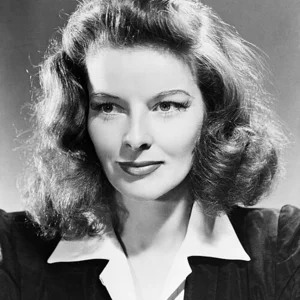

An American film and stage actress, Katharine Hepburn (1907–2003) is considered one of the greatest stars of Hollywood's Golden Age. She won four Academy Awards for Best Actress, an absolute record.
Katharine Hepburn(1907 — 2003)
Katharine Hepburn
États-Unis
8 min read
Frequently asked questions
Famous Quotes
« I never lost a friend I wanted to keep.»
« Life is what happens while you are busy making other plans.»
Key Facts
- Born on May 12, 1907, in Hartford, Connecticut
- First Oscar nomination in 1933 for Morning Glory
- Four Academy Awards for Best Actress (1933, 1967, 1968, 1981), an unmatched record
- Known for her roles as independent and unconventional women in Hollywood
- Died on June 29, 2003, at the age of 96
Works & Achievements
Hepburn's first Academy Award for Best Actress, at the age of 26. She plays a young, ambitious actress determined to make it on Broadway — a role that brought her immediate international recognition.
A film she produced by purchasing the rights to the original play herself, which allowed her to dictate her own terms to MGM. Both a commercial and critical triumph, it stands as one of the most spectacular comebacks in Hollywood history.
Her first collaboration with Spencer Tracy, who would become her partner on screen and in life for twenty-six years. Hepburn plays a brilliant, independent journalist — an iconic portrait of the "modern woman."
Shot in the jungles of the Belgian Congo alongside Humphrey Bogart under grueling conditions of heat and tropical illness. The film is considered one of the undisputed classics of Hollywood adventure.
A film that directly confronted interracial marriage in an America torn apart by the civil rights struggle. Spencer Tracy, her off-screen partner, died seventeen days after the end of filming.
Hepburn's third Oscar, shared in a tie with Barbra Streisand — a first in Academy Awards history. She plays Eleanor of Aquitaine in a masterful battle of wits opposite Peter O'Toole.
Her fourth and final Academy Award for Best Actress — an absolute record to this day. Hepburn stars alongside Henry Fonda in this deeply moving portrait of aging and family reconciliation.
Anecdotes
In the 1930s, Katharine Hepburn shocked Hollywood by regularly wearing trousers, an outfit considered scandalous for a woman. One day, studio executives confiscated her trousers to force her into a dress. She responded by wandering the set in her underwear until they were returned to her.
In 1938, an American theater owners' association published a blacklist dubbed "box-office poison" that included Hepburn, accused of no longer drawing audiences. She struck back by personally purchasing the rights to the play *The Philadelphia Story*, adapted it for the screen, and negotiated with MGM to play the lead role — the film was a triumph and stands as one of the greatest comebacks in Hollywood history.
Katharine Hepburn never attended the Oscars ceremony to collect her awards. She won four statuettes — an all-time record to this day — without ever taking the stage to accept them in person, declaring that such ceremonies held no meaning for her.
Her romantic relationship with actor Spencer Tracy, who was married and a devout Catholic, lasted twenty-six years until his death in 1967, seventeen days after they wrapped filming on *Guess Who's Coming to Dinner*. Hepburn kept the affair entirely private out of respect for Tracy's wife, refusing to appear publicly at his funeral.
Well into old age, Hepburn swam every morning in Long Island Sound in front of her family home in Fenwick, even in the dead of winter. She credited this daily discipline with her remarkable longevity and legendary energy.
Primary Sources
I have many regrets, and I'm sure everyone does. The stupid things you do, you regret if you have any sense, and if you don't regret them, maybe you're stupid.
I have not lived as a woman. I have lived as a man. I've just done what I damn well wanted to, and I've made enough money to support myself, and ain't afraid of being alone.
You people have your job to do and I have mine. Giving prizes for acting seems to me very strange.
Miss Hepburn is perfection itself — so crisp and glittering and right that one can only gasp with admiration.
I'm not a great actress. But I've been a good actress in good pictures with good directors.
Key Places
Katharine Hepburn's birthplace, where she was born on May 12, 1907, into a wealthy and progressive family. Her father was a urologist and her mother an active feminist activist and suffragist.
The Hepburn family home on the shores of Long Island Sound, a retreat where Katharine spent her entire life and died in 2003. She swam there daily well into old age.
A prestigious women's liberal arts college where Hepburn earned her degree in philosophy and economics in 1928. The campus's intellectual and feminist atmosphere shaped her independent character.
The world center of the film industry, where Hepburn made virtually her entire screen career, signing contracts with RKO and then MGM. She lived and worked there throughout the decades of Hollywood's golden age.
Hepburn launched her career in New York theater and returned to it regularly throughout her life, most notably in *The Philadelphia Story* in 1939, which revived her career after the "box-office poison" crisis.
Typical Objects
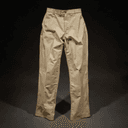
Hepburn wore trousers at a time when this was considered scandalous for a woman in public and in Hollywood studios. This clothing choice became a political act and a symbol of independence.

The central instrument of the Hollywood industry during the golden age of cinema, the 35 mm camera captured major productions on nitrate and then acetate film stock. Hepburn was photographed by the greatest cinematographers of the era.

The statuette awarded by the Academy of Motion Picture Arts and Sciences honors the best film performances each year. Hepburn received four — a record never matched by any actress — without ever attending the ceremony to accept them.
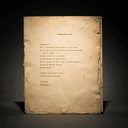
The fundamental working document of the film industry, a script details the dialogue, action, and performance notes. Hepburn was one of the first actresses to purchase the rights to a script herself in order to control her own career.

Hepburn was a passionate tennis player from childhood, a sport she practiced throughout her life with the same discipline as her daily swimming sessions. Athletics were an integral part of her image of physical independence.
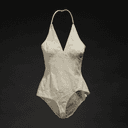
Hepburn swam every morning in Long Island Sound in front of her home in Fenwick, in all weather and all seasons. Her daily swim was a central ritual of her personal discipline and her longevity.
School Curriculum
Vocabulary & Tags
Key Vocabulary
Tags
Daily Life
Morning
Hepburn rose at dawn and began each day with a swim in Long Island Sound, regardless of the season or weather. This daily athletic discipline, inherited from her upbringing, defined her entire life. She would then have a simple breakfast before getting to work or rehearsing her roles.
Afternoon
Afternoons were devoted to rehearsals, filming, or, when not working, to tennis — another long-standing sporting passion. Hepburn was known for her absolute concentration on set, memorizing her lines with remarkable precision. She avoided Hollywood social circles and preferred outdoor activities to studio life.
Evening
Hepburn's evenings were generally quiet: she entertained rarely and shunned the grand Hollywood parties she considered superficial. During her long years with Spencer Tracy, her evenings were often spent with him in private. She read widely, with a keen interest in literature, classical theater, and philosophy.
Food
Hepburn followed a simple, healthy diet shaped by her parents' no-frills upbringing. She favored vegetables, fruit, and plain cooking, in keeping with her active lifestyle and distrust of excess. She was not known for the lavish dinners typical of Hollywood circles.
Clothing
Hepburn wore cotton or flannel trousers as everyday attire, at a time when such clothing was considered scandalous for a woman. She rejected heavy makeup and the elaborate outfits imposed by the movie-star image, preferring a restrained, functional elegance. Her personal style became in itself a statement of female independence.
Housing
Hepburn divided her time between the family home at Fenwick (Connecticut) — a true refuge where she had grown up and where she died — and residences in Hollywood and New York during working periods. The Fenwick house, facing the sea, embodied her values: simplicity, closeness to nature, and distance from Hollywood glamour.
Historical Timeline
Period Vocabulary
Liens externes & ressources
Références
Œuvres
Gloire et Beauté (Morning Glory)
1933
La Femme de l'année (Woman of the Year)
1942
Le Lion en hiver (The Lion in Winter)
1968
La Maison du lac (On Golden Pond)
1981