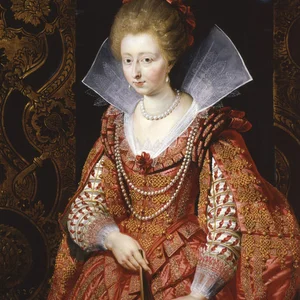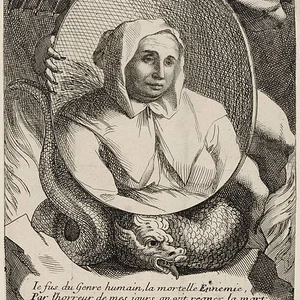

Poisoner, fortune-teller, and abortionist in 17th-century Paris, Catherine Deshayes was the central figure of the Affair of the Poisons (1679–1682). Supplying poisons, love potions, and black masses to an aristocratic clientele, she was burned alive at the Place de Grève in 1680.
La Voisin(1640 — 1680)
Catherine Deshayes
royaume de France
9 min read
Frequently asked questions
Key Facts
- Born around 1640, Catherine Deshayes worked as a midwife and fortune-teller in Paris from the 1660s onward.
- She supplied poisons and love potions to an aristocratic clientele, including several members of Louis XIV's court.
- In 1679, the Affair of the Poisons erupted; Louis XIV established a special tribunal known as the Chambre ardente to try the suspects.
- Arrested in March 1679, she denounced many noble names under torture, including Madame de Montespan.
- Sentenced to death, she was burned alive at the Place de Grève in Paris on February 22, 1680.
Works & Achievements
La Voisin spent nearly twenty years building a clandestine supply network for poisons made from arsenic and toxic plants. This network served a clientele ranging from jealous bourgeois women to high-ranking aristocrats eager to eliminate a husband or a rival.
Her official trade as a fortune-teller and card reader served as a legal front to attract and retain wealthy clients. This double life allowed her to prosper for years before La Reynie's investigation dismantled her network.
La Voisin orchestrated sacrilegious ceremonies in her garden and in secret locations, in collaboration with defrocked priests including Abbé Guibourg. These black masses were the most spectacular and most incriminating aspect of her activities, directly implicating illustrious names from the royal court.
Known by the euphemism 'angel-maker,' La Voisin performed clandestine abortions for women of all social classes. This activity, criminally prosecuted under the Ancien Régime, reveals the social reality of a world in which women had no legal recourse.
Anecdotes
La Voisin received her clients in a lavish house on the rue Beauregard in Paris, where she would appear dressed in a ceremonial robe embroidered with golden eagles, which she wore during black masses. This theatrical staging impressed a clientele ranging from bourgeois women to great ladies of the court of Versailles.
Among her most illustrious clients was the Marquise de Montespan, Louis XIV's favorite. According to confessions gathered during the investigation, she allegedly ordered love potions intended to maintain the king's attachment, and even black masses celebrated over her own naked body used as an altar.
Arrested in March 1679 as she left Sunday mass, Catherine Deshayes was taken to the Bastille and then to the Château de Vincennes. She long refused to implicate her accomplices despite torture sessions under both ordinary and extraordinary questioning, displaying a composure that astonished her interrogators.
On February 22, 1680, La Voisin was burned alive at the Place de Grève before an enormous crowd. Witnesses reported that she hurled insults at the spectators, pushed away the crucifix presented to her, and struggled until the very end, refusing all public contrition — a scandalous attitude that fueled chronicles for decades.
La Voisin also performed clandestine abortions, an activity her contemporaries referred to as being a 'maker of angels.' According to the clerk of the Chambre ardente, she herself claimed to have 'destroyed' more than two thousand children over the course of her career — a figure likely exaggerated, but revealing of the scale of her network.
Primary Sources
The said Deshayes confessed to having supplied powders and poisons to various persons of quality, and to having arranged for masses to be celebrated for sacrilegious purposes, all in exchange for money.
This woman is of an extraordinary character in her boldness and obstinacy. She names few accomplices and appears to fear neither death nor torture.
On the twenty-second day of February 1680, Catherine Deshayes, known as La Voisin, convicted of crimes of sorcery, poisoning, and sacrilege, was burned alive at the Place de Grève, having refused to the last the consolations of religion.
They say that La Voisin drank shamelessly on the day before her execution; she sang songs. This morning she was given the retentum — that is, she was strangled before being thrown into the fire.
The list of persons implicated in La Voisin's practices includes names from the most illustrious families of the kingdom, which made the investigation extremely delicate and compelled the king to order secrecy over several depositions.
Key Places
It was in this house in the Saint-Denis district that Catherine Deshayes received her clients and prepared her poisons and love potions. She also held secret ceremonies in the garden there, according to confessions gathered during the investigation.
After her arrest in March 1679, La Voisin was first imprisoned at the Château de Vincennes, where the initial interrogations conducted by Nicolas de La Reynie took place. This royal detention facility held many of the accused in the Affair of the Poisons.
La Voisin was subsequently transferred to the Bastille, the royal fortress-prison, where interrogations and sessions of torture continued. It was there that she made her most important revelations about her accomplices and clients.
Now known as the Place de l'Hôtel-de-Ville, the Place de Grève was the traditional site of public executions in Paris. It was here that Catherine Deshayes was burned at the stake on February 22, 1680, before a large crowd described by chroniclers of the time.
The Chambre ardente, a special tribunal established by Louis XIV to investigate the Affair of the Poisons, sat at the Paris Arsenal. It was before this court that La Voisin and dozens of her accomplices were tried between 1679 and 1682.
Typical Objects

La Voisin kept preparations based on arsenic, hemlock, and aconite in small glass flasks in her workshop. These 'inheritance powders' earned their nickname because they allowed heirs to quickly come into the possessions of an inconvenient relative.

Catherine Deshayes wore a sumptuous dark velvet robe embroidered with golden eagles and flames during her rituals — symbols of both power and magic. This ceremonial garment helped establish her authority over her impressionable aristocratic clientele.

Like many fortune-tellers of her era, La Voisin used books of ritual magic compiling formulas, ointment recipes, and incantations. These grimoires circulated clandestinely in the occultist circles of 17th-century Paris.

La Voisin officially practiced cartomancy — reading the future in cards — to attract and retain her clientele. This marginally tolerated practice served as a cover for her far more illicit activities in selling poisons.

In the back room of her house, La Voisin had a furnace for preparing her decoctions and powders. According to official records, investigators found charred remains there whose exact nature fueled the darkest rumors.

Among the seized items were desecrated liturgical objects, including inverted crucifixes used in the sacrilegious ceremonies La Voisin organized with defrocked priests. These acts of profanation were among the most serious charges brought against her.
School Curriculum
Vocabulary & Tags
Key Vocabulary
Daily Life
Morning
La Voisin began her days with an air of bourgeois respectability: she attended morning Mass, carefully maintaining her reputation as a pious woman in her neighborhood. This religious façade stood in stark contrast to her nocturnal activities and provided her with a valuable social cover.
Afternoon
Her afternoons were devoted to receiving clients in her official fortune-telling shop, where she read cards and practiced palmistry. In the back room, she prepared her concoctions — love potions, ointments, and powders — according to orders placed by her clientele.
Evening
La Voisin's evenings and nights were the heart of her most clandestine activities: meetings with defrocked priests such as Abbé Guibourg, the preparation and sale of poisons, and the organization of ritual ceremonies in her garden. Her husband, a jeweler who asked few questions, turned a blind eye to these activities, which generously funded their lifestyle.
Food
Like a prosperous Parisian bourgeoise of the 17th century, La Voisin ate meat, white bread, and drank table wine. On her last evening before her execution, Madame de Sévigné reports that she 'drank heavily' and sang songs, refusing any form of repentance.
Clothing
La Voisin dressed as a prosperous bourgeoise by day, wearing good-quality wool gowns. For her ritual ceremonies, she donned a magnificent ceremonial robe embroidered with golden eagles and esoteric motifs — a garment that made a deep impression on her aristocratic clientele.
Housing
She lived in a well-appointed house on the rue Beauregard in the Saint-Denis district, which included a shop, comfortable living quarters, and a garden. According to the confessions of her accomplices, this garden was used for nocturnal ceremonies and, according to the darkest accusations, for the burial of human remains.
Historical Timeline
Period Vocabulary
Visual Style
Style baroque sombre inspiré du clair-obscur caravagesque : ombres profondes, lumière de chandelle, velours brodés et atmosphère d'officine secrète dans le Paris nocturne du Grand Siècle.
Sound Ambience
Ambiance nocturne du Paris du XVIIe siècle : ruelles sombres, cloches lointaines, murmures feutrés d'une officine secrète et crépitement d'un feu sous un alambic.
Liens externes & ressources
Références
Œuvres
Réseau de vente de poisons et de 'poudres de succession'
Années 1660-1679
Officine de devineresse et de cartomancienne
Années 1660-1679
Organisation de messes noires
Années 1670-1679
Pratique des avortements clandestins
Années 1660-1679