Kainang Bisaya (pre-colonial Visayan meal)
The 16th-century Visayan meal revolves around *kanon* (steamed or boiled rice), accompanied by one or more *ulam* (side dishes — fish, meat, vegetables). *Sawsawan* (dipping sauce or condiment, often based on coconut vinegar) completes each bite. Feasts and rituals add roast pork and *tuba* (palm wine). There is no sequential service: everything is placed together on banana leaves or in earthenware pots, and everyone eats with their hands.
Signature : Sukà (coconut vinegar)
*Sukà*, naturally fermented vinegar from coconut sap, is the foundational acid of Visayan cuisine. It is used for cooking (*kinilaw*), as a condiment (*sawsawan*), and for preservation. Pigafetta mentioned vinegar drawn from coconut trees during his stay in Cebu in 1521.
Lapu-Lapu at the table
1491 — 1542
4 period recipes
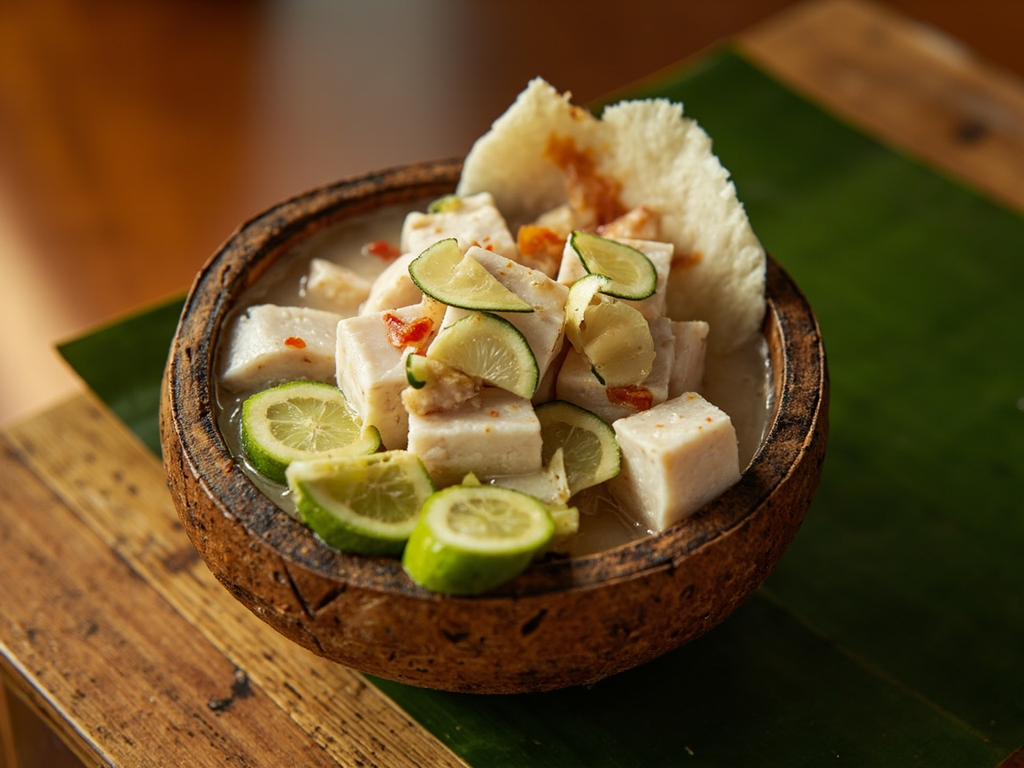 Everyday
Kinilaw na Isda
Ulam (rice accompaniment)
🍋 🧂 🍄· 25 min
View the recipe
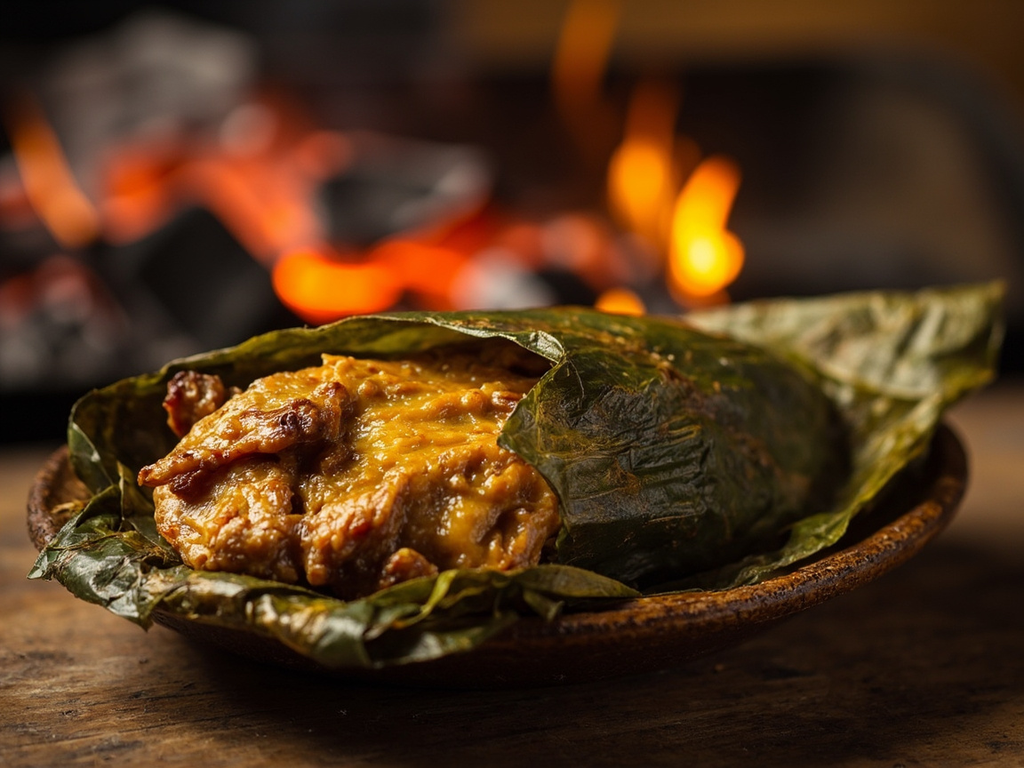 Festive
Sinugba na Baboy sa Dahon
Ulam panginaon (feast dish)
🧂 🍄· 5 h (including 4 h marinating)
View the recipe
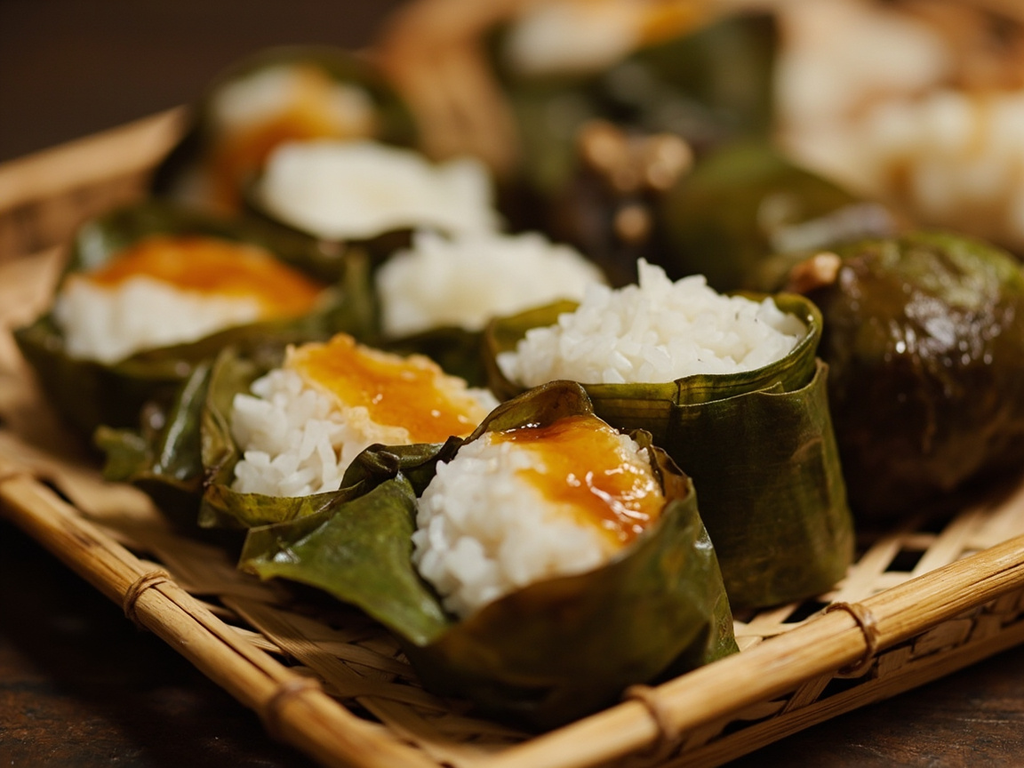 Travel
Suman sa Gata
Kakanin (rice cake, snack or offering)
🍯· 1 h 30 (plus soaking)
View the recipe
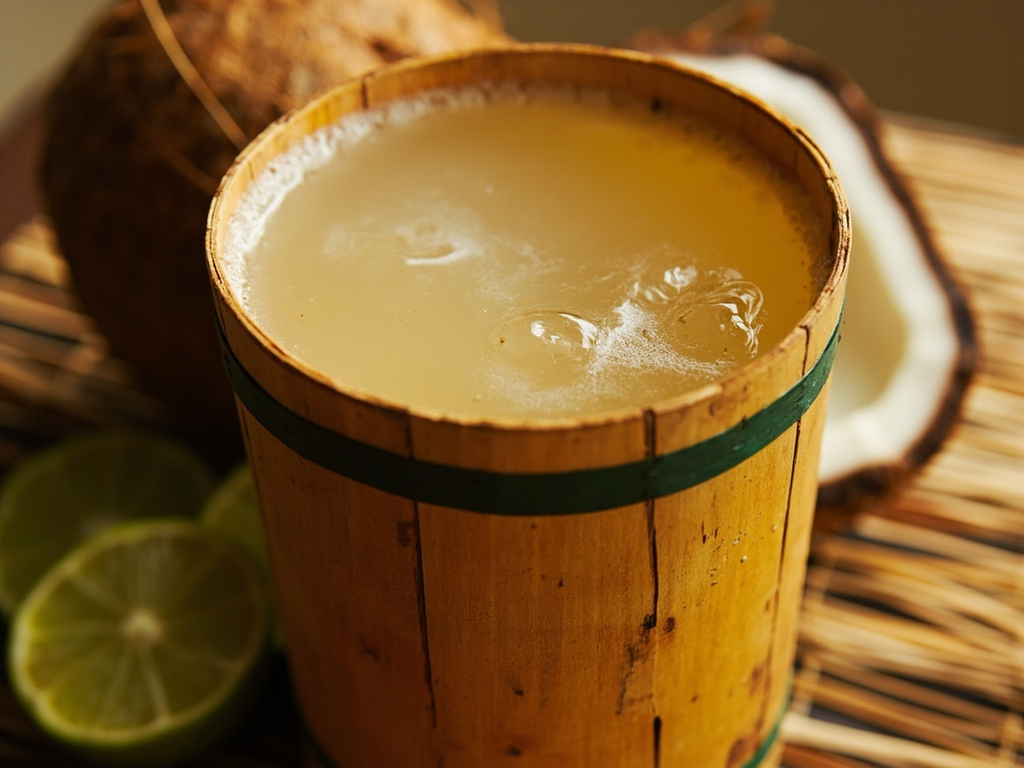 Drink
DrinkTuba — Fresh Palm Wine
Inumin (beverage)
🫙 🍯· 15 min (+ 12 to 24 h fermentation)
View the recipe