 flip
flipSinugba na Baboy sa Dahon
Sinugba na Baboy sa Dahon
Why this dish? Pigafetta describes a great banquet offered by Rajah Humabon in Cebu in April 1521, a few days before the Battle of Mactan, with abundant roast pork, rice and palm wine. Lapu-Lapu, the rival *datu*, held similar feasts for his warriors to seal alliances and prepare for combat.
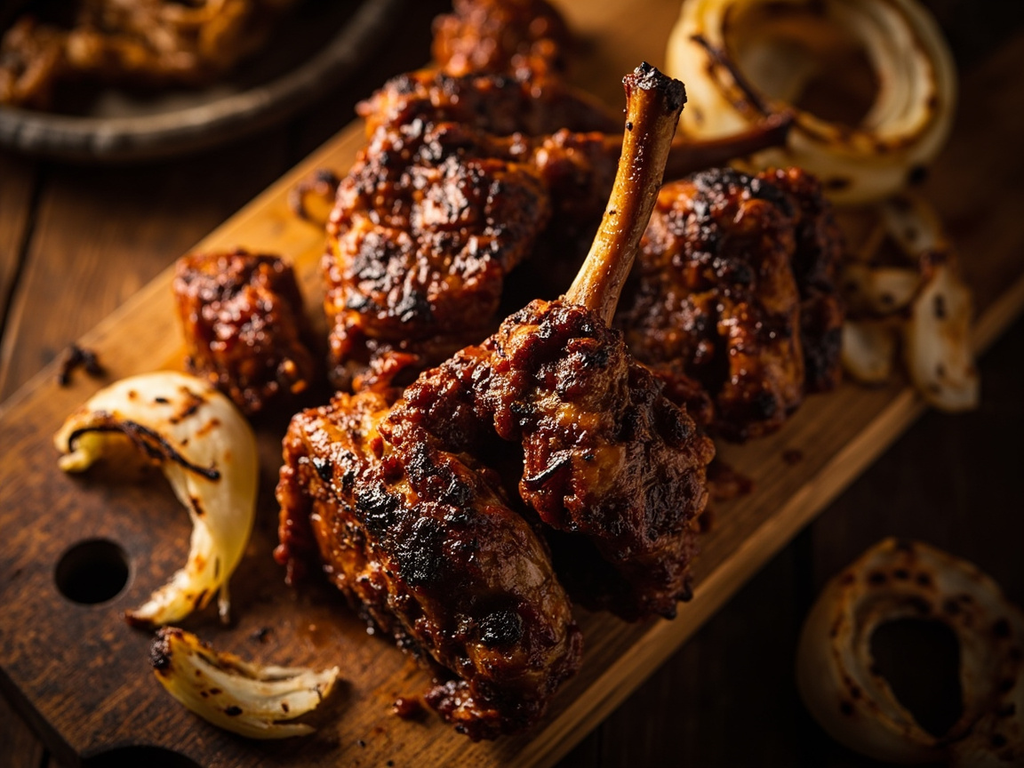
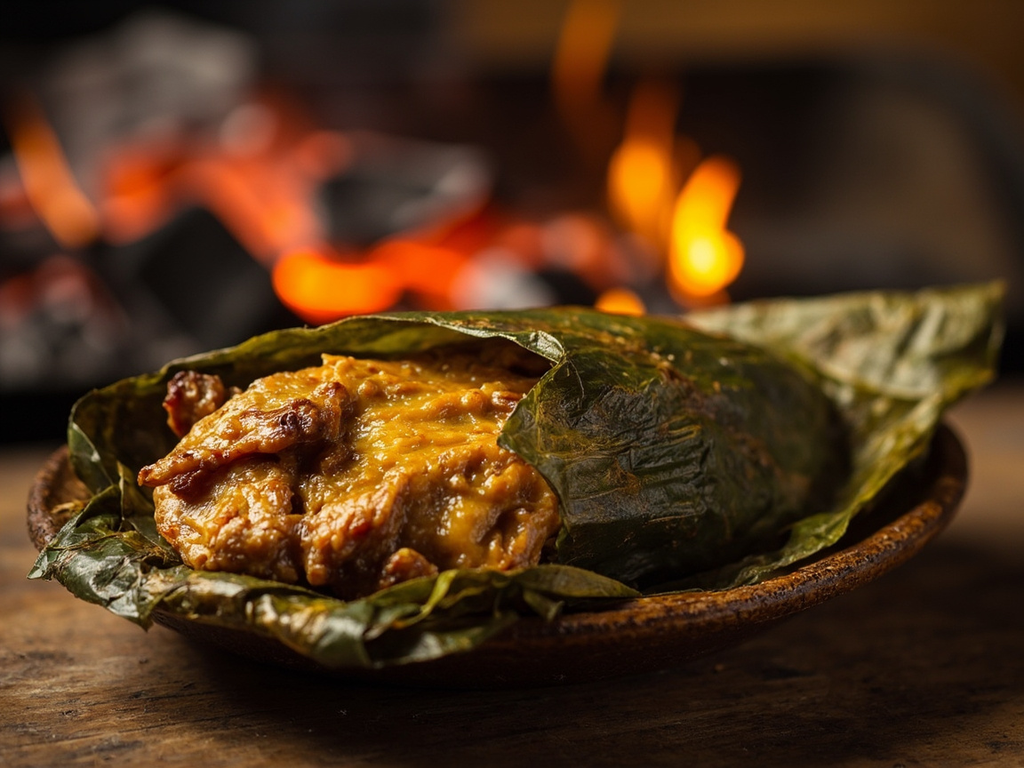
Pork marinated in coconut vinegar and ginger, wrapped in banana leaves and slow-roasted over coconut wood embers. This festive dish preceded great occasions — alliances between *datus*, battle preparations, ritual ceremonies.
When I summon my warriors for the war council, the meat must be worthy of their courage. My women marinate the *baboy* in *sukà* and *layà* all night, then wrap it in the broad leaves of the *saging* and lay it on the embers of *niyog* wood. The fat melts, the smoke perfumes — my *timawa* know then that battle approaches. This is how we ate on the eve of Mactan, when I told my men that the armored strangers would not leave our island alive.
- •Baboy (pork, shoulder or belly) — A fine piece to feed the warriors (Base)
- •Sukà (coconut vinegar) — Generous, to cover the meat (Marinade, tenderizer)
- •Layà (ginger) — Several pieces, crushed (Aroma and warmth)
- •Luyang-dilaw (fresh turmeric) — A few pieces (Golden color, slight bitterness)
- •Bawang (wild garlic) — Several cloves, crushed (Aroma)
- •Sea salt — To taste (Seasoning)
- •Banana leaves — Several large leaves (Cooking wrap)
- •Lemongrass — A few stalks (Aroma)
Sinugba na Baboy sa Dahon
Pork marinated in coconut vinegar and ginger, wrapped in banana leaves and slow-roasted over coconut wood embers. This festive dish preceded great occasions — alliances between *datus*, battle preparations, ritual ceremonies.
Why this dish? Pigafetta describes a great banquet offered by Rajah Humabon in Cebu in April 1521, a few days before the Battle of Mactan, with abundant roast pork, rice and palm wine. Lapu-Lapu, the rival *datu*, held similar feasts for his warriors to seal alliances and prepare for combat.
When I summon my warriors for the war council, the meat must be worthy of their courage. My women marinate the *baboy* in *sukà* and *layà* all night, then wrap it in the broad leaves of the *saging* and lay it on the embers of *niyog* wood. The fat melts, the smoke perfumes — my *timawa* know then that battle approaches. This is how we ate on the eve of Mactan, when I told my men that the armored strangers would not leave our island alive.
Ingredients (period version)
- Baboy (pork, shoulder or belly) — A fine piece to feed the warriors (Base)
- Sukà (coconut vinegar) — Generous, to cover the meat (Marinade, tenderizer)
- Layà (ginger) — Several pieces, crushed (Aroma and warmth)
- Luyang-dilaw (fresh turmeric) — A few pieces (Golden color, slight bitterness)
- Bawang (wild garlic) — Several cloves, crushed (Aroma)
- Sea salt — To taste (Seasoning)
- Banana leaves — Several large leaves (Cooking wrap)
- Lemongrass — A few stalks (Aroma)
Ingredients
- Boneless pork shoulder — 1 kg, in thick pieces (Base)
- Coconut vinegar (or rice vinegar) — 150 ml (Marinade)
- Fresh ginger — 50 g, crushed (Aroma and warmth)
- Fresh turmeric (or 1 tsp powder) — 20 g (Color, bitterness)
- Garlic — 6 cloves, crushed (Aroma)
- Lemongrass — 2 stalks, crushed (Aroma)
- Salt — 2 tsp (Seasoning)
- Banana leaves (or aluminum foil as last resort) — 4 large leaves (Cooking wrap)
Method
- Mix the coconut vinegar, crushed ginger, turmeric, garlic, lemongrass and salt in a large bowl. Add the pork pieces and coat well. Cover and marinate in a cool place for at least 4 hours (ideally overnight).
- Pass the banana leaves over a flame for a few seconds to soften (they should not burn, just become pliable and shiny).
- Divide the marinated pork pieces among the banana leaves. Fold to form tightly closed packets, tie with kitchen twine.
- Cook on a barbecue over indirect coals (or in an oven at 160°C) for 2 hours, turning the packets halfway through.
- Open the packets — the meat should be tender and golden from the turmeric. Serve in the opened leaf, with rice and a *sawsawan* of vinegar and garlic.
How it was made : Pigafetta describes in detail a banquet in Cebu on April 15, 1521: 'They brought us roast pork and palm wine in jars.' Cooking in banana leaves over embers was the standard technique for large cuts of meat in pre-colonial Philippines, pork being the prestige animal reserved for feasts and offerings to the *anito* (spirits).
The contemporary twist : Serve the banana leaf packets directly on the table as a sharing dish, each guest tearing open their portion — faithful to the spirit of *kamayan* (eating together with hands).
Sources : Antonio Pigafetta, Primo Viaggio Intorno al Globo (1525) — description of the Cebu banquet, April 1521 · William Henry Scott, Barangay: Sixteenth-Century Philippine Culture and Society (1994) — Visayan food and pig farming · Felice Prudente Sta. Maria, The Governor-General's Kitchen: Philippine Culinary Vignettes and Period Recipes (2006)
Lapu-Lapu · Charactorium