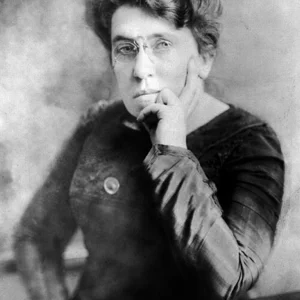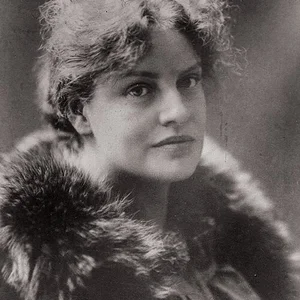

Lou Andreas-Salomé (1861-1937) was a German-Russian writer and psychoanalyst, a major intellectual figure of the late 19th century. A close friend of Nietzsche and Rilke, she was one of the first women to practice psychoanalysis in Europe.
Lou Andreas-Salomé(1861 — 1937)
Lou Andreas-Salomé
Reich allemand
8 min read
Frequently asked questions
Famous Quotes
« Life itself is my religion.»
« To love is two solitudes that protect, define, and greet each other.»
Key Facts
- Born on February 12, 1861, in Saint Petersburg into a prominent Russian family
- In 1882, met Friedrich Nietzsche and Paul Rée in Rome; Nietzsche proposed marriage, which she declined
- Married orientalist Friedrich Carl Andreas in 1887, though the marriage was never consummated
- Entered into a deep relationship with poet Rainer Maria Rilke beginning in 1897
- Became a psychoanalyst after meeting Sigmund Freud in 1911; died on February 5, 1937, in Göttingen
Works & Achievements
The first serious analytical essay devoted to Nietzsche, published during his lifetime. Remarkable for its psychological insight, it established Lou's reputation as a major philosophical critic.
A semi-autobiographical novel exploring a young woman's loss of faith and spiritual quest. It prefigures the central themes of her work: freedom, love, and female identity.
A psychoanalytic essay on eroticism as a creative and spiritual force. Lou develops a radically emancipated vision of female sexuality, in dialogue with Freud.
An intimate and intellectual portrait of the poet with whom she shared a formative relationship. The book reflects her gift for capturing the inner lives of those around her.
An analytical and personal tribute to Freud, in which Lou develops her own theoretical contributions to psychoanalysis, particularly on narcissism and femininity.
Intellectual and spiritual memoirs written at the end of her life. An essential work for understanding her remarkable journey and her thinking on love, creativity, and identity.
Anecdotes
In 1882, Friedrich Nietzsche proposed to Lou Andreas-Salomé twice, through his friend Paul Rée. She flatly refused, preferring a purely intellectual friendship. Though wounded, Nietzsche drew inspiration from her to create the character of Zarathustra and dedicated to her several reflections on the idea of the free woman.
In Saint Petersburg, the young pastor Hendrik Gillot, who was giving her philosophy lessons, fell in love with her and wanted to divorce his wife to marry her. Lou, then 17 years old, refused with the same firmness she would always show toward men who sought to possess her, and left Russia to study freely in Switzerland.
Lou Andreas-Salomé met the young poet Rainer Maria Rilke in 1897; she was 36, he was 21. Their relationship lasted several years, and she profoundly reshaped his poetic identity — she even asked him to change his first name from René to Rainer to assert a stronger, more virile creative presence. She remained his spiritual guide until the end of his life.
During her analysis with Sigmund Freud in Vienna in 1911–1912, Lou Andreas-Salomé impressed the master so deeply that he considered her one of his most brilliant intellectual partners. She went on to practice psychoanalysis herself, corresponding regularly with Freud for twenty-five years. Upon her death, he wrote that she was 'the greatest woman he had ever known.'
Despite her declining health under the Nazi regime, Lou Andreas-Salomé refused to leave Germany. The Gestapo raided her home in Göttingen in 1933 to seize her psychoanalytic writings, which had been condemned as 'Jewish science.' She died in 1937, shortly before the complete destruction of the intellectual legacy she had helped to build.
Primary Sources
I have never been able to separate thought from lived experience; for me, to philosophize was to live, and to live was to philosophize. That is why the people who crossed my path were not objects of study, but companions in a shared adventure of the mind.
We are agreed on what we seek and what we want — a free life, a thought unencumbered. But the paths we take to get there are, I fear, fundamentally different.
Love is not possession: it is a recognition of the other as a complete and separate being. Any attempt at total fusion betrays not love, but the fear of solitude.
What strikes me about analytic treatment is that the patient does not heal by forgetting, but by remembering differently — by giving suffering a meaning that transforms it without erasing it.
Nietzsche carries within him a tearing contradiction: he preaches Dionysian strength and joy, yet he is a man who suffers from his own depth. His work is the splendid mask of an inner wound.
Key Places
Lou's birthplace, a cosmopolitan imperial capital where she grew up in a cultured family. Her Russian-German identity and early intellectual openness took root here.
Lou studied philosophy and theology here at one of the first universities in Europe to admit women. It was here that she forged her intellectual independence.
The site of her decisive encounter with Nietzsche and Paul Rée in 1882, in the salon of Countess von Meysenbug. This Roman stay launched Lou into the circle of Europe's greatest minds.
The city where Lou settled permanently after 1903, following her husband, a university professor. She practiced as a psychoanalyst there and wrote her major works until her death.
The world capital of Freudian psychoanalysis, where Lou stayed in 1911–1912 to train under Freud. She formed a lasting intellectual friendship there with the father of psychoanalysis.
Typical Objects

Lou maintained an intense correspondence with hundreds of European intellectuals. Her notebooks and letters were her daily working tools, supporting a way of thinking that was always in dialogue.

In her Göttingen practice, the Freudian couch was the central instrument of her psychoanalytic work. It symbolized her dual identity: woman of letters and practitioner of the unconscious.

The famous 1882 photograph in which Lou holds a whip over Nietzsche and Rée harnessed to a cart has become an icon of female intellectual freedom in the Belle Époque.

Lou read the great Russian novelists in the original language; this Slavic culture nourished her vision of the human soul and her analytical practice, grounded in deep empathy.

A prolific author of essays, novels, and correspondence, Lou wrote by hand every day. For her, writing was inseparable from thought and lived experience.

Inherited from her St. Petersburg childhood, Lou kept a samovar in each of her successive homes. Over Russian tea, she welcomed poets, philosophers, and analysands in a warm, convivial atmosphere.
School Curriculum
Vocabulary & Tags
Key Vocabulary
Daily Life
Morning
Lou woke early and devoted her mornings to writing, alone in her study in Göttingen. She would draft her essays and correspondence before visits and analytic sessions took over the rest of the day. This solitary morning time was sacred to her.
Afternoon
Afternoons were dedicated to her psychoanalytic patients, whom she received in her apartment. She practiced a deeply attentive form of listening, shaped by Freud but colored by her own literary sensibility and Russian spiritual depth. Between sessions, she read voraciously in German, French, and Russian.
Evening
Evenings were often lively gatherings: Lou would host intellectual friends, poets, and philosophers over tea served from her Russian samovar. She loved long conversations that stretched late into the night, and never shied away from defending her ideas with wit and energy.
Food
Lou ate simply and gave little thought to culinary refinement. She enjoyed hearty German home cooking — dark bread, cheeses, soups — along with strong, sweet Russian tea, a legacy of her Petersburg childhood.
Clothing
Lou dressed modestly but with dignity, wearing the long high-collared dresses typical of the educated bourgeoisie of her era. She paid little attention to fashion, preferring practicality over ornamentation — itself a quiet gesture of feminine independence.
Housing
Lou spent most of her adult life in Göttingen, in a bourgeois apartment lined floor to ceiling with books. The space served at once as study, consulting room, and literary salon, a reflection of a life in which thought and living were one and the same.
Historical Timeline
Period Vocabulary
Visual Style
Esthétique Jugendstil et symboliste : tons sépia et ambrés, bibliothèques sombres, lumière tamisée, élégance intellectuelle de la Belle Époque germano-russe.
Sound Ambience
Atmosphère feutrée d'un salon intellectuel de la Belle Époque : plume, samovar, pluie sur les fenêtres et murmures philosophiques en plusieurs langues.
Liens externes & ressources
Références
Œuvres
Friedrich Nietzsche in seinen Werken
1894
Im Kampf um Gott (Dans la lutte pour Dieu)
1885
Die Erotik
1910
Rainer Maria Rilke
1928
Mein Dank an Freud (Ma gratitude envers Freud)
1931
Lebensrückblick (Ma vie — Esquisse de quelques souvenirs)
1931