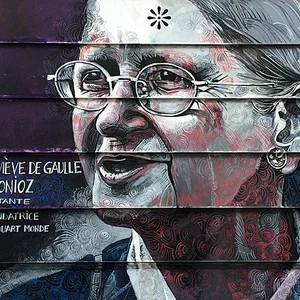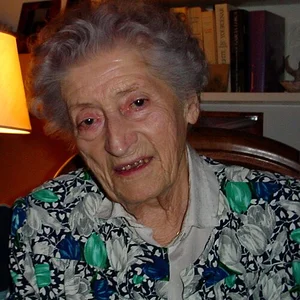

A French Resistance fighter, she organized the escape of her husband Raymond Aubrac from a Lyon prison on October 21, 1943. A committed history teacher, she became after the war a symbol of the Resistance and spent her entire life working to keep its memory alive.
Lucie Aubrac(1912 — 2007)
Lucie Aubrac
France
8 min read
Frequently asked questions
Key Facts
- June 29, 1912: born in Paris under the name Lucie Bernard
- 1940: joined the Resistance immediately after the armistice, becoming part of the Libération-Sud network
- October 21, 1943: organized the escape of her husband Raymond Aubrac from Montluc prison in Lyon
- 1944: traveled to London, then joined De Gaulle in Algiers; taught there until the Liberation
- March 14, 2007: died in Paris at the age of 94
Works & Achievements
Lucie Aubrac's memoirs recounting her involvement in the Resistance and her organization of Raymond's escape. It has become a key reference work for school curricula on World War II and has been translated into several languages.
An educational book written for young readers in which Lucie explains the stakes of the Resistance in plain terms, along with her deepest motivations and the republican values that guided her. Widely used in French schools.
A film adaptation of the Aubrac couple's story, starring Carole Bouquet and Daniel Auteuil in the lead roles. Lucie collaborated on the project, which helped bring her story to a wide general audience.
Throughout her life, Lucie Aubrac gave testimony in hundreds of schools, high schools, and universities. This mission of memory education, carried out on a voluntary basis for more than sixty years, stands as one of her most enduring commitments.
Lucie was actively engaged in institutional efforts to preserve and pass on the memory of the Resistance, supporting the creation of memorial sites and archives dedicated to that period.
Anecdotes
Lucie and Raymond Samuel chose the pseudonym “Aubrac,” borrowed from a volcanic plateau in the Massif Central, for their clandestine activities within the Libération-Sud network. This wartime alias would become their permanent civilian identity after the Liberation, to the point that their descendants still bear it today.
In October 1943, Raymond had been sentenced to death and was being held by the Gestapo in Lyon. Lucie, several months pregnant, obtained permission from the German authorities to marry him in a civil ceremony in prison in order to “legitimize” their unborn child. On October 21, as the convoy was being transferred to the ceremony, armed Resistance fighters attacked it and freed Raymond right in front of the German soldiers.
After the escape, the Gestapo put all of Lyon on alert to track down the couple. Lucie, Raymond, and their son Jean-Pierre had to flee clandestinely to Spain before making their way to London by plane. It was there that Lucie gave birth to their daughter Catherine in February 1944, just a few months after having orchestrated one of the most daring Resistance operations of the war.
A trained history and geography teacher, Lucie Aubrac never stopped sharing her knowledge. After the war, she returned to teaching at secondary school and devoted her retirement to bearing witness in hundreds of schools across France. She often said: “Memory is a living thing, not a monument.”
In 1987, at the war crimes trial of Klaus Barbie in Lyon, Lucie testified with tremendous moral strength. The defense attorney attempted to undermine her credibility, but her precise account and unshakeable composure impressed the court and contributed to the conviction of the former head of the Lyon Gestapo to life imprisonment.
Primary Sources
Lucie recounts how she convinced the German authorities to grant her a prison marriage: “I am pregnant. If my companion is shot before we are married, my child will be illegitimate. I want to marry him, even in prison.” This first-person account is one of the most detailed testimonies about the Lyon Resistance.
“We all knew we were risking our lives. But we had chosen. One does not undergo the Resistance — one chooses it.” This oral testimony, transcribed in the judicial archives, reflects the deeply voluntary view Lucie Aubrac held of resistance commitment.
“A resistance fighter is an ordinary person who makes an extraordinary choice in extraordinary circumstances. It is not a matter of innate heroism — it is a matter of values.” This educational work, aimed at young readers, is one of the most widely distributed in French schools.
“I accept this distinction only on behalf of all those who did not come back, and so that younger generations may know what freedom costs. To pass it on is the only way to do justice to the dead.”
Key Places
The unofficial capital of the French Resistance, Lyon was the scene of nearly all of Lucie Aubrac's clandestine activities within the Libération-Sud network. It was here that she organized Raymond's escape and where she herself was briefly arrested by the Gestapo.
Raymond Aubrac was imprisoned here by the Gestapo following his arrest at Caluire in June 1943. It was from this prison that Lucie engineered the escape operation by obtaining permission for a prison marriage, using her pregnancy as a pretext.
Lucie Aubrac's birthplace, where she was born Lucie Bernadette Bernard on June 29, 1912. She grew up here in a family of Burgundian winegrowers before going on to study history — studies that would profoundly shape her relationship with memory and the past.
After Raymond's escape and the Gestapo's pursuit of the family, Lucie and her family made their way to the British capital, seat of the Free French government. It was there that their daughter Catherine was born in February 1944, and where they took part in the governing bodies of the external Resistance.
This high volcanic plateau in the Massif Central gave the Samuel couple their wartime alias — they chose "Aubrac" as their clandestine pseudonym. The name became their permanent civil surname after the Liberation and remains forever linked to their legacy of resistance.
Typical Objects

Lucie always carried false documents under the name “Lucie Aubrac,” which allowed her to move freely through the occupied zone. Producing and distributing these papers was one of the essential activities of her clandestine network.

The bicycle was the primary mode of transportation for Lyon’s resistance fighters, allowing Lucie to carry messages and illegal materials without attracting attention. German checkpoints targeted motorized vehicles far more than cyclists.

Lucie helped write and distribute this mimeographed newspaper, the organ of the Libération-Sud network. These sheets passed from hand to hand and served as a tool of intellectual resistance against Nazi propaganda and Vichy-controlled media.

Clandestine tracts and newspapers were written and reproduced on typewriters hidden in apartments. Lucie helped type and copy these illegal texts, which were punishable by death if discovered.

Resistance members communicated through messages whose true meaning was concealed in innocuous language or partial ciphers. Lucie had to memorize or destroy most communications to eliminate any risk in the event of arrest or a search.

Lucie paid careful attention to her appearance so as to look like an ordinary schoolteacher rather than a suspect. The modest but respectable outfit of a proper teacher served as her daily camouflage against German soldiers, the Milice, and informants.
School Curriculum
Vocabulary & Tags
Key Vocabulary
Daily Life
Morning
Under the Occupation, Lucie rose early and checked clandestine news bulletins before preparing her lessons. As a teacher, she maintained a facade of normality while planning her resistance activities, hiding letters and documents among her school materials.
Afternoon
Her afternoons were often devoted to secret meetings of the Libération-Sud network, disguised as friendly visits or professional errands. She cycled through Lyon to carry leaflets and messages, avoiding checkpoints manned by the Gestapo and the Milice.
Evening
Evenings were reserved for the most sensitive contacts: relaying encrypted messages, sheltering resistance fighters passing through, and planning the next operations. The family often slept fully dressed, ready to flee at a moment's notice should they be denounced or caught in a night raid.
Food
Like all French people under the Occupation, Lucie endured food rationing: bread ration cards, scarce meat, and chicory-based ersatz coffee. Resistance members sometimes received help from sympathetic farmers who provided extra food in exchange for protection.
Clothing
Lucie paid close attention to her appearance, projecting the image of an ordinary middle-class teacher rather than a wanted suspect. She dressed plainly but respectably — a tailored jacket, coat, and hat — so that her clandestine movements were cloaked in the reassuring look of a respectable woman who attracts no notice.
Housing
The couple moved frequently to avoid being tracked down by the Gestapo. These makeshift Lyon flats sometimes concealed illegal materials — leaflets, forged papers, weapons — hidden behind furniture or in false-bottomed compartments, under the constant threat of a raid.
Historical Timeline
Period Vocabulary
Liens externes & ressources
Références
Œuvres
Ils partiront dans l'ivresse
1984
La Résistance expliquée à mes petits-enfants
2000
Mission mémorielle dans les établissements scolaires
1945-2007
Participation à la création du Mémorial de la France combattante, Paris
1960