 Flip the card
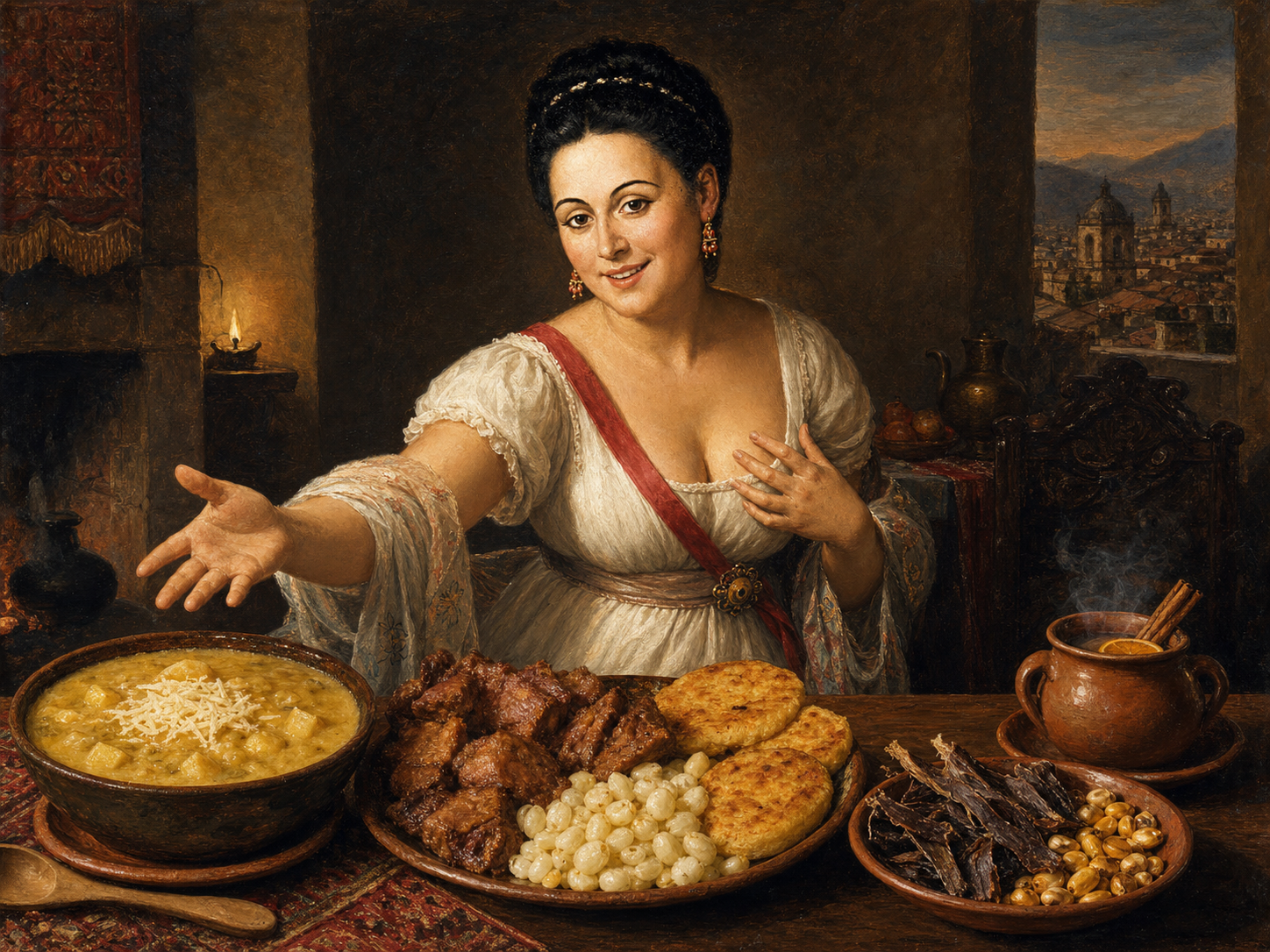
Manuela Sáenz at the table
1797 — 1856
On the menu
The Andean Criollo Table — from Broth to Sweet
In the Ecuadorian and Peruvian Andes of Manuela's time, a meal was not thought of as starter/main/dessert but as a succession that ALWAYS begins with a thick base soup (the sopa or locro, the nourishing heart of the day), followed by the segundo (a main course of braised meat accompanied by mote, potatoes, and ají), then a dulce (sweet) and a hot drink. On military campaign, this structure was reduced to the ración: dried meat, toasted grain, and fermented drink. It was this architecture — caldo, segundo, dulce, bebida — that paced her table in Quito as in her exile in Paita.
Signature : The Andean Potato and Ají
Domesticated in the Andes for millennia, the potato appears here in dozens of varieties and structures almost every dish; it is paired with ají (fresh Andean chili or sauce) and achiote (annatto) which give even the simplest broth its golden warmth. Drying, smoking, fermenting grain and meat: these high-altitude preservation techniques are the true signature of a mountain and wartime cuisine.
click to flip back
Manuela Sáenz at the table
1797 — 1856
5 period recipes
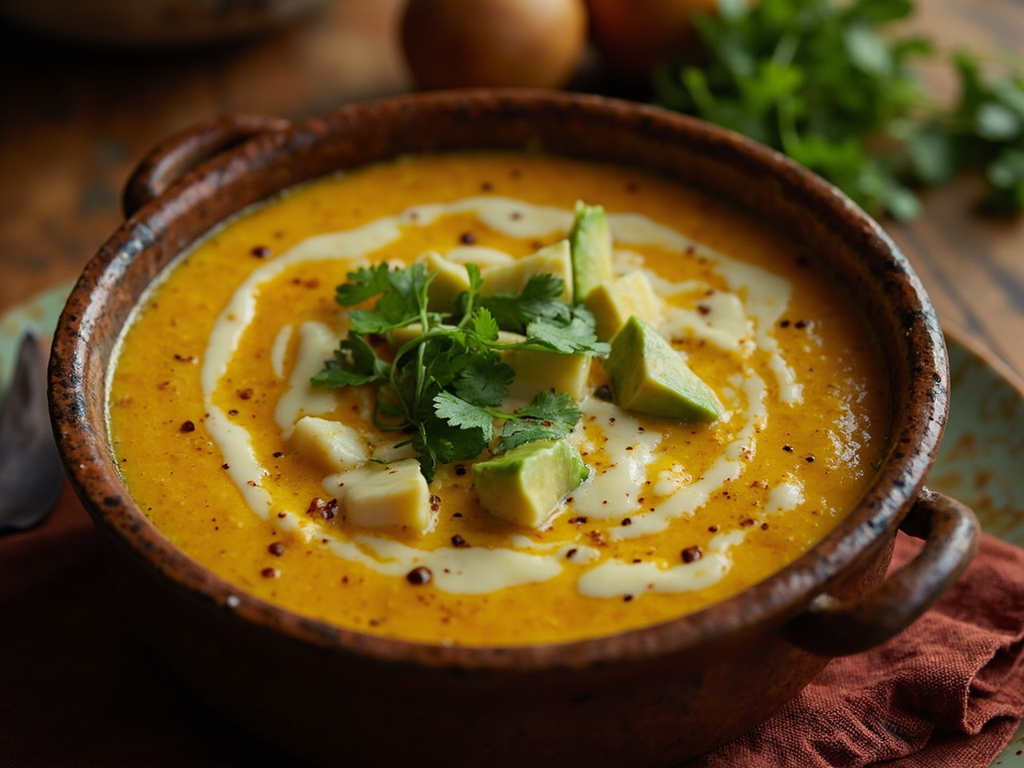 Everyday
Locro de papas
Sopa — the base soup that opens the meal
🧂 🍄· 45 min
View the recipe
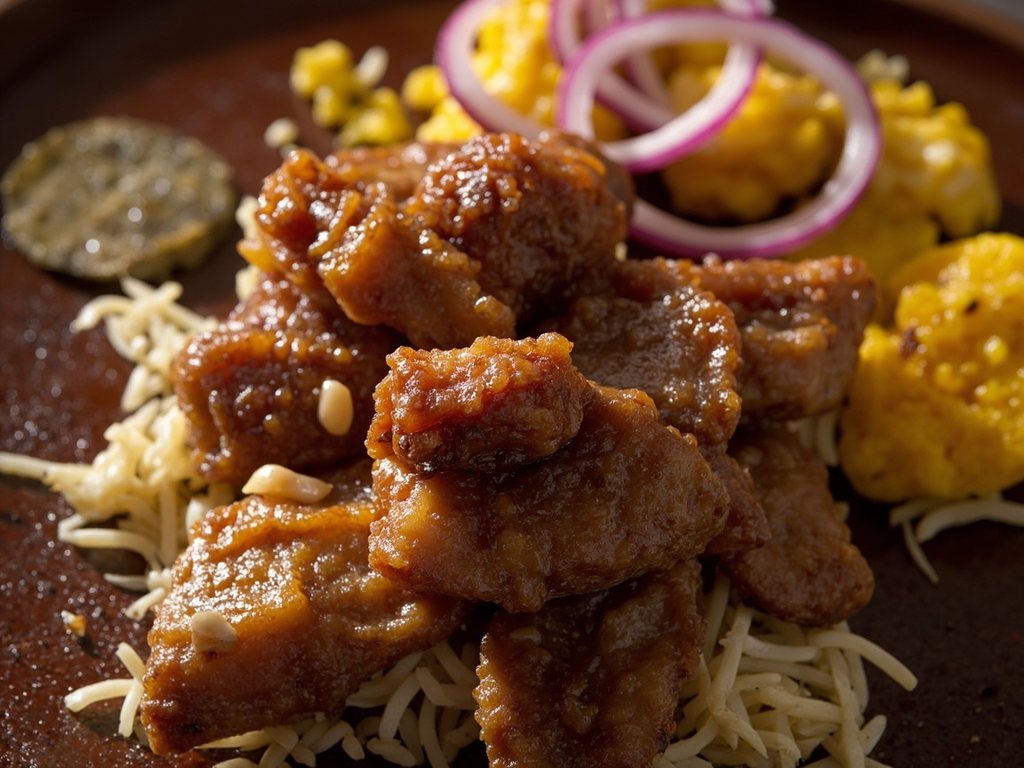 Festive
Fritada con mote y llapingachos
Segundo / main course — the hearty dish of festive meals
🧂 🍄 🌶️· 1 h 30
View the recipe
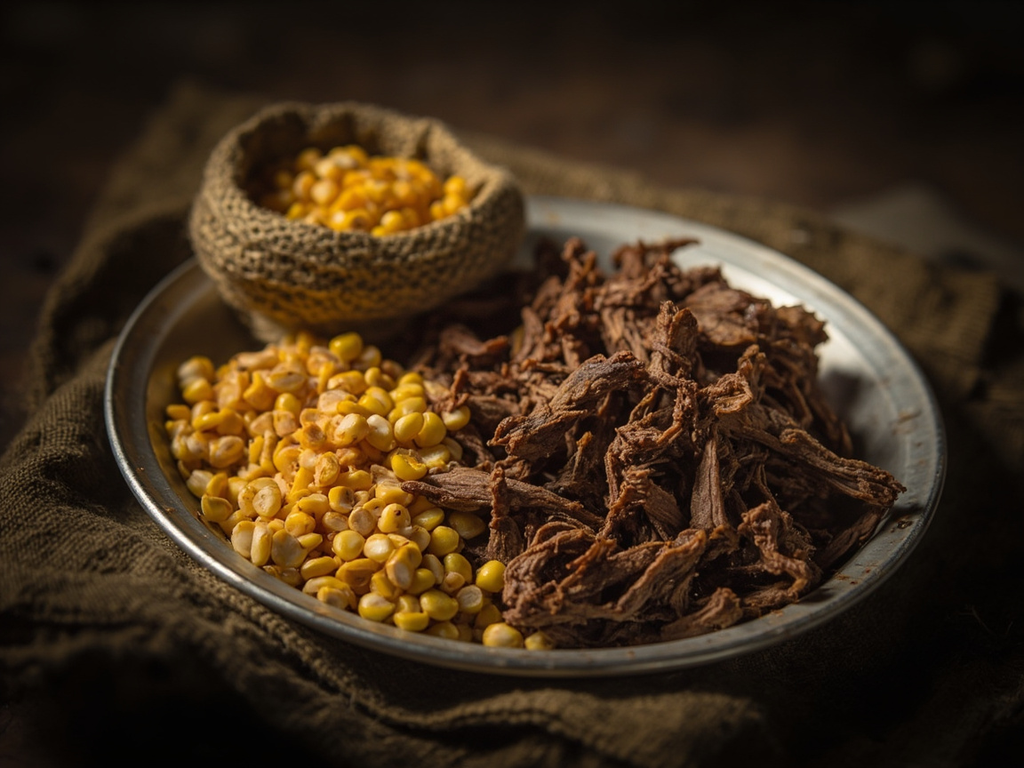 Travel
Campaign ration: charqui and tostado
Ración — the meager fare of camps and marches
🧂 🫙· 30 min (plus soaking)
View the recipe
 Drink
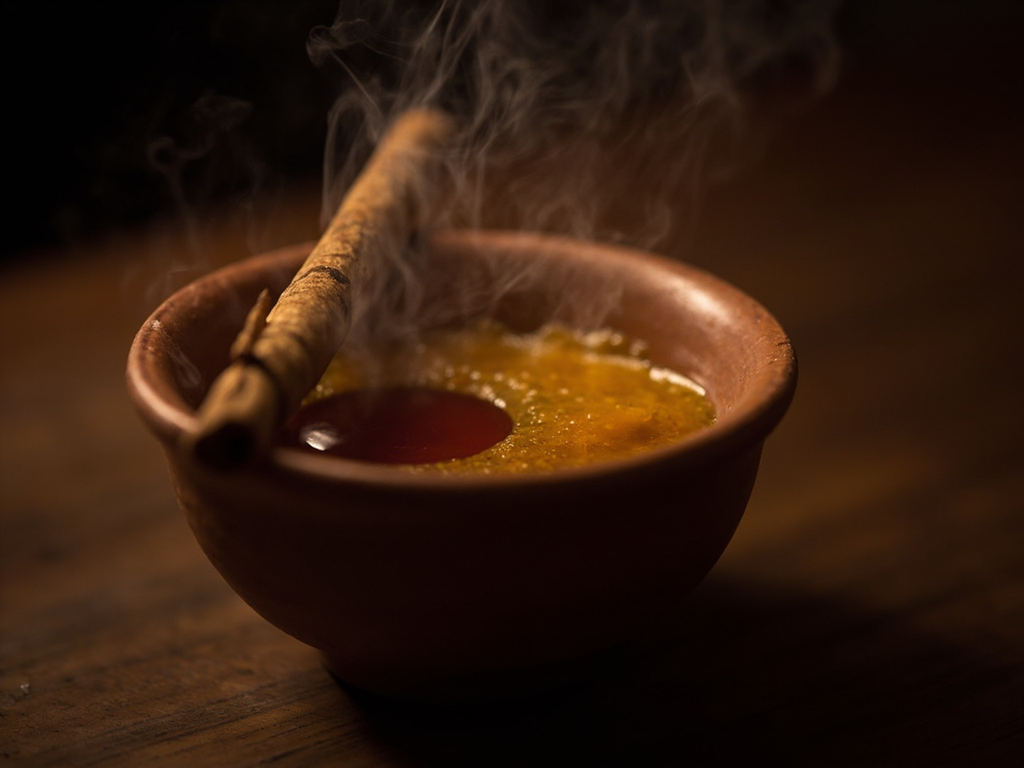
DrinkCanelazo for cold nights
Hot drink — the warming beverage of the evening vigil
🍯 🍋 🌶️· 20 min
View the recipe
 Street food
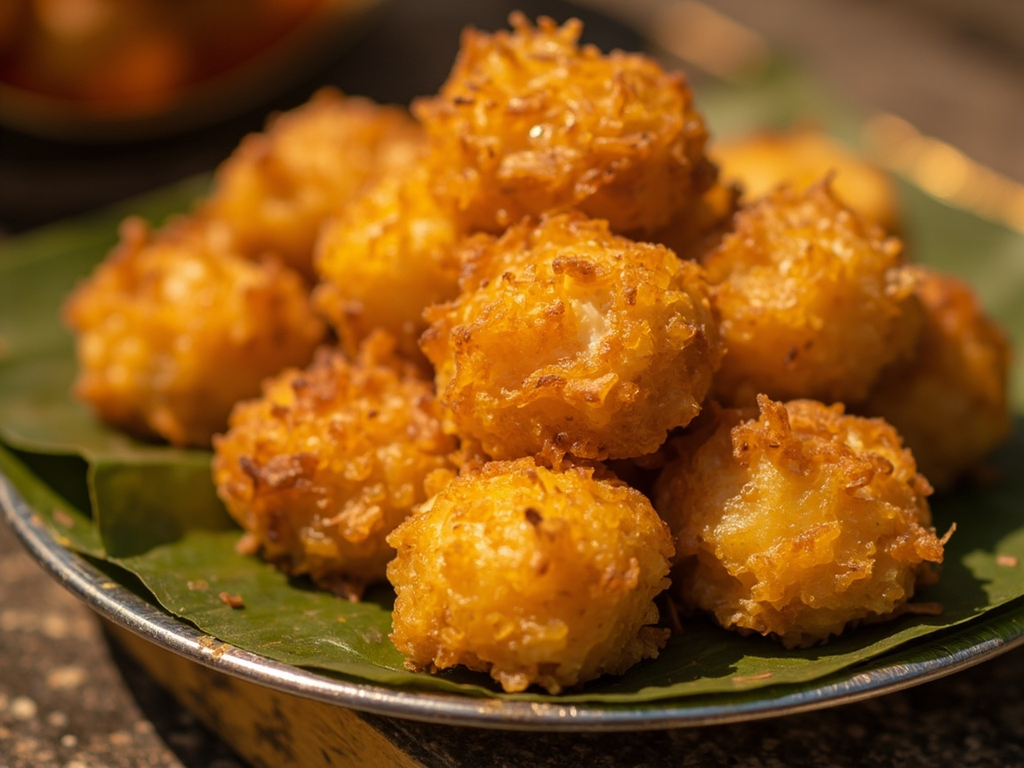
Paita sweets — cocadas of exile
Dulce — the end-of-meal sweet, here sold at a stall
🍯· 30 min
View the recipe