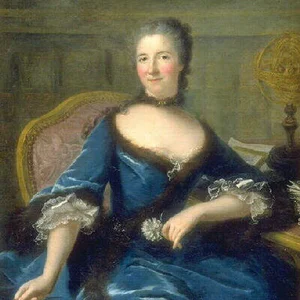

An 18th-century French physicist and mathematician, she translated and annotated Newton's Principia Mathematica, introducing Newtonian mechanics to France. Voltaire's companion and a central figure of the Enlightenment, she developed the concept of vis viva (kinetic energy).
Marquise du Châtelet
Gabrielle Émilie Le Tonnelier de Breteuil, marquise du Châtelet
8 min read
Frequently asked questions
Famous Quotes
« One must have ambition for things of the mind as for those of fortune.»
« I am in truth a singular woman.»
Key Facts
- 1706: Born in Paris into a high-ranking noble family
- 1733: Beginning of her relationship with Voltaire and move to the Château de Cirey, which becomes an intellectual center
- 1740: Publication of the Institutions de physique, a synthesis of Newton and Leibniz
- 1745–1749: Annotated translation of Newton's Principia Mathematica (published posthumously in 1759)
- 1749: Death at Lunéville at age 42, from complications following childbirth
Works & Achievements
A scientific paper submitted to the competition of the Royal Academy of Sciences, in which she experimentally analyzes heat and light. This text earned her her first official recognition in the scholarly world.
A physics treatise initially intended for her son's education, which became a reference work synthesizing Newtonian mechanics and Leibnizian natural philosophy, with a rigorous defense of the concept of vis viva (mv²).
A polemical text in which she rigorously defends the Leibnizian theory of vis viva against the criticisms of the secretary of the Academy of Sciences, demonstrating her full command of the scientific debates of her era.
A French translation of Newton's Principia Mathematica accompanied by an original analytical commentary. Published ten years after her death, it remains to this day the only authoritative French translation of this foundational work.
A personal philosophical essay in which she defends women's right to education and intellectual fulfillment, arguing for a profound reform of women's place in Enlightenment society.
Anecdotes
To gain access to the Café Gradot in Paris, a gathering place for scholars and mathematicians, Émilie du Châtelet once disguised herself as a man to circumvent the ban on women entering. Once recognized, she was nonetheless welcomed with respect by the intellectuals present, who knew her scientific worth.
Émilie du Châtelet slept very little — sometimes only two or three hours a night — and often worked until dawn. To stay awake during her long nights of study, she had developed the habit of plunging her hands into ice-cold water, a drastic method for maintaining her concentration on her complex calculations.
Passionate about card games, the marquise played at gaming tables in Parisian salons not out of idleness, but to fund her scientific work. Her winnings allowed her to buy books, optical and physics instruments, which were extremely expensive at the time.
Her annotated translation of Newton's *Principia Mathematica* stands as an intellectual monument: not content simply to translate the Latin into French, she added an analytical commentary of several hundred pages, explaining and updating the mathematical demonstrations. Published ten years after her death, this edition remains to this day the standard French reference for Newton's work.
Émilie du Châtelet died at forty-two in Lunéville in 1749, a few days after giving birth to a baby girl. Voltaire, who had shared her life for sixteen years, wrote in a heartbreaking letter: “I have not lost a mistress, I have lost half of myself, a soul for whom mine was made.”
Primary Sources
"The force of moving bodies is compounded of their mass and the square of their velocity." She expounds Leibniz's theory of vis viva, reconciling it with Newtonian mechanics.
A memoir submitted to the prize competition of the Royal Academy of Sciences in Paris, in which she experimentally analyses the nature of heat and light, challenging certain Cartesian theses.
"Newton demonstrated that all planets attract one another in direct proportion to their mass and in inverse proportion to the square of their distance." An annotated translation completed with an original analytical commentary.
"We must begin by telling ourselves, in complete good faith, what things can make us happy." A philosophical essay in which she defends women's right to education and intellectual fulfilment.
Scientific exchanges with the Swiss mathematician on differential calculus, mechanics, and vis viva, bearing witness to the rigour and originality of her mathematical thought.
Key Places
Émilie's birthplace in 1706, where she grew up in a cultivated aristocratic household that allowed her to study Latin, Greek, German, and mathematics from childhood.
The main residence of Émilie du Châtelet and Voltaire from 1734 to 1749, transformed into a genuine scientific center complete with a physics laboratory, a library of several thousand volumes, and a private theater.
The court residence of Duke Stanisław of Lorraine, where Émilie du Châtelet died on 10 September 1749, a few days after giving birth to her daughter.
France's most prestigious scientific institution, where her work on fire was presented in 1738. Women were barred from membership, yet this did not prevent her from submitting her papers there.
A city she visited regularly with Voltaire to attend to the Marquis du Châtelet's diplomatic affairs, continuing her scientific work and her translation of Newton throughout these stays.
Liens externes & ressources
See also
Related Characters
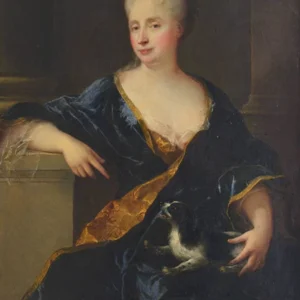
Anne Thérèse de Marguenat de Courcelles, marquise de Lambert
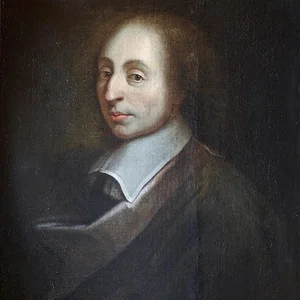
Blaise Pascal
1623 — 1662
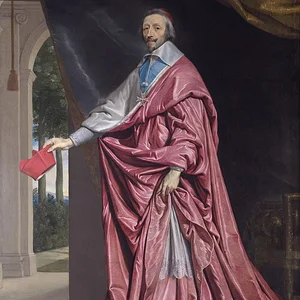
Cardinal de Richelieu
1585 — 1642
Cardinal Mazarin
1602 — 1661
Caroline of Ansbach
1683 — 1737
Charles XII of Sweden