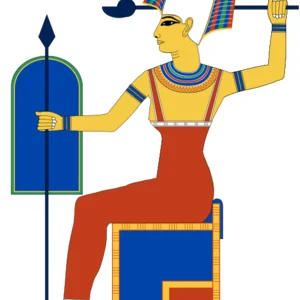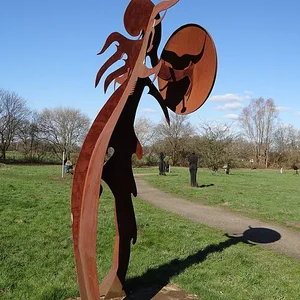

Aztec goddess of death and queen of Mictlan, the realm of the dead. She rules alongside her husband Mictlantecuhtli and watches over the bones of the deceased. She is celebrated today during Día de los Muertos.
Mictecacihuatl
Mictecacihuatl
9 min read
Frequently asked questions
Key Facts
- Queen of Mictlan, the ninth and deepest level of the Aztec underworld
- Wife of Mictlantecuhtli, the god of death
- Guardian of the bones of the dead, the raw material for the creation of humanity according to some myths
- Associated with the Aztec festival of the dead, forerunner of the Mexican Día de los Muertos
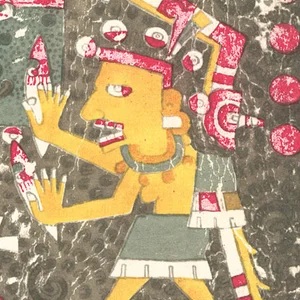
- Depicted with a skull and death attributes in the iconography of the Codex Borgia
Works & Achievements
In the Nahuatl creation myth, Mictecacihuatl and Mictlantecuhtli jealously guard the bones of previous generations. These bones, stolen by Quetzalcóatl, were used to create present-day humanity, making the goddess a central figure in the genesis of the human species.
Mictecacihuatl co-rules with her husband over the nine levels of the Aztec afterlife. Her role is to welcome and watch over the souls of ordinary deceased people, unlike warriors who died in battle or women who died in childbirth, who pass on to other divine realms.
Two periods of the Aztec calendar were entirely devoted to festivals of the dead, presided over by Mictecacihuatl. These celebrations are a direct precursor to today's Día de los Muertos and represent one of the best-preserved traditions in Mexican culture.
According to Nahuatl cosmology, Mictecacihuatl swallows the stars during the day, explaining their disappearance at sunrise. This myth casts her as a key player in the daily cosmic cycle governing the alternation of day and night.
Mictecacihuatl is now associated with the popular figure of La Calavera Catrina and celebrated as the patron of Día de los Muertos. Her image, blending death and festivity, has become a Mexican cultural symbol recognized around the world.
Anecdotes
According to the Aztec myth recorded in the Florentine Codex, Mictecacihuatl was sacrificed at birth and descended directly into Mictlan, the realm of the dead, where she became its queen. This tragic origin made her a deity doubly bound to death: both victim and sovereign of the afterlife.
Mictecacihuatl is described in Nahuatl sources as swallowing the stars during the day. In Aztec cosmology, this explained why stars disappear at sunrise: they are temporarily absorbed by the goddess of the dead before reappearing at night.
In the Nahuatl creation myth, the god Quetzalcóatl had to descend secretly into Mictlan to steal the bones guarded by Mictecacihuatl and her husband. The furious goddess set a trap for him: Quetzalcóatl stumbled and shattered the bones, which is why human beings come in different sizes.
The goddess presided over two major festivals of the dead in the Aztec calendar: the Miccailhuitontli (Little Feast of the Dead) and the Hueymiccailhuitl (Great Feast of the Dead), which lasted an entire month. These celebrations, direct ancestors of the Día de los Muertos, included offerings of food, flowers, and incense to honor the deceased.
During Aztec funeral rituals, offerings of food, *amatl* paper, and copal incense were burned in honor of Mictecacihuatl to protect the soul of the deceased during its long journey through the nine levels of Mictlan — a passage that could take four years according to tradition.
Primary Sources
Pages 9 to 13 of the Codex Borgia depict the deities of the dead, including Mictecacihuatl, shown with her mouth wide open and funerary attributes, associated with the ill-omened days of the ritual calendar *tonalpohualli*.
Book III describes Mictlan and its rulers: "In the ninth place was Mictlan, the land of the dead. There reigned Mictlantecuhtli and Mictecacihuatl, lord and lady of Mictlan, who jealously guarded the bones of the deceased."
This illustrated manuscript describes Aztec funerary rites and the feasts of the dead, mentioning the offerings made to Mictecacihuatl and the processions accompanying the bodies of the deceased to their final resting place in the depths of Mictlan.
This Nahuatl cosmogonic text recounts how Quetzalcóatl descended into Mictlan to steal the bones guarded by Mictecacihuatl and Mictlantecuhtli in order to create humanity of the fifth sun — the age in which the Aztecs lived.
Key Places
Sovereign domain of Mictecacihuatl and her husband Mictlantecuhtli, Mictlan is the deepest level of the Aztec afterlife. The souls of ordinary dead had to cross nine levels and face nine obstacles over four years before reaching it for their eternal rest.
The great temple of Tenochtitlan was the religious center of the Aztec Empire. Annex temples were dedicated to deities of death, and ritual sacrifices — whose souls would join Mictlan — were performed there during the great calendar festivals.
A city founded in 1325 on Lake Texcoco, Tenochtitlan was the political and religious heart of the Aztec Empire. It was here that the cult of Mictecacihuatl was celebrated during the great annual festivals of the dead, the Miccailhuitontli and the Hueymiccailhuitl.
Mitla (whose Nahuatl name means “place of the dead”) was a major pre-Hispanic ceremonial center dedicated to funerary rites. It illustrates the deep Mesoamerican tradition of death veneration that Mictecacihuatl embodies — one that transcends the Aztec world alone.
The Oaxaca region is considered the birthplace of the most authentic Día de los Muertos celebrations, direct heirs of the Aztec festivals dedicated to Mictecacihuatl. Candlelit nighttime processions through cemeteries there keep alive a heritage centuries in the making.
Typical Objects

The skulls of sacrificial victims were displayed on sacred skull racks called tzompantli, dedicated to the deities of death, including Mictecacihuatl. They symbolize the cycle of life and death in Aztec cosmology and are the ancestors of the calaveras (decorated skulls) of Día de los Muertos.

Copal resin, burned as an offering during funerary rituals, was believed to carry prayers and spirits to Mictlan. Its sacred fragrance accompanied the deceased on their journey to Mictecacihuatl's realm and is still used today during Día de los Muertos.

Strips of amatl paper, made from fig tree bark, were offered to the deities of the dead and placed in tombs. They served as spiritual currency and protection for souls traveling through the nine levels of the afterlife.

In Aztec mythology, Mictecacihuatl is the guardian of the bones of the ancestors. According to the creation myth, the god Quetzalcóatl had to steal the bones kept by Mictecacihuatl in order to create humanity, making the goddess a central figure in human genesis.

Pre-Hispanic iconography depicts Mictecacihuatl adorned with necklaces of torn-out eyeballs, a macabre attribute that underscores her absolute dominion over the dead and her terrifying nature to the living.

These bright orange flowers with their powerful scent were used in Aztec funerary rites and today serve as the primary symbol of Día de los Muertos. Their color and fragrance were believed to guide souls from Mictlan back to the world of the living.

Obsidian, a gleaming black stone associated with night and death, was sacred to the deities of Mictlan. Obsidian sacrificial knives were the instruments of the ritual sacrifices whose souls sustained Mictecacihuatl's realm.
School Curriculum
Vocabulary & Tags
Key Vocabulary
Tags
Daily Life
Morning
At sunrise, according to Aztec myth, Mictecacihuatl swallows the stars one by one, freeing the sky for the day of the living. This daily cosmic task marks the boundary between the world of the dead and that of the living, between the night of Mictlan and the reign of the sun.
Afternoon
In Aztec religious imagination, the goddess sits on her throne in Mictlan alongside Mictlantecuhtli to receive the souls of the departed who have completed their long journey. She watches over the bones of ancestors accumulated in the depths of her kingdom and presides over the entry of new souls into the ninth level.
Evening
At dusk, Mictecacihuatl releases the stars she spits back out, returning the night to the forces of darkness. In the temples of Tenochtitlan, Aztec priests would offer her copal incense and *amatl* paper banners to secure her favor for the souls of the community's deceased.
Food
As a deity, Mictecacihuatl is symbolically nourished by ritual offerings: copal incense, tamales prepared for the dead, cacao, and pulque (a fermented agave drink) left in temples during calendar festivals. In myth, she also feeds on souls and stars — spiritual sustenance that sustains her cosmic power.
Clothing
Pre-Hispanic iconography depicts Mictecacihuatl with an emaciated or skeletal body, tangled black hair, and adorned with human skulls. She wears a skirt woven with intertwined serpents, a symbol of her power over death, and a necklace of eyeballs characteristic of Nahuatl deities of darkness.
Housing
Mictecacihuatl resides in the ninth and final level of Mictlan, a dark and cold underground space located at the far end of the world from the living. Her mythical domain, devoid of sunlight, is described in Nahuatl sources as a place of silence and eternal rest for souls who have completed their journey through the eight preceding levels.
Historical Timeline
Period Vocabulary
Liens externes & ressources
Références
Œuvres
Gardienne des ossements des ancêtres
mythe préhispanique
Souveraine de Mictlan
cosmologie aztèque, attestée dès le XIVe siècle
Présidence du Miccailhuitontli et du Hueymiccailhuitl
calendrier rituel aztèque (tonalpohualli)
Avaleuse des étoiles
mythe cosmologique aztèque
Patronne du Día de los Muertos (époque contemporaine)
XIXe-XXIe siècle