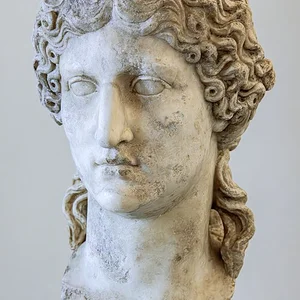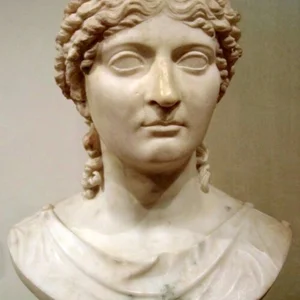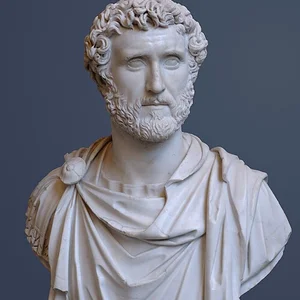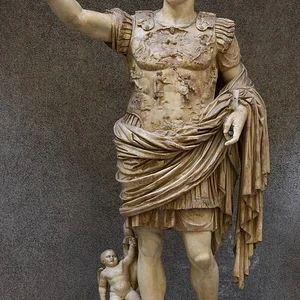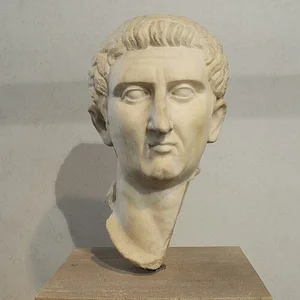

Nerva was Roman emperor from 96 to 98 AD. Brought to power by the Senate after the assassination of Domitian, he founded the Antonine dynasty and the line of the “good emperors.” His brief reign was marked by a policy of appeasement and the adoption of Trajan as his successor.
Nerva(30 — 98)
Nerva
Rome antique
6 min read
Frequently asked questions
Key Facts
- Became emperor in 96 AD after the assassination of Domitian, chosen by the Senate
- First of the “Five Good Emperors” (Nerva, Trajan, Hadrian, Antoninus, Marcus Aurelius)
- Ended treason trials and eased tensions with the Senate
- Adopted Trajan in 97 AD, establishing the principle of the emperor chosen by adoption
- Died in January 98 AD after a reign of about sixteen months
Works & Achievements
Upon coming to power, Nerva opened the line of the "five good emperors" who would secure nearly a century of prosperity for Rome.
The choice of a capable successor based on merit rather than blood, founding the principle of the adoptive emperors and ensuring a peaceful succession.
A public welfare program to feed and support the children of poor families in Italy, one of the earliest social policies of the Roman state.
The purchase of land redistributed to destitute citizens to relieve poverty, funded in part by savings on court expenses.
The end of the arbitrary accusations that had fueled the terror under Domitian, and the recall of exiles: a return to the rule of law.
The inauguration of the Forum Transitorium in Rome, connecting the neighboring forums, one of the great urban projects bearing his name.
The removal of certain taxes burdening the provinces and a reform of the inheritance tax on Jews, measures of fiscal relief.
Anecdotes
Nerva was already around 65 years old when the Senate chose him as emperor after the assassination of Domitian in 96. He was an elderly senator, with no sons and no strong military backing: a compromise choice meant to reassure an aristocracy traumatized by years of terror.
His reign nearly collapsed when the Praetorian Guard mutinied to avenge Domitian, whom they loved. The soldiers surrounded the palace and forced Nerva to hand over the former emperor's killers; publicly humiliated, the old emperor realized he needed a powerful heir.
To save his power, Nerva adopted Trajan, governor of Upper Germania and a respected military commander. This adoption of a man chosen for his merits — and not for his blood ties — established the principle of the “adoptive emperors” that ensured nearly a century of stability.
To mark the break with Domitian's tyranny, Nerva had coins struck bearing the legend “Libertas Publica” (public liberty). He also freed those imprisoned for treason and recalled the exiles.
Nerva died of illness in January 98, after only sixteen months of rule. According to Cassius Dio, he suffered a violent fit of fever after losing his temper with a senator; his peaceful transfer of power to Trajan remains a model of successful succession in Roman history.
Primary Sources
Nerva Caesar at last united things long incompatible, the principate and liberty.
Nerva, having become emperor, swore that he would put no senator to death, and he kept his word despite the plots directed against him.
The deified Nerva adopted you as his son, so that the State might have a leader not by the chance of birth, but by the choice of the best man.
Nerva, already very old, was raised to power by the senators and adopted Trajan to share imperial authority with him.
Key Places
Nerva's birthplace, in central Italy, cradle of his senatorial family the Cocceii.
Capital of the Empire where Nerva held power, sat in the Senate, and died in 98. The heart of Roman political life.
Residence of the emperors in Rome, where Nerva lived and where he was besieged by the mutinous Praetorians.
The Senate's meeting place in the Forum, which proclaimed Nerva emperor and where he swore to respect senatorial liberty.
A monumental square in Rome, begun under Domitian and inaugurated by Nerva, also called the Forum Transitorium. It bears his name.
The imperial tomb in Rome where, according to tradition, Nerva's ashes were laid to rest — the last emperor to be interred there.
Typical Objects

A wreath of laurel leaves worn by the emperor during ceremonies, a symbol of victory and imperial dignity. Nerva appears crowned this way on his coins.

A toga with a purple band reserved for senior magistrates and the emperor. It marked Nerva's senatorial rank and power.

A gold coin struck with the emperor's likeness bearing legends such as “Libertas Publica.” It spread the image and political message of the reign throughout the Empire.

A staff of command topped with an eagle, held by the emperor during triumphs and official ceremonies. An emblem of supreme power in Rome.

A writing surface used to draft laws, decrees, and imperial correspondence. An everyday tool of Roman administration.

A scroll on which edicts, registers, and official documents were recorded. The senatus consulta and the acts of the reign were archived on it.
School Curriculum
Vocabulary & Tags
Key Vocabulary
Daily Life
Morning
Like every Roman aristocrat, Nerva began his day with the salutatio: a crowd of clients and senators came to greet him in the atrium of the palace. Once he became emperor, he would then receive reports from the administration and petitions from the provinces.
Afternoon
The afternoon was devoted to affairs of state: sessions in the Senate, judicial hearings, and deliberations on laws. Nerva, eager for reconciliation, listened to grievances and made sure to involve the senators in his decisions.
Evening
In the evening, the emperor shared a banquet (cena) with his close companions and advisers, reclining on couches around low tables. There they discussed politics and literature, with a restraint that Nerva preferred to the lavishness of Domitian.
Food
An emperor's diet was based on bread, olive oil, wine diluted with water, vegetables, fish, and meat. Imperial banquets could offer refined dishes seasoned with garum, the fermented fish sauce so prized by the Romans.
Clothing
Nerva wore the senatorial toge bordered with purple and, during ceremonies, the imperial purple cloak. On coins, he appears crowned with laurel, the emblem of power and victory.
Housing
The emperor resided in the vast imperial palace on the Palatine Hill, built by his Flavian predecessors, with its audience halls, gardens, and frescoes. It was there that he was besieged by the revolting Praetorians.
Historical Timeline
Period Vocabulary
Liens externes & ressources
Références
Œuvres
Fondation de la dynastie des Antonins
96 apr. J.-C.
Adoption de Trajan
97 apr. J.-C.
Institution des alimenta
97 apr. J.-C.
Réforme agraire et distribution de terres
97 apr. J.-C.
Abolition des procès de lèse-majesté
96 apr. J.-C.
Achèvement du Forum de Nerva
97 apr. J.-C.
Allègement de la fiscalité
97 apr. J.-C.