The Roman Empire
Emperors, generals, orators and poets of Rome — from the Republic to the fall of the Empire, a thousand years of civilisation.
68 characters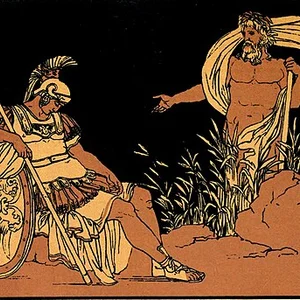
68 characters
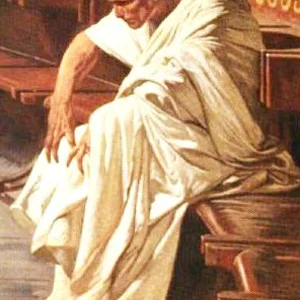
Catiline
107 av. J.-C. — 61 av. J.-C.
Lucius Sergius Catiline was a Roman patrician and politician, famous for plotting a conspiracy to seize power in 63 BC. Exposed by Cicero, he died fighting at the Battle of Pistoria in 62 BC.
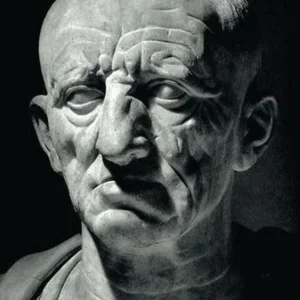
Cato the Elder
233 av. J.-C. — 148 av. J.-C.
Roman statesman and writer (234–149 BC), consul in 195 BC and censor in 184 BC. An uncompromising defender of traditional Roman values, he opposed Greek influence and pursued strict economic policies. He is also considered the first great Latin prose writer, known for his treatise on agriculture.
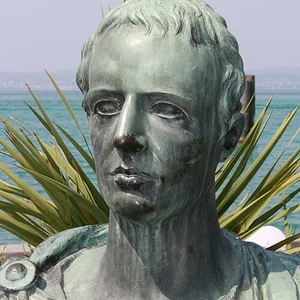
Catullus
83 av. J.-C. — 53 av. J.-C.
Catullus was a Latin lyric poet of the Roman Republic, born around 83 BC in Verona. A contemporary of Caesar and Cicero, he authored a collection of 116 poems blending passionate love, friendship, and political satire.
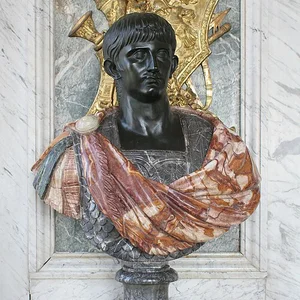
Claudius
9 av. J.-C. — 54
Fourth Roman emperor (41–54 AD), Claudius succeeded Caligula. Despite physical disabilities that long kept him on the margins of power, he proved to be a skilled administrator, reformer, and conqueror of Britain.
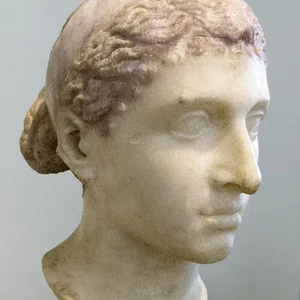
Cleopatra
68 av. J.-C. — 29 av. J.-C.
The last queen of Egypt's Ptolemaic dynasty, Cleopatra VII ruled from 51 to 30 BC. A woman of power and learning, she allied herself with Julius Caesar and later Mark Antony in an effort to preserve her kingdom's independence against Rome.
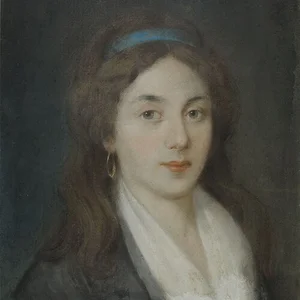
Cornelia
190 av. J.-C. — 100 av. J.-C.
Daughter of Scipio Africanus and wife of Tiberius Sempronius Gracchus, Cornelia (c. 190–100 BC) is the model of the virtuous Roman matron. She raised her twelve children alone after being widowed, refusing a royal remarriage. She is famous for pointing to her sons Tiberius and Gaius as "her most precious jewels."
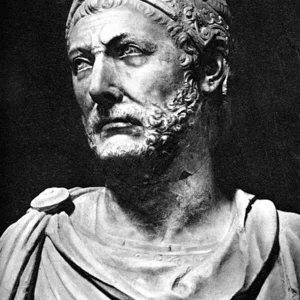
Hannibal Barca
246 av. J.-C. — 182 av. J.-C.
Carthaginian general (246–182 BC), son of Hamilcar Barca, he is one of the greatest military strategists of the ancient world. He led the Second Punic War against Rome, crossing the Alps with his war elephants to invade Italy. His victory at Cannae (216 BC) remains one of the most studied battles in military history.
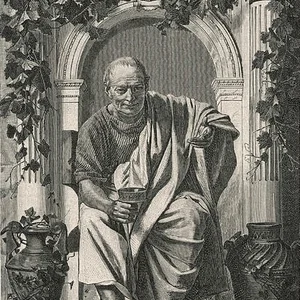
Horace
64 av. J.-C. — 7 av. J.-C.
Horace is a major Latin poet of the Augustan age, born in 65 BC in Venusia. A friend of Virgil and protégé of Maecenas, he is the author of the Odes, the Satires, and the Ars Poetica. His work celebrates wisdom, friendship, and the simple pleasures of life.
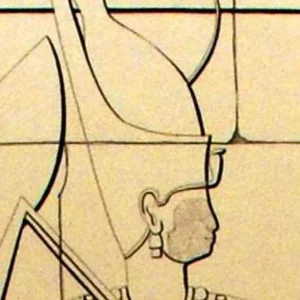
Kandake Amanirenas
Warrior queen of the Kingdom of Meroë (Nubia, present-day Sudan), Amanirenas led Kushite armies against the Roman legions of Augustus around 27–21 BCE. According to Roman sources and Sudanese oral tradition, she lost an eye in battle yet never surrendered, ultimately securing a peace treaty favorable to her kingdom.
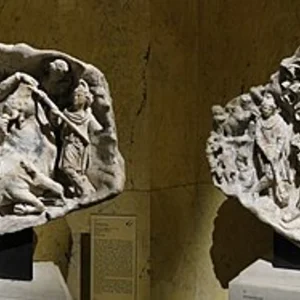
Mithra
An Indo-Iranian deity of contracts and light, Mithra was venerated in Persian Zoroastrianism before becoming a mysterious solar god of the Roman Empire. His cult, Mithraism, spread among Roman soldiers from the 1st to the 4th centuries AD.
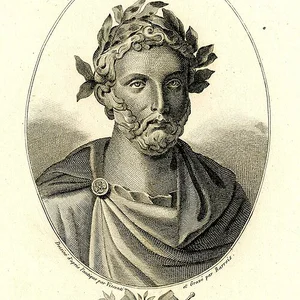
Plautus
249 av. J.-C. — 183 av. J.-C.
A Latin comic playwright of the 3rd–2nd century BC, Plautus is the leading figure of Roman comedy. He adapted Greek New Comedy for Roman audiences, creating characters that became archetypes: the cunning slave, the miser, the braggart soldier.
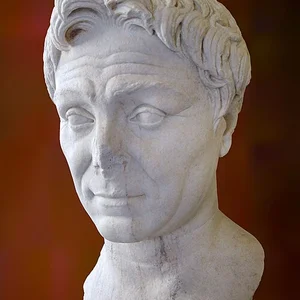
Pompey
105 av. J.-C. — 47 av. J.-C.
Pompey (106–48 BC) was a Roman general and statesman who distinguished himself through his military victories in the East. A rival and later enemy of Caesar, he was one of the key figures in the fall of the Roman Republic.
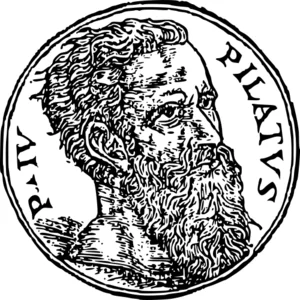
Pontius Pilate
11 av. J.-C. — ?
Pontius Pilate was a Roman prefect of Judaea from 26 to 36 AD. He is best known for ordering the crucifixion of Jesus of Nazareth. His governorship was marked by several conflicts with the Jewish population.
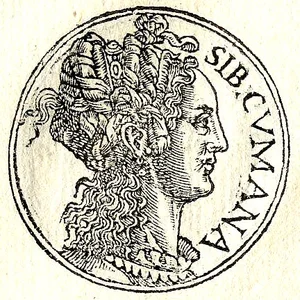
Sibyl of Cumae
A legendary prophetess of Antiquity, she presided over Apollo's oracle at Cumae, in Campania. According to tradition, she lived for a thousand years and sold the Sibylline Books to King Tarquin. Virgil makes her the guide of Aeneas in the Underworld in the Aeneid.
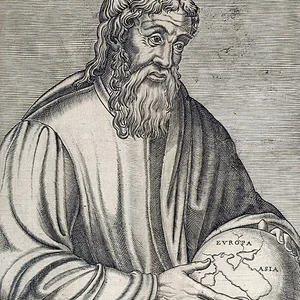
Strabo
62 av. J.-C. — 23
Greek geographer, historian, and philosopher born around 62 BC in Amaseia (modern-day Turkey). He is the author of the Geography in 17 books, a description of the known world of his time. An heir to the Stoic tradition, he traveled extensively throughout the Mediterranean and the East.
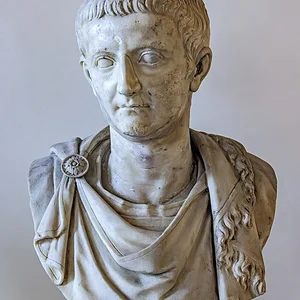
Tiberius
41 av. J.-C. — 37
Tiberius (42 BC – 37 AD) was the second Roman emperor, successor to Augustus. He reigned from 14 to 37 AD and withdrew to Capri from 27 AD onward, leaving power in the hands of Sejanus.
Aeneas
Hero of Greco-Roman mythology, son of Aphrodite and Anchises. Aeneas is the central figure of Virgil's Aeneid, a Latin epic recounting his journey from Troy to Italy, where he becomes the mythical ancestor of ancient Rome and the Julio-Claudian dynasty.
Agrippina the Elder
13 av. J.-C. — 33
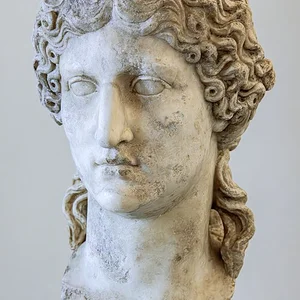
Granddaughter of Augustus and wife of Germanicus, Agrippina the Elder played a major political role during the principate of Tiberius. Her opposition to the emperor led to her exile and death in captivity in AD 33.
Agrippina the Younger
15 — 59
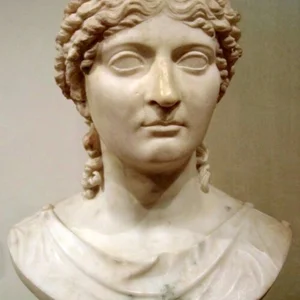
Agrippina the Younger (15–59 AD) was a Roman empress, sister of Caligula, and mother of Nero. She wielded considerable influence over imperial power, most notably by marrying her uncle, Emperor Claudius, and arranging for her son Nero to be adopted as his heir.
Antoninus Pius
86 — 161
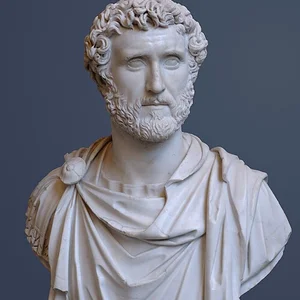
Antoninus Pius was Roman emperor from 138 to 161, the third of the “good emperors” of the Antonine dynasty. His exceptionally long and peaceful reign remained a symbol of stability and prosperity for the Empire.
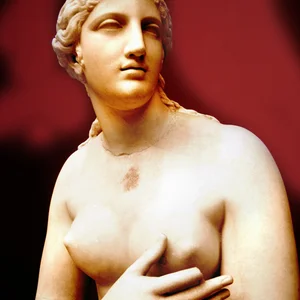
Aphrodite
Greek goddess of love, beauty, and fertility in ancient mythology. Venerated throughout Greece and the Roman Empire under the name Venus. A central figure in mythological narratives and ancient art.
Apollodorus of Damascus
50 — 120
A Greek architect and engineer of Syrian origin, active under the emperor Trajan in the early 2nd century. The designer of Trajan's Forum and Trajan's Column in Rome, he was one of the greatest builders of Roman antiquity.
Attila
500 — 453
Attila was king of the Huns from 434 to 453. He conquered a vast empire across Eastern and Central Europe, directly threatening the Western Roman Empire through repeated invasions. He is remembered as one of the greatest warriors of Late Antiquity.
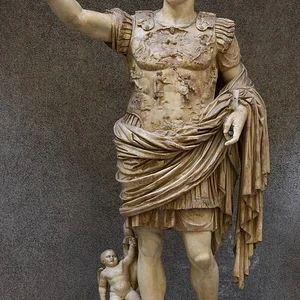
Augustus
62 av. J.-C. — 14
Augustus was the first Roman emperor, ruling from 27 BC to 14 AD. Grand-nephew and adopted son of Julius Caesar, he established a lasting political regime and brought peace after decades of civil wars. His reign marks the beginning of the Roman Empire and a period of cultural prosperity.
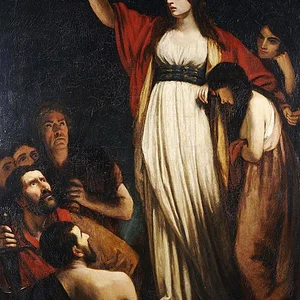
Boudicca
30 — 61
Queen of the Iceni, a Celtic people of Britain, she led a major revolt against Roman occupation around 60–61 AD. At the head of a coalition of British tribes, she destroyed Camulodunum, Londinium, and Verulamium before being defeated by the governor Paulinus.
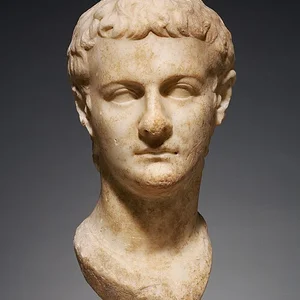
Caligula
12 — 41
The third Roman emperor, Caligula ruled from 37 to 41 AD. After a promising start, his reign descended into tyranny and extravagance. He was assassinated by officers of the Praetorian Guard.
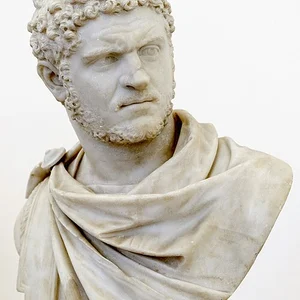
Caracalla
188 — 217
Roman Emperor from 211 to 217 AD, Caracalla is best known for the Edict of Caracalla (212 AD), which granted Roman citizenship to all free inhabitants of the Empire. Despite his reforms, his reign was marked by political instability and his assassination in 217 AD.
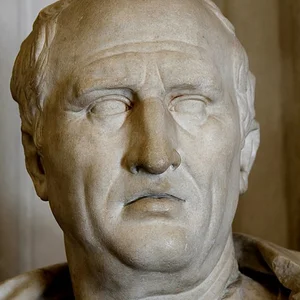
Cicero
106 av. J.-C. — 42 av. J.-C.
Roman orator, politician, and philosopher (106–43 BC), Cicero is one of the greatest figures of the Roman Republic. He left a lasting mark on Latin literature through his eloquence and philosophical works, becoming a model of rhetoric for centuries to come.
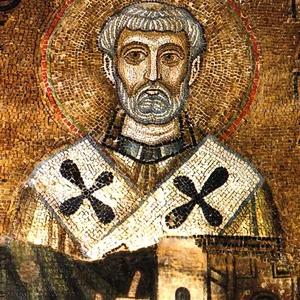
Clement of Rome
100 — 99
Bishop of Rome at the end of the 1st century, Clement is considered one of the earliest popes of the Christian Church. He is best known for his epistle to the Corinthians, a valuable testimony to the organization of the early Church.
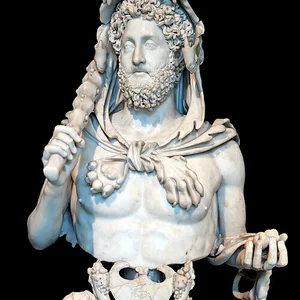
Commodus
161 — 192
Roman emperor from 180 to 192, son and successor of Marcus Aurelius. His authoritarian and eccentric reign marked the end of the Antonine dynasty and the close of the imperial golden age. He was assassinated in 192, opening a period of turmoil.
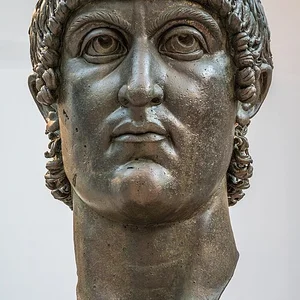
Constantine I
272 — 337
Roman Emperor from 306 to 337, Constantine I is renowned for establishing religious tolerance toward Christianity through the Edict of Milan in 313 and for founding Constantinople in 330. He marks the turning point of the Roman Empire toward Christianity and the East.

Cupid
God of love in Roman mythology, Cupid is the son of Venus and Mars (or Mercury, depending on the version). Armed with a bow and golden arrows, he strikes humans with romantic passion. His Greek equivalent is Eros.
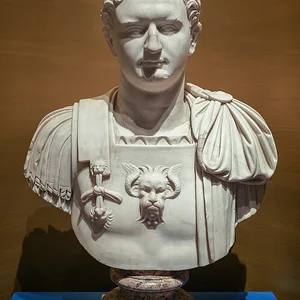
Domitian
51 — 96
Domitian (51–96) was the third and last emperor of the Flavian dynasty. His authoritarian reign was marked by persecutions of Christians and senators, but also by efficient provincial administration.
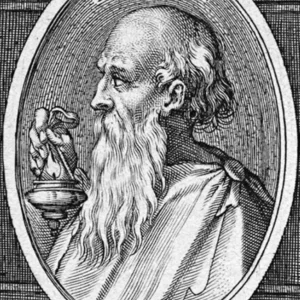
Epictetus
50 — 138
Greek Stoic philosopher of the 1st–2nd century CE, born a slave in Hierapolis in Phrygia. He founded a school of philosophy in Nicopolis in Epirus, where he taught that virtue lies in accepting what does not depend on us. His teachings, compiled by his disciple Arrian in the Enchiridion, became a major reference of late Stoicism.
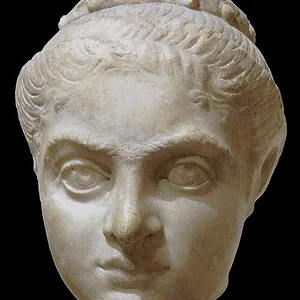
Fausta
289 — 326
Fausta was a Roman empress, daughter of Emperor Maximian and wife of Constantine I. Mother of three future emperors, she died in 326 under obscure circumstances, shortly after the execution of Prince Crispus.
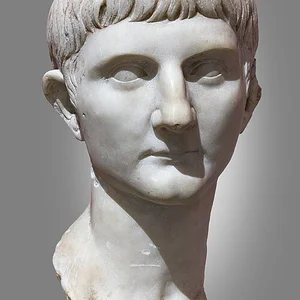
Germanicus
14 av. J.-C. — 19
Roman general of the early Empire, nephew and adopted son of the emperor Tiberius. Popular for his campaigns in Germania, he died in Syria in AD 19 under suspicious circumstances often blamed on Tiberius.
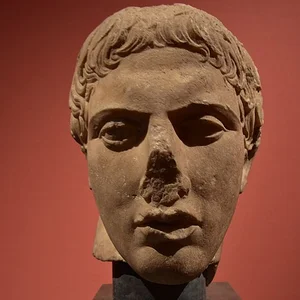
Hermes
Hermes is a major deity in Greek mythology, son of Zeus and Maia. He is venerated as the messenger of the gods, protector of commerce, travelers, and thieves, and identified with Mercury in Roman mythology.
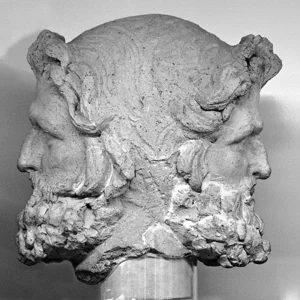
Janus
Janus is an ancient Roman deity depicted with two faces looking simultaneously toward the past and the future. God of beginnings, transitions, and doorways, he symbolizes thresholds and passages between two states. He was especially venerated at the New Year and at the start of any important undertaking.
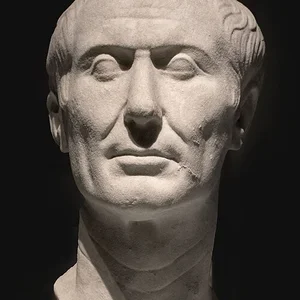
Julius Caesar
99 av. J.-C. — 43 av. J.-C.
Roman general and statesman (100–44 BC), Julius Caesar conquered Gaul between 58 and 50 BC and established his political dominance in Rome. His assassination in 44 BC hastened the fall of the Roman Republic.
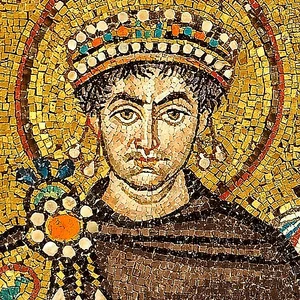
Justinian
482 — 565
Justinian was a Byzantine emperor who reigned from 527 to 565. He is famous for codifying Roman law in the Justinian Code and for conquering vast territories. His reign marks the height of the Byzantine Empire.
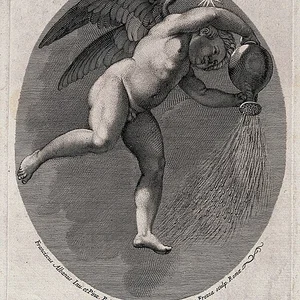
Lucifer
Latin name meaning 'Light-bearer', originally referring to the morning star (Venus). In Christian tradition, it designates the fallen angel cast from Heaven by God for his pride, becoming the figure of absolute Evil.
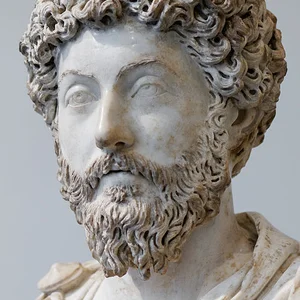
Marcus Aurelius
121 — 180
Roman Emperor from 161 to 180 and Stoic philosopher. Author of Meditations, personal reflections on wisdom and virtue. Represents the ideal of the philosopher-emperor in ancient Rome.
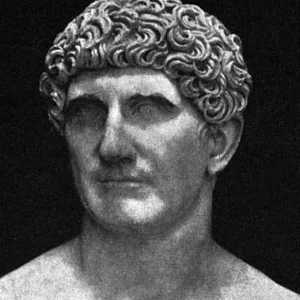
Mark Antony
82 av. J.-C. — 29 av. J.-C.
A Roman general of the 1st century BC, Mark Antony was one of the triumvirs who governed Rome after Caesar's assassination. Ally then rival of Octavian, he embodies the civil wars that tore the Roman Republic apart in its final years.
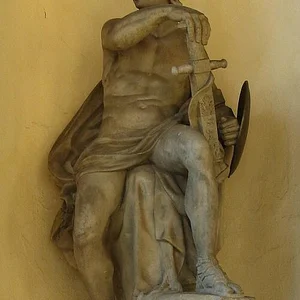
Mars
Roman god of war and protector of agriculture, Mars is one of the most venerated deities in the Roman pantheon. Legendary father of Romulus and Remus, he embodies Rome's military power and its destiny of conquest.
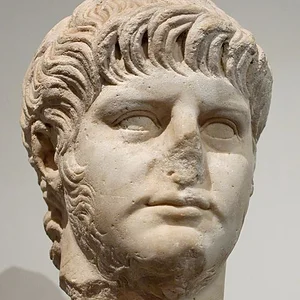
Nero
37 — 68
The fifth Roman emperor from 54 to 68, Nero is known for a reign marked by persecutions of Christians and the Great Fire of Rome in 64. The last representative of the Julio-Claudian dynasty, he consolidated imperial power against the Roman aristocracy.
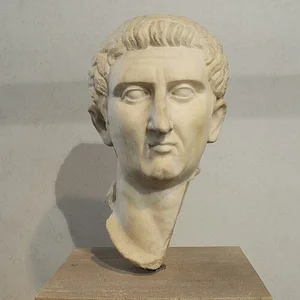
Nerva
30 — 98
Nerva was Roman emperor from 96 to 98 AD. Brought to power by the Senate after the assassination of Domitian, he founded the Antonine dynasty and the line of the “good emperors.” His brief reign was marked by a policy of appeasement and the adoption of Trajan as his successor.
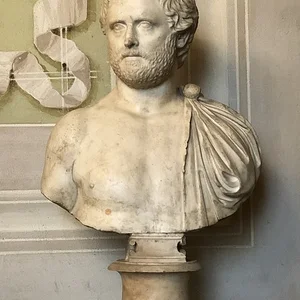
Ovid
42 av. J.-C. — 17
Ovid (43 BC – 17 AD) was a Roman poet of the Augustan age, author of the Metamorphoses, a landmark work of ancient literature. He transformed Greco-Roman mythology into narrative and musical poetry, profoundly influencing European culture.
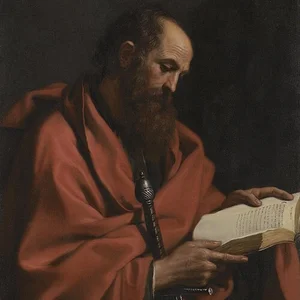
Paul of Tarsus
5 — 66
A Christian apostle and missionary of the 1st century, Paul of Tarsus played a decisive role in spreading Christianity throughout the Roman Empire. His epistles form an essential part of the New Testament.
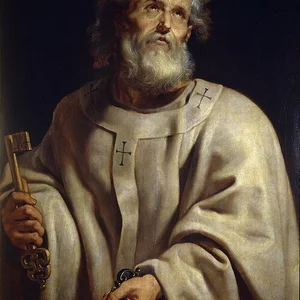
Peter
0 — 65
A fisherman from Galilee who became one of the twelve apostles of Jesus Christ, Peter is considered the first pope of the Catholic Church. He was martyred in Rome around 64–68 AD.
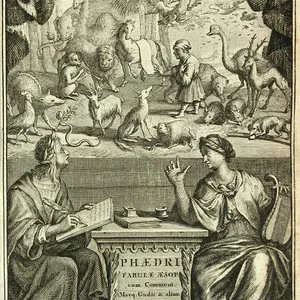
Phaedrus
20 av. J.-C. — 50
Phaedrus was a Latin fabulist of the 1st century AD, a freedman of Emperor Augustus. He was the first author to render Aesopian fables in Latin verse, leaving behind a collection in five books that had a lasting influence on European literature.

Philostratus of Athens
300 — ?
Greek writer and sophist of the 2nd–3rd century AD, Philostratus of Athens is celebrated for his Life of Apollonius of Tyana and his Lives of the Sophists. He moved in the literary circle of Empress Julia Domna in Rome.
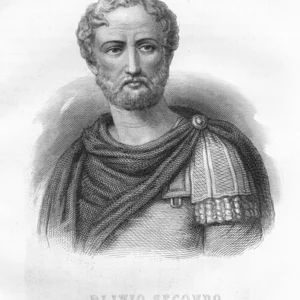
Pliny the Elder
20 — 79
Pliny the Elder was a Roman scholar and officer of the 1st century AD, author of the encyclopedic Natural History. A naturalist curious about everything, he died in 79 AD while attempting to observe the eruption of Mount Vesuvius that destroyed Pompeii.
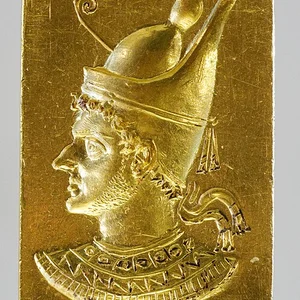
Ptolemy
250 — 350
A Greek astronomer and mathematician of the 2nd century CE, Ptolemy developed the geocentric model that dominated Western astronomy for over a thousand years. His major work, the Almagest, is a foundational treatise of ancient astronomy compiling observations and mathematical theories.
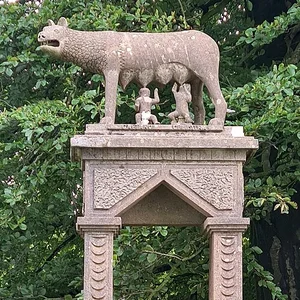
Romulus and Remus
Twin brothers of Roman mythology, legendarily raised by a she-wolf after being abandoned at birth. Romulus is presented as the founder and first king of Rome in 753 BC, while Remus is said to have perished during the founding of the city.
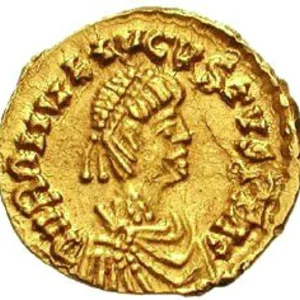
Romulus Augustulus
462 — ?
Last emperor of the Western Roman Empire, Romulus Augustulus reigned in 475–476 AD, placed on the throne by his father Orestes. Deposed at around age 15 by the Germanic chieftain Odoacer, his abdication marks the conventional end of the Western Roman Empire.
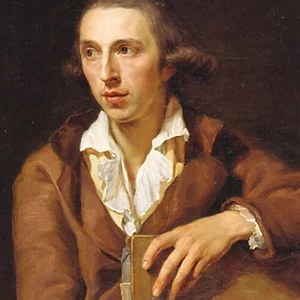
Saint John
Saint John is one of the twelve apostles of Jesus of Nazareth, traditionally identified as “the disciple whom Jesus loved.” Christian tradition attributes to him the fourth Gospel, three epistles, and the Book of Revelation.
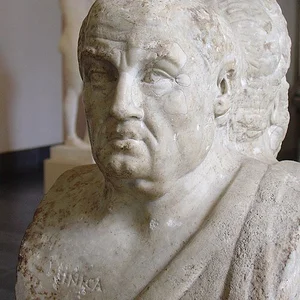
Seneca
4 av. J.-C. — 65
Roman Stoic philosopher (4 BC – 65 AD), Seneca left a lasting mark on ancient thought through his reflections on wisdom, virtue, and detachment from material wealth. Tutor to Emperor Nero, he was also a playwright and statesman, leaving a major body of written work including the celebrated Letters to Lucilius.
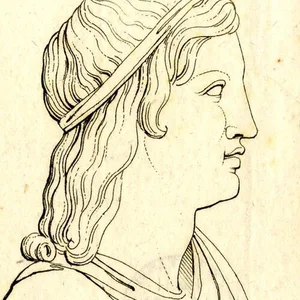
Suetonius
69 — 126
Suetonius was a Roman historian, grammarian, and rhetorician of the early 2nd century. As secretary to Emperor Hadrian, he is famous for his "Lives of the Twelve Caesars," a gallery of biographies of the first emperors rich in anecdotes and private details.
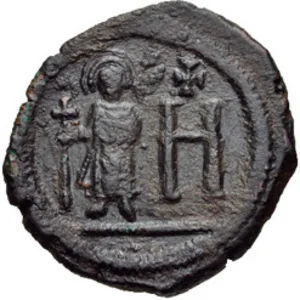
Theodosius
583 — 602
Byzantine emperor who reigned from 408 to 450, Theodosius II is known for consolidating the Eastern Empire and his devotion to Christianity. He ordered the construction of the famous Theodosian Walls around Constantinople and promulgated the Theodosian Code, a landmark collection of Roman laws.

Titus Vinius
12 — 69
Roman consul in 69 AD, Titus Vinius was one of Emperor Galba's most influential advisors. A central figure of the 'Year of the Four Emperors', he was assassinated during Otho's coup in January 69.
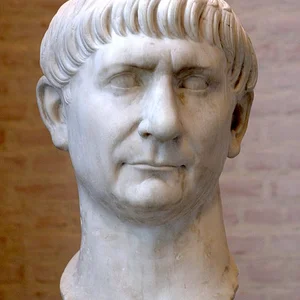
Trajan
53 — 117
Trajan (53–117) was the first Roman emperor born outside Italy, from the province of Hispania. His reign is considered the height of the Roman Empire, marked by major conquests and a generous social policy.
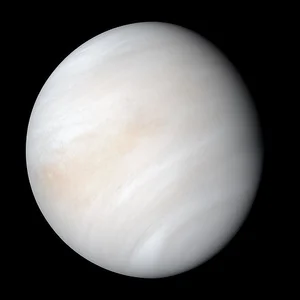
Venus
Venus is the Roman goddess of love, beauty, and fertility, equivalent to the Greek Aphrodite. Daughter of Jupiter according to some traditions, she plays a central role in Roman mythology and has inspired countless works of art throughout the centuries.
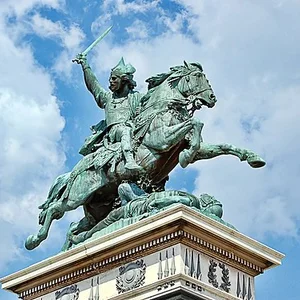
Vercingetorix
79 av. J.-C. — 45 av. J.-C.
Arverni chieftain (79–46 BC), Vercingetorix united the Gallic peoples against Julius Caesar's Roman invasion. Defeated at the Battle of Alesia in 52 BC, he stands as a symbol of Gallic resistance to Roman conquest.
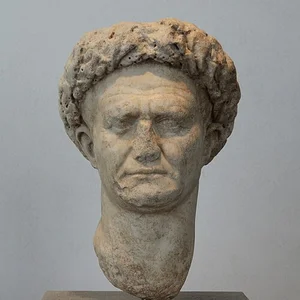
Vespasian
9 — 79
Vespasian (9–79 AD) was the ninth Roman emperor and founder of the Flavian dynasty. A general of equestrian background, he rose to power after the civil war of 69 AD. His reign marked a period of stability and reconstruction following the excesses of Nero.
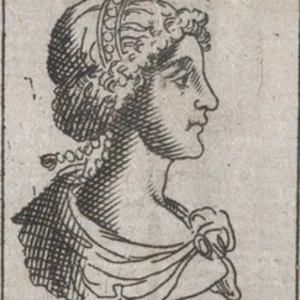
Vipsania
Vipsania Agrippina was a Roman citizen of the Augustan age, daughter of the general Agrippa and of Caecilia Pomponia Attica. The first wife of Tiberius, whom she loved, she was forced to divorce by Augustus for dynastic reasons. Her life illustrates the burden of imperial marriage politics.
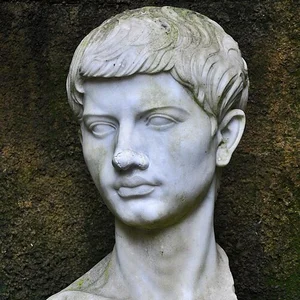
Virgil
69 av. J.-C. — 18 av. J.-C.
Virgil (70–19 BC) is the greatest poet of ancient Rome. Author of the Aeneid, the founding epic of Latin literature, he also composed the Eclogues and the Georgics. His work has profoundly influenced Western literature.
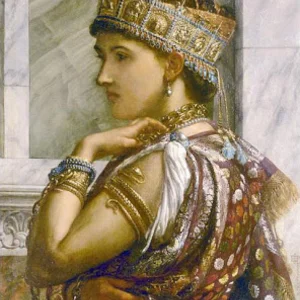
Zenobia
240 — 275
Queen of the Palmyrene Empire in the 3rd century, Zenobia ruled as regent in her son's name and expanded her empire to Egypt and Asia Minor, openly defying Rome. Defeated by Emperor Aurelian in 272, she remains the enduring symbol of an indomitable Eastern queen.
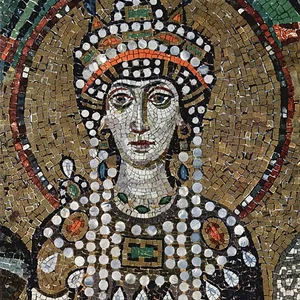
Theodora
497 — 548
Theodora, empress of Byzantium alongside Justinian I, is one of the most powerful women of late antiquity. Born into humble origins, she became co-regent and played a decisive role in Byzantine imperial politics, most notably during the suppression of the Nika revolt in 532.