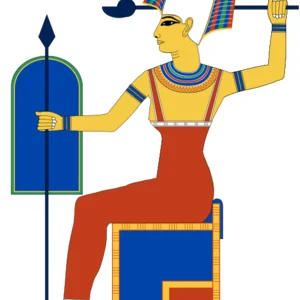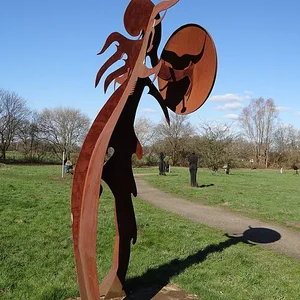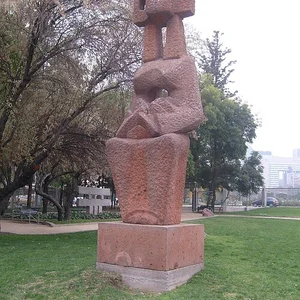

A major deity of the Andean peoples, particularly the Inca, Pachamama is the Earth Mother — goddess of fertility, agriculture, and the cycle of seasons. Venerated since pre-colonial times, she embodies the nourishing earth and is the subject of ritual offerings still practiced today in the Andes.
Pachamama
Pachamama
8 min read
Frequently asked questions
Key Facts
- Pachamama is attested as a central deity in the oral and ritual traditions of Andean peoples well before the Spanish conquest (prior to 1532).
- Within the Inca Empire (c. 1438–1532), she was venerated alongside Inti, the Sun god, reflecting a dual earth/sky cosmology.
- The ceremony of 'pago a la tierra' (offering to the Earth) is an age-old ritual still practiced in the Bolivian, Peruvian, and Argentine Andes.
- After the Spanish conquest (1532), the cult of Pachamama underwent syncretism with Catholicism, notably through a partial identification with the Virgin Mary.
- Pachamama is today a symbolic figure in Indigenous and environmentalist movements across Latin America, enshrined in Ecuador's 2008 constitution under the concept of 'Rights of Nature'.
Works & Achievements
Organization of the year into twelve lunar months structured around the cycles of Pachamama (planting, growth, harvest). Each month included specific ceremonies in her honor, setting the rhythm of all Inca social life.
Vast stepped terraces carved into the slopes of the Andes by the Incas, regarded as a concrete dialogue with Pachamama. This irrigated system fed millions of people and stands as one of the masterworks of pre-Columbian engineering.
A body of ritual songs in Quechua passed down orally from generation to generation, addressed to the Earth Mother during planting and harvest. These hymns, partially recorded by Spanish chroniclers, bear witness to a sophisticated theology.
Official Inca state festivals combining solar worship (Inti) with earthly rites (Pachamama), celebrated in Cusco with processions, sacrifices, and libations. They illustrate the cosmic complementarity of sky and earth in Andean thought.
A ritual offering to Pachamama practiced without interruption from pre-Inca times to the present day in Andean communities of Bolivia, Peru, and Ecuador. Its continuity across several millennia makes it one of the most enduring indigenous rituals in the Americas.
Anecdotes
During every corn planting in the Andes, Inca farmers would first dig a small hole in the earth and place inside it coca leaves, chicha (corn beer), and sometimes llama fat. This gesture, called 'pago a la Tierra', literally meant 'paying the Earth' in gratitude for its generosity. Without this ritual, the harvest risked never coming.
Every year in August — considered the month when the Earth lies open and hungry — Andean communities held collective ceremonies in honor of Pachamama. Offerings were buried in ritual holes called 'apacheta', containing food, cloth, and precious objects, to appease the goddess and ensure the fertility of the fields for the coming year.
Sixteenth-century Spanish chroniclers, such as Cristóbal de Molina, were struck to see that even after the conquest, Andean peoples quietly continued their offerings to Pachamama under the guise of ordinary agricultural practices. The goddess survived forced evangelization by blending into the everyday rituals tied to the land.
In Andean cosmology, Pachamama is not merely the physical earth: she is space-time itself, for the Quechua word 'pacha' means earth, world, and time all at once. To venerate Pachamama was therefore to honor the entire living universe — a conception that far exceeds that of a simple agricultural deity.
Primary Sources
Adoraban a la Pachamama, que es la Tierra, ofreciéndole chicha y coca en los campos antes de sembrar, pidiéndole que diese fruto y sustento a los hombres.
Los indios en todo el Reyno, para sembrar la tierra, primero hablan con la Pachamama y le dan de comer y beber, diciendo que ella es la madre que los sustenta.
Tienen por costumbre invocar a la Pachamama antes de abrir la tierra con la chaquitaclla, reconociendo en ella una potencia viva que puede favorecer o castigar.
La tierra misma es una madre que recibe los muertos y devuelve la vida a las plantas; ella no se separa jamás del mundo de los vivos.
Key Places
The mythical place of origin of the Incas and home to some of the oldest Pachamama cults in the Andes. The lake is considered the navel of the world, a point of contact between the earth and the cosmos.
Capital of the Inca Empire, laid out as a cosmic representation of the Andean universe. Temples and ceremonies dedicated to Pachamama were woven into the official ritual calendar of the Inca state.
An Inca city perched among the clouds whose stepped agricultural terraces are a living expression of the sacred relationship between people and Pachamama. Its orientation follows solar and earthly cycles.
An ancient pre-Inca city near Lake Titicaca and a major religious center where the oldest Andean agricultural rites developed, including traditions connected to the Earth Mother.
A fertile valley regarded as a blessed space of Pachamama and the heart of Inca agriculture, with its monumental terraces. Planting ceremonies held here were among the most important in the ritual calendar.
Typical Objects

A fundamental offering to Pachamama in all Andean ceremonies. Placed in the earth or burned, they serve as a sacred intermediary between humans and the goddess.

A fermented corn beer poured as a libation on the ground before each meal or agricultural ceremony. This everyday gesture acknowledges the earth as the primary source of nourishment.

An Andean foot plow used to break the soil during planting season. Before driving it into the ground, the farmer would offer a prayer to Pachamama to avoid 'wounding' the goddess.

A ritual bundle containing various offerings — grains, llama fat, flowers, and figurines — buried or burned as a payment to Pachamama during major ceremonies.

A cairn of stones built at crossroads and mountain passes, used as a place of offering to Pachamama during travel. Wayfarers would add a stone as a sign of respect.

A wooden or ceramic cup richly decorated with agricultural and cosmological scenes, used for chicha libations offered to Pachamama during festivals of the Inca agricultural calendar.
School Curriculum
Vocabulary & Tags
Key Vocabulary
Tags
Daily Life
Morning
Before sunrise, Andean farmers approached their fields whispering a prayer to Pachamama, placing a few coca leaves on the still-cold ground. This daily offering marked the beginning of all agricultural activity and reaffirmed the bond between humans and the nurturing earth. The silence of dawn was considered the moment when Pachamama listened most attentively.
Afternoon
During fieldwork, Andean peasants worked together as a community (minka), keeping rhythm with traditional songs sung to Pachamama. The chaquitaclla (foot plow) was handled with care so as not to 'wound' the Earth Mother. At midday, a little chicha was poured onto the ground before anyone drank, acknowledging that Pachamama was to be served first.
Evening
In the evening, after the harvest or sowing, families gathered to share a meal whose first bites were symbolically offered to the earth. During major seasonal ceremonies, nights could be devoted to collective singing and the making of despachos (offering bundles) to be buried the following day. A wood fire crackled at the center of the village, acting as an intermediary between the world of people and that of Pachamama.
Food
The diet of Andean peoples who venerated Pachamama was directly tied to the gifts of the Earth Mother: maize (sara), quinoa, potatoes (papa), and oca formed the staples. Chicha, a sacred fermented drink, was both consumed and offered in ritual. Every food taken from the earth was preceded by a gesture of gratitude toward Pachamama.
Clothing
Garments worn during ceremonies honoring Pachamama were woven from llama and alpaca wool, dyed with mineral and plant-based pigments in earth tones: ochre, brown, and the green of the highlands. Women wore the acsu (tunic) held in place by topu pins, adorned with geometric patterns including symbols of fertility and agricultural cycles. Shamans and ritual officiants added seed necklaces and multicolored fringed belts.
Housing
Andean communities lived in houses of dry stone or adobe with thatched roofs, built into mountainsides in harmony with the natural landscape — never disrupting the earth. The orientation of each dwelling took into account the sacred cardinal directions and the cosmic lines (ceques) radiating outward from Cusco. The threshold of the home received regular offerings to Pachamama, who was guardian of the hearth as much as of the fields.
Historical Timeline
Period Vocabulary
Visual Style
Style visuel ancré dans l'iconographie inca et préinca : géométrie sacrée, palette terreuse et minérale, motifs textiles andins et figures rituelles aux contours nets inspirés des frises de pierre de Tiwanaku.
Sound Ambience
Ambiance sonore des hauts plateaux andins à l'aube, mêlant les sons de la nature sauvage d'altitude, les instruments traditionnels quechuas et les murmures des cérémonies rituelles agricoles.
Liens externes & ressources
Références
Œuvres
Le calendrier agricole et rituel inca
XIIIe–XVIe siècle
Les andenes (terrasses agricoles)
XIIIe–XVIe siècle
Hymnes à Pachamama (tradition orale quechua)
période précoloniale, transmission continue
Inti Raymi et Mama Pacha Raymi — grandes fêtes agraires
vers 1438–1532
La cérémonie du 'Pago a la Tierra' (tradition vivante)
époque précoloniale à nos jours