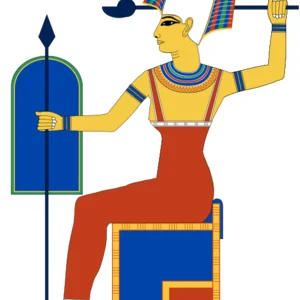

Papatuanuku is the Earth Mother of Māori cosmogony, a central figure passed down through oral tradition in Polynesia. Wife of Ranginui (Sky Father), her separation from him by their children gave birth to the world as the Māori conceive it.
Papatuanuku
Papa
9 min read
Frequently asked questions
Key Facts
- Papatuanuku is known solely through Māori oral tradition — no contemporary written sources record her story
- In the myth, she lies united with Ranginui (Sky Father) in primordial darkness, until their children separate them to let light into the world
- The separation of Papatuanuku and Ranginui symbolises the creation of the world: rain represents Ranginui's tears, and mist represents Papatuanuku's sighs
- She is regarded as the nurturing ancestor of all living beings in Māori cosmology
- The concept of kaitiakitanga (guardianship of the land) in contemporary Māori culture is directly rooted in Papatuanuku
Works & Achievements
A cosmogonic narrative passed down orally in the whare wānanga, describing the progression from nothingness (Te Kore) through darkness (Te Pō) to light (Te Ao) through the separation of Papatuanuku and Ranginui. It forms the foundation of the entire Māori worldview.
A cycle of stories recounting how the children of Papatuanuku (Tāne, Tangaroa, Rongo, Tūmatauenga...) became the guardians of the different domains of nature. These myths explain the origins of forests, oceans, cultivated plants, and humankind.
A body of ritual formulas recited before agricultural work, construction, births, and funerals to invoke the protection and goodwill of Papatuanuku. Some karakia are still used today in official New Zealand ceremonies.
The first major written compilation of Māori oral traditions, including the myths of Papatuanuku, composed in the Māori language. A landmark work in the preservation and transmission of Māori cosmogony beyond the oral tradition.
A philosophical and legal concept drawn directly from the relationship with Papatuanuku: human beings are guardians, not owners, of the Earth. Embedded in New Zealand environmental law, it continues to shape conservation policy.
Anecdotes
According to Māori cosmogony, Papatuanuku and Ranginui held each other so tightly that their children lived in complete darkness between them. It was Tāne, god of the forests, who managed to separate them by pushing upward with his legs toward the sky, letting in the light and allowing life to flourish on Earth.
The Māori word 'whenua' means both the earth and the placenta. This shared meaning reflects a deep belief: at the birth of a child, the placenta was buried in the ground to connect the newborn to Papatuanuku, ensuring an eternal bond with the Earth Mother and with their ancestors.
According to tradition, Papatuanuku still weeps for her husband Ranginui: her tears form the morning dew on plants, while Ranginui's sighs toward her create the mists that drift down over the hills and forests of New Zealand.
Māori warriors, before going into battle, would lie on the ground to receive strength from Papatuanuku, the nurturing Earth Mother. After battle, they performed rituals to 'lift the tapu' (the sacredness) of war and return to the peace of the Earth.
Papatuanuku is the origin of the concept of 'kaitiakitanga', the guardianship or stewardship of nature. Māori believe that as children of the Earth Mother, they have a duty to protect and care for the environment — a concept now embedded in New Zealand's environmental legislation.
Primary Sources
Ka noho a Ranginui e tū nei, a Papatuanuku e takoto nei. Ko ā rāua tamariki i noho i roto i te pōuri nui, i te pōuri roa, i te pōuri e kore e āhei te wehe.
E Papatuanuku e takoto nei, ko koe te whaea o te katoa, ko koe te āhuru mōwai o ngā uri whakaheke.
Papatuanuku is the great earth mother, the foundation of all things that grow and live. She lies spread beneath all, and from her body springs forth every form of life.
Papa-tū-ā-nuku is personified as a woman lying flat upon her face, face downward. All vegetation, all life, emerges from her body. She is the origin of the earth itself.
Key Places
The entire territory of New Zealand is regarded by the Māori as the very body of Papatuanuku. Every mountain, river, and forest is a manifestation of the Earth Mother, the spiritual foundation of all Māori land rights.
An active volcano considered one of the places where Papatuanuku's energy is most powerfully expressed. New Zealand's first national park (1887), it was gifted by chief Horonuku Te Heuheu Tūkino to be protected for future generations.
A sacred river regarded as a living ancestor and child of Papatuanuku. In 2017, it was granted legal personhood, giving concrete expression to the Māori philosophy that sees the Earth Mother as a being deserving of respect and protection.
The ancestral homeland from which Māori canoes set out toward Aotearoa, carrying with them the myths of Papatuanuku. Located roughly in the region of the Cook Islands or the Society Islands, Hawaiki remains as much a spiritual place as a geographical one.
Site of the Treaty of Waitangi (1840), where the concept of whenua (the land as Papatuanuku) lay at the heart of negotiations. A defining place of remembrance where the tension between Māori and European understandings of the land came into sharp focus.
Typical Objects

Carved from precious wood, the paddle symbolizes the mythic voyages across the waters that flowed from Papatuanuku's body. It is often decorated with spiral motifs evoking creation and growth.

Made from harakeke (Māori flax) leaves, the kete is used to carry offerings placed directly on the ground in tribute to Papatuanuku. It represents the generosity of the Earth Mother who nourishes her children.

A volcanic rock drawn from the depths of the Earth, obsidian is regarded as a fragment of Papatuanuku's body. Used as a sacred tool and ritual offering, it symbolizes the strength and inner fire of the Earth Mother.

A sacred stone found in the rivers of the South Island, considered a direct emanation of Papatuanuku. Pounamu is carved into pendants (hei-tiki) worn as ancestral protections and passed down from generation to generation.

The first crop cultivated by the Māori, kumara is a gift from Papatuanuku. Its planting and harvest were surrounded by rituals addressed to the Earth Mother to ensure her goodwill and an abundant yield.

A weapon ceremonially linked to the land, the taiaha was consecrated before use by touching it to the ground, invoking Papatuanuku's protection. Its carvings incorporated cosmogonic motifs recalling the creation of the world.
School Curriculum
Vocabulary & Tags
Key Vocabulary
Tags
Daily Life
Morning
Papatuanuku awakens with the morning dew — her tears for Ranginui, the Sky Father from whom she is separated. Her divine children begin their work: Tāne clothes her slopes with forests, Rongo coaxes cultivated plants to sprout in Māori gardens. The light filtering through the trees is a reminder of that original separation.
Afternoon
In the full light of day, Papatuanuku's body nourishes all living creatures. The Māori recognize her as the source of every resource: the rivers are her veins, the hills her limbs, the volcanoes her organs of fire. Māori farmers recite karakia (prayers) as they work her soil.
Evening
At dusk, the mist rising from the valleys of Aotearoa is the breath of Ranginui leaning down toward Papatuanuku. At night, she receives the dead into her embrace — the world of the ancestors (Te Pō) lies within her depths. Evening ritual chants are addressed to her in gratitude for the gifts of the day.
Food
Papatuanuku is herself the source of all food. The Māori offer her the first fruits of every harvest — kūmara, fern root, fish — placing them directly on the ground before any communal meal as an act of thanksgiving. To eat of her bounty without acknowledging her gift is considered a serious breach of the sacred bond.
Clothing
Her body is perpetually clothed in the living vegetation of Aotearoa: tree ferns (ponga), kauri and tōtara forests, the grasses of wetlands. When the Māori wear cloaks (kākahu) woven from harakeke flax and adorned with native bird feathers, they dress themselves in the very materials of their Earth Mother's body.
Housing
Papatuanuku is herself the dwelling of all living beings: her depths shelter the dead, her surface carries the living, her mountains are the pillars of the world. Māori marae (ceremonial gathering places) are built on her bare earth, preserving direct and sacred contact between the community and the Earth Mother.
Historical Timeline
Period Vocabulary
Visual Style
Déesse-Terre monumentale aux motifs koru en pierre volcanique, corps entrelacé de fougères et de racines ancestrales, dans une palette de terres, d'ocres et de verts profonds de la forêt māorie.
Sound Ambience
Ambiance terrestre et primordiale d'Aotearoa : forêts ancestrales, volcans lointains, chants d'oiseaux natifs et murmure des rivières sacrées, traversés par les sons rituels de la flûte māorie.
Liens externes & ressources
Références
Œuvres
Te Kore, Te Pō, Te Ao — La cosmogonie māorie (tradition orale)
pluriséculaire, antérieure au XIIIe siècle
Te Whānau o Papatuanuku — Les enfants divins de la Terre-Mère (mythes des atua)
tradition orale pluriséculaire
Karakia — Prières et incantations rituelles adressées à Papatuanuku
tradition orale, en usage continu
Ko ngā mahinga ā ngā tūpuna Māori — George Grey
1854
Principe du Kaitiakitanga (tutelle de la Terre-Mère)
tradition orale, codifiée dans le Resource Management Act néo-zélandais de 1991