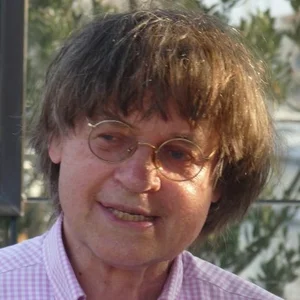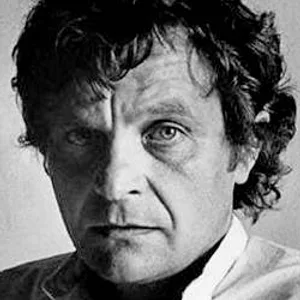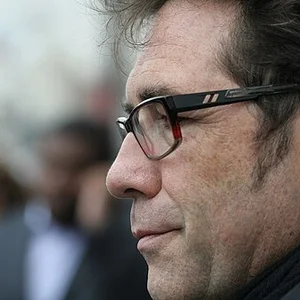

Philippe Honoré (1941-2015) was a French press cartoonist and illustrator, known for his fine, minimalist line and his literary references. A contributor to Charlie Hebdo, he was murdered on 7 January 2015 during the attack on the newspaper.
Philippe Honoré(1941 — 2015)
Philippe Honoré
France
5 min read
Frequently asked questions
Key Facts
- Born in 1941 in Vichy, he began publishing his drawings as a teenager in the 1950s
- Contributed to numerous French satirical publications, including Hara-Kiri and later Charlie Hebdo
- Recognized for his spare graphic style and his literary illustrations (wordplay, classical culture)
- Drew the last cover cartoon published on the morning of 7 January 2015
- Murdered on 7 January 2015 in the attack on the Charlie Hebdo newsroom, at the age of 73
Works & Achievements
Fine-lined, erudite press cartoons that made him a recognizable signature of the satirical newspaper.
A daily feature combining grids and drawings, prized for its wordplay and literary references.
Illustration work fed by his passion for literature, giving visual form to poems and classic texts.
Collaborations with several newspapers, in the tradition of French humorous and critical cartooning.
His last drawing, published on the morning of his death, which became a tragic symbol of freedom of expression.
Anecdotes
Philippe Honoré often signed his drawings with a simple “Honoré”. A lover of literature, he slipped nods to Rimbaud, Verlaine or Apollinaire into his illustrations, to the point of being considered the most “literary” of the Charlie Hebdo cartoonists.
From 1992 onward, he created a daily crossword feature for the newspaper Le Monde, which he illustrated himself. His grids, blending wordplay and literary culture, made it a favourite fixture for readers for more than twenty years.
The very last drawing he published appeared on the morning of his death, 7 January 2015: a greetings cartoon showing the leader of Daesh, captioned “And above all, good health”. The dark humour of this final image, posted on Charlie Hebdo's Twitter account just before the attack, struck public opinion deeply.
Honoré had a style unlike any other: fine, precise, almost old-fashioned, running counter to the more caricatural manner of his colleagues. He worked with pen and ink, cultivating a graphic elegance inherited from the great illustrators of the early 20th century.
On 7 January 2015, he was murdered on the premises of Charlie Hebdo alongside Cabu, Wolinski, Charb and Tignous. His death, together with that of the other cartoonists, sparked an enormous mobilisation across France around the slogan “Je suis Charlie” and marches bringing together millions of people.
Primary Sources
A greetings cartoon depicting an Islamic State fighter, with the caption “And above all, good health”.
Philippe Honoré, cartoonist and creator of Le Monde's illustrated crosswords, is among the victims of the attack on Charlie Hebdo.
His fine, cultured line, steeped in literary references, made him a singular figure in French press cartooning.
Key Places
Town in Auvergne where Philippe Honoré was born in 1941, in the midst of the Second World War.
Editorial offices of the satirical weekly, on rue Nicolas-Appert, where he worked and where he was murdered on 7 January 2015.
Daily newspaper for which he created illustrated crosswords for more than twenty years.
Gathering place for the marches and popular tributes after the January 2015 attack.
Typical Objects

Honoré's favorite tool, whose fine, clean line recalled the great classical illustrators. He drew by hand, against the grain of digital tools.

The work surface on which he composed his illustrations and press cartoons. The central space of his daily craft.

The medium for the illustrated crosswords he designed daily for Le Monde. Blending wordplay and drawing, it embodied his love of letters.

Charlie Hebdo, the irreverent weekly where his drawings appeared. A vehicle for caricature and for political and religious criticism.

Small studio equipment allowing for the shades of grey and the solid fills of his drawing. An extension of his graphic exacting standards.

Books of poetry and literature that fed his references (Rimbaud, Verlaine, Apollinaire). A constant source of inspiration for his illustrations.
School Curriculum
Vocabulary & Tags
Key Vocabulary
Daily Life
Morning
The morning of a press cartoonist often began with reading the newspapers and listening to the news, to catch the current events worth sketching. Honoré, a man of letters, also leafed through his poetry collections before settling at his table.
Afternoon
The afternoon was devoted to drawing itself: sketches, inking, the search for just the right line. He also had to design the illustrated crossword grids, patient work assembling words and images together.
Evening
Evening brought the time for editorial meetings and exchanges with his colleagues at Charlie Hebdo, where they discussed the week's themes and drawings. It was also a moment for reading and reflecting on current affairs.
Food
Like most Parisians of his generation, he shared the daily rhythm of French urban life: coffee in the morning, simple meals sometimes grabbed on the go between two drawing boards, editorial lunches with the newspaper's team.
Clothing
He wore the discreet, understated attire of a late-20th-century Parisian intellectual: comfortable jackets, shirts and sweaters, far from any ostentation, mirroring his spare, uncluttered line.
Housing
He lived and worked in Paris, in the world of editorial offices and artists' studios. His living space blended the domestic and the studio, a drawing table, inkwells and a well-stocked library.
Historical Timeline
Period Vocabulary
Liens externes & ressources
Références
Œuvres
Illustrations et dessins pour Charlie Hebdo
années 1990-2015
Mots croisés illustrés du journal Le Monde
1992-2015
Illustrations d'ouvrages littéraires et de poésie
années 1970-2000
Dessins de presse pour divers titres satiriques
années 1960-1990
Dernier dessin de vœux « Et surtout la santé »
7 janvier 2015