 Flip the card
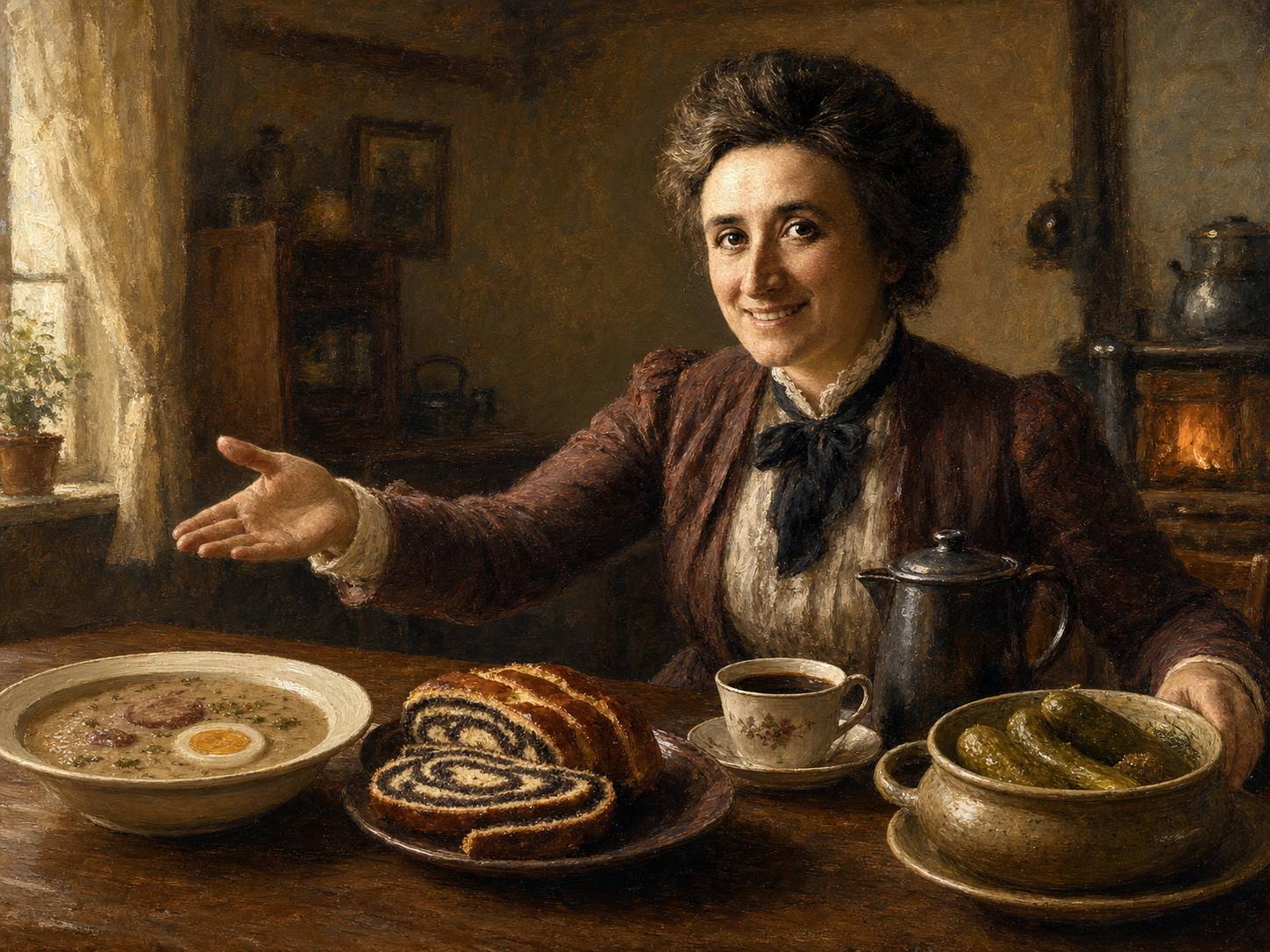
Rosa Luxemburg at the table
1871 — 1919
On the menu
The Polish obiad and the Jewish table of Zamość
In Congress Poland, where Rosa grew up, the main meal of the day is obiad, taken in the middle of the afternoon. It begins with a zupa (a soup that alone sustains modest families), followed by a danie (a single dish of grain, vegetable, or poultry). Kiszonki (lacto-fermented vegetables) accompany everything, stored in the cellar, and słodkości (sweet treats with poppy seed or farmer cheese) close festive days. Among the Jews of Zamość, the same structure adapts to the rhythm of Shabbat.
Signature : Fermentation (kiszenie) and rye sourdough (zakwas)
The acidic heart of this cuisine is lacto-fermentation: a rye sourdough (zakwas) that sours soups, and brine that transforms cucumbers and cabbages. It is a poor person's technique—it preserves without sugar or meat, lasts through winter, and gives that sour-fresh taste that marks the entire table of Central Europe.
click to flip back
Rosa Luxemburg at the table
1871 — 1919
5 period recipes
 Everyday
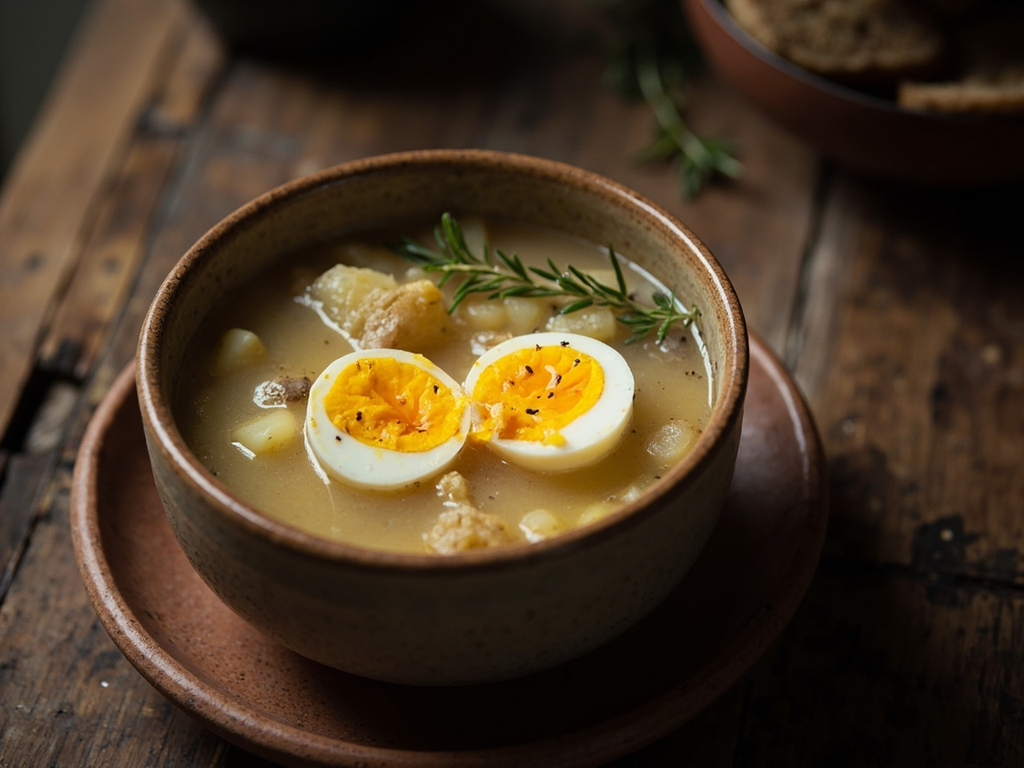
Żurek — sour rye soup
Zupa (obiad soup base)
🍋 🫙 🧂· 45 min (+ 5 days for sourdough)
View the recipe
 Festive
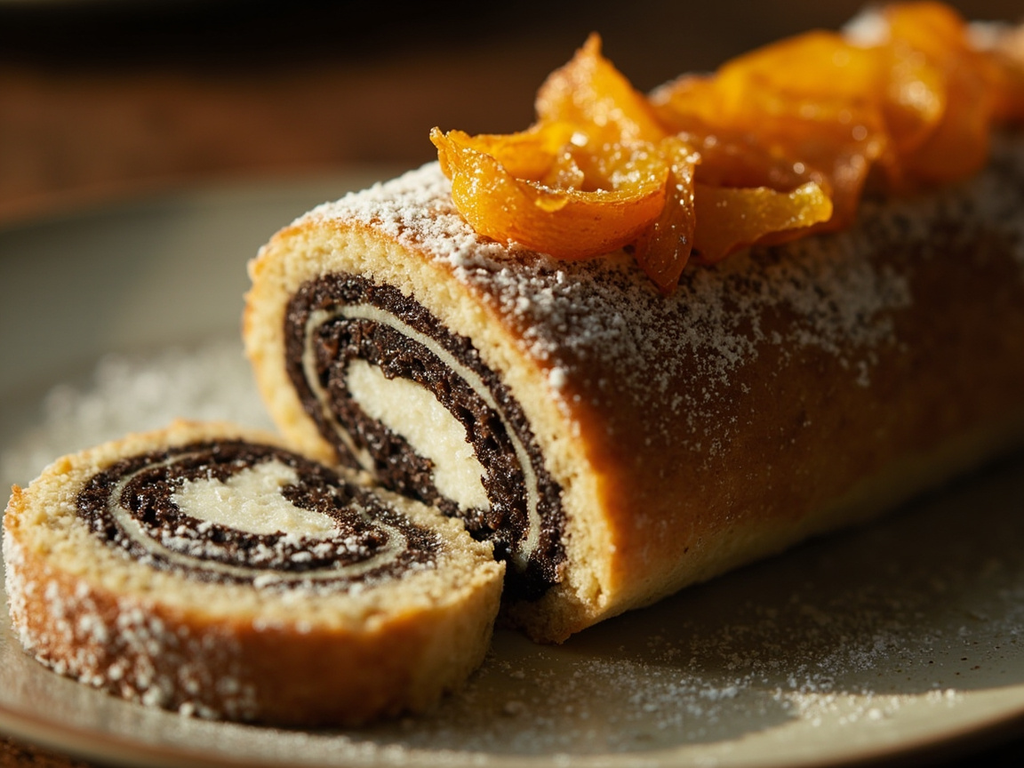
Makowiec — poppy seed roll
Słodkości (festive sweet)
🍯· 2 h 30 (with rising)
View the recipe
 Drink
DrinkKawa z cykorią — chicory coffee
Napój (work drink)
☕· 10 min
View the recipe
 Preserving
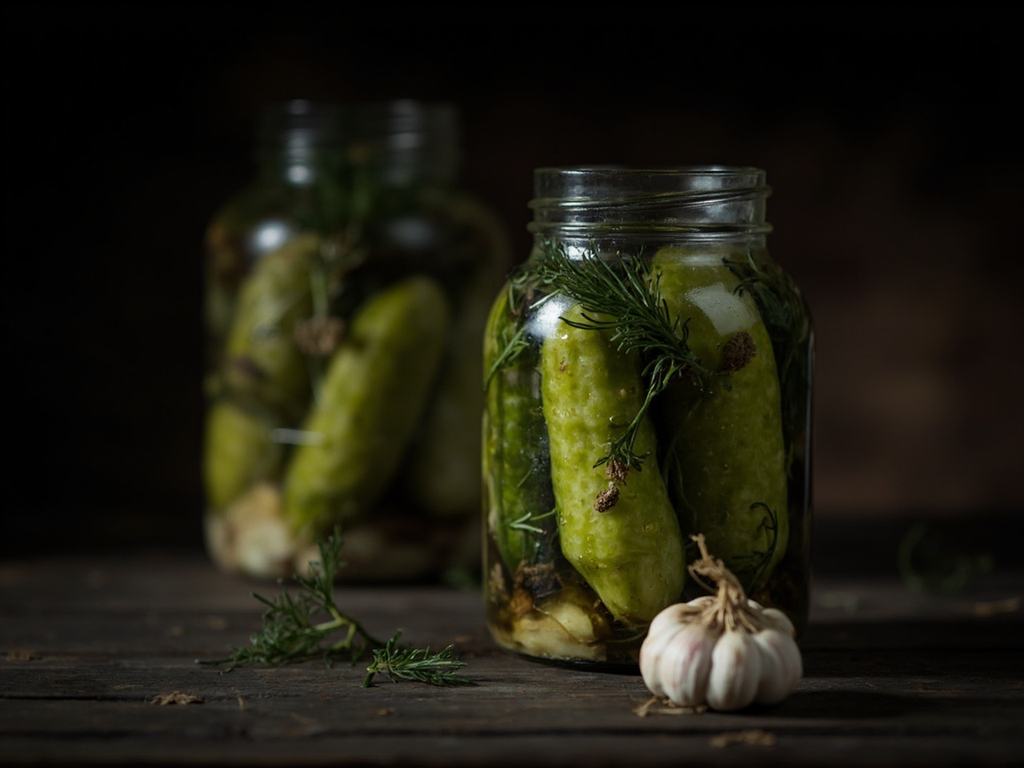
Ogórki kiszone — lacto-fermented cucumbers
Kiszonki (fermented cellar reserve)
🍋 🫙· 20 min (+ 3 to 7 days fermentation)
View the recipe
 Remedy
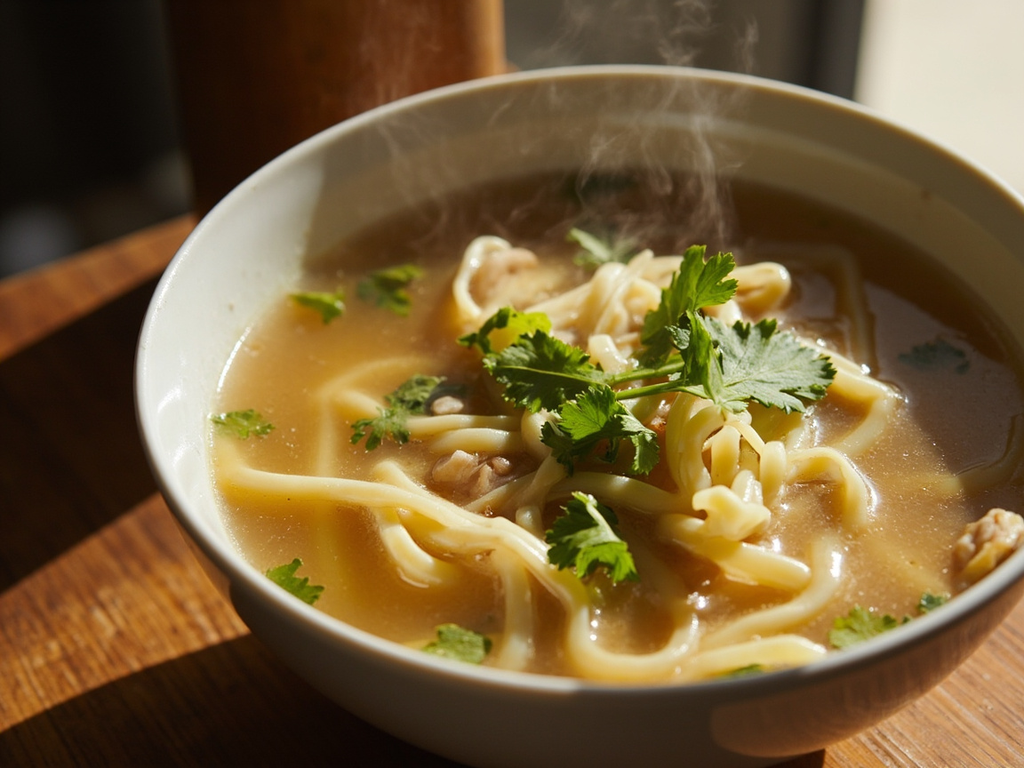
Rosół z kluskami — chicken noodle soup
Zupa (comforting broth)
🧂 🍄· 3 h
View the recipe