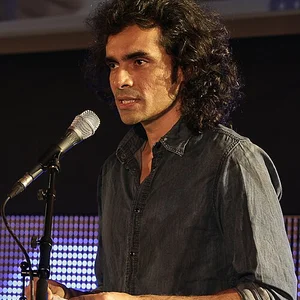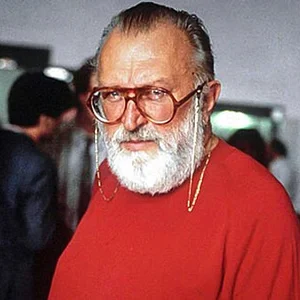

Italian director and screenwriter (1929–1989), father of the spaghetti western. He revolutionized genre cinema with his Dollars Trilogy and Once Upon a Time in America.
Sergio Leone(1929 — 1989)
Sergio Leone
Italie
9 min read
Frequently asked questions
Famous Quotes
« Cinema is the most beautiful way to tell lies.»
« I don't make films about violence. I make films about violent men.»
Key Facts
- 1929: born in Rome, son of a silent film director
- 1964: A Fistful of Dollars launches the spaghetti western and introduces Clint Eastwood to the world
- 1966: The Good, the Bad and the Ugly, a masterpiece of the genre, with music by Ennio Morricone
- 1968: Once Upon a Time in the West, considered one of the greatest westerns ever made
- 1984: Once Upon a Time in America, an epic saga about the American Mafia and his artistic testament
Works & Achievements
Leone's first feature film as sole director. This spectacular *peplum* allowed him to learn how to direct actors and master the techniques of large-scale filmmaking.
The first installment of the Dollars Trilogy and the founding film of the Spaghetti Western genre. By transposing Kurosawa's *Yojimbo* to a Far West setting, Leone invented a cynical antihero who revolutionized the conventions of the genre.
The second installment of the trilogy, refining the formula by introducing a second protagonist (Lee Van Cleef) and deepening the theme of revenge. The collaboration with Ennio Morricone reaches new heights here.
The pinnacle of the Dollars Trilogy and one of the most celebrated Westerns in cinema history. The final three-way standoff (the *triello*) and Ennio Morricone's score have become part of the world's collective memory.
An elegiac masterpiece often regarded as the greatest Western ever made. A twilight film about the end of the frontier era and the rise of industrial capitalism, it stands out for its hypnotic slowness and spellbinding soundtrack.
A political Western set during the Mexican Revolution of 1913. It explores themes of political commitment, betrayal, and memory, with Rod Steiger and James Coburn in the lead roles.
An epic nearly four hours long about friendship, betrayal, and nostalgia within New York's Jewish gangster underworld. Leone's artistic testament, the film is a meditation on time, memory, and the corruption of the American Dream.
Anecdotes
For his first true western, 'A Fistful of Dollars' (1964), Sergio Leone chose a virtually unknown American actor for European audiences: Clint Eastwood, glimpsed in the TV series 'Rawhide'. Paid only 15,000 dollars, Eastwood would become a world star thanks to this film, marking the beginning of a revolution in genre cinema history.
Sergio Leone and composer Ennio Morricone were classmates in primary school in Rome. Decades later, their artistic collaboration would transform film music: Leone would hum the musical themes he had in mind even before filming began, and Morricone composed the music BEFORE the scenes were shot — a radically new practice at the time.
For 'A Fistful of Dollars', Leone used the pseudonym 'Bob Robertson' (literally 'son of Bob', a nod to his father Roberto Roberti). The film was very loosely inspired by Akira Kurosawa's 'Yojimbo', and Kurosawa did indeed acknowledge the borrowing: he obtained the film's distribution rights in Japan in exchange for dropping any lawsuit.
The shooting of the Dollars Trilogy took place not in the United States but on the arid plains of Almería, Spain, and at the Cinecittà studios in Rome. Sergio Leone had never set foot in the United States before making three 'American' westerns: the Spanish desert landscapes perfectly mimicked the Wild West, at a fraction of the cost.
'Once Upon a Time in America' (1984), Leone's masterpiece, originally ran 229 minutes. The American distributor, fearing audiences would not endure such a length, cut the film to 139 minutes by rearranging the chronological order of scenes, destroying the entire narrative structure in the process. Leone never recovered from this, and the film was a commercial failure in the United States before being recognized as a masterpiece in its full-length version.
Primary Sources
I wanted to demythologize the American western. John Ford's hero is a saint, Hawks's is a fearless professional. My character, on the other hand, is ambiguous: he is neither good nor bad — he is trying to survive.
It is a very beautiful film, but it is my film. You have copied Yojimbo scene by scene. I will not allow this film to be released in Japan without prior agreement.
This film is my whole life. I carried it for ten years. What the Americans did to it is a crime against cinema. They cut out the memory of the film, and without the memory, there is nothing left.
The spaghetti western is not a subgenre of the American western. It is a European genre that uses the codes of the western to talk about other things: money, betrayal, survival.
Key Places
Sergio Leone's birthplace and the city where he died. He grew up in Rome surrounded by the world of cinema, began his career as an assistant director, and spent his entire life there. He died on April 30, 1989, of a heart attack.
The legendary Roman film studios where Leone built his Western sets and recreated the streets of 1920s New York for *Once Upon a Time in America*. Nicknamed "Hollywood on the Tiber," they are the cradle of postwar European cinema.
An Andalusian province with desert landscapes that served as the natural backdrop for Leone's Westerns from 1964 onward. Its barren plains and intense light were a perfect stand-in for the American West, and several movie-set villages built at the time still exist today.
The main setting of *Once Upon a Time in America* (1984). Leone filmed real scenes in the Lower East Side while recreating most of the neighborhood at Cinecittà. The film embodies his poetic and tragic vision of the American Dream.
Typical Objects
An emblematic tool of film production, the clapperboard synchronizes sound and image during editing. On Leone's sets at Cinecittà or in Spain, it marked each take of a meticulous staging process that could last for hours.
The iconic weapon of the American western, the Colt .45 is the centerpiece of Leone's duels. In his films, the deliberate slowness with which characters draw this revolver becomes a dramatic and musical element in its own right.
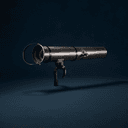
Leone shot in Techniscope and later Panavision, formats that deliver an extremely wide panoramic image (2.35:1 aspect ratio). This horizontal frame allowed him to compose monumental shots showcasing the vastness of the landscape and the isolation of his characters.
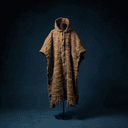
A traditional Mexican woolen garment worn by Clint Eastwood's Man with No Name in the Dollars Trilogy. It became one of the most recognizable costumes in cinema history, symbolizing the moral ambiguity of Leone's archetypal hero.
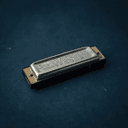
A wind instrument at the heart of *Once Upon a Time in the West*: Ennio Morricone's theme associated with this object is one of the most celebrated leitmotifs in world cinema. In the film, the harmonica is the symbol of a childhood trauma and the driving force behind an implacable quest for revenge.
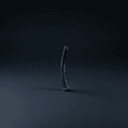
A small, blunt-cut cigar that became the distinctive trademark of Clint Eastwood's character in the Dollars Trilogy. Leone used it as a staging device to punctuate silences, mark the tense pauses of duels, and convey the character's dangerous nonchalance.
School Curriculum
Vocabulary & Tags
Key Vocabulary
Daily Life
Morning
Sergio Leone was a notorious late riser on his film sets. In the mornings, at his Roman villa, he read extensively — novels, screenplays, historical works on the American Far West — and annotated his shot breakdowns, surrounding the frames with hand-drawn sketches.
Afternoon
On set, Leone was an exceptionally meticulous and demanding director, capable of shooting the same scene dozens of times to achieve the exact effect he wanted. He communicated his musical intentions by humming Morricone's themes to his actors, and could spend an entire day on just a few seconds of film.
Evening
A devoted lover of Roman cuisine and lively conversation, Leone would spend his evenings with friends and collaborators at restaurants around Rome. A large and warm-hearted man, he was known for his infectious enthusiasm whenever he spoke about classic Hollywood cinema, of which he was a fervent admirer — despite, or perhaps because of, his desire to subvert it.
Food
Leone was a committed epicurean with a taste for traditional Roman cuisine: *cacio e pepe* pasta, *saltimbocca alla romana*, roast lamb. His imposing frame was testament to his appetite for the pleasures of the table, which he happily shared with his film crews over long, convivial meals.
Clothing
In everyday life, Leone dressed with the comfortable casualness of a man little concerned with appearances: Italian suits for formal occasions, relaxed attire on set. He often wore a hat during outdoor shoots in Spain to shield himself from the punishing Andalusian sun.
Housing
Leone lived in a fine Roman villa with his wife Carla Ranalli and their three children. His study was a true cinematic Aladdin's cave, filled with books, production photographs, American film posters, and visual references: thousands of volumes on the history of the United States and world cinema were piled throughout the room.
Historical Timeline
Period Vocabulary
Liens externes & ressources
Références
Œuvres
Le Colosse de Rhodes (Il Colosso di Rodi)
1961
Et pour quelques dollars de plus (Per qualche dollaro in più)
1965
Le Bon, la Brute et le Truand (Il Buono, il Brutto, il Cattivo)
1966
Il était une fois la Révolution (Giù la testa)
1971