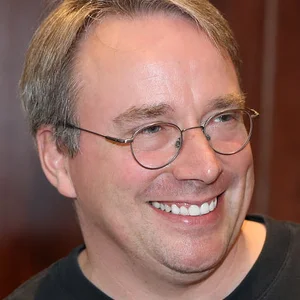
Israeli-American theoretical computer scientist and pioneer of modern cryptography. Co-recipient of the 2012 Turing Award with Silvio Micali, she laid the mathematical foundations of probabilistic cryptography and zero-knowledge proofs.
Shafi Goldwasser
Shafi Goldwasser
8 min read
Frequently asked questions
Key Facts
- Born in 1958 in New York to Israeli immigrant parents
- Completed her doctoral dissertation at Berkeley in 1983, under the supervision of Manuel Blum
- Co-invented with Silvio Micali the notion of semantic security in encryption (1982)
- 2012 Turing Award, the highest honor in computer science, shared with Silvio Micali
- Professor at MIT and at the Weizmann Institute of Science in Israel
Works & Achievements
A landmark paper published in the Journal of Computer and System Sciences, establishing for the first time a rigorous mathematical definition of the security of an encryption scheme. This work transformed cryptography from an empirical art into an exact science.
A paper presented at STOC 1985 introducing the concept of zero-knowledge proofs, which allow one to prove knowledge of a secret without revealing any information about that secret. Considered one of the most influential papers in the entire history of computer science.
Demonstrates the equivalence between two models of interactive proof systems, deepening the theory of interactive complexity and laying groundwork for the PCP theorem.
A cryptography course that has become a worldwide reference, freely distributed on the Internet from MIT. These teaching notes have trained generations of engineers and researchers in computer security.
A body of research on techniques for performing computations on encrypted data without decrypting it, paving the way for confidential data processing in the cloud.
Anecdotes
In 1982, at the University of California at Berkeley, Shafi Goldwasser and Silvio Micali asked themselves a question that seemed almost absurd: is it possible to prove that you know a secret without ever revealing it? This apparently paradoxical question would give birth to “zero-knowledge proofs,” a concept as baffling as a magic trick made rigorous by mathematics.
At the STOC conference in 1985, Goldwasser presented with Micali and Rackoff the foundational paper on zero-knowledge proofs. The audience, though accustomed to mathematical abstractions, was left astounded: it was now proven that one could convince someone of a truth without giving them any information about how one knows it. This result, dismissed by some as too abstract, would become thirty years later a cornerstone of blockchain security.
In 2012, the Association for Computing Machinery awarded her the Turing Award alongside Silvio Micali — the computing equivalent of the Nobel Prize. Goldwasser is one of the very few women to have received this distinction since its creation in 1966, a crowning achievement for theoretical work long considered too abstract to be of practical use… before becoming the mathematical foundation of Internet security.
Goldwasser long led a dual academic life, teaching simultaneously at MIT in Cambridge (Massachusetts) and at the Weizmann Institute in Israel, crossing the Atlantic several times a year. Born in New York, raised in Israel, trained at Carnegie Mellon then Berkeley, she embodies that generation of researchers whose biography is as international as their networks of collaboration.
Primary Sources
We propose a novel framework for the study of computational difficulty of decrypting encrypted messages. Our framework allows for the first time a rigorous proof that a cryptosystem is secure.
In this paper we study the information complexity of interactive proof systems. We introduce a new measure, called knowledge complexity, which measures the amount of knowledge communicated from the prover to the verifier during an interactive proof.
We study the difference in power between interactive proof systems where the verifier's random choices are public and those where they are private, and show that these two types of systems have the same power.
Cryptography is now a mathematical science. We can prove theorems about the security of cryptographic protocols. The field has been transformed from an art practiced by a few to a rigorous science accessible to all.
Key Places
Goldwasser earned her bachelor's degree in mathematics here in 1979. It was here that she discovered theoretical computer science and decided to pursue it for her doctoral studies.
She completed her doctorate in computer science here under the supervision of Manuel Blum, awarded in 1984. It was during these years that her foundational work on probabilistic encryption, developed with Silvio Micali, first took shape.
The Computer Science and Artificial Intelligence Laboratory at MIT has been her primary workplace since 1983. There she leads the cryptography and theoretical computer science group and has trained generations of researchers.
She holds a professorial chair there alongside her position at MIT, maintaining a strong connection with the Israeli scientific community. This dual affiliation reflects the international dimension of her career.
The city where Goldwasser grew up after her family emigrated from New York. Her Israeli upbringing shaped her worldview and her path toward mathematics.
Typical Objects

The theoretical mathematician's central tool, on which Goldwasser and her collaborators formalize proofs, sketch complexity graphs, and build their arguments. Collective work sessions around the blackboard are at the heart of theoretical computer science culture.

Goldwasser's early work on probabilistic cryptography was developed during the era of the first Unix workstations. These machines, far less powerful than today's smartphones, were the playground of nascent cryptography.

Theoretical computer scientists record their proofs in notebooks filled with formal notation and proof attempts. These notebooks bear witness to the artisanal nature of fundamental research before the digital age.

Before the internet, research results circulated as typescripts mailed between universities. The landmark 1985 paper on zero-knowledge proofs circulated in this way for years before its official publication.

A concrete representation of the public-key cryptography whose theoretical foundations Goldwasser formalized and critiqued. These long strings of digits have become ubiquitous across all of modern computer security.

Course material co-written with Mihir Bellare, freely distributed on the internet since 1997, and now a worldwide reference used in universities across the globe to teach rigorous cryptography.
School Curriculum
Vocabulary & Tags
Key Vocabulary
Tags
Daily Life
Morning
Goldwasser's day at a lab like MIT CSAIL often begins with reading the latest research preprints and checking in with her doctoral students. Theoretical computer science relies on thinking and writing rather than laboratory experiments: the early hours are devoted to careful reading of papers and to formalizing new intuitions.
Afternoon
Afternoons are shaped by seminars, research group meetings around the blackboard, and collaborative work sessions with colleagues or students. Theoretical cryptography is often built collectively, through intense exchanges where the goal is to turn intuitions into rigorous mathematical proofs.
Evening
Evenings, especially during international conference season, are spent writing papers, preparing presentations, or exchanging emails with collaborators around the world. Theoretical computer scientists often work late: the best ideas frequently arise outside regular office hours.
Food
Like many American academic researchers, campus culture shapes daily eating habits: university cafeterias, seminar coffee breaks, working lunches. Frequent travel between the United States and Israel exposes Goldwasser to two distinct culinary traditions.
Clothing
Theoretical computer scientists of the 1980s–2000s typically dressed in casual, functional attire — jeans, sweaters, jackets — typical of American university campuses. More formal dress was reserved for major international conferences and award ceremonies such as the Turing Award in 2012.
Housing
Goldwasser split her life between Cambridge, Massachusetts, near MIT, and Rehovot, Israel, near the Weizmann Institute, living the rhythm of researchers with dual international affiliations. These transatlantic back-and-forths are characteristic of the global academic elite in computer science.
Historical Timeline
Period Vocabulary
Liens externes & ressources
Références
Œuvres
Probabilistic Encryption (avec Silvio Micali)
1984
The Knowledge Complexity of Interactive Proof Systems (avec Micali et Rackoff)
1985
Private Coins versus Public Coins in Interactive Proof Systems (avec Michael Sipser)
1986
Lecture Notes on Cryptography (avec Mihir Bellare)
1997
Travaux sur le chiffrement homomorphe et la vie privée computationnelle
2009-2020