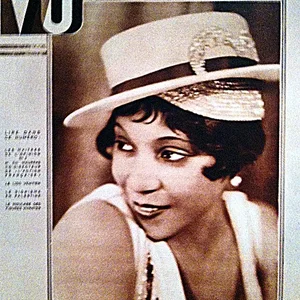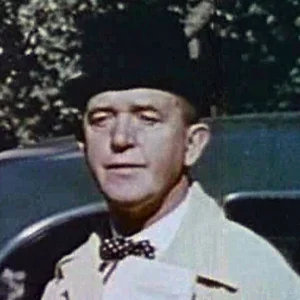

Stan Laurel (1890-1965) was a British actor and comedian, famous for forming the comic duo Laurel and Hardy with Oliver Hardy. A pioneer of slapstick comedy in both silent and sound film, he left a lasting mark on cinema history with his poetic and absurdist humor.
Stan Laurel(1890 — 1965)
Stan Laurel
Royaume-Uni
9 min read
Frequently asked questions
Key Facts
- Born on June 16, 1890, in Ulverston, England, under the name Arthur Stanley Jefferson
- Met Oliver Hardy in 1926 and formed the legendary Laurel and Hardy duo
- Appeared in more than 100 short and feature films between 1927 and 1951
- Awarded an honorary Academy Award in 1961 for his contributions to comedy in cinema
- Died on February 23, 1965, in Santa Monica, California
Works & Achievements
Short film in which Laurel and Hardy attempt to deliver a piano up a monumental flight of stairs. The duo's first and only Oscar in their lifetimes, this film is universally regarded as the absolute masterpiece of slapstick comedy.
Feature film in which the two pals try to attend their fraternal order's convention despite the opposition of their wives. Considered by critics to be the best feature film Laurel and Hardy ever made.
Burlesque western in which Laurel and Hardy head out to the Far West to deliver an inheritance. The film contains the duo's famous impromptu song-and-dance sequence, which has become one of the most iconic images of their partnership.
A whimsical feature film inspired by an operetta, blending slapstick and fantasy in the Land of Toyland. One of the duo's most ambitious and original productions.
A silent short film and a textbook example of escalating gags: Laurel and Hardy, Christmas tree salesmen, get drawn into a tit-for-tat war of destruction with an exasperated customer. A perfect showcase of the repetitive comedy and absurd escalation that defined the duo.
Considered the first official film of the Laurel and Hardy duo, it lays the groundwork for the comic style that would make them famous around the world for decades to come.
Anecdotes
Stan Laurel, born Arthur Stanley Jefferson, began his career as Charlie Chaplin's understudy in Fred Karno's vaudeville troupe. During a tour of the United States in 1912, the two young comedians crossed the Atlantic together, with no idea that this journey would mark the beginning of two great and separate Hollywood careers.
The famous Laurel and Hardy duo came about almost by chance in 1926 on the set of a comedy at Hal Roach Studios. The producer noticed the natural chemistry between the two actors and decided to pair them permanently. Their alchemy rested on a striking contrast: the tall Oliver Hardy, overbearing and pompous, opposite the slight Stan Laurel, naive and accident-prone.
The short film *The Music Box* (1932), in which Laurel and Hardy desperately attempt to deliver a player piano to the top of an endless flight of stairs in Los Angeles, won the Academy Award for Best Short Subject (Two-Reel). It was the only individual Oscar the duo received during their lifetimes, though Stan was awarded an Honorary Oscar in 1961 for his lifetime achievement.
After Oliver Hardy's death in 1957, Stan Laurel flatly refused to perform with another partner. He spent his final years in his Santa Monica apartment writing comic gags and corresponding with admirers from around the world, faithful to the memory of his friend and partner of more than thirty years.
Stan Laurel was known for his creative perfectionism: unlike Hardy, who deferred more to the director, Laurel was actively involved in writing scripts and devising gags. Several directors attested that he was the true comic architect of the duo, inventing the absurd situations and slapstick effects that made the partnership immortal.
Primary Sources
In his many letters to John McCabe, Stan Laurel humorously recalled the behind-the-scenes workings of the duo: 'Ollie and I never needed to rehearse for long — we instinctively knew what the other was going to do. That's something you can't teach.'
Asked about the secret to Laurel and Hardy's success, Stan said: 'We played ordinary men faced with impossible situations. People laughed because they recognized themselves in our clumsiness and our way of never learning from our mistakes.'
The Hal Roach Studios archives contain memos attesting to Stan Laurel's active role in devising gags and the editorial control he exerted over the films, sometimes at the expense of the production's budgets and schedules.
Upon receiving his honorary Oscar in 1961, Stan Laurel said with emotion: 'I only wish Ollie were here to share this honor with me. It belonged to him as much as to me — perhaps even more.'
Key Places
Stan Laurel's birthplace, where he was born Arthur Stanley Jefferson on June 16, 1890. A museum dedicated to Laurel and Hardy now stands there, reflecting the town's enduring pride in its most famous son.
The production studio where Laurel and Hardy shot the majority of their films between 1926 and 1940. It was on these soundstages that the most celebrated comedy duo in cinema history was born and flourished, under the watchful eye of producer Hal Roach.
The epicenter of the global film industry, Hollywood was the main stage of Stan Laurel's career and the place where the duo's legend was built over more than thirty years.
Stan Laurel's home in his final years, after the death of Oliver Hardy. It was here that he died on February 23, 1965, having spent his last years writing gags and corresponding with admirers from around the world.
The city where Stan Laurel got his start in the music halls before joining Fred Karno's troupe. He returned in triumph during the 1950 European tour, welcomed as a hero by British audiences.
Typical Objects
The iconic headwear worn by both comedians, the bowler hat symbolized their aspirations to bourgeois respectability — aspirations perpetually undermined by their blunders. It was frequently crushed, swapped, or lost in the course of their adventures, becoming a comic prop in its own right.

The central instrument of film production at the Hal Roach Studios, the 35 mm camera was used to shoot the silent films and the first talkies. It is through this device that Laurel and Hardy's gags were immortalized for posterity.
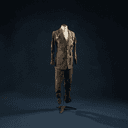
Clothing that was too large or too tight was a fundamental comic device in slapstick. Stan Laurel wore slightly rumpled suits that accentuated his nonchalant air, while Oliver Hardy wore clothes that were too tight, emphasizing his portliness and his perpetually wounded dignity.
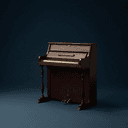
Made famous by *The Music Box* (1932), the player piano was a symbol of modernity and bourgeois aspiration in 1930s America. The impossible task of delivering one up an endless flight of stairs, as attempted by Laurel and Hardy, constitutes one of the most celebrated comic sequences in the history of cinema.

The introduction of the microphone into studios from 1927 onwards radically transformed film production. Unlike many silent-era stars who faded with the advent of sound, Laurel and Hardy adapted with great success, thanks to their distinctive and complementary voices.

An essential piece of technical equipment on film sets from the 1920s onward, the clapperboard was used to synchronize sound and picture during editing. It symbolizes the collective, craft-based nature of film production during Hollywood's golden age.
School Curriculum
Vocabulary & Tags
Key Vocabulary
Tags
Daily Life
Morning
In the 1930s, Stan Laurel arrived very early at the Hal Roach studios, often before the rest of the crew. He spent the first hours of the day working on scripts and gags with the writers, adding his own comic ideas before filming officially began.
Afternoon
Afternoons were devoted to shooting on the studio sets. Stan Laurel took an active role in directing decisions, suggesting variations to directors and sometimes improvising gags on set, much to the frustration of producers mindful of deadlines and budgets.
Evening
Stan Laurel typically spent his evenings at home rereading the next day's scripts or jotting new comic ideas in his notebooks. Those close to him described how he could laugh alone for long stretches at his own gags — proof of a wholly natural sense of humor.
Food
Like most American actors of the era, Stan Laurel kept the eating habits of his British childhood: eggs and toast in the morning, a quick lunch at the studio canteen. He retained a lifelong fondness for tea, a habit his American colleagues found quietly amusing.
Clothing
Off set, Stan Laurel dressed simply and inconspicuously, far removed from the rumpled-suit character he played on screen. He wore the classic, understated suits of the 1930s — practical and plain, with none of the eccentricity of his cinematic alter ego.
Housing
Stan Laurel lived in various homes around the Los Angeles area throughout his career. At his peak in the 1930s, he lived in a comfortable villa in Hollywood. After Oliver Hardy's death, he moved into a more modest apartment in Santa Monica, where he quietly spent the rest of his life.
Historical Timeline
Period Vocabulary
Liens externes & ressources
Références
Œuvres
Sons of the Desert
1933
Babes in Toyland (Les Soldats de bois)
1934
Big Business
1929