The United Kingdom
Monarchs, prime ministers, scientists, writers and explorers — the figures who shaped Britain and its empire.
258 characters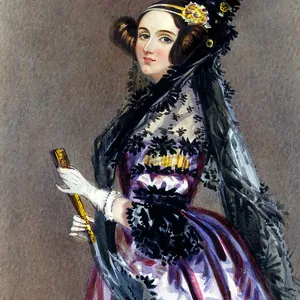
258 characters
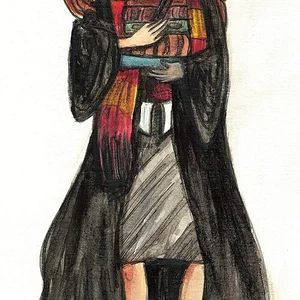
Hermione
Hermione Granger is a fictional character created by J.K. Rowling, the heroine of the "Harry Potter" series published from 1997 onward. Born to Muggle parents in 1979, she embodies the brilliant, studious, and loyal witch whose intelligence and courage play a decisive role in the fight against Voldemort.
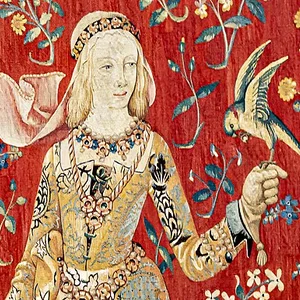
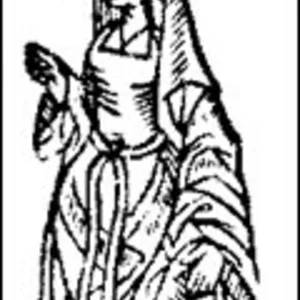
Blanche of Lancaster
1342 — 1368
Blanche of Lancaster (c. 1341–1368) was the daughter of Henry of Grosmont, first Duke of Lancaster, and the wife of John of Gaunt, son of King Edward III of England. Her early death inspired her husband to commission the poem *The Book of the Duchess* from Geoffrey Chaucer.
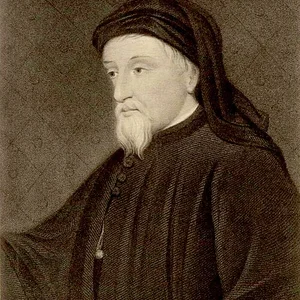
Geoffrey Chaucer
1343 — 1400
Geoffrey Chaucer (c. 1343–1400) is the greatest English poet of the Middle Ages, author of The Canterbury Tales. A diplomat and royal official, he brought the vernacular English language into high literature, leaving a lasting influence on English letters.
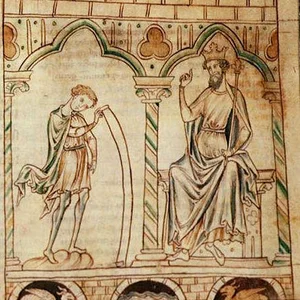
Geoffrey of Monmouth
1100 — 1155
Geoffrey of Monmouth is a 12th-century Welsh cleric and chronicler, famous for his *Historia regum Britanniae* (c. 1136). This work, blending history and legend, popularized the figures of King Arthur and the enchanter Merlin, durably shaping the Matter of Britain.
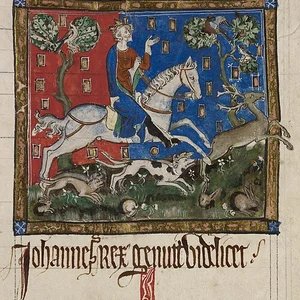
John Lackland
1166 — 1216
King of England from 1199 to 1216, son of Henry II and Eleanor of Aquitaine. He lost most of the Plantagenet continental possessions to Philip Augustus and was forced to sign Magna Carta in 1215.
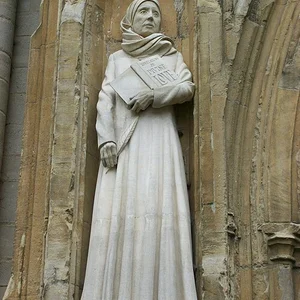
Julian of Norwich
1342 — 1500
A fourteenth-century English mystic, Julian of Norwich is the first known woman to write in the English language. Following a divine vision received in 1373, she composed Revelations of Divine Love, a foundational work of medieval Christian spirituality. Living as an anchoress in Norwich, she developed a theology centered on divine love and mercy.
Margery Kempe
1373 — 1438
English Christian mystic of the late Middle Ages, mother of fourteen children who became a pilgrim and visionary. She dictated the account of her life and mystical experiences, regarded as the first autobiography in the English language.
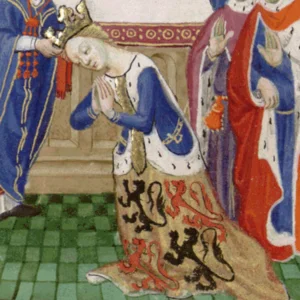
Philippa de Hainaut
1310 — 1369
Queen of England through her marriage to Edward III in 1328, Philippa of Hainaut was a respected sovereign, known for her clemency and benevolent influence. She played an important role in the English court and was a patron of the arts and letters.
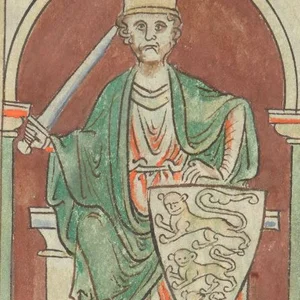
Richard the Lionheart
1157 — 1199
King of England from 1189 to 1199, Richard the Lionheart was a medieval monarch renowned for his leading role in the Third Crusade (1191–1192). He embodied the chivalric ideal of his era, though he spent very little time in England during his reign.
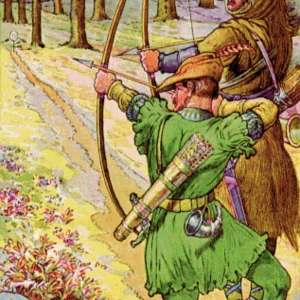
Robin Hood
A legendary hero of English folklore, Robin Hood is an archer and outlaw said to have operated in England during the Middle Ages. An iconic figure of popular resistance, he embodies the ideal of robbing from the rich to give to the poor.
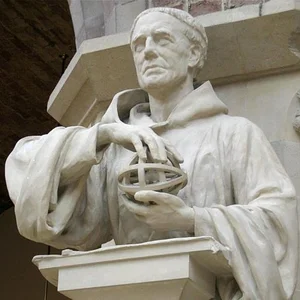
Roger Bacon
1220 — 1292
Roger Bacon, nicknamed Doctor Mirabilis, was a 13th-century English Franciscan friar, philosopher, and scholar. A pioneer of the experimental method, he championed observation and mathematics as the foundations of knowledge, long before modern science.
Thomas Malory
1405 — 1471
Fifteenth-century English writer, author of *Le Morte d'Arthur*, a vast prose compilation of the Arthurian legends. His work, published by Caxton in 1485, became the definitive source of the King Arthur myth in the English-speaking world.
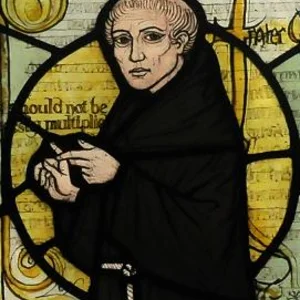
William of Ockham
1287 — 1349
William of Ockham was an English philosopher, logician, and theologian, a major figure of late Scholasticism and of the nominalist movement. A Franciscan friar, he is famous for the principle of parsimony known as “Ockham's razor.”
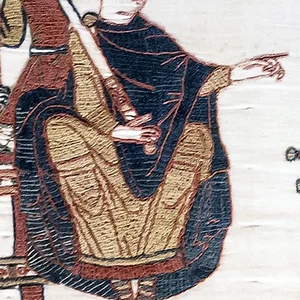
William the Conqueror
1028 — 1087
Duke of Normandy, William the Conqueror became King of England after his victory at the Battle of Hastings in 1066. This event marked one of the most significant conquests of the Middle Ages and profoundly transformed English society.
Agnes Waterhouse
1502 — 1566
Agnes Waterhouse was the first woman executed for witchcraft in England, hanged in 1566 in Chelmsford. Her trial, one of the earliest documented witchcraft trials in England, illustrates the rise of persecution driven by fear of black magic during the Tudor period.
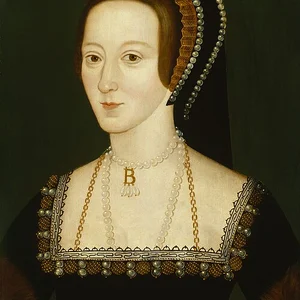
Anne Boleyn
1507 — 1536
Queen of England from 1533 to 1536, Anne Boleyn was the second wife of Henry VIII. Her marriage required England's break with Rome, giving rise to the Church of England. Mother of Elizabeth I, she was accused of adultery and beheaded at the Tower of London.
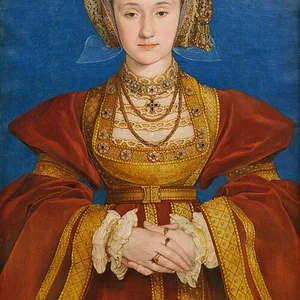
Anne of Cleves
1515 — 1557
A German princess of the House of La Marck, Anne of Cleves became the fourth wife of King Henry VIII of England in January 1540. The marriage, motivated by a diplomatic alliance with the Protestant princes, was annulled after six months.
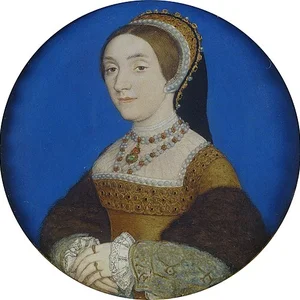
Catherine Howard
1523 — 1542
Catherine Howard was the fifth wife of King Henry VIII of England, whom she married in 1540. A very young queen consort, she was accused of adultery and treason, then executed in 1542.
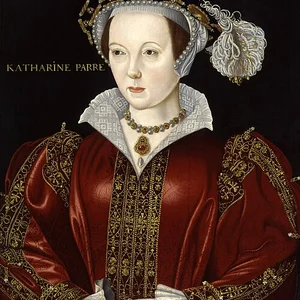
Catherine Parr
1512 — 1548
Sixth and last wife of King Henry VIII of England, whom she married in 1543. A cultured woman with reformist convictions, she was the only one of the six wives to outlive the king. She served as Regent of England in 1544 during Henry VIII's French campaign.
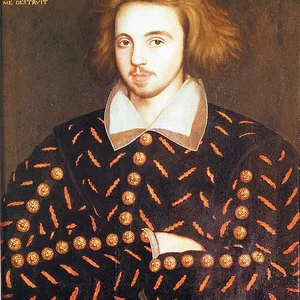
Christopher Marlowe
1564 — 1593
English playwright, poet, and translator of the Elizabethan Renaissance. A contemporary and rival of Shakespeare, he revolutionized English theatre with his blank-verse tragedies before dying violently at the age of 29.
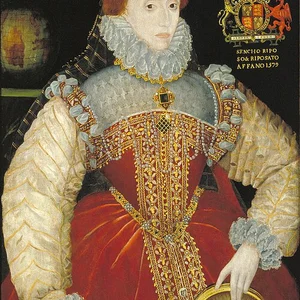
Elizabeth I of England
1533 — 1603
Elizabeth I (1533–1603) was Queen of England and Ireland for 45 years. The daughter of Henry VIII and Anne Boleyn, she consolidated Protestantism in England and led her kingdom to exceptional prominence in Europe. Her reign, known as the "Elizabethan era," was marked by the defeat of the Spanish Armada and a flourishing of arts and literature.
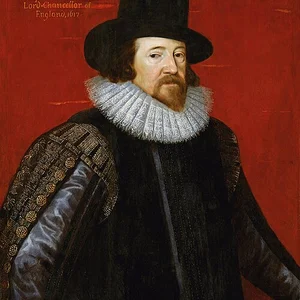
Francis Bacon
1561 — 1626
English philosopher and statesman (1561–1626), Francis Bacon is the founder of the modern experimental method. Lord Chancellor of England under James I, he championed the idea that science must be based on observation and induction rather than authority.
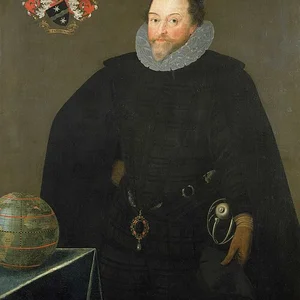
Francis Drake
1540 — 1596
Francis Drake was an English privateer and navigator of the 16th century, famous for being the second person to circumnavigate the globe by ship (1577–1580). Vice Admiral of the English fleet, he played a decisive role in the defeat of the Spanish Armada in 1588.
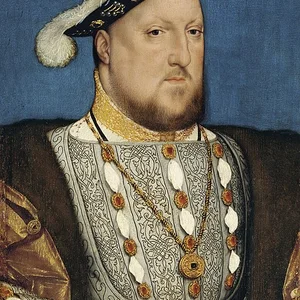
Henry VIII
1491 — 1547
King of England and Ireland from 1509 to 1547, Henry VIII is famous for breaking with the Catholic Church and founding the Church of England in order to annul his marriage. He married six wives and had two of them executed, leaving a lasting mark on England's political and religious history.
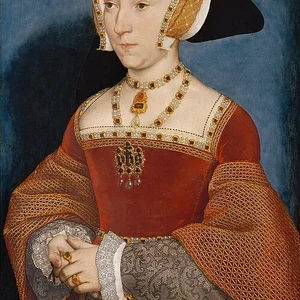
Jane Seymour
1508 — 1537
Jane Seymour was the third wife of King Henry VIII of England and queen consort from 1536 to 1537. She gave birth to the long-awaited male heir, the future Edward VI, but died a few days later from complications of childbirth.
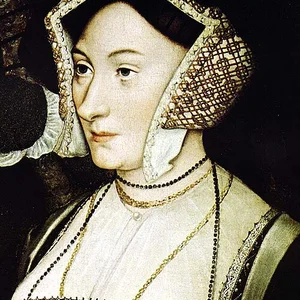
Margaret Roper
1505 — 1544
Margaret Roper, the eldest daughter of Thomas More, was an English humanist and translator of the Renaissance. Renowned for her exceptional scholarship, she was one of the first women not of royal birth to publish a translation in English.
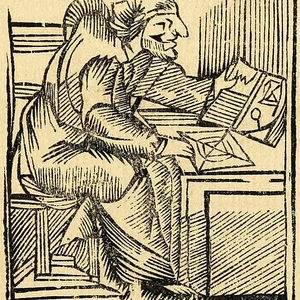
Mother Shipton
1488 — 1561
Legendary English prophetess and seer of the 16th century, born around 1488 in Knaresborough, Yorkshire. Famous for her prophecies in verse, she became a major folk figure of Tudor England. Her actual historical existence remains uncertain, as legend has far outgrown the facts.
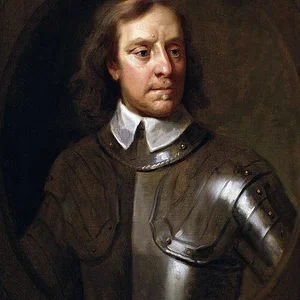
Oliver Cromwell
1599 — 1658
An English statesman and military leader, Oliver Cromwell led the Puritan revolution against Charles I. Commander of the Roundheads, he had the king executed in 1649 and ruled England as Lord Protector until his death in 1658.
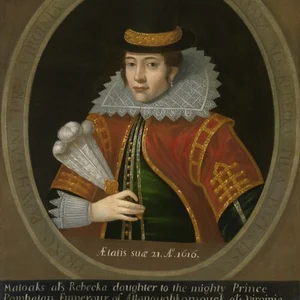
Pocahontas
1596 — 1617
Daughter of Chief Powhatan, leader of the Algonquian confederacy of Virginia, Pocahontas (c. 1596–1617) is a central figure in the encounter between the Powhatan peoples and the English settlers of Jamestown. Her story, passed down through colonial written sources and her people's oral tradition, symbolizes both the dialogue and the tensions between two worlds.
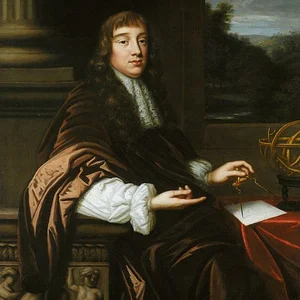
Robert Hooke
1635 — 1703
Robert Hooke was a 17th-century English polymath and scientist, a pioneer of microscopy. His work *Micrographia* (1665) revealed the microscopic world, and he introduced the term “cell.” He also formulated the law of elasticity that bears his name.
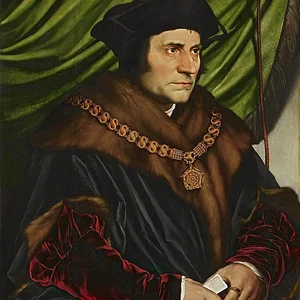
Thomas More
1478 — 1535
An English humanist and statesman, Thomas More served as Lord Chancellor to Henry VIII before opposing the Anglican schism. Author of Utopia (1516), he was executed for refusing to acknowledge the king as Supreme Head of the Church of England.
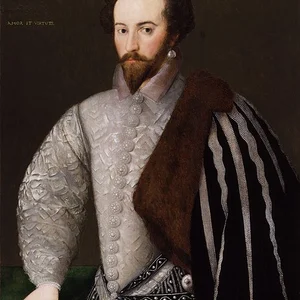
Walter Raleigh
1552 — 1618
English explorer, poet, and courtier (1552–1618), a favourite of Queen Elizabeth I. He organised several expeditions to North America and searched for El Dorado in South America. Imprisoned and later executed under James I, he remains an iconic figure of English expansion.
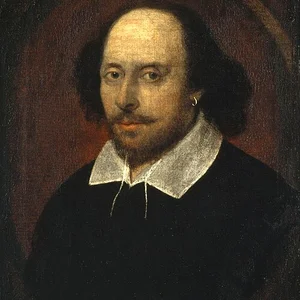
William Shakespeare
1564 — 1616
English playwright, poet, and actor (1564–1616), Shakespeare is the author of the greatest plays in world literature. He revolutionized theatre by exploring human psychology and creating unforgettable characters who grapple with love, power, and death.
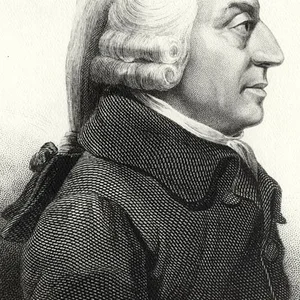
Adam Smith
1723 — 1790
An 18th-century Scottish philosopher and economist, Adam Smith is considered the father of modern political economy. His landmark work, The Wealth of Nations (1776), laid the foundations of economic liberalism and capitalism.
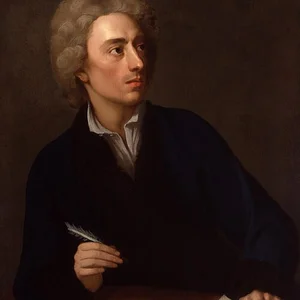
Alexander Pope
1688 — 1744
Alexander Pope was a British poet and essayist of the 18th century, a major figure of English Neoclassicism. A master of the rhymed heroic couplet, he is celebrated for his satirical and philosophical poems as well as for his translations of Homer's *Iliad* and *Odyssey*.
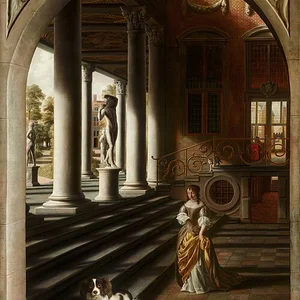
Anne Conway
1631 — 1679
Anne Conway was an English philosopher of the 17th century. Self-taught, she developed a vitalist metaphysics set out in her posthumous work “The Principles of the Most Ancient and Modern Philosophy.” Her thought notably influenced Leibniz and his concept of the monad.
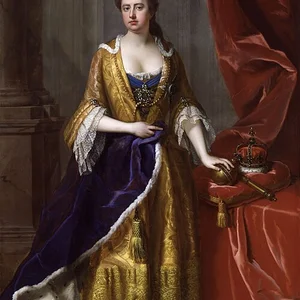
Anne of Great Britain
1665 — 1714
Queen of England, Scotland, and Ireland from 1702 to 1707, then first Queen of Great Britain following the Acts of Union of 1707. Her reign saw the rise of parliamentary government and the War of the Spanish Succession.
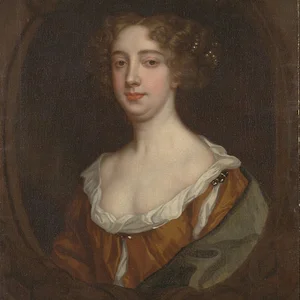
Aphra Behn
1640 — 1689
Aphra Behn (1640-1689) was the first English woman to earn her living by the pen. A prolific playwright, novelist, and spy in the service of Charles II, she defied the conventions of her time by making her mark in the male-dominated literary world.
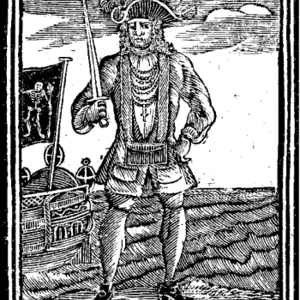
Bartholomew Roberts
1682 — 1722
Bartholomew Roberts, known as “Black Bart,” was a Welsh pirate considered the most prolific of the Golden Age of Piracy. In barely three years (1719–1722), he captured more than 400 ships across the Atlantic and the Caribbean before being killed in battle by the Royal Navy.
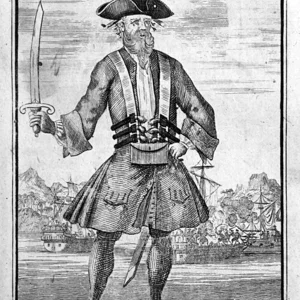
Blackbeard
1680 — 1718
Edward Teach, known as Blackbeard, was one of the most famous pirates of the early 18th century. He roamed the Caribbean and the Atlantic coast of North America aboard the Queen Anne's Revenge, spreading terror through his carefully cultivated reputation, before being killed in battle in 1718.
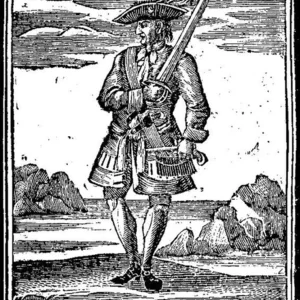
Calico Jack
1682 — 1720
English pirate of the early 18th century, active in the Caribbean during the “Golden Age of Piracy.” He owes his fame to his flag — a skull above two crossed cutlasses — and to the presence in his crew of the female pirates Anne Bonny and Mary Read.
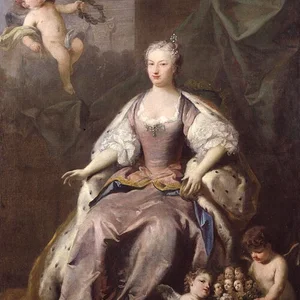
Caroline of Ansbach
1683 — 1737
Queen consort of Great Britain and Ireland (1727–1737), wife of George II. An Enlightenment intellectual, she corresponded with Leibniz and actively supported Newton in the philosophical and scientific dispute between the two men. Regent on several occasions, she wielded major political influence over the British monarchy.
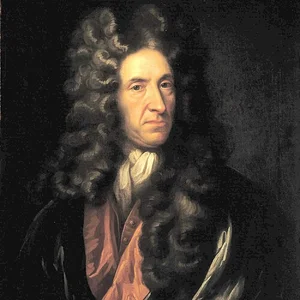
Daniel Defoe
1660 — 1731
Daniel Defoe was an English writer and journalist, considered one of the founders of the modern novel in the English language. He is famous for *Robinson Crusoe* (1719), a tale of adventure and survival on a desert island.
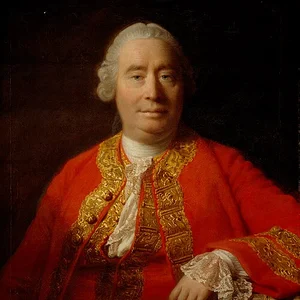
David Hume
1711 — 1776
Scottish Enlightenment philosopher (1711-1776), David Hume is one of the foremost thinkers of modern empiricism. He grounded his philosophy in observation and sensory experience, challenging rational certainties and developing a sceptical approach to knowledge.
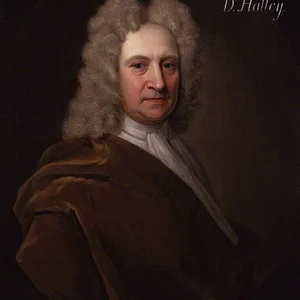
Edmond Halley
1656 — 1742
An English astronomer and scientist of the 17th–18th century, he is famous for calculating the orbit of the comet that bears his name and predicting its return. A friend and patron of Newton, he played an essential role in the publication of the Principia Mathematica.
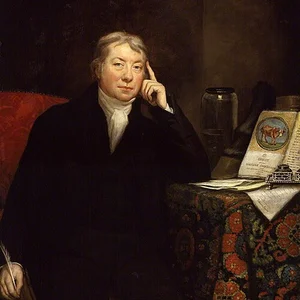
Edward Jenner
1749 — 1823
English physician and scientist (1749-1823), pioneer of vaccination. In 1796, he developed the first vaccine in history by inoculating cowpox to protect against human smallpox.
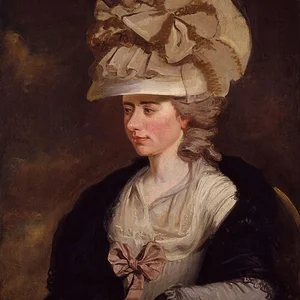
Frances Burney
1752 — 1840
English novelist, playwright, and diarist (1752-1840), Frances Burney published Evelina anonymously in 1778, an epistolary novel that was an immediate success. A forerunner of Jane Austen, she documented eighteenth-century English society with great perceptiveness in her journals and correspondence.
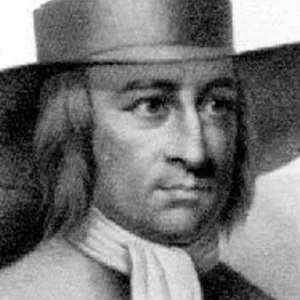
George Fox
1624 — 1691
Seventeenth-century English preacher, founder of the Religious Society of Friends, commonly known as the Quakers. He advocated a direct and inward experience of God, without clergy or rituals, grounded in the “inner light” present in every human being.
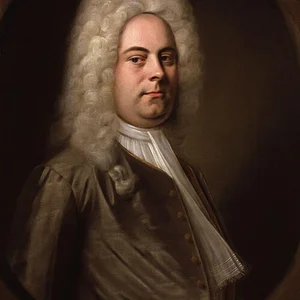
George Frideric Handel
1685 — 1759
German-born Baroque composer who became a British subject (1685–1759), Handel is one of the towering figures of 18th-century music. He is celebrated for his Italian operas, oratorios, and concerti grossi. His work *Messiah* (1741) remains one of the masterpieces of Western sacred music.
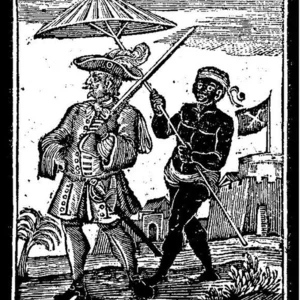
Henry Every
1659 — 1699
Henry Every, nicknamed “Long Ben,” was an English pirate of the late 17th century. In 1695, he seized the Ganj-i-Sawai, a ship of the Grand Mughal, pulling off one of the largest hauls in the history of piracy. Actively hunted, he vanished without ever being captured.
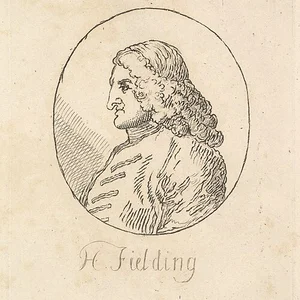
Henry Fielding
1707 — 1754
Henry Fielding (1707-1754) was an English novelist, playwright and magistrate, regarded as one of the fathers of the modern novel. His masterpiece, *Tom Jones* (1749), is a comic and moral panorama of eighteenth-century English society.
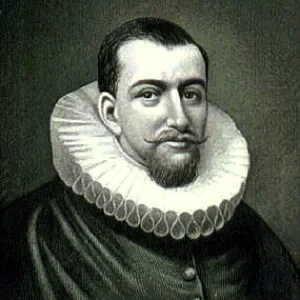
Henry Hudson
1565 — 1611
An English navigator and explorer of the early 17th century, Henry Hudson led four expeditions in search of a Northwest Passage to Asia. He gave his name to Hudson Bay in Canada, before disappearing during a mutiny by his crew in 1611.
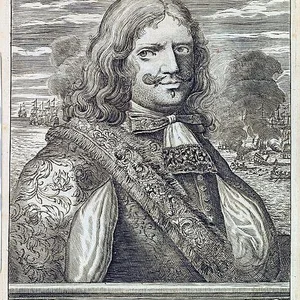
Henry Morgan
1631 — 1688
Henry Morgan (c. 1635–1688) was a Welsh privateer in the service of England who led devastating raids against Spanish possessions in the Caribbean. Knighted by the Crown, he ended his career as Lieutenant Governor of Jamaica.
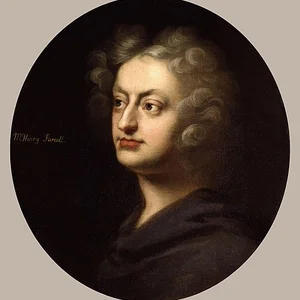
Henry Purcell
1659 — 1695
Henry Purcell was an English composer and organist of the Baroque era. Considered one of the greatest British composers, he left his mark on the music of the Stuart court and composed the opera Dido and Aeneas.
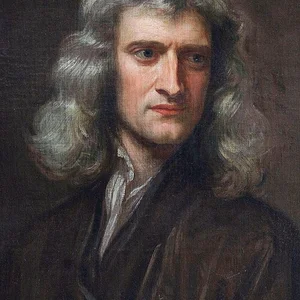
Isaac Newton
1643 — 1727
English mathematician, physicist and astronomer (1643–1727), Isaac Newton is one of the greatest scientists in history. He revolutionized science by formulating the laws of motion and universal gravitation, and by developing calculus.
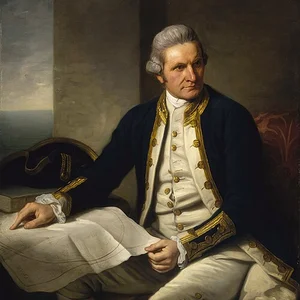
James Cook
1728 — 1779
British navigator, cartographer and explorer (1728–1779), James Cook led three major expeditions into the Pacific Ocean and greatly advanced the world's geographical knowledge. He explored and mapped New Zealand, Australia, and numerous Pacific archipelagos, becoming one of the defining figures of modern exploration.
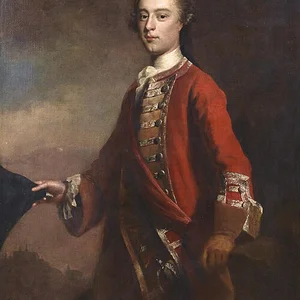
James Wolfe
1727 — 1759
British general (1727–1759), James Wolfe is renowned for his decisive victory over the French at the Battle of the Plains of Abraham in Quebec in 1759. He died in combat on the very day of his victory, becoming a British national hero.
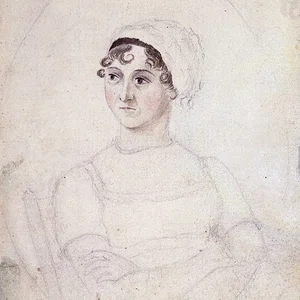
Jane Austen
1775 — 1817
Jane Austen (1775-1817) was a major English novelist of the 19th century, author of romantic and social novels that subtly critique the social conventions of her time. Her work, most notably Pride and Prejudice, explores human relationships and the stakes of marriage with irony and psychological insight.
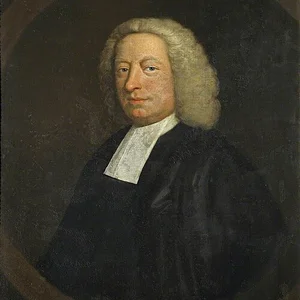
John Colson
1680 — 1760
John Colson was an eighteenth-century British mathematician, Lucasian Professor of Mathematics at the University of Cambridge. He is best known for translating Newton's treatise on fluxions into English.
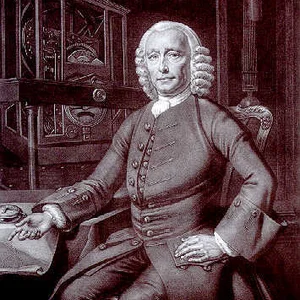
John Harrison
1693 — 1776
A self-taught British clockmaker (1693–1776), John Harrison solved one of the greatest scientific challenges of his era: the precise determination of longitude at sea. His marine chronometer H4 (1759) revolutionized navigation and saved countless lives.
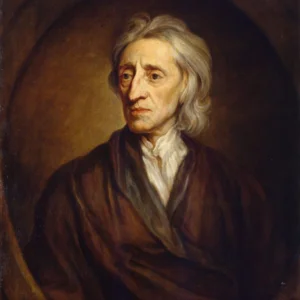
John Locke
1632 — 1704
A 17th-century English philosopher, John Locke is the founder of modern empiricism and a major thinker of political liberalism. He developed the theory of natural rights (life, liberty, property) and justified the right to revolt against tyrannical power, profoundly influencing democratic revolutions.
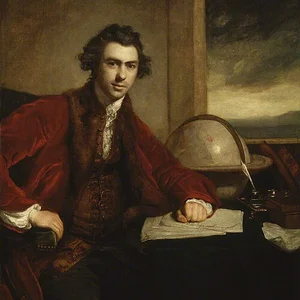
Joseph Banks
1743 — 1820
British naturalist and botanist (1743–1820), Joseph Banks took part in James Cook's first voyage around the world (1768–1771) aboard the Endeavour. He brought back thousands of previously unknown plant specimens and served as President of the Royal Society for 41 years.
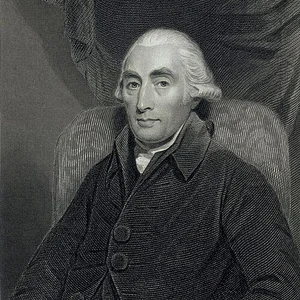
Joseph Black
1728 — 1799
Joseph Black (1728-1799) was a Scottish chemist and physicist, a major figure of the Enlightenment. He discovered “fixed air” (carbon dioxide) and formulated the concepts of latent heat and specific heat, laying the foundations of thermodynamics.
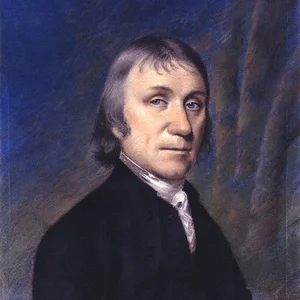
Joseph Priestley
1733 — 1804
Eighteenth-century English chemist, theologian and philosopher, famous for isolating oxygen in 1774. A dissenting minister, he was also a liberal thinker forced into exile in the United States.
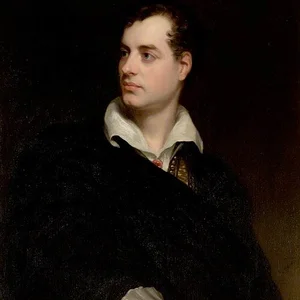
Lord Byron
1788 — 1824
Lord Byron (1788-1824) was the most celebrated British poet of the Romantic era. A scandalous and politically engaged figure, he embodied the "Byronic hero": brooding, rebellious, and passionate. He died in Greece while fighting for Greek independence.
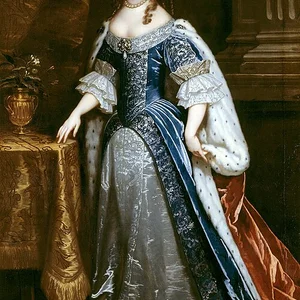
Margaret Cavendish
1617 — 1673
Seventeenth-century English natural philosopher and woman of letters (1623–1673), she developed her own theories on the nature of matter, drawing on atomism while proposing an original vitalist materialism. The first woman to attend a meeting of the Royal Society, in 1667.
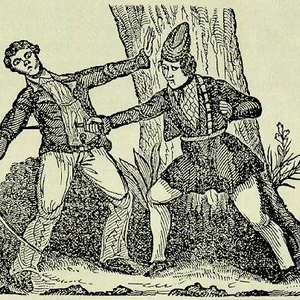
Mary Read
1685 — 1721
Mary Read (1685-1721) was an English pirate who long concealed her sex beneath men's clothing. She served in the army and then aboard ships before joining the crew of the pirate Calico Jack Rackham, alongside Anne Bonny, in the Caribbean.
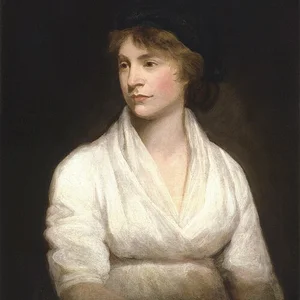
Mary Wollstonecraft
1759 — 1797
Mary Wollstonecraft was an 18th-century British philosopher and writer, a pioneer of feminism. Her landmark work, *A Vindication of the Rights of Woman* (1792), demands equal education and civil rights for women. She embodies Enlightenment thinking applied to the condition of women.
Samuel Bellamy
1689 — 1717
Samuel “Black Sam” Bellamy (c. 1689-1717) was an English pirate of the golden age of piracy. Captain of the Whydah, a captured former slave ship, he is considered one of the wealthiest pirates in history before perishing in a shipwreck in 1717.
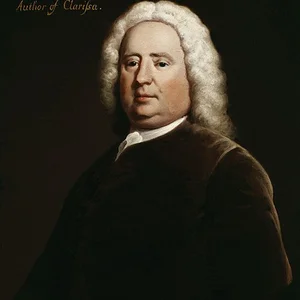
Samuel Richardson
1687 — 1761
Samuel Richardson was an English writer and printer of the 18th century. A pioneer of the epistolary novel, he is regarded as one of the founders of the modern novel through his works centered on psychology and morality.
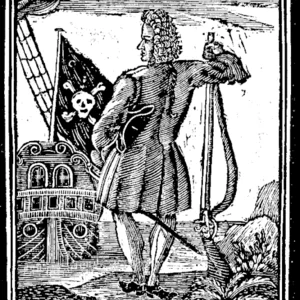
Stede Bonnet
1688 — 1718
Stede Bonnet (c. 1688–1718), nicknamed “the gentleman pirate,” was a wealthy Barbadian planter who abandoned his plantation to become a pirate in the Caribbean. Allied for a time with Blackbeard, he was captured and hanged in Charleston in 1718.
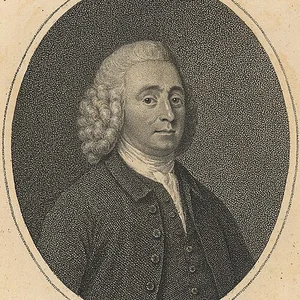
Thomas Dimsdale
1712 — 1800
Eighteenth-century British physician, a pioneer of variolation (inoculation against smallpox). He gained European fame by inoculating Empress Catherine II of Russia and her son in 1768.
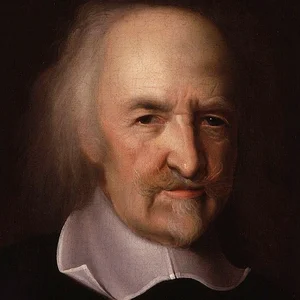
Thomas Hobbes
1588 — 1679
A 17th-century English philosopher, Thomas Hobbes is the author of Leviathan (1651), a founding work of modern political philosophy. He develops a social contract theory justifying the absolute authority of the state to guarantee peace and security.
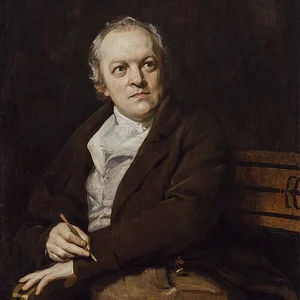
William Blake
1757 — 1827
British poet, painter, and engraver (1757-1827), William Blake is one of the towering figures of English Romanticism. A visionary and mystic, he created a strikingly original body of poetic and artistic work, combining text and image in hand-engraved illuminated books.
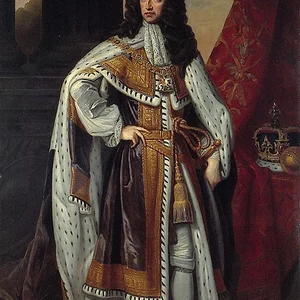
William III of Orange
1650 — 1702
Stadtholder of the United Provinces from 1672, William III of Orange became King of England, Scotland, and Ireland in 1689 following the Glorious Revolution that overthrew James II. A Protestant champion, he devoted his reign to containing the power of Louis XIV.
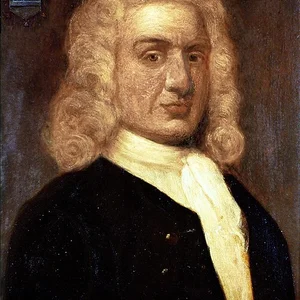
William Kidd
1645 — 1701
A Scottish sailor first commissioned as a privateer in the service of the English Crown to hunt down pirates in the Indian Ocean. Accused of piracy himself, he was tried and hanged in London in 1701, becoming a legendary figure of the Golden Age of Piracy.
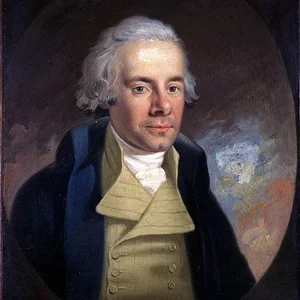
William Wilberforce
1759 — 1833
British politician and philanthropist, a leading figure in the parliamentary fight against the slave trade. An evangelical Member of Parliament, he devoted his life to the abolition of slavery throughout the British Empire.
Ada Lovelace
1815 — 1852
British mathematician (1815-1852), pioneer of computing and programming. She wrote the first algorithm intended to be executed by a machine, working on Charles Babbage's Analytical Engine. Her legacy makes her a founding figure of theoretical computer science.
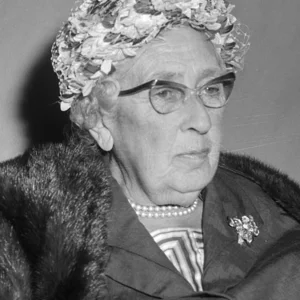
Agatha Christie
1890 — 1976
Agatha Christie (1890-1976) was a British novelist, widely known as the 'Queen of Crime'. The author of 66 detective novels, she created the iconic characters Hercule Poirot and Miss Marple. Her works are among the best-selling in the history of world literature.
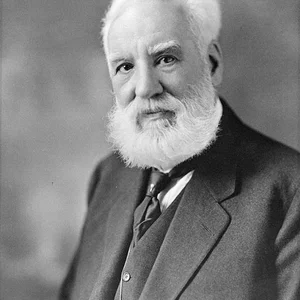
Alexander Graham Bell
1847 — 1922
A Scottish-born inventor who became a naturalized American citizen, Alexander Graham Bell is best known for filing the patent for the telephone in 1876. He also conducted research on hearing and communication, particularly to help people who were deaf.
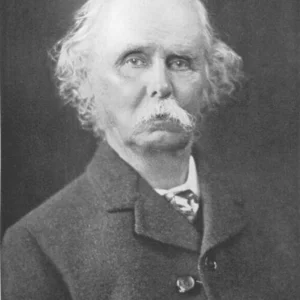
Alfred Marshall
1842 — 1924
Alfred Marshall (1842-1924) was a British economist and a leading figure of the neoclassical school. His textbook *Principles of Economics* (1890) profoundly shaped the teaching of economic science for several decades.
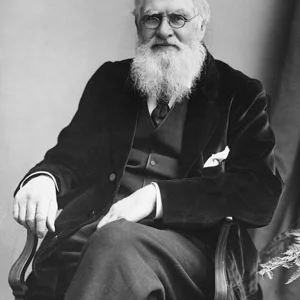
Alfred Russel Wallace
1823 — 1913
British naturalist and geographer (1823-1913), Wallace independently developed the theory of natural selection alongside Darwin. His explorations in the Amazon and Southeast Asia led him to formulate fundamental laws in biogeography.
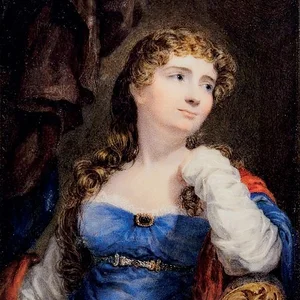
Annabella Milbanke
1792 — 1860
British aristocrat (1792–1860), self-taught mathematician and philanthropist, she married the poet Lord Byron in 1815 before separating from him a year later. She went on to dedicate herself to popular education and social reform, and is the mother of Ada Lovelace, pioneer of computing.
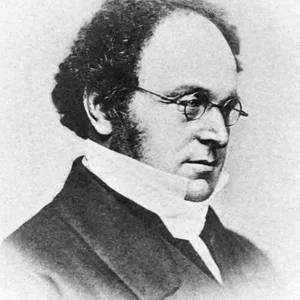
Augustus De Morgan
1806 — 1871
Augustus De Morgan was a 19th-century British mathematician and logician. A pioneer of modern formal logic, he helped found the algebra of logic and gave his name to De Morgan's laws, which are fundamental to logic and set theory.
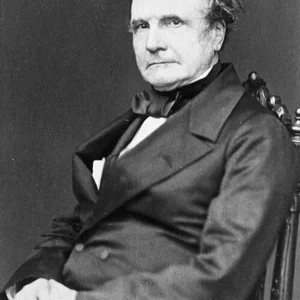
Charles Babbage
1791 — 1871
British mathematician (1791–1871), Charles Babbage is the pioneer of modern computing. He designed the Analytical Engine, the first programmable machine in history, and the Difference Engine, both conceptual ancestors of the computer.
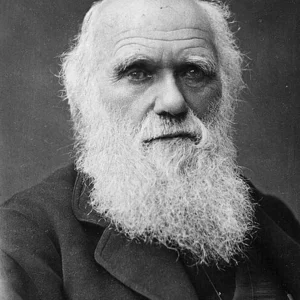
Charles Darwin
1809 — 1882
A 19th-century English naturalist, Charles Darwin revolutionized biology by proposing the theory of evolution by natural selection. His observations during the voyage of the Beagle and his subsequent work laid the foundations of modern biology.
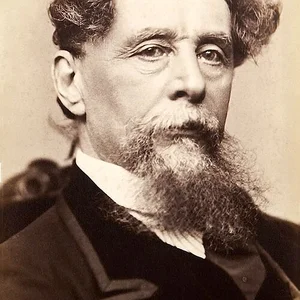
Charles Dickens
1812 — 1870
Charles Dickens was an English novelist of the Victorian era, regarded as one of the greatest writers in the English language. His novels, published in serial form, depict with realism and humanity the industrial society and social misery of his time.
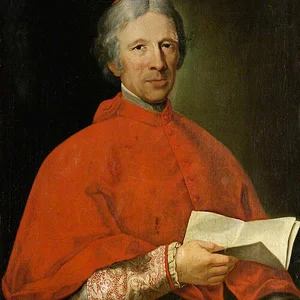
Charles Erskine de Kellie
1739 — 1811
Charles Erskine (1739-1811) was a Scottish cardinal in the service of the Holy See. A diplomat of the Catholic Church, he acted as an intermediary between Rome and the European powers during the Napoleonic era.
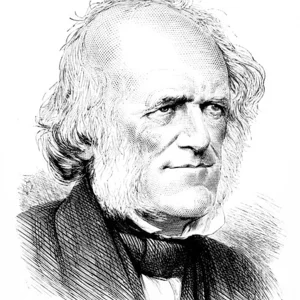
Charles Lyell
1797 — 1875
Charles Lyell was a 19th-century British geologist and a major figure in modern geology. His work 'Principles of Geology' popularized uniformitarianism, the idea that present-day geological processes explain the formation of the Earth over very long stretches of time. He had a profound influence on Charles Darwin.
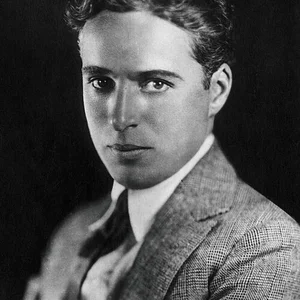
Charlie Chaplin
1889 — 1977
British actor, director and composer (1889-1977), pioneer of silent cinema. Creator of the iconic Tramp character, he shaped film history through his comedic genius and social commentary, most notably in The Great Dictator (1940).
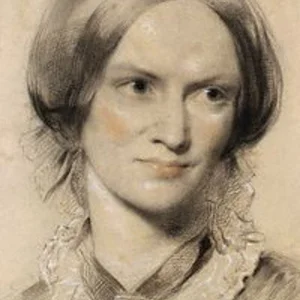
Charlotte Brontë
1816 — 1855
Charlotte Brontë was a 19th-century British novelist, author of Jane Eyre (1847), a masterpiece of Victorian literature. The daughter of a clergyman in Yorkshire, she published under a male pseudonym (Currer Bell) to gain acceptance in the literary world. Her work powerfully explores the feminine condition, independence, and passion.
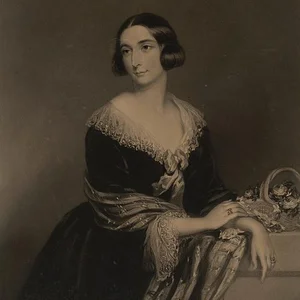
Charlotte Guest
1812 — 1895
British translator and businesswoman (1812–1895), celebrated for her English translation of the Mabinogion, a foundational collection of medieval Welsh myths and legends. She also managed the Dowlais ironworks in Wales, becoming one of the first women to run a major industrial enterprise.
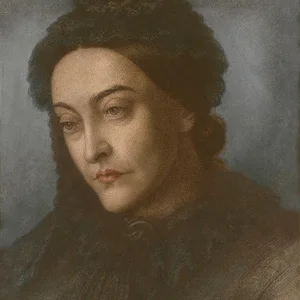
Christina Rossetti
1830 — 1894
British poet of the nineteenth century and a leading figure of the Pre-Raphaelite movement. Author of Goblin Market (1862), a poetry collection blending symbolism and religious fervour. Her work explores love, death, and Christian faith with remarkable lyrical sensitivity.
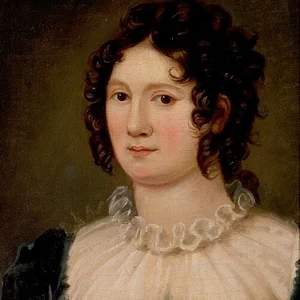
Claire Clairmont
1798 — 1879
British woman of letters and step-sister of Mary Shelley. Part of the circle of English Romantic poets, she had a daughter, Allegra, with Lord Byron. Her journals and correspondence are a valuable testimony to the Romantic era.
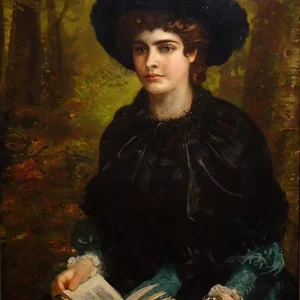
Constance Lloyd
1859 — 1898
British author and activist, wife of Oscar Wilde. Committed to the dress reform movement and to writing for children, she lived first in the shadow and then the scandal of her famous husband.
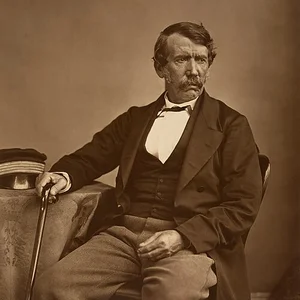
David Livingstone
1813 — 1873
Physician, Protestant missionary, and Scottish explorer (1813–1873), Livingstone was one of the first Europeans to cross Africa from east to west. He contributed to the geographical knowledge of the continent and actively fought against the slave trade.
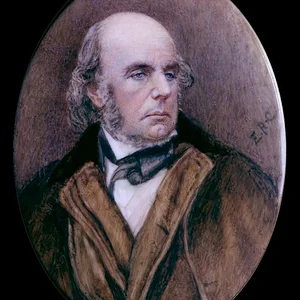
Edward FitzGerald
1809 — 1883
19th-century British poet and translator, celebrated for his free translation of the Rubaiyat of Omar Khayyam (1859), which achieved remarkable success across Europe and helped introduce Persian poetry to Western readers.
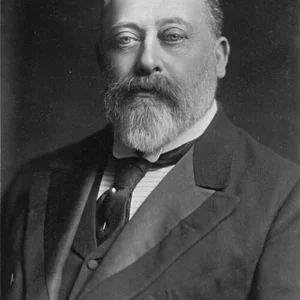
Edward VII
1841 — 1910
Son of Queen Victoria, Edward VII reigned over the United Kingdom and the Empire of India from 1901 to 1910. An emblematic figure of the Belle Époque, he played a decisive role in bringing France and Britain closer together through the Entente Cordiale of 1904.
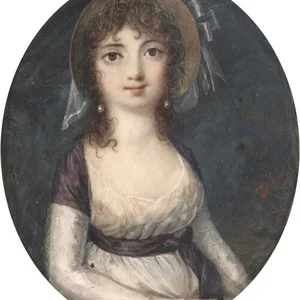
Elizabeth Arnold Poe
1787 — 1811
American actress of English origin, a figure of the traveling theater of the early years of the United States. Mother of the famous writer Edgar Allan Poe, she died young of tuberculosis, leaving her children orphaned.
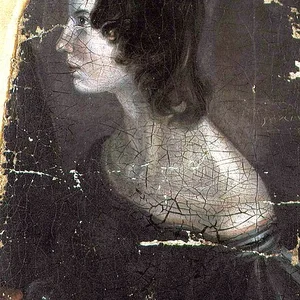
Emily Brontë
1818 — 1848
British writer
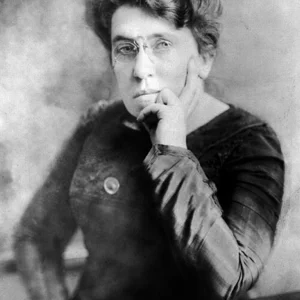
Emma Goldman
1869 — 1940
Emma Goldman (1869-1940) was a Lithuanian-born anarchist and feminist activist who emigrated to the United States. A leading figure in the American labor movement, she championed individual freedom, women's emancipation, and opposed war and capitalism.
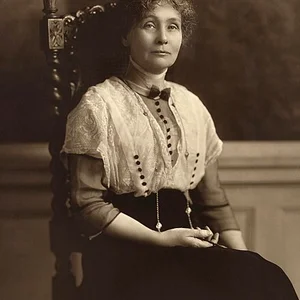
Emmeline Pankhurst
1858 — 1928
British feminist political activist (1858–1928)
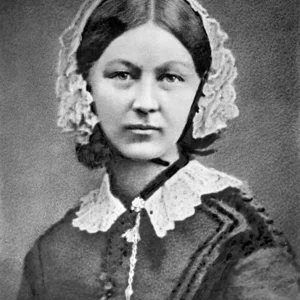
Florence Nightingale
1820 — 1910
British nurse and statistician (1820–1910), she revolutionized hospital care during the Crimean War. A pioneer of public health, she founded the first secular nursing school and used statistics to demonstrate the critical importance of hygiene.
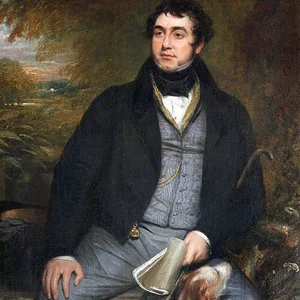
Frederick Hodgson
1796 — 1854
Investigator for the Society for Psychical Research (SPR) who, in 1884-1885, examined the phenomena attributed to Helena Blavatsky at the Theosophical headquarters in Adyar, India. His report concluded that they were fraud and trickery.
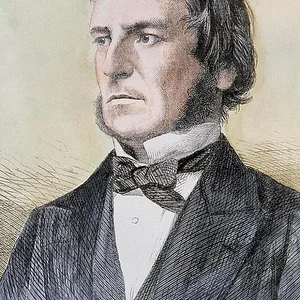
George Boole
1815 — 1864
19th-century British mathematician and logician, founder of Boolean algebra. He revolutionized logic by translating it into a mathematical system, laying the foundations of modern computing.
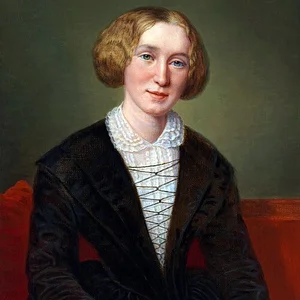
George Eliot
1819 — 1880
Pen name of Mary Ann Evans (1819–1880), one of the leading Victorian novelists. Author of Middlemarch and The Mill on the Floss, she explores the female condition and social morality with rare philosophical depth.
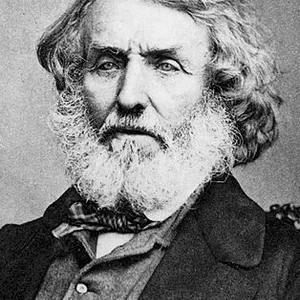
George Everest
1790 — 1866
British geographer and geodesist, George Everest led the Great Trigonometrical Survey of India in the 19th century. He carried out the precise triangulation of the Indian subcontinent — a monumental undertaking that made it possible to accurately measure the Himalayan peaks. Mount Everest, the highest mountain in the world, was named in his honour in 1865.
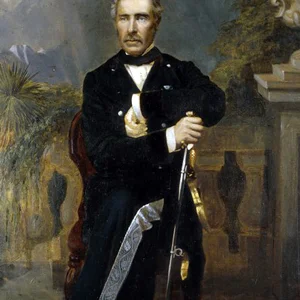
George Grey
1812 — 1898
British colonial governor and ethnologist, George Grey successively administered South Australia, New Zealand, and the Cape Colony. Passionate about indigenous cultures, he devoted part of his life to collecting and publishing Māori myths and language.
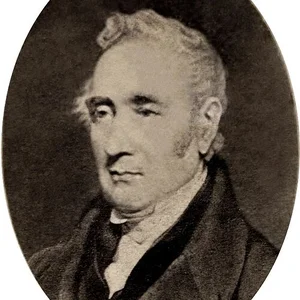
George Stephenson
1781 — 1848
British engineer (1781–1848), George Stephenson is the father of the railway. He built the first efficient steam locomotive for passenger transport and designed the Liverpool-Manchester line, inaugurated in 1830.
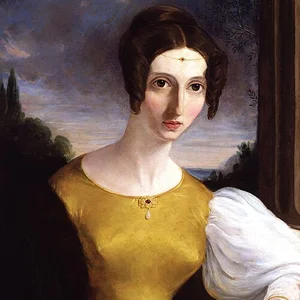
Harriet Taylor Mill
1807 — 1858
Harriet Taylor Mill (1807-1858) was a British philosopher and feminist, a major figure in 19th-century liberal thought. A collaborator and wife of John Stuart Mill, she profoundly influenced his works, particularly on individual liberty and the emancipation of women.
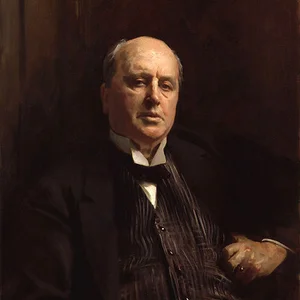
Henry James
1843 — 1916
Henry James (1843-1916) was an American writer who became a naturalized British citizen in 1915. A master of the psychological novel, he explored the relationship between the European Old World and the American New World. He is the author of the celebrated novel The Portrait of a Lady (1881).
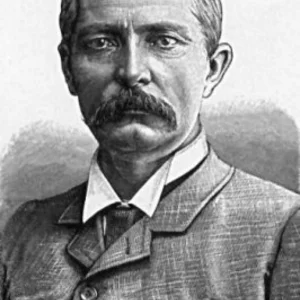
Henry Morton Stanley
1841 — 1904
British journalist and explorer (1841–1904), famous for finding David Livingstone in central Africa in 1871. He led several major expeditions across Africa and played a significant role in the colonization of the Congo.
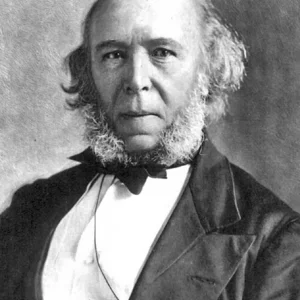
Herbert Spencer
1820 — 1903
Herbert Spencer (1820-1903) was an English philosopher and sociologist, one of the leading thinkers of social evolutionism in the 19th century. He applied the idea of evolution to all natural and social phenomena and coined the phrase “survival of the fittest.”
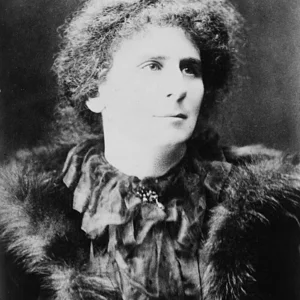
Hertha Ayrton
1854 — 1923
British mathematician and engineer (1854-1923), pioneer of electrical engineering. She conducted groundbreaking research on the electric arc and invented several technical devices, becoming the first woman elected as an associate member of the Royal Society.
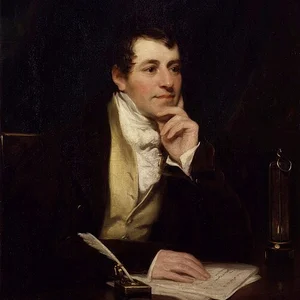
Humphry Davy
1778 — 1829
Humphry Davy was a British chemist and a pioneer of electrochemistry. He isolated several elements using electrolysis and invented the safety lamp for miners.
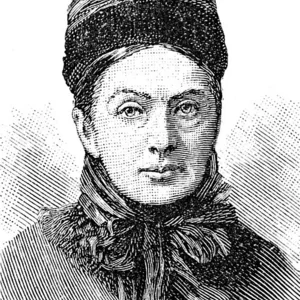
Isabella Bird
1831 — 1904
A nineteenth-century British explorer and writer, Isabella Bird was one of the first women to travel alone in Japan, China, India, Persia, and the American Rockies. She published numerous travel accounts that earned her international recognition and admission to the Royal Geographical Society.
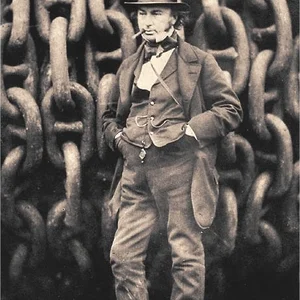
Isambard Kingdom Brunel
1806 — 1859
19th-century British engineer, Brunel revolutionized transportation with the Great Western Railway, the Thames Tunnel, and giant steamships. An iconic figure of the Victorian Industrial Revolution.
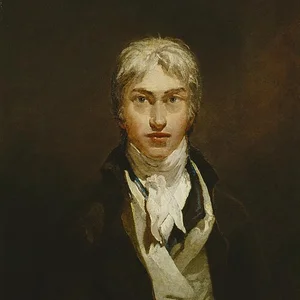
J. M. W. Turner
1775 — 1851
British painter and engraver (1775-1851), Turner is considered the master of Romantic landscape. A forerunner of Impressionism, he revolutionized the depiction of light, water, and atmosphere.
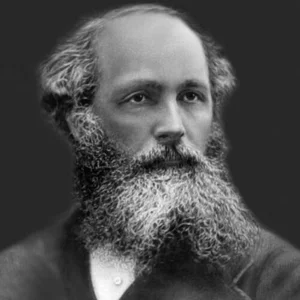
James Clerk Maxwell
1831 — 1879
Scottish physicist and mathematician (1831–1879), Maxwell authored the unifying equations of electromagnetism. His work predicted the existence of electromagnetic waves and inspired Einstein in developing the theory of special relativity.
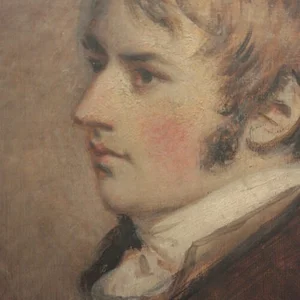
John Constable
1776 — 1837
John Constable (1776-1837) was a major English Romantic landscape painter. He revolutionized landscape painting by observing nature directly and depicting atmospheric effects with great fidelity.
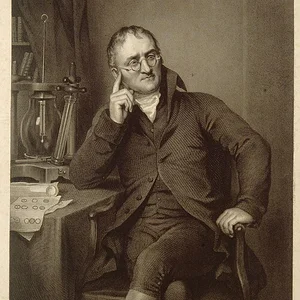
John Dalton
1766 — 1844
John Dalton was a British chemist, physicist and meteorologist. He is regarded as the father of modern atomic theory, according to which matter is made up of indivisible atoms specific to each element. He also described colour blindness, a condition he himself had.
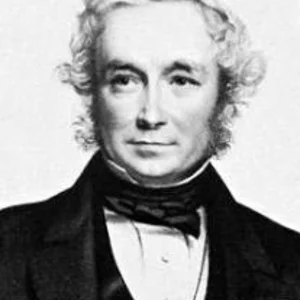
John Stevens Henslow
1796 — 1861
British botanist and geologist, professor at the University of Cambridge. As Charles Darwin's mentor, he recommended the young naturalist for the voyage of HMS Beagle, which gave rise to the theory of evolution.
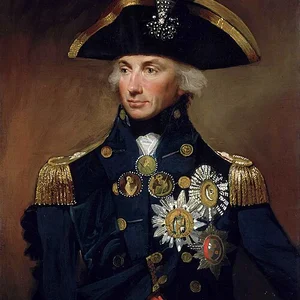
Lord Nelson
1758 — 1805
Horatio Nelson (1758-1805) was a British admiral and hero of the Napoleonic Wars. His decisive victory at Trafalgar in 1805, where he was killed, secured the United Kingdom's naval supremacy for more than a century.
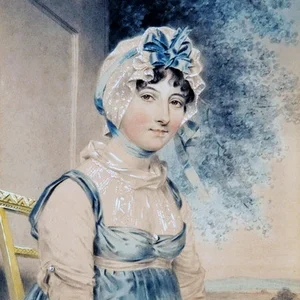
Maria Edgeworth
1768 — 1849
Anglo-Irish novelist and moralist (1768–1849), pioneer of the regional novel and the novel of education. Her works, praised by Walter Scott and Jane Austen, explore morality, the education of women, and Irish society.
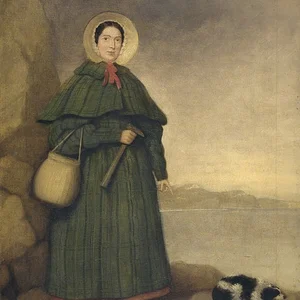
Mary Anning
1799 — 1843
Mary Anning was a self-taught English paleontologist who, from childhood, collected fossils along the cliffs of Lyme Regis. She discovered the first complete skeletons of an ichthyosaur and a plesiosaur, revolutionizing the understanding of extinct species. Despite her major contributions, she was long excluded from scientific circles because of her sex and her modest background.
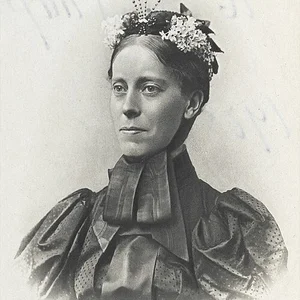
Mary Kingsley
1862 — 1900
British explorer and ethnographer (1862–1900), Mary Kingsley was one of the first European women to travel alone in West Africa. She brought back invaluable observations on the cultures and wildlife of Gabon and the Congo, and championed African societies against colonial prejudice.
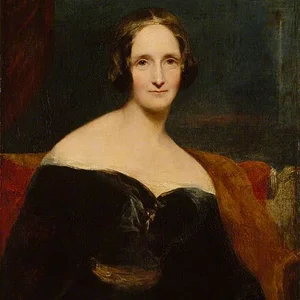
Mary Shelley
1797 — 1851
Peerage person ID=695563
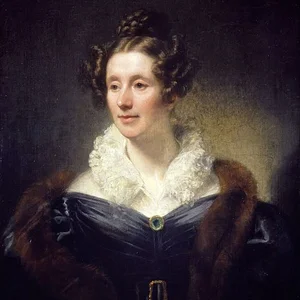
Mary Somerville
1780 — 1872
Scottish mathematician and scientist (1780–1872), a pioneer of science in the 19th century. She popularised the works of Laplace and contributed to celestial mechanics. Together with Caroline Herschel, she was one of the first women to be elected an honorary member of the Royal Astronomical Society.
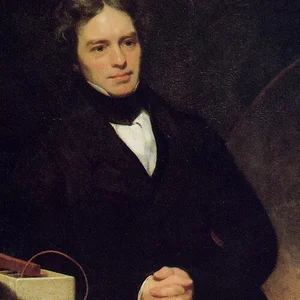
Michael Faraday
1791 — 1867
A self-taught British physicist and chemist (1791–1867), Faraday discovered electromagnetic induction and laid the foundations of modern electrical engineering. His work on electric and magnetic fields inspired Maxwell's theories.
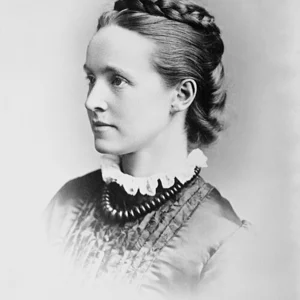
Millicent Fawcett
1847 — 1929
British feminist activist and leading figure of constitutional suffragism. As president of the NUWSS, she championed winning women's voting rights through lawful and peaceful means, in contrast to the militant methods of the suffragettes.
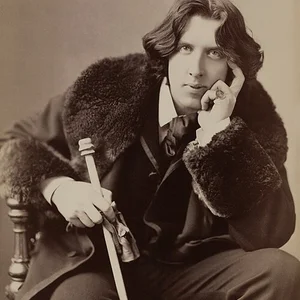
Oscar Wilde
1854 — 1900
A 19th-century Irish writer, Oscar Wilde is the author of major witty comedies and symbolist novels. An iconic figure of the Aesthetic movement, he left a lasting mark on English literature through his brilliant style, biting irony, and celebrated plays.
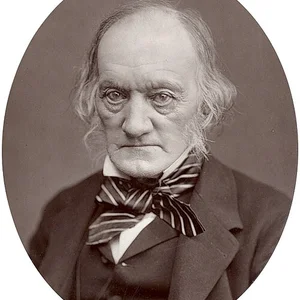
Richard Owen
1804 — 1892
Richard Owen was a 19th-century British palaeontologist and anatomist. He coined the term “Dinosauria” (dinosaurs) in 1842 and was the founder of the Natural History Museum in London. A famous opponent of Darwin's theories on evolution.
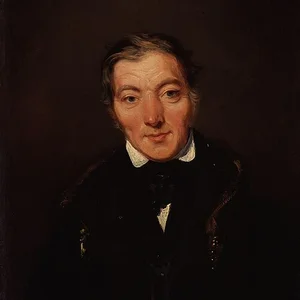
Robert Owen
1771 — 1858
A Welsh industrialist and socialist theorist, Robert Owen transformed the New Lanark cotton mill into a model of social reform. A pioneer of utopian socialism and the cooperative movement, he championed better conditions for workers and education for all.
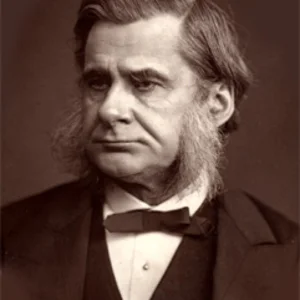
Thomas Henry Huxley
1825 — 1895
A British biologist and palaeontologist, and a fervent defender of Charles Darwin's theory of evolution — which earned him the nickname “Darwin's bulldog.” A renowned comparative anatomist, he was one of the foremost popularizers of science in the 19th century.
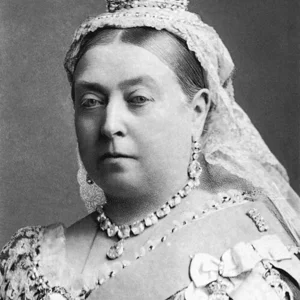
Victoria
1819 — 1901
Victoria ascended to the British throne at 18 in 1837 and reigned for 63 years, becoming one of the most influential monarchs in history. Her reign coincided with the height of the British Empire and the Industrial Revolution. She gave her name to an entire era: the Victorian age.
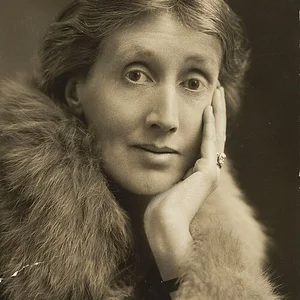
Virginia Woolf
1882 — 1941
British author (1882–1941), Virginia Woolf is one of the most important figures in 20th-century modernist literature. Author of Mrs Dalloway and Orlando, she revolutionized the novel through her use of stream of consciousness and her pioneering reflections on feminism and the condition of women.
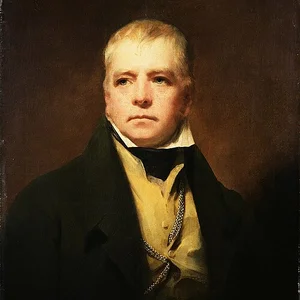
Walter Scott
1771 — 1832
Scottish writer and poet (1771–1832), Walter Scott is the father of the modern historical novel. Works such as *Ivanhoe* and *Waverley* popularized the Romantic vision of the Middle Ages across Europe.
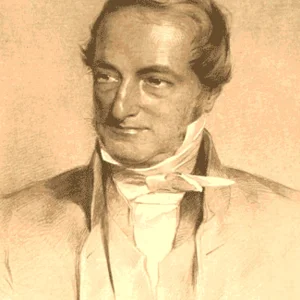
William Conybeare
1787 — 1857
William Conybeare was a 19th-century British geologist and palaeontologist. A pioneer in the study of fossil marine reptiles, he notably described the plesiosaur and contributed to the rise of stratigraphic geology.
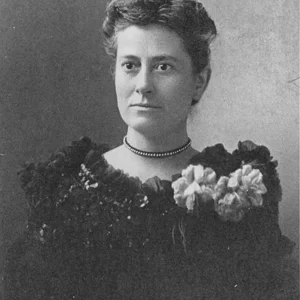
Williamina Fleming
1857 — 1911
Scottish-American astronomer, she joined the Harvard Observatory as a "Harvard Computer." She developed a system for classifying stellar spectra and discovered the Horsehead Nebula in 1888.
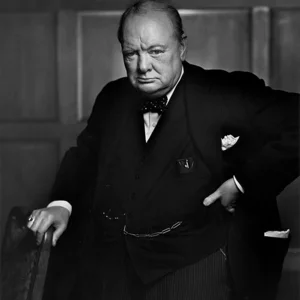
Winston Churchill
1874 — 1965
British statesman and writer (1874–1965), Winston Churchill is best known for his role as Prime Minister of the United Kingdom during the Second World War. As the leader of British resistance against Nazism, he embodied Allied resolve until victory in 1945.
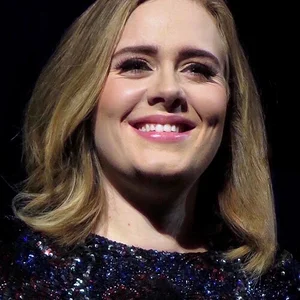
Adele
1988 — ?
Adele is a British singer-songwriter born in 1988 in London. She broke through to mainstream audiences with her album '19' in 2008, and has since established herself as one of the best-selling artists of the 21st century, known for her powerful voice and introspective lyrics.
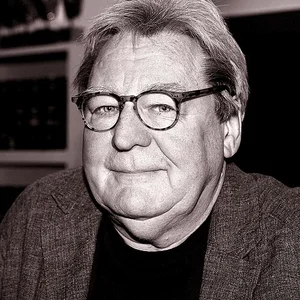
Alan Parker
1944 — 2020
British director born in 1944, Alan Parker is the filmmaker behind landmark works such as Midnight Express, Fame, and Pink Floyd – The Wall. A major figure in British cinema, he also worked in advertising before establishing himself in Hollywood.
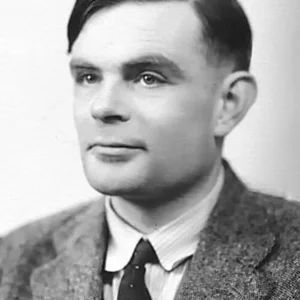
Alan Turing
1912 — 1954
British mathematician and cryptologist (1912-1954), Alan Turing is the founder of theoretical computer science and artificial intelligence. He contributed to the decryption of the Enigma machine during the Second World War and formalized the concepts of computability and algorithm.
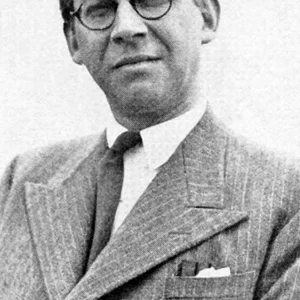
Alexander Korda
1893 — 1956
Hungarian-born film director and producer who became a naturalised British citizen. Founder of the company London Films, he was a major figure in British cinema between the two world wars and the first film professional to be knighted.
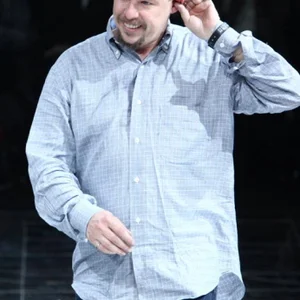
Alexander McQueen
1969 — 2010
Alexander McQueen (1969–2010) was a revolutionary British fashion designer and founder of his eponymous house. Trained on Savile Row and at Central Saint Martins, he is known for his provocative collections blending beauty and darkness.
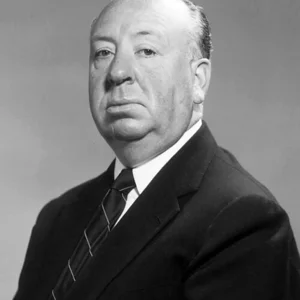
Alfred Hitchcock
1899 — 1980
A British filmmaker and naturalized American citizen, Alfred Hitchcock was nicknamed the “master of suspense.” A pioneer of a cinema built on psychological tension and dread, he profoundly reinvented the conventions of the thriller with works such as *Psycho*, *The Birds*, and *Vertigo*.
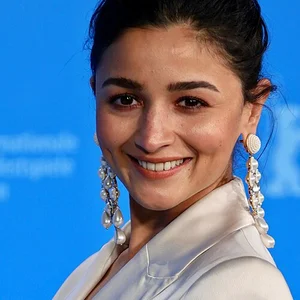
Alia Bhatt
1993 — ?
Alia Bhatt is an Indian actress and singer born on March 15, 1993, in Mumbai. The daughter of filmmaker Mahesh Bhatt, she has established herself as one of Bollywood's most influential actresses, balancing blockbuster hits with demanding dramatic roles.
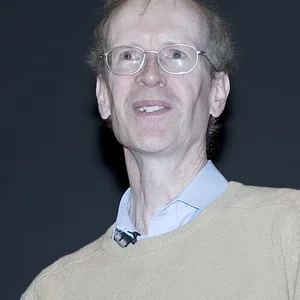
Andrew Wiles
1953 — ?
British mathematician born in 1953, famous for proving Fermat's Last Theorem in 1994 after seven years of secret work. His proof, published in 1995, solved a problem that had been open for 358 years.
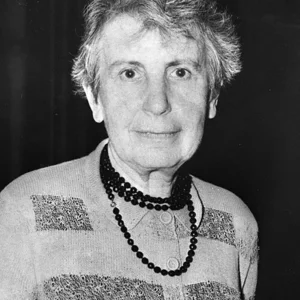
Anna Freud
1895 — 1982
Austrian-British psychoanalyst (1895–1982), daughter of Sigmund Freud. A pioneer of child psychoanalysis, she theorized the ego's defense mechanisms and founded child therapy in London.
Annie Ross
1930 — 2020
British-American jazz singer and actress, a pioneer of vocalese. A member of the trio Lambert, Hendricks & Ross, she is famous for setting lyrics to instrumental solos, notably her standard “Twisted” (1952).
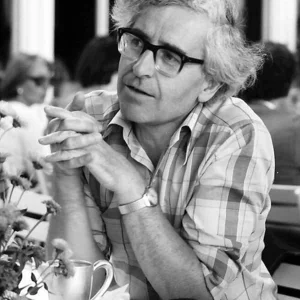
Antony Hewish
1924 — 2021
Antony Hewish (1924-2021) was a British radio astronomer. He led the work that resulted in the discovery of pulsars in 1967 and received the Nobel Prize in Physics for it in 1974, shared with Martin Ryle.
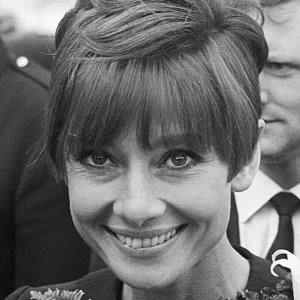
Audrey Hepburn
1929 — 1993
Audrey Hepburn (1929–1993) was a British actress and model of Belgian origin, an icon of Hollywood cinema in the 1950s and 1960s. She won the Academy Award for Roman Holiday (1953) and became synonymous with elegance and grace on screen. In her later years, she devoted herself to humanitarian work as a UNICEF Goodwill Ambassador.
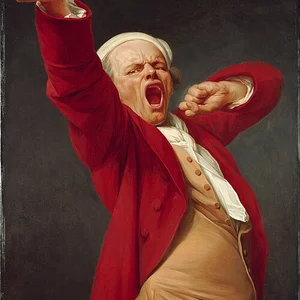
Banksy
1974 — ?
British artist born in 1974, Banksy is a graffiti artist and political activist known for his satirical and subversive street art. Operating under the cover of anonymity, he uses urban art to criticize society, war, and social injustices.
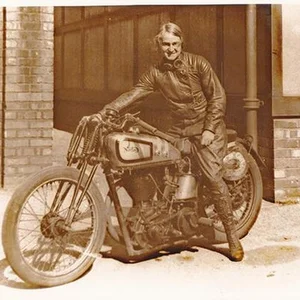
Beatrice Shilling
1909 — 1990
Beatrice Shilling (1909-1990) was a British aeronautical engineer. She is famous for solving a serious flaw in the Rolls-Royce Merlin engines that powered RAF fighters during the Second World War.
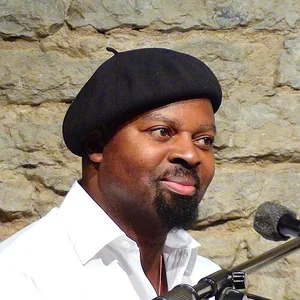
Ben Okri
1959 — ?
Ben Okri is a Nigerian writer and poet born in 1959. A major figure in contemporary African literature, he is known worldwide for his novel *The Famished Road*, which won him the Booker Prize in 1991.
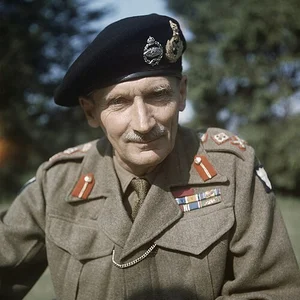
Bernard Montgomery
1887 — 1976
British field marshal, one of the principal Allied military commanders of the Second World War. He led the victorious 8th Army at El Alamein and then commanded the Allied ground forces during the Normandy landings.
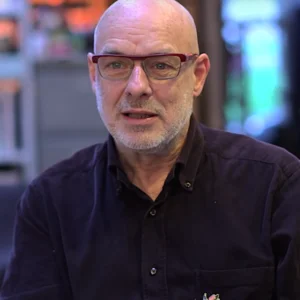
Brian Eno
1948 — ?
Brian Eno is a British musician, producer, and theorist born in 1948, regarded as the pioneer of ambient music. Originally a member of Roxy Music, he revolutionized music production by collaborating with David Bowie, U2, and Talking Heads.
Bryan Sykes
1947 — 2020
Bryan Sykes (1947-2020) was a British geneticist and professor of human genetics at the University of Oxford. A pioneer in the study of ancient DNA and mitochondrial DNA, he popularized the use of genetics to trace the origins of human populations.
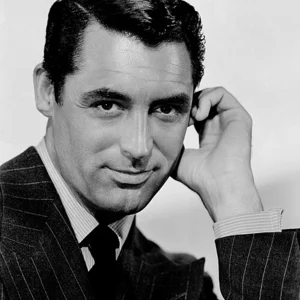
Cary Grant
1904 — 1986
Cary Grant was an Anglo-American actor and an iconic figure of Hollywood's golden age. The embodiment of elegance and charm, he excelled in sophisticated comedy as well as in thrillers, notably working alongside Alfred Hitchcock.
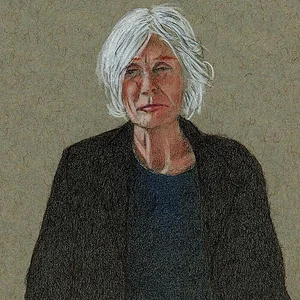
Caryl Churchill
1938 — ?
British playwright born in 1938, a major figure of feminist and political theatre. Her plays such as “Top Girls” (1982) and “Cloud Nine” (1979) deconstruct gender, capitalism, and power relations. Associated with the Royal Court Theatre in London, she has profoundly renewed contemporary dramatic forms.
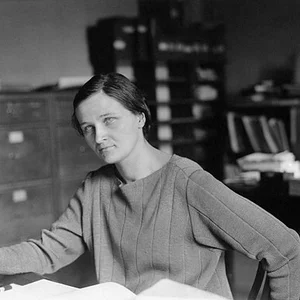
Cecilia Payne-Gaposchkin
1900 — 1979
British-born American astronomer (1900–1979), she discovered that stars are composed primarily of hydrogen and helium. Her 1925 doctoral thesis revolutionized astrophysics, even though her conclusions were initially rejected by her peers.
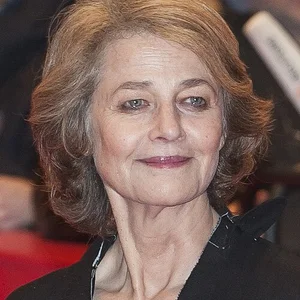
Charlotte Rampling
1946 — ?
A British actress born in 1946, Charlotte Rampling established herself as one of the most distinctive figures in European cinema. Based in France, she collaborated with the greatest directors and embodied a certain idea of rebellious elegance.
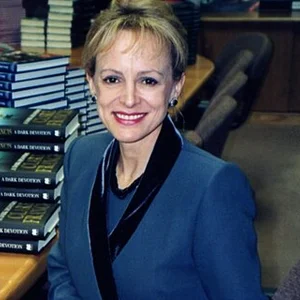
Clare Francis
1946 — ?
British sailor born in 1946, famous for her solo Atlantic crossings in the 1970s. After her sporting career, she became a successful novelist, notably in the thriller and saga genres.
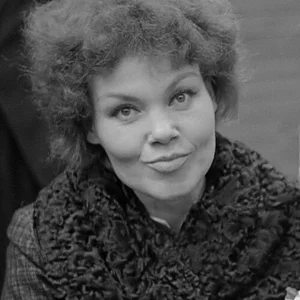
Cleo Laine
1927 — 2025
Cleo Laine is a British jazz singer and actress, famous for her deep timbre and an exceptional vocal range of more than three octaves. The lifelong companion of saxophonist and bandleader John Dankworth, she became one of the major figures of 20th-century British vocal jazz.
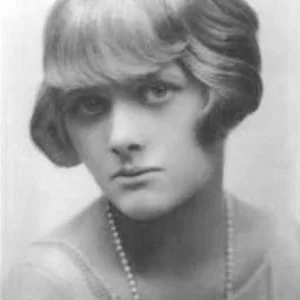
Daphne du Maurier
1907 — 1989
Daphne du Maurier (1907-1989) was a British novelist and short-story writer. A mistress of psychological suspense and gothic atmosphere, she is famous for stories such as “Rebecca” and “The Birds,” several of which were brought to the screen by Alfred Hitchcock.
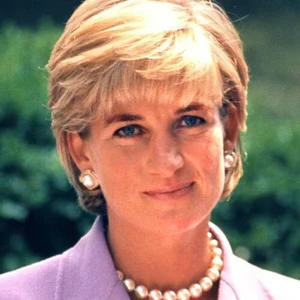
Diana Spencer
1961 — 1997
Princess of Wales (1981–1996), Diana Spencer became a global humanitarian figure through her commitment to banning landmines and supporting people living with AIDS. Her informal diplomatic influence and tragic death in 1997 made her an icon of the 20th century.
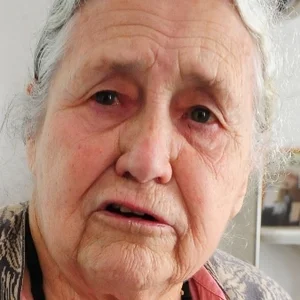
Doris Lessing
1919 — 2013
Doris Lessing (1919-2013) was a British novelist born in Persia and raised in Southern Rhodesia. A major figure of 20th-century literature, she is best known for The Golden Notebook. She was awarded the Nobel Prize in Literature in 2007.
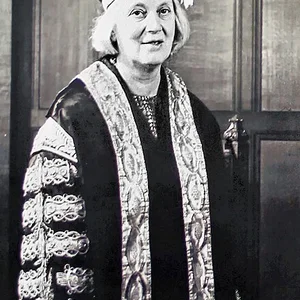
Dorothy Hodgkin
1910 — 1994
British chemist (1910-1994)
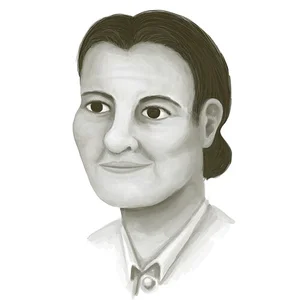
Elizabeth Anscombe
1919 — 2001
G. E. M. Anscombe (1919–2001) is one of the greatest analytic philosophers of the twentieth century. A student of Wittgenstein, she coined the term "consequentialism" and revolutionized the philosophy of action with her landmark work *Intention* (1957). A devout Catholic, she did not hesitate to publicly oppose the atomic bomb.
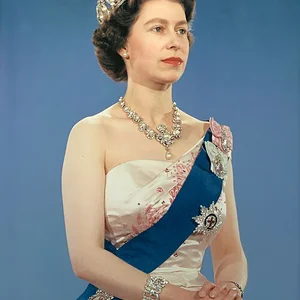
Elizabeth II
1926 — 2022
Queen of the United Kingdom from 1952 to 2022, Elizabeth II was the longest-reigning monarch in British history. She embodied the stability of constitutional monarchy through decolonisation, the Cold War, and globalisation.
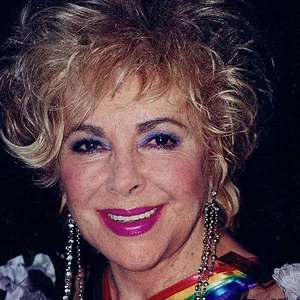
Elizabeth Taylor
1932 — 2011
Elizabeth Taylor (1932–2011) was a British-American actress widely regarded as one of Hollywood's greatest stars. A child prodigy who rose to fame early, she excelled in major roles of classic cinema and became a global symbol of glamour and the Hollywood star system. She was also a pioneering activist in the fight against AIDS from the 1980s onward.
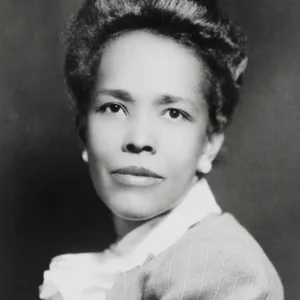
Ella Baker
1903 — 1986
An American civil rights activist, Ella Baker dedicated her life to community organizing and the fight against racial segregation. Co-founder of the SNCC, she shaped a generation of activists by championing collective leadership over individual charisma.
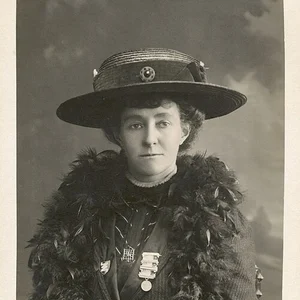
Emily Wilding Davison
1872 — 1913
British suffragette activist and a leading figure of the movement for women's voting rights. She died after throwing herself under King George V's horse at the 1913 Epsom Derby, becoming a martyr for the suffragette cause.
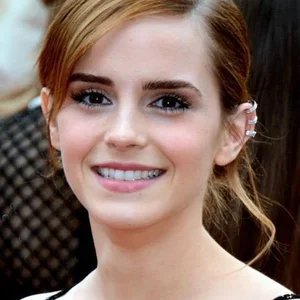
Emma Watson
1990 — ?
British actress born in 1990, who rose to fame as Hermione Granger in the Harry Potter series. She became an international feminist activist, notably as a UN Goodwill Ambassador and promoter of the HeForShe campaign.
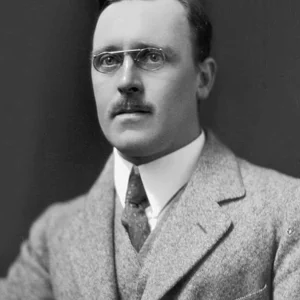
Ernest Marsden
1889 — 1970
English–New Zealand physicist and collaborator of Ernest Rutherford. In 1909, together with Hans Geiger, he carried out the famous experiment scattering alpha particles off a gold foil, which revealed the existence of the atomic nucleus.
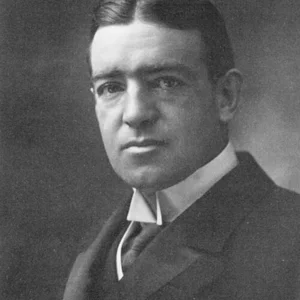
Ernest Shackleton
1874 — 1922
Anglo-Irish polar explorer (1874–1922), an iconic figure of the heroic age of Antarctic exploration. His Endurance expedition (1914–1916), despite failing to cross Antarctica, is celebrated as a feat of survival and leadership.
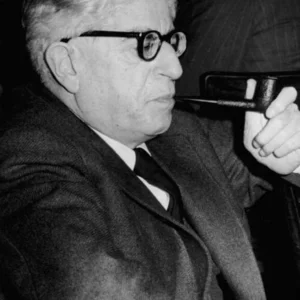
Ernst Bloch
1885 — 1977
Ernst Bloch (1885-1977) was a German philosopher and a major figure of heterodox Marxism. He developed a philosophy of hope and utopia, seeing in the "hope principle" a driving force of human history.
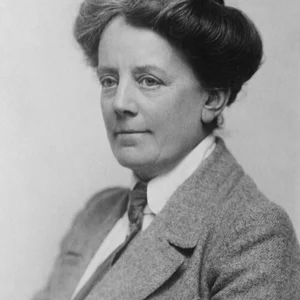
Ethel Smyth
1858 — 1944
A pioneering British composer (1858–1944), Ethel Smyth was the first woman to have an opera performed at the Metropolitan Opera in New York. A suffragist activist, she composed the suffragette anthem 'The March of the Women' (1911).
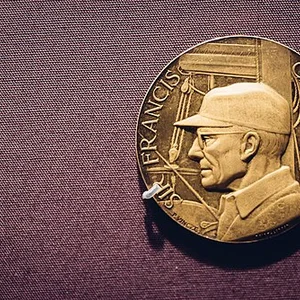
Francis Chichester
1901 — 1972
British aviator and sailor (1901-1972), a pioneer of solo navigation. In 1966-1967 he completed a solo round-the-world voyage under sail with just one stopover, aboard the Gipsy Moth IV.
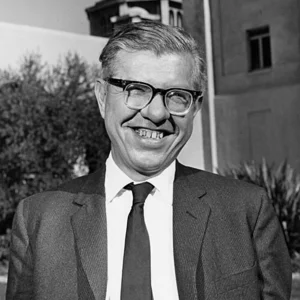
Fred Hoyle
1915 — 2001
British astrophysicist (1915–2001), Fred Hoyle is famous for his work on stellar nucleosynthesis and for ironically coining the term "Big Bang" for the theory he rejected. He championed the steady-state theory of the Universe.

Freddie Mercury
1946 — 1991
Freddie Mercury (1946-1991) was a British singer, songwriter, and pianist, the iconic frontman of the rock band Queen. Renowned for his exceptional voice and showmanship, he left a profound mark on popular music worldwide.
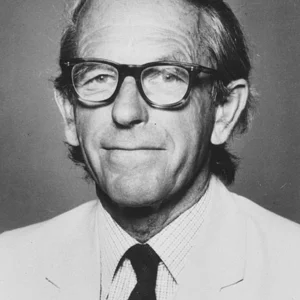
Frederick Sanger
1918 — 2013
Frederick Sanger (1918-2013) was a British biochemist, one of the very few scientists to have received the Nobel Prize in Chemistry twice. He developed fundamental methods for determining the sequence of proteins and then of DNA.
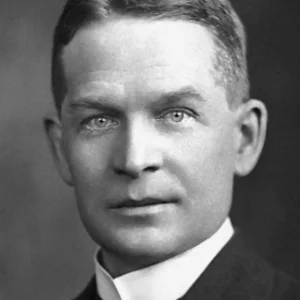
Frederick Soddy
1877 — 1956
Frederick Soddy (1877-1956) was a British radiochemist and a pioneer in the study of radioactivity. He formulated the concept of the isotope and studied radioactive decay with Ernest Rutherford. He was awarded the Nobel Prize in Chemistry in 1921.
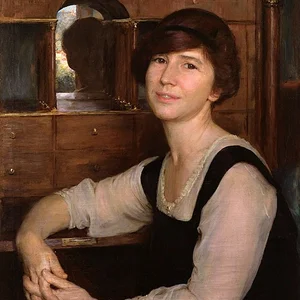
Freya Stark
1893 — 1993
Freya Stark was a British explorer and writer who travelled through the most remote regions of the Middle East in the twentieth century. The first Western woman to reach certain valleys of Arabia and Iran, she published numerous travel narratives combining scholarship and adventure. Her work helped introduce the Arab world to European readers.
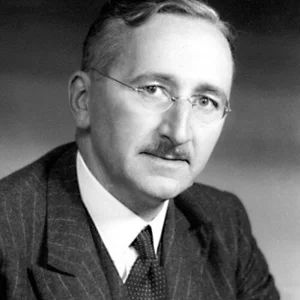
Friedrich Hayek
1899 — 1992
Austrian economist and philosopher, a major figure of classical liberalism and the Austrian school of economics. Winner of the Nobel Prize in Economics in 1974, he championed the spontaneous order of the market and criticized central planning.
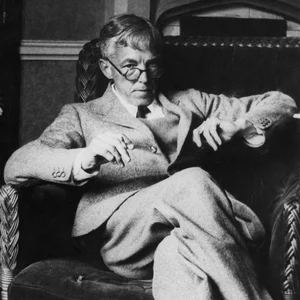
G.H. Hardy
1877 — 1947
British mathematician, a leading figure in number theory and analysis in the early 20th century. He is famous for his collaboration with John Littlewood and for revealing to the world the self-taught Indian genius Srinivasa Ramanujan.
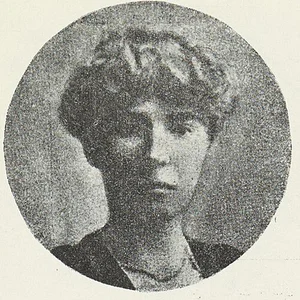
Gertrude Bell
1868 — 1926
British explorer, archaeologist, and diplomat (1868–1926), she traveled extensively across the Middle East and played a decisive role in the creation of modern Iraq after the First World War. Nicknamed “the Queen of the Desert,” she was one of the first women to exert major political influence in the region.
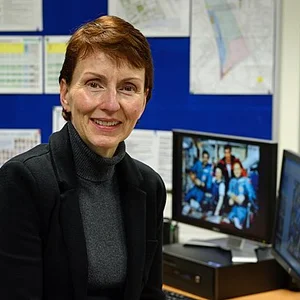
Helen Sharman
1963 — ?
British chemist born in 1963, Helen Sharman became in 1991 the first British person and the first Western woman to travel to space, aboard the Soviet station Mir as part of the Juno project.
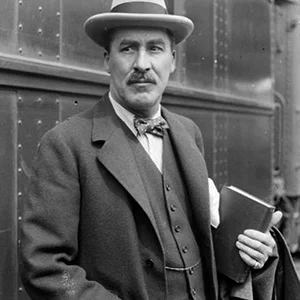
Howard Carter
1874 — 1939
British archaeologist and Egyptologist (1874–1939), Howard Carter is world-famous for discovering in 1922 the nearly intact tomb of Tutankhamun in the Valley of the Kings, Egypt. This discovery is considered the greatest in the history of archaeology.
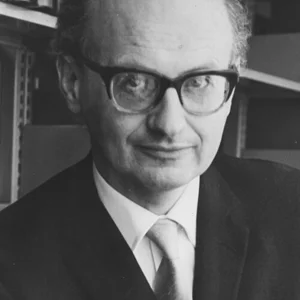
Imre Lakatos
1922 — 1974
Imre Lakatos (1922-1974) was a Hungarian philosopher of science and mathematics who became a naturalized British citizen. A professor at the London School of Economics, he is famous for his theory of “scientific research programmes,” an attempt to move beyond the debate between Popper and Kuhn.
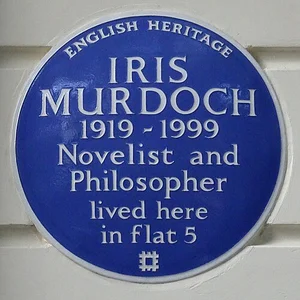
Iris Murdoch
1919 — 1999
Iris Murdoch (1919-1999) was an Irish-British philosopher and novelist, professor at Oxford, known for novels that combine moral reflection with psychological intrigue. The author of more than twenty-six novels and major philosophical works, she explores themes of love, freedom, and the Good.
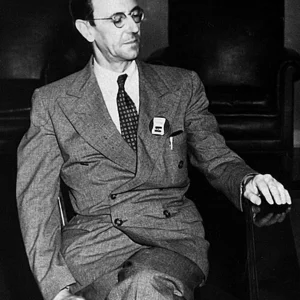
James Chadwick
1891 — 1974
British physicist (1891–1974), James Chadwick discovered the neutron in 1932, earning him the Nobel Prize in Physics in 1935. He later led the British contribution to the Manhattan Project.
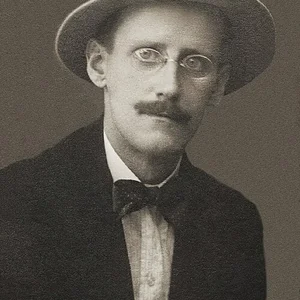
James Joyce
1882 — 1941
James Joyce (1882-1941) was an Irish writer, one of the major figures of literary modernism. His novel *Ulysses* (1922), which transposes Homer's *Odyssey* into a single day in Dublin, revolutionized narrative through its stream-of-consciousness technique.
James Watson & Francis Crick
1928 — 2004 / 1916 — 2004
British and American biologists who discovered the structure of DNA in 1953. Their work revolutionized the understanding of heredity and laid the foundations of modern molecular biology.
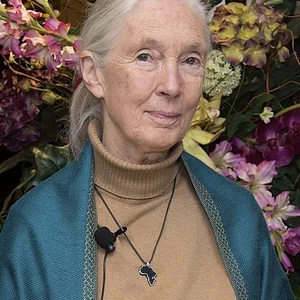
Jane Goodall
1934 — 2025
British ethologist and primatologist born in 1934, Jane Goodall is world-renowned for her pioneering research on chimpanzees in the Gombe forest of Tanzania. Her observations transformed our understanding of animal behaviour and human origins.
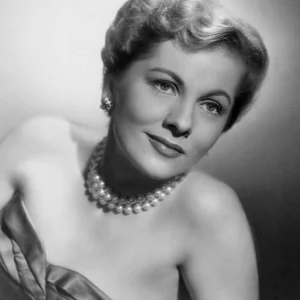
Joan Fontaine
1917 — 2013
A British actress born in 1917 in Japan and died in 2013, Joan Fontaine became a major Hollywood star in the 1940s. She won the Academy Award for Best Actress in 1942 for Alfred Hitchcock's Suspicion, cementing her place among the great stars of classic American cinema.
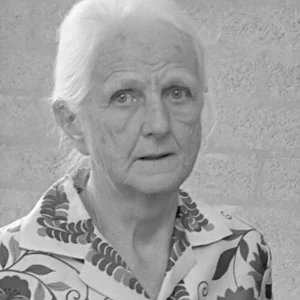
Joan Robinson
1903 — 1983
Joan Robinson (1903-1983) was a British economist of the Cambridge school and a leading figure of the post-Keynesian movement. She is known for her theory of imperfect competition and her contributions to the analysis of capital accumulation.
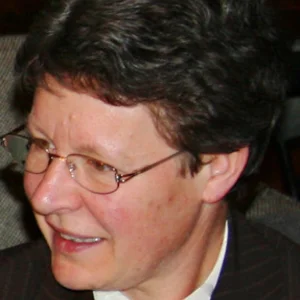
Jocelyn Bell Burnell
1943 — ?
British astrophysicist born in 1943, Jocelyn Bell discovered pulsars in 1967 — neutron stars emitting regular radio signals — during her doctoral thesis. Her thesis supervisor received the Nobel Prize for this discovery, sparking a lasting controversy over the recognition of women in science.

John Desmond Bernal
1901 — 1971
A British physicist and pioneer of X-ray crystallography, he applied this method to the study of biological molecules. A committed Marxist scientist, he was also an influential historian and theorist of science.
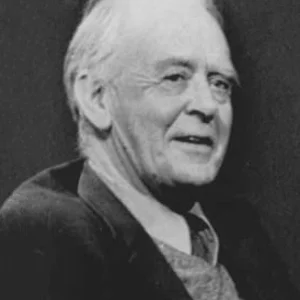
John Hicks
1904 — 1989
British economist, one of the major figures of 20th-century economic thought. He helped formalize Keynesian theory and develop modern microeconomics, which earned him the Nobel Prize in Economics in 1972.
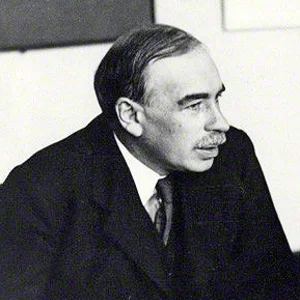
John Maynard Keynes
1883 — 1946
British economist, founder of modern macroeconomics. His general theory, published in 1936 in response to the Great Depression, argues for government intervention to support demand and employment.
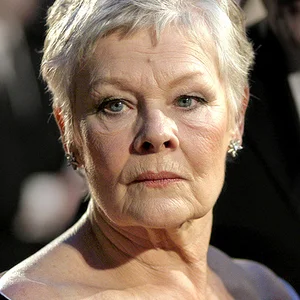
Judi Dench
1934 — ?
Judi Dench is a British actress born in 1934, considered one of the greatest stage and screen performers of her country. Trained at the Royal Shakespeare Company, she achieved worldwide fame in cinema, notably in the role of M in the James Bond saga.
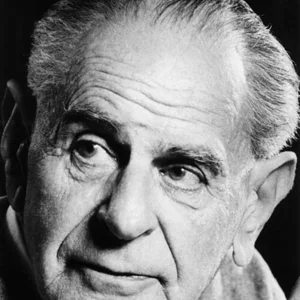
Karl Popper
1902 — 1994
An Austrian-born British philosopher of science, Karl Popper is one of the major thinkers of the 20th century. He revolutionized epistemology with the criterion of falsifiability and defended liberal democracy in *The Open Society and Its Enemies*.
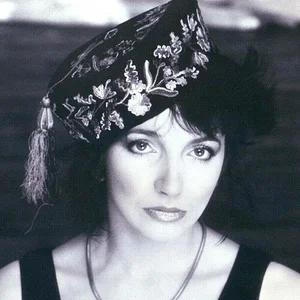
Kate Bush
1958 — ?
British singer, pianist, and composer born in 1958, Kate Bush burst onto the scene in 1978 with “Wuthering Heights”. A pioneer of experimental pop, she blends rock, classical music, and electronics with rare creativity and artistic independence.
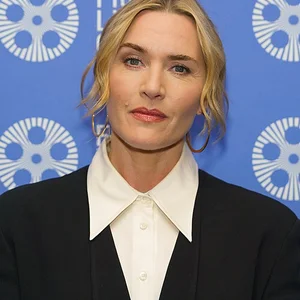
Kate Winslet
1975 — ?
Kate Winslet is a British actress born in 1975 in Reading, England. She rose to worldwide fame through James Cameron's Titanic in 1997 and is considered one of the greatest actresses of her generation. She won the Academy Award for Best Actress in 2009 for her role in The Reader.
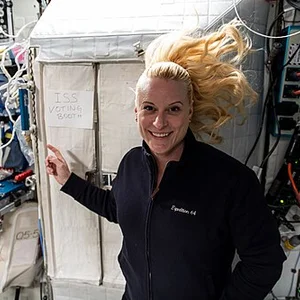
Kathleen Booth
1922 — 2022
Kathleen Booth (1922-2022) was a British computer scientist and mathematician, a pioneer of the early days of computing. She is credited with inventing assembly language and designing the first computers at Birkbeck College in London, alongside Andrew Booth.
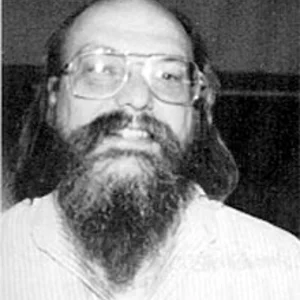
Ken Thompson
1945 — ?
American computer scientist, Ken Thompson is the co-creator of the Unix operating system with Dennis Ritchie at Bell Labs in the 1970s. He also designed the B programming language, the ancestor of C, and co-developed the Go language.
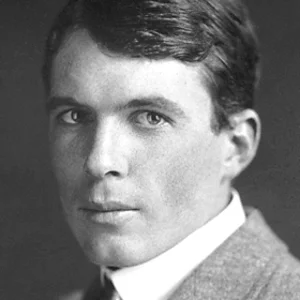
Lawrence Bragg
1890 — 1971
British physicist born in Australia, a pioneer of X-ray crystallography. At 25, he became the youngest-ever Nobel laureate in Physics (1915), sharing the prize with his father William Henry Bragg for the study of crystal structure.
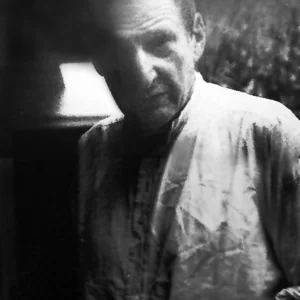
Lucian Freud
1922 — 2011
British painter and printmaker of German origin, grandson of Sigmund Freud. A major figure of 20th-century figurative painting, he is famous for his portraits and fleshy nudes of stark realism.
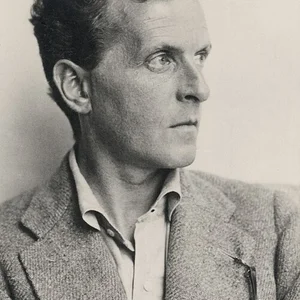
Ludwig Wittgenstein
1889 — 1951
Austrian, then British, philosopher and logician, a major figure of 20th-century analytic philosophy. He profoundly transformed thinking about language, logic, and meaning, first with the Tractatus and later with his Philosophical Investigations.
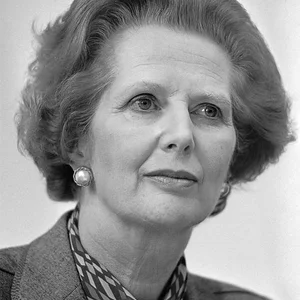
Margaret Thatcher
1925 — 2013
Margaret Thatcher, the first female Prime Minister of the United Kingdom (1979–1990), transformed the British economy through radical free-market policies. Nicknamed the “Iron Lady,” she privatized state-owned enterprises, took on the trade unions, and played a major role in ending the Cold War alongside Reagan and Gorbachev.
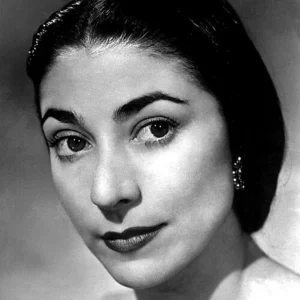
Margot Fonteyn
1919 — 1991
Margot Fonteyn (1919–1991) is considered one of the greatest ballerinas of the 20th century. Prima ballerina assoluta of the Royal Ballet in London, she formed with Rudolf Nureyev one of the most celebrated partnerships in the history of classical dance.
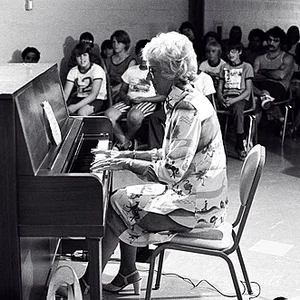
Marian McPartland
1918 — 2013
British-American jazz pianist Marian McPartland made her mark on the New York scene from the 1950s onward. She is best known for hosting the radio show “Piano Jazz” for more than thirty years on the American public radio network NPR.
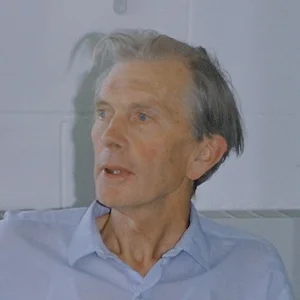
Martin Ryle
1918 — 1984
British astronomer and pioneer of radio astronomy. He developed the aperture synthesis technique that made it possible to map the sky with great precision, and was awarded the Nobel Prize in Physics in 1974.
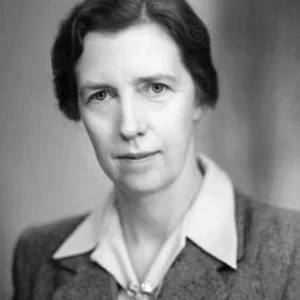
Mary Cartwright
1900 — 1998
British mathematician and pioneer of dynamical systems theory. Her work on nonlinear differential equations foreshadowed chaos theory. She was the first woman mathematician elected to the Royal Society.
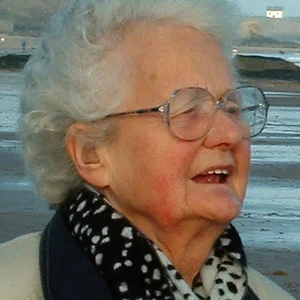
Mary Midgley
1919 — 2018
Mary Midgley (1919-2018) was a British moral philosopher, known for her work in animal ethics and her critique of scientific reductionism. She defends a vision of the human being as a moral animal rooted in nature.
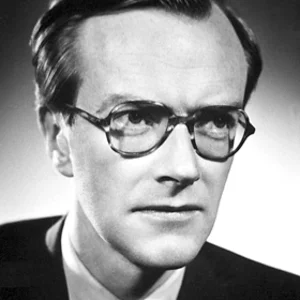
Maurice Wilkins
1916 — 2004
British biophysicist of New Zealand origin. His X-ray diffraction work on DNA contributed to the discovery of the double-helix structure, which earned him the Nobel Prize in Medicine in 1962 alongside James Watson and Francis Crick.
Max Mallowan
1904 — 1978
Max Mallowan (1904-1978) was a British archaeologist specializing in the ancient Near East. He directed major excavations in Iraq and Syria, notably at Nimrud. He was the husband of the novelist Agatha Christie.
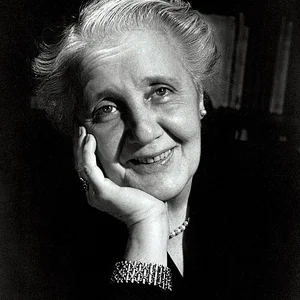
Melanie Klein
1882 — 1960
British psychoanalyst of Austrian origin (1882–1960), pioneer of child psychoanalysis. She developed object relations theory and was one of the first to analyze very young children through play. Her work profoundly influenced child psychiatry and psychoanalytic thought.
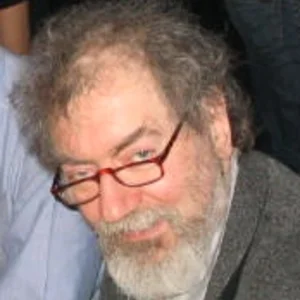
Michael Jackson
1942 — 2007
Michael Jackson was an American singer, dancer and songwriter, nicknamed the “King of Pop.” A major figure in 20th-century popular music, he revolutionized the music video and live performance through his choreography. His album Thriller (1982) remains the best-selling album in history.
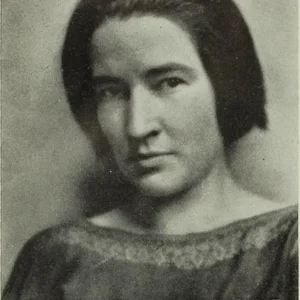
Nicholas Reeves
1956 — ?
Nicholas Reeves is a British Egyptologist and archaeologist born in 1956, a specialist in the 18th Dynasty and the Valley of the Kings. He became famous for his research on Tutankhamun and his theory that the tomb of Queen Nefertiti lies hidden behind the walls of the young pharaoh's own tomb.
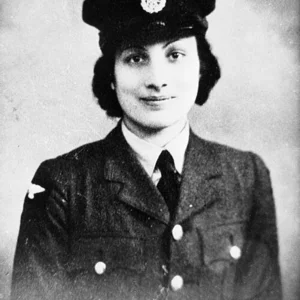
Noor Inayat Khan
1914 — 1944
A radio operator for the British Special Operations Executive (SOE), of Indian origin and Sufi tradition, she was parachuted into occupied France in 1943. Arrested by the Gestapo, she was executed at the Dachau camp in 1944 and posthumously awarded the George Cross.
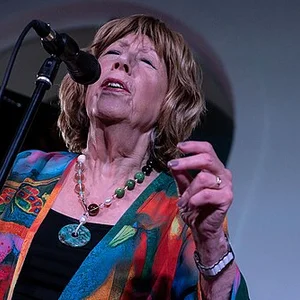
Norma Winstone
1941 — ?
Norma Winstone is a British jazz singer born in 1941, a major figure in European vocal jazz. Famous for her wordless vocalises and her art of writing lyrics for instrumental themes, she has profoundly shaped contemporary jazz.
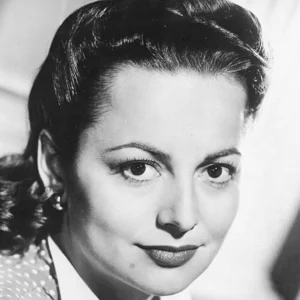
Olivia de Havilland
1916 — 2020
A British actress born in 1916 in Tokyo, Olivia de Havilland was one of Hollywood's greatest stars of the 1930s and 1940s. She won two Academy Awards for Best Actress and successfully fought against the Hollywood studio system, paving the way for actors' contractual freedom.
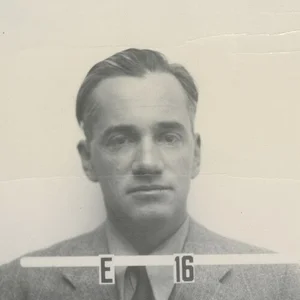
Otto Frisch
1904 — 1979
Austrian-born physicist who became a naturalized British citizen, and nephew of Lise Meitner. Together with his aunt, he provided the first theoretical explanation of nuclear fission in 1939. During the Second World War, he took part in the Manhattan Project and co-wrote the Frisch-Peierls memorandum demonstrating the feasibility of an atomic bomb.

Peter Sellers
1925 — 1980
British actor of comic genius (1925–1980), Peter Sellers is celebrated for his ability to inhabit wildly different characters. He is best known for his role as Doctor Strangelove and as Inspector Clouseau in The Pink Panther.

Philippa Foot
1920 — 2010
British philosopher, a major figure in twentieth-century moral philosophy. She is one of the founders of the contemporary revival of virtue ethics and the inventor of the famous “trolley problem.”
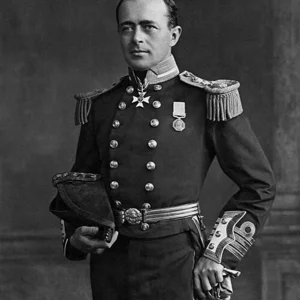
Robert Falcon Scott
1868 — 1912
A British Royal Navy officer, Robert Falcon Scott led two expeditions to Antarctica. During his second expedition (1910–1913), he reached the South Pole in January 1912, only to discover that Amundsen had beaten him by a month. Scott and his four companions perished on the return journey.
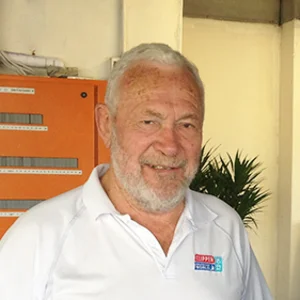
Robin Knox-Johnston
1939 — ?
British sailor born in 1939, the first person to complete a solo, non-stop circumnavigation of the globe under sail (1968–1969), aboard his ketch Suhaili. In doing so he won the Golden Globe Race, ushering in the era of the great solo ocean races.
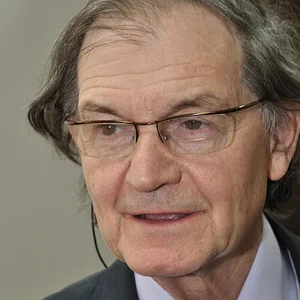
Roger Penrose
1931 — ?
British physicist and mathematician born in 1931, Roger Penrose is known for his work on gravitational singularities, black holes, and cosmology. Winner of the 2020 Nobel Prize in Physics, he also developed controversial theories on consciousness and quantum mechanics.
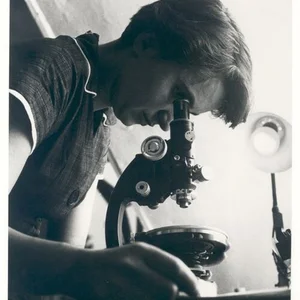
Rosalind Franklin
1920 — 1958
British molecular biologist (1920–1958), Rosalind Franklin made essential contributions to our understanding of DNA structure through her X-ray crystallography work. She is best known for Photo 51, a landmark image that revealed the double helix structure of DNA.
Rosalind Pitt-Rivers
1907 — 1990
Rosalind Pitt-Rivers was a 20th-century British biochemist who specialized in thyroid hormones. In 1952, together with Jack Gross, she co-discovered triiodothyronine (T3), a major thyroid hormone.
Sarah Kane
1971 — 1999
British playwright (1971-1999), Sarah Kane is one of the major figures of radical contemporary theatre. Her plays, marked by extreme violence, psychological suffering and the disintegration of language, shook the English-speaking stage in the 1990s.
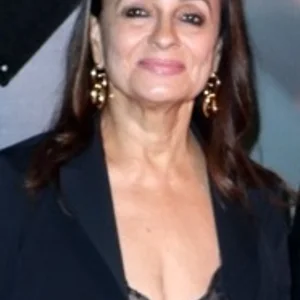
Soni Razdan
1956 — ?
Soni Razdan is an Indian actress born in 1958, known for her roles in Hindi cinema and Indian television series. She is also the mother of actress Alia Bhatt.
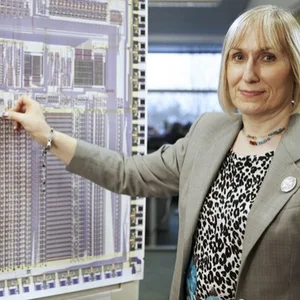
Sophie Wilson
1957 — ?
Sophie Wilson is a British computer scientist born in 1957, who designed the instruction set of the ARM processor. Her architecture now powers nearly all smartphones and mobile devices worldwide.
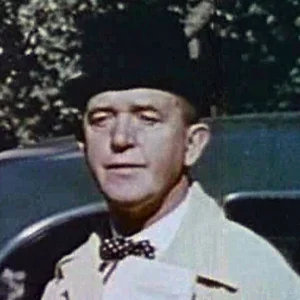
Stan Laurel
1890 — 1965
Stan Laurel (1890-1965) was a British actor and comedian, famous for forming the comic duo Laurel and Hardy with Oliver Hardy. A pioneer of slapstick comedy in both silent and sound film, he left a lasting mark on cinema history with his poetic and absurdist humor.
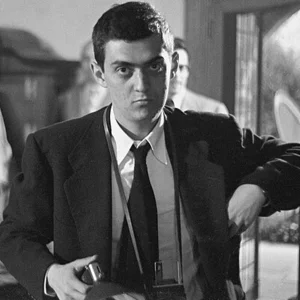
Stanley Kubrick
1928 — 1999
Stanley Kubrick (1928-1999) was an American director, screenwriter and producer. A former photographer, he became one of the most influential filmmakers of the 20th century, renowned for his perfectionism and the diversity of his genres, from war films to science fiction.
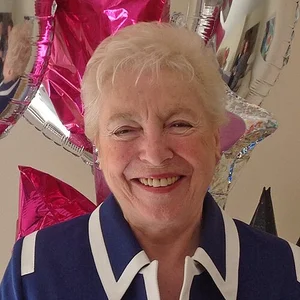
Stephanie Shirley
1933 — 2025
Stephanie Shirley, known as “Steve,” is a British computer scientist and entrepreneur of German origin, who arrived in the United Kingdom as a child thanks to the Kindertransport. A software pioneer, she founded a programming company in 1962 that employed almost exclusively women working from home. Later a philanthropist, she gave away most of her fortune.
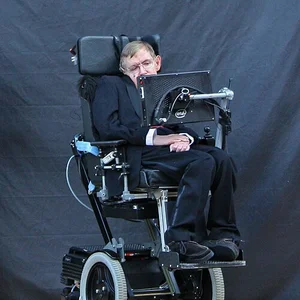
Stephen Hawking
1942 — 2018
British theoretical physicist and cosmologist (1942–2018), Stephen Hawking revolutionized our understanding of black holes and cosmology. Diagnosed with amyotrophic lateral sclerosis at age 21, he went on to have an exceptional scientific career despite severe disability.
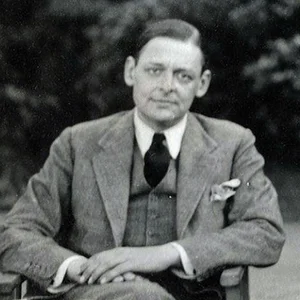
T. S. Eliot
1888 — 1965
American-born poet, playwright and literary critic who became a British citizen, a major figure of modernism. His poem *The Waste Land* (1922) transformed Western poetry; he received the Nobel Prize in Literature in 1948.
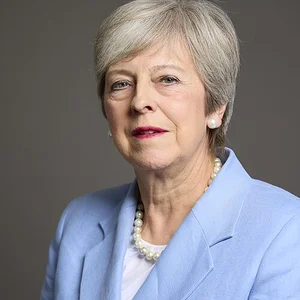
Theresa May
1956 — ?
Theresa May (born 1956) is a British politician and member of the Conservative Party. She served as Prime Minister of the United Kingdom from 2016 to 2019, succeeding David Cameron following the Brexit referendum.
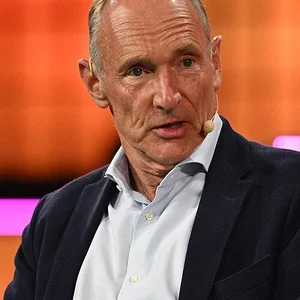
Tim Berners-Lee
1955 — ?
British computer scientist born in 1955, Tim Berners-Lee is the inventor of the World Wide Web (1989–1991). He designed the HTTP and HTML protocols that revolutionized global communication.
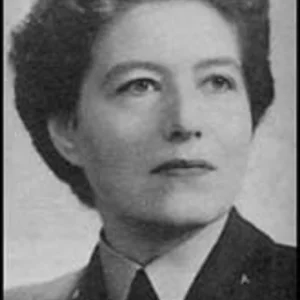
Vera Atkins
1908 — 2000
Vera Atkins was a British intelligence officer of Romanian origin and a leading figure in the French section of the Special Operations Executive (SOE) during the Second World War. As a recruiter and trainer of the agents sent into occupied France, she devoted the post-war years to tracing the fate of the agents who had gone missing, especially the women who had been deported.
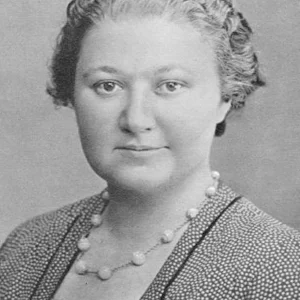
Vera Menchik
1906 — 1944
Vera Menchik was a Russian-British chess player of Czech origin, the first women's world chess champion. She dominated women's competition from 1927 until her death in 1944.
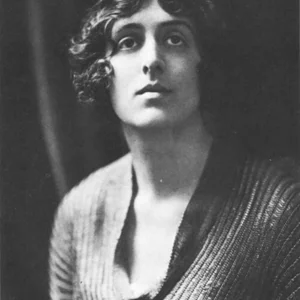
Vita Sackville-West
1892 — 1962
A British writer and poet of the 20th century, Vita Sackville-West is known for her novels, her poetry, and her gardens. She was the close friend of Virginia Woolf, who drew inspiration from her for the novel Orlando.
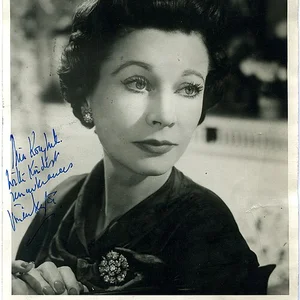
Vivien Leigh
1913 — 1967
British actress born in 1913, Vivien Leigh is world-famous for her role as Scarlett O'Hara in Gone with the Wind (1939). A two-time Oscar winner, she embodied Hollywood glamour while also pursuing a demanding stage career in London.
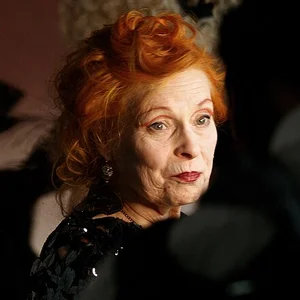
Vivienne Westwood
1941 — 2022
British fashion designer (1941–2022)

Amy Winehouse
1983 — 2011
British singer and songwriter born in 1983, Amy Winehouse is celebrated for her deep, distinctive voice and her style blending soul, jazz, and R&B. Her album *Back to Black* (2006) earned her five Grammy Awards in a single night. She died at the age of 27 in 2011, joining the infamous 27 Club.
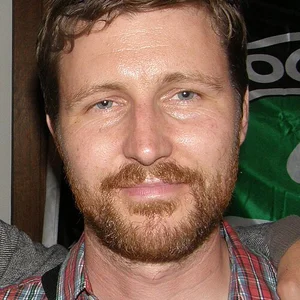
Andrew Haigh
1973 — ?
British director, screenwriter, and editor born in 1973, Andrew Haigh is acclaimed for his intimate films exploring human relationships and LGBTQ+ identity. He is best known for Weekend (2011) and 45 Years (2015).
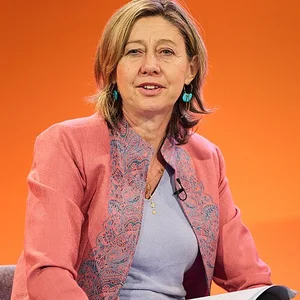
Christina Lamb
1965 — ?
Christina Lamb is a British journalist and writer, born in 1965, specializing in war reporting. A renowned foreign correspondent, she has covered Afghanistan, Pakistan, and many other conflicts, and co-wrote the memoir 'I Am Malala' with Malala Yousafzai.
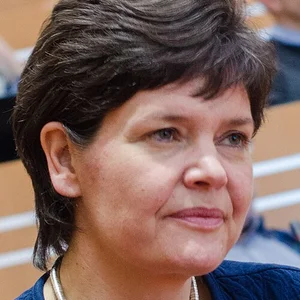
Kate Raworth
1970 — ?
British economist born in 1970, she is known for having designed "Doughnut Economics," an economic model aiming to reconcile human needs with the ecological limits of the planet. Her major work renewed thinking about sustainable development.
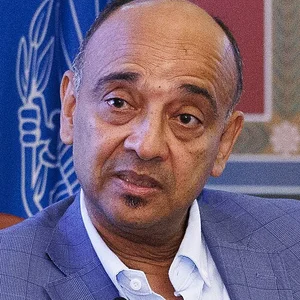
Kwame Anthony Appiah
1954 — ?
Anglo-Ghanaian philosopher born in 1954, professor at New York University, specializing in ethics, identity, and cosmopolitanism. He advocates an ethics of obligations toward all human beings, beyond national and cultural borders.
Lucy Durán
Lucy Durán is a British ethnomusicologist, producer and radio presenter, a specialist in the music of West Africa, particularly Mali. Her work is authoritative on the Mande griots and singers such as Siramori Diabaté.
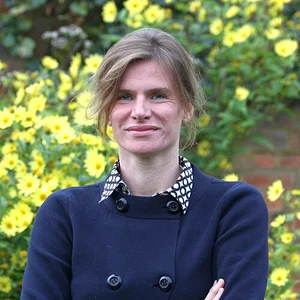
Mariana Mazzucato
1968 — ?
Mariana Mazzucato is an Italian-American economist born in 1968, a professor at University College London. She is known for her work on the driving role of the state in innovation and on value creation in the economy.
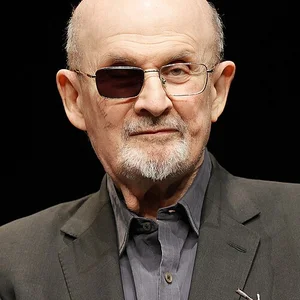
Salman Rushdie
1947 — ?
British-American writer of Indian origin born in 1947, a major figure in English-language postcolonial literature. Known worldwide for his novels blending magical realism with the history of India, as well as for the fatwa issued against him after the publication of The Satanic Verses.
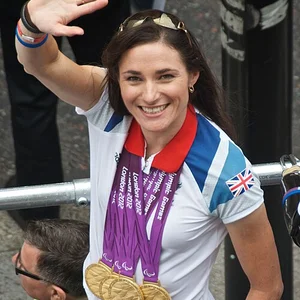
Sarah Storey
1977 — ?
Sarah Storey is a British Paralympic athlete, one of the most decorated in her country's history. First a swimmer and then a cyclist, she has amassed a record number of gold medals over several decades of competition.
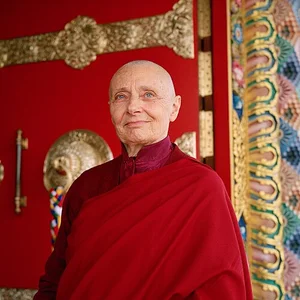
Tenzin Palmo
1943 — ?
Tenzin Palmo, born Diane Perry in 1943 in London, is a Tibetan Buddhist nun of the Drukpa Kagyü school. She is famous for having spent twelve years on meditation retreat in a cave in the Himalayas, three of them in strict seclusion.
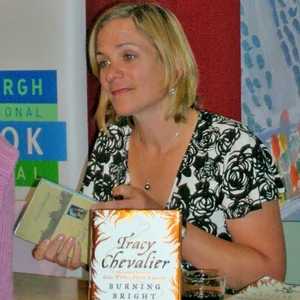
Tracy Chevalier
1962 — ?
Tracy Chevalier is an American novelist born in 1962 and based in London. She is known worldwide for her historical novel *Girl with a Pearl Earring* (1999), inspired by Vermeer's painting and adapted for film in 2003.