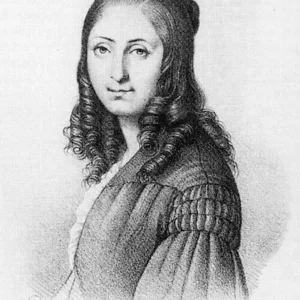
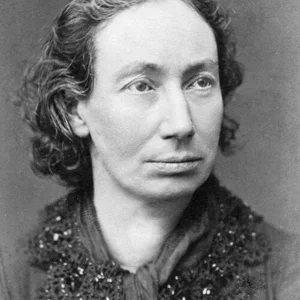
Dutch-born anarchist and feminist militant who emigrated to the United States, known for her correspondence with Emma Goldman in the 1890s–1900s. A prominent figure in New York's anarchist and labor circles at the end of the nineteenth century.
Stella Zeehandelaar
Stella Zeehandelaar
7 min read
Frequently asked questions
Key Facts
- Born in Amsterdam around 1860, emigrated to the United States
- Maintained an active correspondence with Emma Goldman from the 1890s onward
- Involved in anarchist and feminist networks in New York
- Her letters are a historical source on anarchist circles at the end of the nineteenth century
Works & Achievements
A collection of letters preserved in the archives of the International Institute of Social History in Amsterdam. These exchanges constitute the primary documentary evidence of Zeehandelaar's militant involvement and her contribution to anarchist and feminist thought.
Like many activists in her circle, Zeehandelaar contributed to the circulation of anarchist publications within immigrant communities in New York — an activity essential to the vitality of the movement.
A fundamental grassroots activity for militants: organizing meetings, hosting itinerant speakers such as Goldman, and maintaining solidarity networks between European and American anarchists.
Anecdotes
Stella Zeehandelaar was one of Emma Goldman's first regular correspondents in the 1890s. Their letters, preserved in the archives of the International Institute of Social History in Amsterdam, bear witness to a deep activist friendship and a shared reflection on anarchism and women's emancipation.
In her letters to Emma Goldman, Zeehandelaar addressed not only revolutionary strategy but also the questions of free love and marriage — central themes of late nineteenth-century anarchist feminism. These exchanges illustrate how women activists of the era saw social emancipation and personal emancipation as inseparable.
An immigrant from the Netherlands like many European radical activists, Zeehandelaar quickly found her place in the anarchist circles of New York's Lower East Side — a neighborhood that welcomed thousands of immigrants bringing socialist and libertarian ideas from Central and Eastern Europe.
The correspondence between Zeehandelaar and Goldman helped the latter, then still a young activist, to sharpen her theoretical positions on anarchism and feminism. Goldman would later describe these exchanges as foundational to the development of her political thought.
Primary Sources
The letters exchanged between 1890 and 1901 address the organization of the anarchist movement, the question of women's emancipation, and the living conditions of immigrant workers in New York. They constitute the primary documentary record of Zeehandelaar's activist activity.
In her autobiography, Goldman mentions Stella Zeehandelaar among her correspondents and fellow activist friends during the early years of her anarchist involvement in New York, highlighting the importance of these epistolary ties to her political formation.
A critical edition of Emma Goldman's papers including letters written by Stella Zeehandelaar, making it possible to partially reconstruct her trajectory and positions within the American anarchist movement.
Key Places
A neighborhood of Jewish and European immigration where New York's anarchist and labor circles were concentrated at the end of the 19th century. It was in this cosmopolitan and radical milieu that Zeehandelaar lived, organized, and corresponded with Goldman.
Stella Zeehandelaar's homeland, which had a strong tradition of political radicalism and active labor movements at the end of the 19th century. It was in this environment that she developed her first anarchist convictions before emigrating.
An iconic gathering place for labor and anarchist movements in New York, hosting meetings and demonstrations attended by militants in the circle of Emma Goldman and Stella Zeehandelaar.
The institution that today holds Emma Goldman's archives, including Zeehandelaar's letters. This documentary collection is the primary source for reconstructing her activist journey.
Typical Objects

Epistolary correspondence was the primary coordination tool among scattered activists. The letters from Zeehandelaar to Goldman, preserved in the IISH archives, attest to the central importance of the postal network in organizing the anarchist movement.

Radical publications in German, Yiddish, and English circulating among immigrant communities in New York. These newspapers served both as sources of information and as propaganda tools that activists like Zeehandelaar distributed through their networks.

Foundational theoretical texts of anarchism, sold cheaply at activist meetings. Reading and distributing these pamphlets formed the backbone of the political education of anarchist militants of the era.

Active militants like Zeehandelaar used early typewriters to produce leaflets and letters more quickly. This tool symbolizes the modernization of anarchist propaganda in the late nineteenth century.

In the modest tenements of the Lower East Side, activists worked by lamplight in the evenings, writing correspondence and articles after long days of labor. Electricity remained scarce in these working-class buildings.

An indispensable tool for maintaining the network of contacts among anarchists across Europe and America. It enabled the coordination of lecture tours, the distribution of publications, and solidarity among dispersed militants.
School Curriculum
Vocabulary & Tags
Key Vocabulary
Tags
Daily Life
Morning
Stella Zeehandelaar likely started her day early, like most working-class immigrant women on the Lower East Side. She may have worked in the garment industry — the dominant sector for immigrant women in New York at the time — before devoting her free hours to activism and her voluminous correspondence.
Afternoon
Afternoons were often spent reading radical newspapers — in Dutch, German, or English — writing letters to fellow activists scattered across Europe and the Americas, and preparing for the evening's political meetings. Militant life was organized in the cafés and back rooms of the neighborhood.
Evening
Evenings were the heart of anarchist political life: public meetings, lectures by speakers such as Emma Goldman, debates in radical reading circles. It was in the evenings, after their long working days, that immigrant workers carried out the bulk of their associative and political activity.
Food
The diet of a modest immigrant activist in New York was simple and shaped by Northern European cuisines: rye bread, herring, potatoes, vegetable soups. Meals shared at movement gatherings offered an opportunity to exchange the flavors of the many immigrant cultures brought together in the cause.
Clothing
Anarchist women of the era wore simple, practical clothing, often made at home or purchased at Lower East Side markets. Some activists made a point of rejecting corsets and bourgeois fashion as a concrete symbol of their emancipation from the male gaze and prevailing social norms.
Housing
Housing meant a modest tenement apartment on the Lower East Side, typically with several people to a room in overcrowded buildings lacking running water or central heating. These precarious living conditions directly fueled the political revolt of anarchist immigrants against the capitalist system.
Historical Timeline
Period Vocabulary
Liens externes & ressources
Références
Œuvres
Correspondance avec Emma Goldman
1894-1901
Participation à la diffusion de la presse anarchiste new-yorkaise
1890-1905
Organisation de réunions et conférences dans les cercles anarchistes
1890-1905