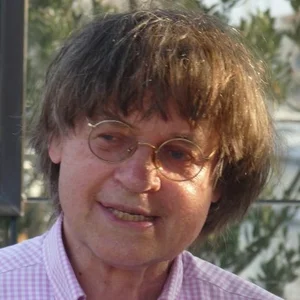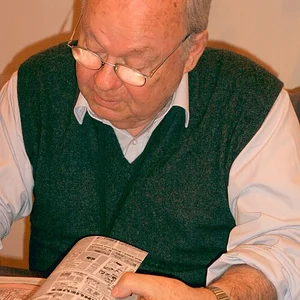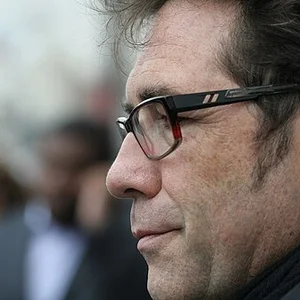

Bernard Verlhac, known as Tignous (1957-2015), was a French press cartoonist and caricaturist. A contributor to Charlie Hebdo, Marianne and Fluide glacial, he championed freedom of expression through satirical drawing. He was murdered on 7 January 2015 during the attack on Charlie Hebdo.
Tignous(1957 — 2015)
Tignous
France
6 min read
Frequently asked questions
Key Facts
- Born on 21 August 1957 in Paris under the name Bernard Verlhac
- Published his drawings from the 1980s in numerous publications (Charlie Hebdo, Marianne, Fluide glacial, La Grosse Bertha)
- Member of the Cartooning for Peace collective, defending press cartoons as a tool for dialogue
- Murdered on 7 January 2015 in the attack on the Charlie Hebdo editorial office, alongside Cabu, Wolinski, Charb and Honoré
- His funeral in Montreuil in January 2015 drew a large crowd and many cartoonists paying tribute
Works & Achievements
Weekly editorial cartoons commenting on political and social current events. They made Tignous one of the graphic voices of the satirical newspaper.
Regular contributions to the weekly news magazine, where his cartoons illustrated society-wide debates. They reflect the diversity of his outlets.
A collection of courtroom sketches drawn during a criminal assize trial, with a text by journalist Pascale Robert-Diard. The book showcases drawing as a tool for judicial reporting.
A humorous album illustrated by Tignous, playing on the absurd and on tenderness. It reveals a gentler side of his drawing, beyond political satire.
Contributions to adult humor comics, where he refined his line and his sense of derision. They anchor Tignous in the tradition of French satirical comics.
Anecdotes
Bernard Verlhac chose the pen name “Tignous,” a nickname that came to him from his childhood in Montreuil. Like many press cartoonists, he signed his caricatures with a short, catchy name that's easier to recognize at the bottom of a drawing.
Tignous didn't attend a prestigious art school: he taught himself to draw and broke into the satirical press by relentlessly submitting his work. He contributed to many publications such as Charlie Hebdo, Marianne, Fluide glacial, and L'Écho des savanes, sketching political and social current events.
In 2011, Tignous illustrated the book *Responsables et coupables*, a documentary project in which he attended a real criminal court trial and drew the hearings, the defendants, and the lawyers on the spot. Here, press cartooning became a tool for courtroom reporting.
On 7 January 2015, two armed men burst in during Charlie Hebdo's weekly editorial meeting. Tignous was murdered alongside his fellow cartoonists Cabu, Charb, Wolinski, and Honoré. The attack sent shockwaves around the world, rallied around the slogan “Je suis Charlie.”
At his funeral in Montreuil, his hometown, his cartoonist friends covered his coffin with drawings and colorful messages, turning the farewell into one final graphic tribute. The ceremony was marked by emotion but also by humor, true to his spirit.
Primary Sources
France has today been struck at its very heart, there where information, free thought, and these values that are ours and that are universal are produced.
A collection of sketches made by Tignous during a criminal trial, capturing on the spot the faces and scenes of the courtroom.
The paper reappears one week after the attack, in memory of the murdered cartoonists, including Tignous, killed for their drawings.
Key Places
The French capital and the heart of the satirical press, where Tignous practised his trade as a cartoonist for numerous newspapers. It is also the site of the 2015 attack.
Newsroom of the satirical newspaper where the weekly editorial meeting was held. On 7 January 2015, Tignous was murdered there along with his colleagues.
A town in the eastern suburbs of Paris to which Tignous was deeply attached and where his funeral took place in January 2015.
Gathering place for the republican marches of 10 and 11 January 2015 in tribute to the victims of the attack. It became a spontaneous memorial.
Typical Objects

The cartoonist's basic tools, allowing the sharp, expressive black line that characterizes press drawing. Tignous used them to quickly sketch the news of the day.

A pad of paper used to draw trials from life, where photography is forbidden. It makes the artist a visual witness to justice.

A weekly such as Charlie Hebdo or Marianne, the medium through which cartoons reach the general public. It embodies the opinion press and freedom of the press.

The artist's tilted work surface, often set up at home or in the newsroom. It is the station from which press drawings are born.

A pencil or pen held up during the marches of January 2015, which became a worldwide symbol of freedom of expression in the face of violence. It turns a simple drawing tool into a political emblem.
School Curriculum
Vocabulary & Tags
Key Vocabulary
Daily Life
Morning
Like many press cartoonists, Tignous starts his day by reading the newspapers and listening to the radio to grasp the hottest news. Drawing ideas often come from this morning information.
Afternoon
The afternoon is devoted to work at the drawing table: sketches, inking, searching for the comic “punchline.” Once a week, he goes to the editorial meeting where the team chooses the topics.
Evening
The evening may be spent finishing a late drawing to put the paper to bed, since the press imposes tight deadlines. It is also a time for exchanges with colleagues and family.
Food
Tignous leads the ordinary life of a Frenchman of the late 20th century, without any particular diet linked to his profession. Meals shared with the team or with friends often set the pace of the workdays.
Clothing
He wears casual, unfussy clothing, in keeping with the world of satirical press where simplicity takes precedence over strict dress codes. His style is that of an urban artist of his time.
Housing
He lives and works in the Paris region, notably attached to Montreuil, in a home where he sets up his drawing studio. The drawing table occupies a central place there.
Historical Timeline
Period Vocabulary
Liens externes & ressources
Références
Œuvres
Caricatures pour Charlie Hebdo
années 1990-2015
Dessins pour Marianne
à partir de 1997
Responsables et coupables
2011
Pandas dans la brume (avec Jean-Louis Fournier)
années 2000
Dessins pour Fluide glacial et L'Écho des savanes
années 1980-2000