The Sassanid khwân
In the Persia from which Pîrûz came, they did not serve a "main course" followed by a dessert: they laid out the khwân, a cloth or low table covered with several dishes placed together. Flatbread, thick soup, sweet-and-sour meat stew, dried dairy and fruits all sat side by side, each person composing their own plate according to their rank and hunger. The structure is not "starter/main/dessert" but a simultaneous array where sour (verjuice, whey) answers fat (mutton) and sweet (dates, honey). On the table of an enslaved artisan in Medina, this khwân was reduced to bread, dates and milk — but the memory of the flavors of Nahavand remained vivid.
Signature : Kashk (fermented and dried whey)
The heart of Persian and Sassanid-Persian cuisine: sheep's milk curdled then dried into hard balls, which kept for months and were reconstituted in water to bring an inimitable sour and umami depth to soups. It is the "Parmesan of the Iranian plateau": a nomadic protein reserve, a gustatory signature that distinguishes Pîrûz's table from that of the Arabs of the Hejaz.
Abu Lu'lu'a Fīrūz at the table
5 period recipes
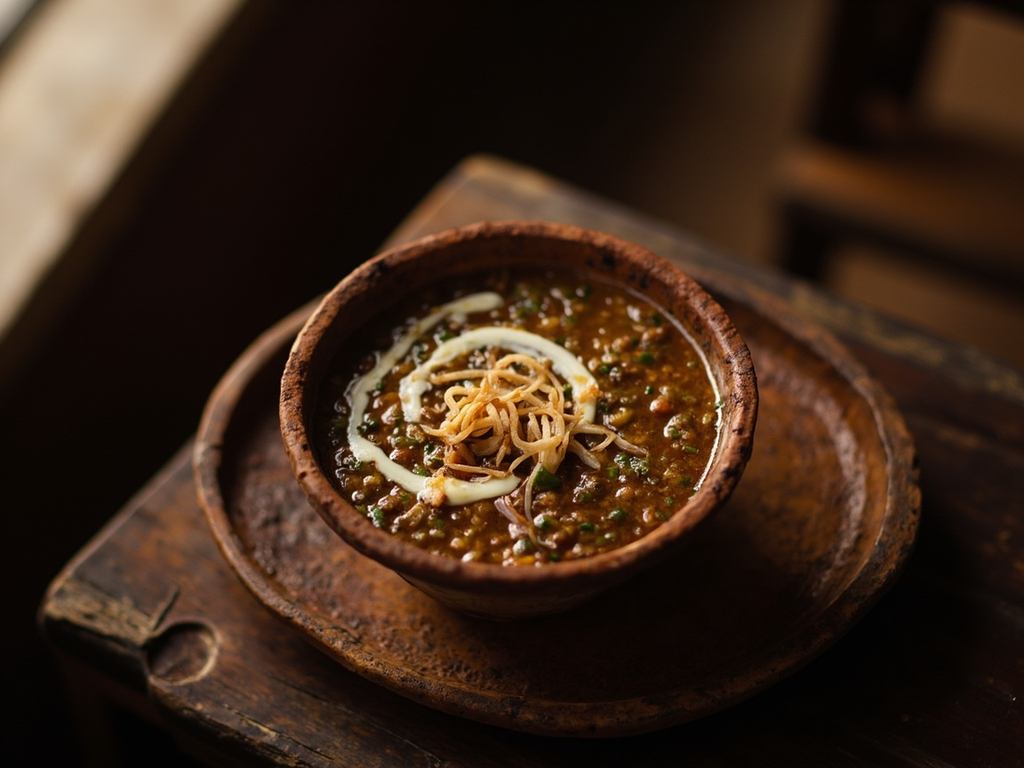 Everyday
Âsh-e adas — lentil and herb soup with kashk
Âsh (soup-staple of the Persian table)
🧂 🍄 🫙· 1 h 10
View the recipe
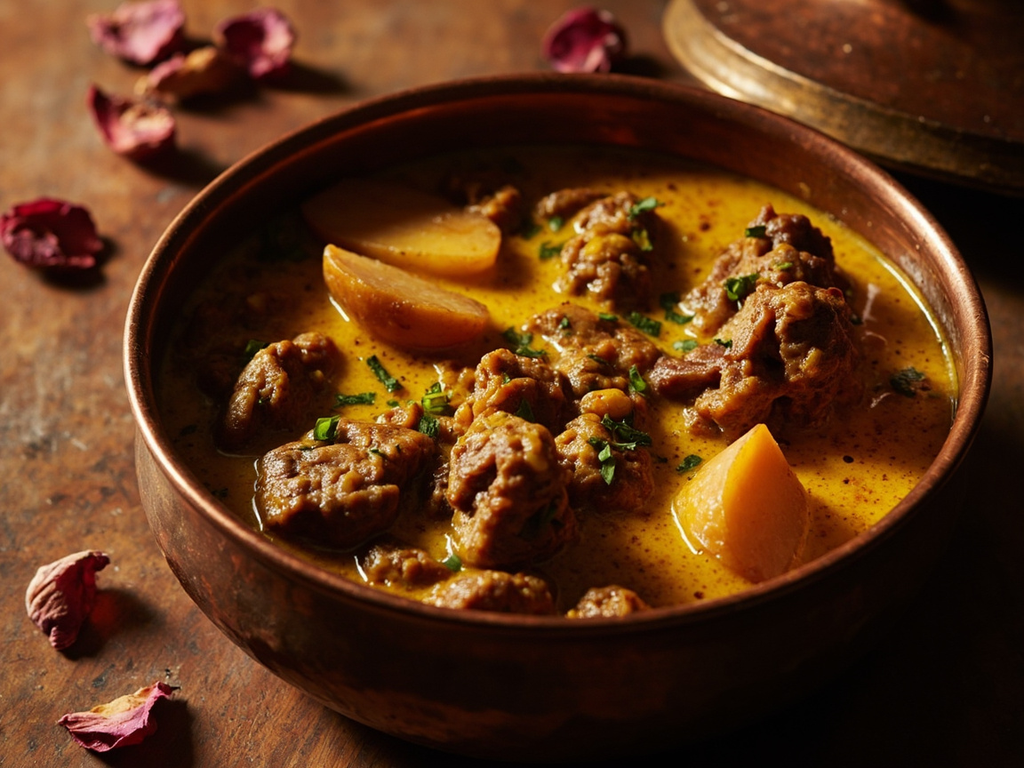 Festive
Saffron lamb and quince khoresh with verjuice
Khoresh (sweet-and-sour stew of the festive khwân)
🧂 🍋 🍯· 2 h 30
View the recipe
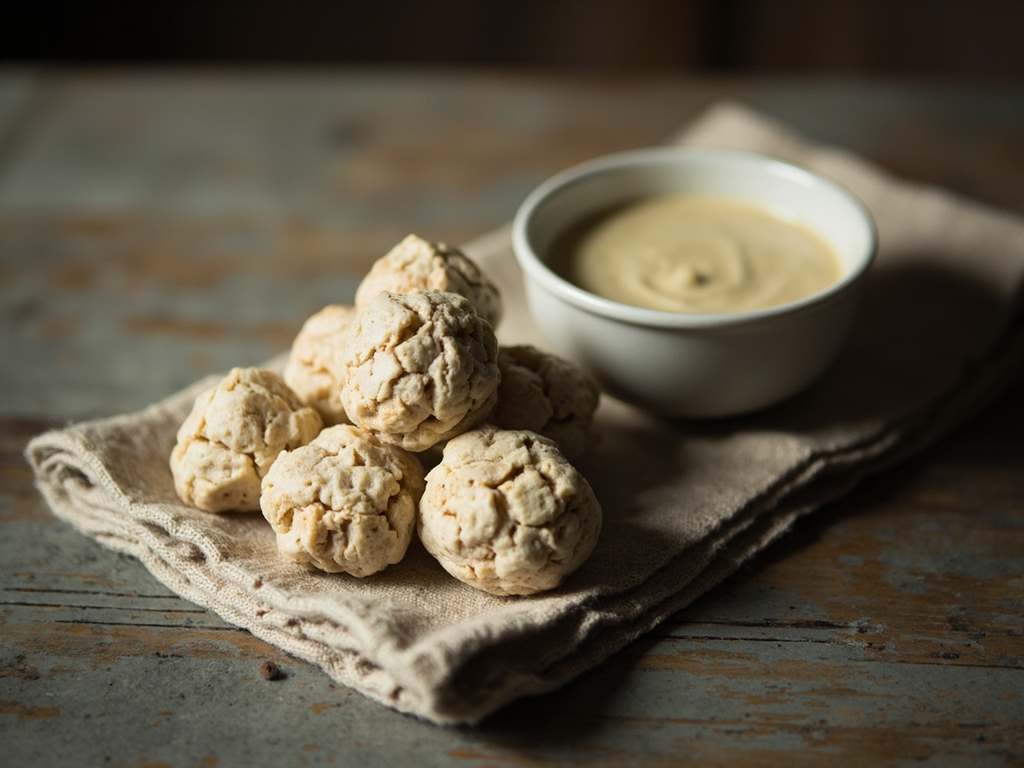 Preserving
Kashk — fermented and dried whey for long storage
Nomadic provision (khwân reserve)
🫙 🍋 🍄· 3 to 5 days (drying)
View the recipe
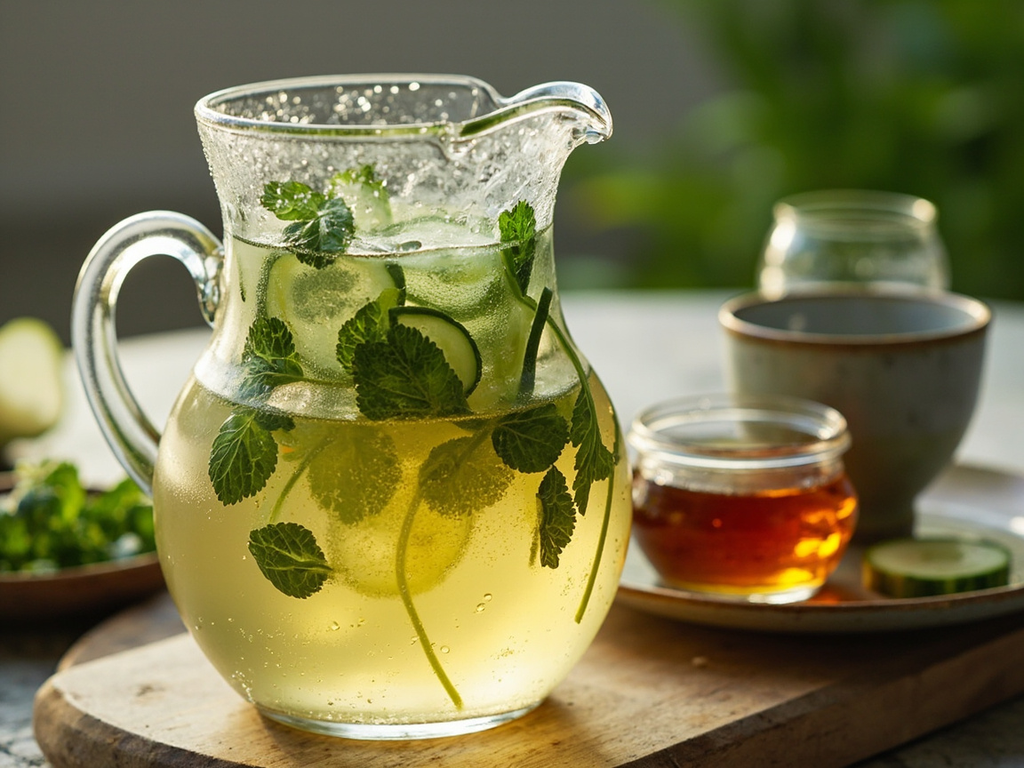 Drink
DrinkSekanjabin — honey and vinegar syrup with mint
Sharbat (refreshing drink of the khwân)
🍋 🍯· 40 min
View the recipe
 Travel
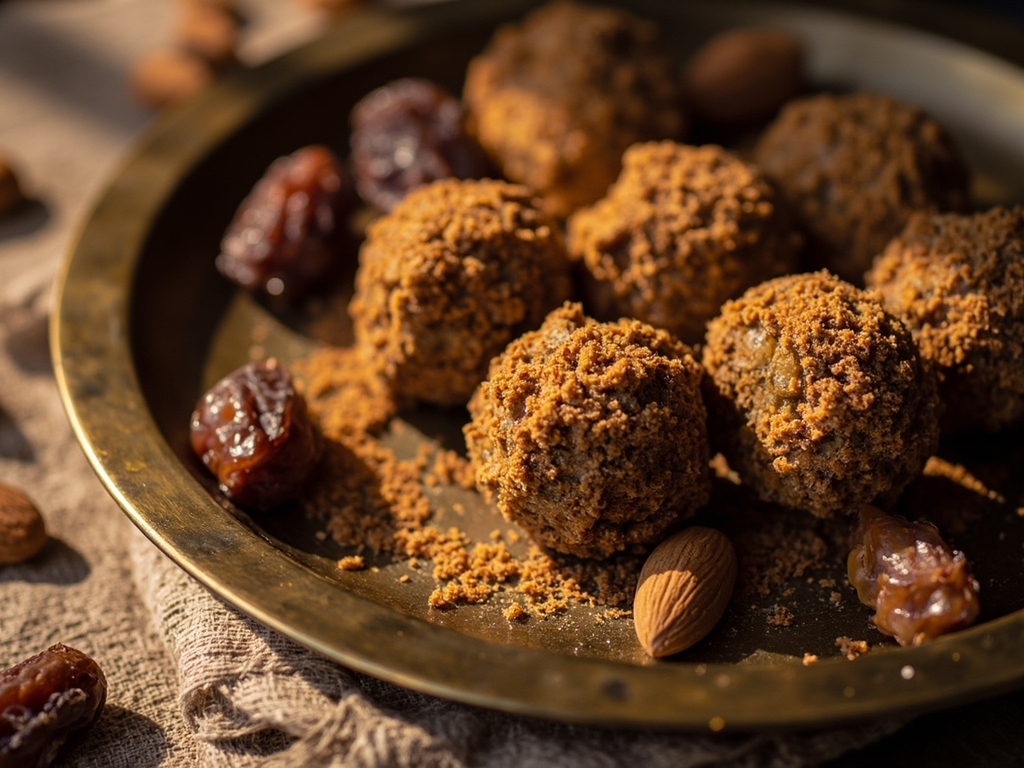
Date and almond balls with toasted barley flour
Travel provision (toushé of the wayfarer)
🍯· 25 min
View the recipe