 flip
flipSaffron lamb and quince khoresh with verjuice
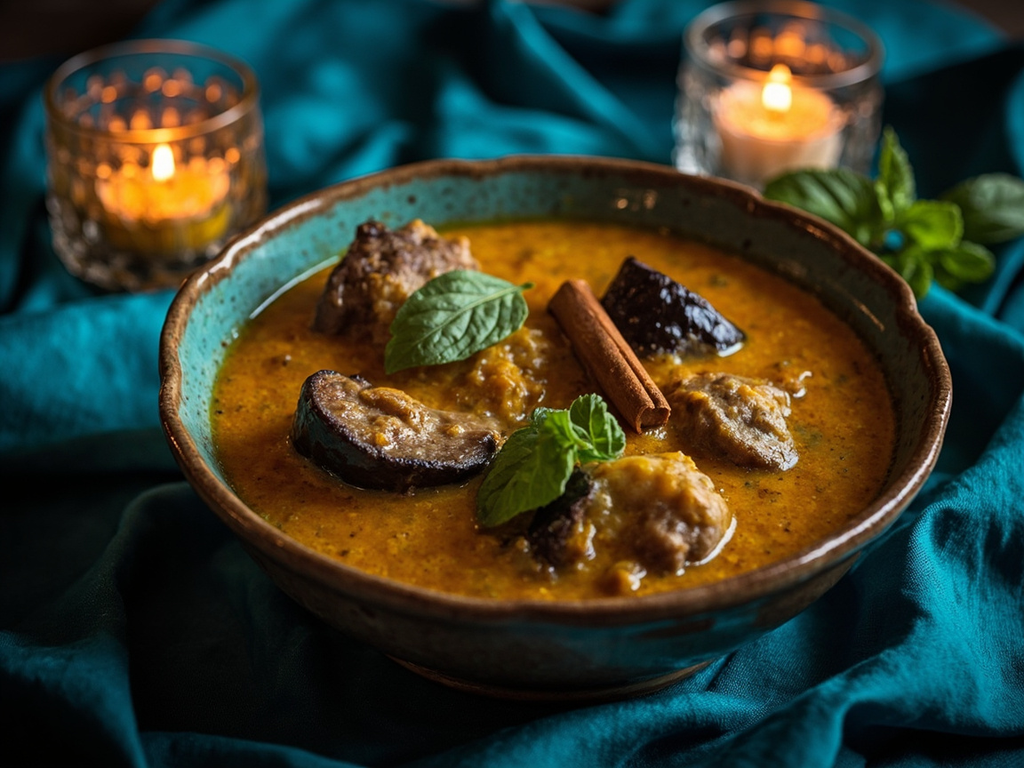
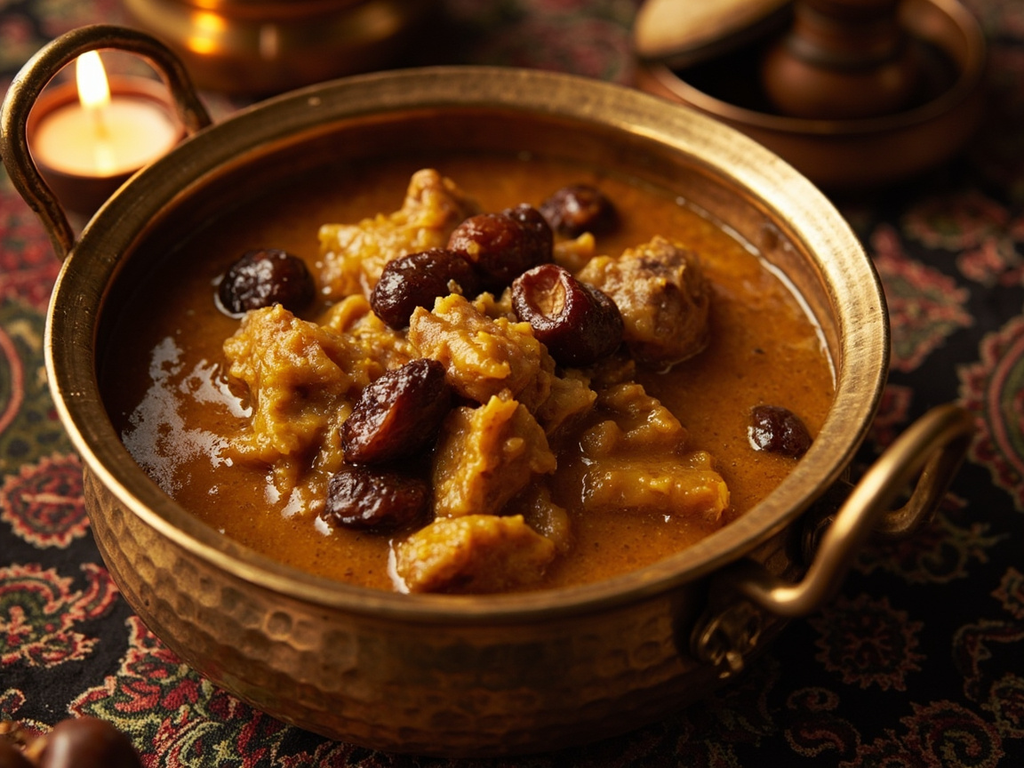
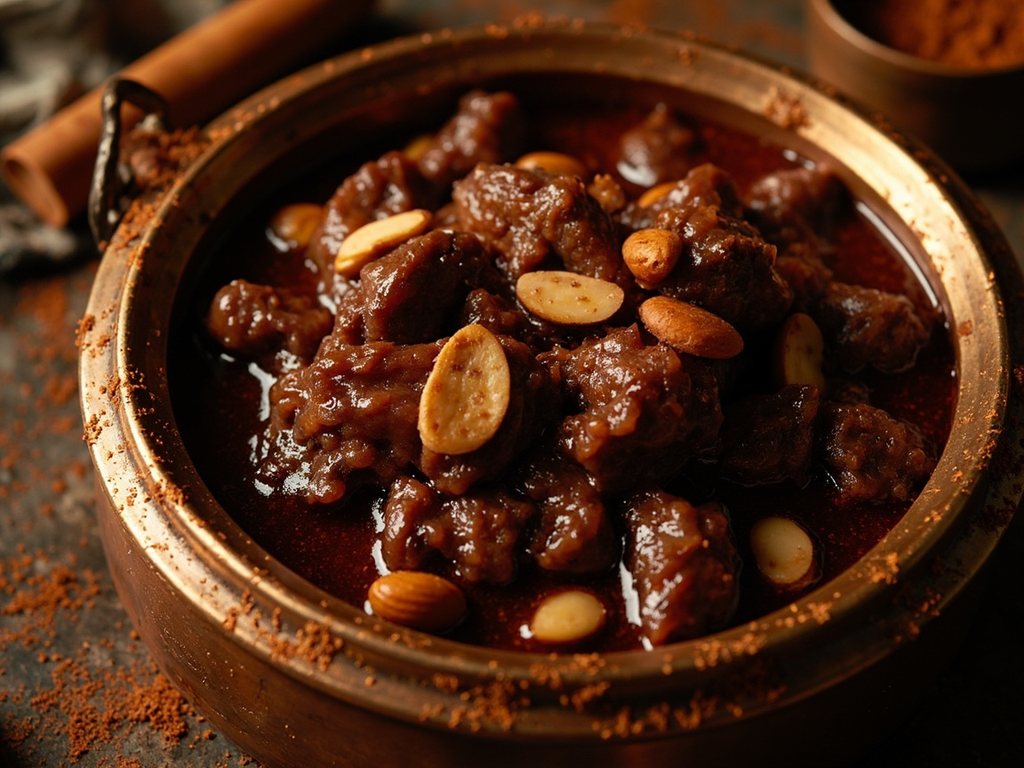
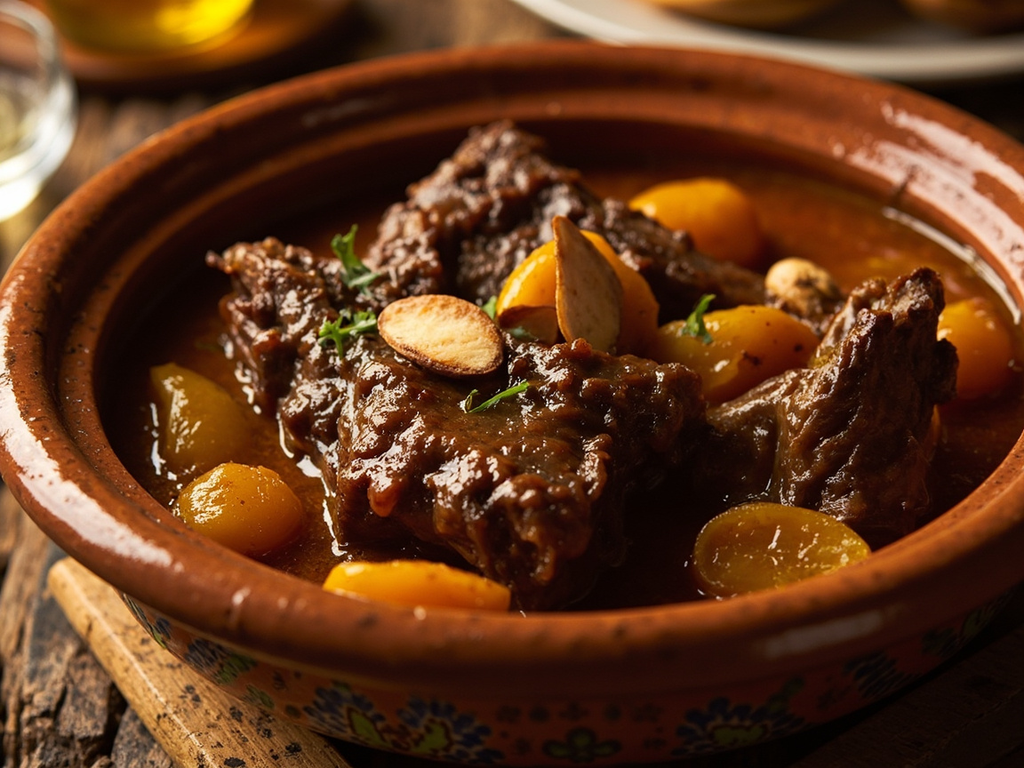
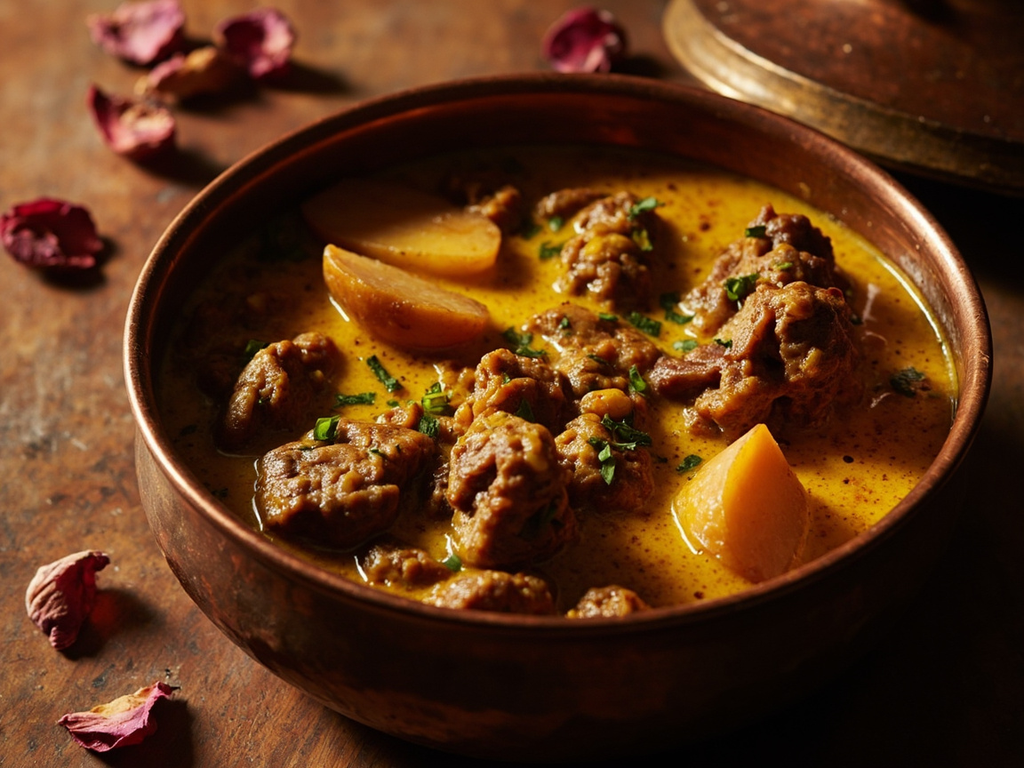
Saffron lamb and quince khoresh with verjuice
Why this dish? Pîrûz came from a land where the Sassanid banquet skillfully balanced sour and fat: meat stew simmered with a sour fruit is the soul of great Persian cuisine. To evoke the table before captivity — the feasts at Nahavand and near Ctesiphon — nothing is more fitting than this khoresh where quince and verjuice tame the lamb.
A slow stew where confit lamb absorbs the perfume of quince and the sourness of verjuice, balanced with a touch of honey and colored with saffron. The dish for feast days, placed in the center of the khwân.
This is the dish of wedding nights, when my people were still free on their lands. Take a fine piece of mutton, sweat it in fat with onion until golden, then drown it in water and forget it on the embers all afternoon. At the right moment, slide in cut quince and verjuice pressed from green grapes — the sour embraces the fat, that's the whole secret of our table. A tear of honey, three threads of saffron, and you hold the taste of an empire that no caliph will take from my memory.
- •Mutton (shoulder) — a fine piece (meat)
- •Quince — two fruits (sour-fragrant fruit)
- •Verjuice (juice of unripe grapes) — a bowl (sourness)
- •Onion — two (base)
- •Saffron — a few threads (color and noble aroma)
- •Honey — a spoonful (sweet balance)
- •Cinnamon and salt — to taste (seasoning)
Saffron lamb and quince khoresh with verjuice
A slow stew where confit lamb absorbs the perfume of quince and the sourness of verjuice, balanced with a touch of honey and colored with saffron. The dish for feast days, placed in the center of the khwân.
Why this dish? Pîrûz came from a land where the Sassanid banquet skillfully balanced sour and fat: meat stew simmered with a sour fruit is the soul of great Persian cuisine. To evoke the table before captivity — the feasts at Nahavand and near Ctesiphon — nothing is more fitting than this khoresh where quince and verjuice tame the lamb.
This is the dish of wedding nights, when my people were still free on their lands. Take a fine piece of mutton, sweat it in fat with onion until golden, then drown it in water and forget it on the embers all afternoon. At the right moment, slide in cut quince and verjuice pressed from green grapes — the sour embraces the fat, that's the whole secret of our table. A tear of honey, three threads of saffron, and you hold the taste of an empire that no caliph will take from my memory.
Ingredients (period version)
- Mutton (shoulder) — a fine piece (meat)
- Quince — two fruits (sour-fragrant fruit)
- Verjuice (juice of unripe grapes) — a bowl (sourness)
- Onion — two (base)
- Saffron — a few threads (color and noble aroma)
- Honey — a spoonful (sweet balance)
- Cinnamon and salt — to taste (seasoning)
Ingredients
- Lamb or mutton shoulder — 800 g, cut into pieces (meat)
- Quinces — 2, quartered (sour fruit)
- Verjuice — 150 ml (or green grape juice / lemon juice + water) (sourness)
- Onions — 2, sliced (base)
- Saffron — 1 good pinch infused in a little hot water (aroma/color)
- Honey — 1 tbsp (balance)
- Cinnamon — 1/2 tsp (sweet spice)
- Salt, oil/clarified butter — to taste (cooking)
Method
- Brown the onions in clarified butter, add the meat and sear on all sides.
- Cover with water, add salt and cinnamon, and simmer covered on low heat for 1 hour 30 minutes.
- Separately sauté the quince wedges in a little butter until colored, then add to the stew.
- Pour in verjuice, honey and infused saffron; continue for 30-40 minutes until the meat is tender and the sauce coats.
- Taste and adjust the sweet-sour balance; serve with flatbread or rice.
How it was made : Sassanid Persia loved meat stewed with sour fruits (quince, plum, pomegranate) and verjuice: these khoresh are the direct ancestors of Iranian cuisine. Saffron, already cultivated in Persia, signaled a prestige dish. They cooked long over embers in clay pots.
The contemporary twist : Sprinkle with dried rose petals and pistachio slivers, and name the dish "Nahavand Stew" on the menu.
Sources : Ferdowsi, Shâhnâmeh (descriptions of Sassanid royal banquets) · Najmieh Batmanglij, Food of Life
Abu Lu'lu'a Fīrūz · Charactorium