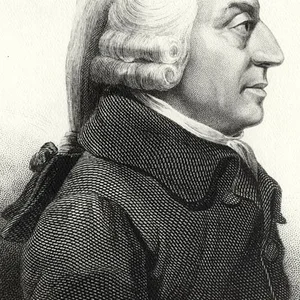

An 18th-century Scottish philosopher and economist, Adam Smith is considered the father of modern political economy. His landmark work, The Wealth of Nations (1776), laid the foundations of economic liberalism and capitalism.
Adam Smith(1723 — 1790)
Adam Smith
royaume de Grande-Bretagne
7 min read
Frequently asked questions
Famous Quotes
« It is not from the benevolence of the butcher, the brewer, or the baker that we expect our dinner, but from their regard to their own interest.»
« The division of labour is limited by the extent of the market.»
Key Facts
- 1723: born in Kirkcaldy, Scotland
- 1759: publication of The Theory of Moral Sentiments
- 1776: publication of An Inquiry into the Nature and Causes of the Wealth of Nations
- 1778: appointed Commissioner of Customs in Scotland
- 1790: died in Edinburgh
Works & Achievements
Smith's first major work, exploring the moral foundations of human society through the concept of sympathy. It earned him an international reputation even before The Wealth of Nations.
The founding masterpiece of modern political economy, this five-book work analyzes the division of labor, value, markets, money, and the role of the state in the economy.
Notes taken by students during Smith's lectures at Glasgow, published posthumously. They reveal his thinking on law, property, and political institutions.
A posthumous collection including essays on the history of astronomy and the origin of languages, reflecting the breadth of Smith's intellectual curiosity.
An essay in which Smith analyzes how languages form and evolve, applying to linguistics the same analytical method he used in economics.
Anecdotes
At the age of four, Adam Smith was briefly kidnapped by Roma travelers passing near Kirkcaldy, Scotland. He was quickly recovered and returned to his mother. His biographers have joked that he would have made a 'very poor gypsy' — he was far too absent-minded and dreamy for that way of life.
Adam Smith was famous for his fits of absent-mindedness. One day, so absorbed in his thoughts during a walk, he fell into a large tanning pit. On another occasion, he wandered fifteen miles from home in his dressing gown before realizing where he was.
A few weeks before his death in 1790, Adam Smith had nearly all of his unpublished manuscripts burned, including significant philosophical works. He was such a perfectionist that he refused to leave any unfinished work to posterity.
Smith never married and lived his entire life with his mother, to whom he was deeply devoted. When she died in 1784 at the age of 90, Smith was devastated. He confided to friends that she had been 'one of the most amiable people he had ever known.'
The Wealth of Nations was published on March 9, 1776, the same year as the American Declaration of Independence. Smith followed the American Revolution with great interest, believing that the colonies' commercial freedom perfectly illustrated his theories on the prosperity of nations.
Primary Sources
It is not from the benevolence of the butcher, the brewer, or the baker that we expect our dinner, but from their regard to their own interest.
How selfish soever man may be supposed, there are evidently some principles in his nature, which interest him in the fortune of others, and render their happiness necessary to him.
Property and civil government are very closely connected. The value of property depends upon civil government, and civil government is necessarily connected with property.
The division of labour, in so far as it can be introduced, occasions, in every art, a proportionable increase of the productive powers of labour.
Wonder is the most ancient of all philosophical emotions; it is what drives the mind to seek out the hidden principles connecting apparently distinct phenomena.
Key Places
Adam Smith's birthplace, where he was born in 1723 and where he wrote much of The Wealth of Nations. He lived there with his mother for many years.
Smith taught moral philosophy here from 1752 to 1764. It was in Glasgow that he developed the ideas that would shape his two major works.
The intellectual capital of the Scottish Enlightenment, where Smith gave his first public lectures and where he died in 1790 after serving as a commissioner of customs.
Smith studied here from 1740 to 1746 on a scholarship. He left with mixed feelings, later criticizing the pedagogical laziness of its professors in The Wealth of Nations.
During his time in France (1764–1766) as tutor to the Duke of Buccleuch, Smith met Voltaire in Geneva and the Physiocrat economists in Paris, greatly enriching his thinking.
Typical Objects

The universal writing tool of the 18th century, the quill pen was the instrument with which Smith wrote his major works, including The Wealth of Nations, the fruit of ten years of labor.

Smith collected and studied commercial ledgers and economic data from Scottish merchants to inform his analyses of trade and wealth.

Smith was known for working and wandering about in his dressing gown, a sign of his absent-minded character and his preference for intellectual comfort over social propriety.

Like all educated men of his era, Smith wore a powdered wig during his lectures and official appearances at the University of Glasgow.

Smith used maps depicting global trade routes to illustrate his theories on international exchange and the division of labor on a worldwide scale.

In The Wealth of Nations, Smith uses the pin factory and spinning as emblematic examples of the division of labor and its effects on productivity.
School Curriculum
Vocabulary & Tags
Key Vocabulary
Tags
Daily Life
Morning
Smith rose early and began his day with a long solitary walk, often around Kirkcaldy or through the streets of Edinburgh, thinking aloud as he went. He would then have a simple breakfast before settling at his desk to write.
Afternoon
Afternoons were devoted to reading, annotating books, and drafting. During his time teaching in Glasgow, he delivered his lectures in the early afternoon to audiences of dozens of students. He would sometimes receive merchants or intellectuals to discuss economic questions.
Evening
Smith frequented intellectual clubs and philosophical dinners, most notably the Edinburgh club where he kept company with David Hume and other figures of the Scottish Enlightenment. He was known for his anecdotes and brilliant conversation, even if he could seem absent-minded at times.
Food
Smith ate simply: boiled mutton or beef, fish, oatbread, vegetables. In eighteenth-century Scotland, middle-class food was hearty but unrefined. He was fond of tea, a fashionable drink throughout Britain at the time.
Clothing
Like any university professor of his standing, Smith wore a dark woolen frock coat, breeches, white stockings, and buckled shoes. He wore a powdered wig for formal occasions, but was known to wander absentmindedly around the house in his dressing gown.
Housing
Smith spent many years in the modest family home in Kirkcaldy with his mother and cousin. In Edinburgh, he occupied a comfortable bourgeois apartment in the Canongate neighbourhood, plain but well-stocked with books and piled manuscripts.
Historical Timeline
Period Vocabulary
Visual Style
Style portrait néoclassique écossais du XVIIIe siècle, éclairage à la bougie dans un cabinet d'étude chargé de livres et de cartes, palette chaude et sobre évoquant les Lumières britanniques.
Sound Ambience
Ambiance sonore mêlant le brouhaha d'un port écossais du XVIIIe siècle, le grattement de la plume dans un cabinet d'étude et le claquement régulier d'un métier à tisser, symbole de la révolution industrielle naissante.
Liens externes & ressources
Références
Œuvres
Théorie des sentiments moraux
1759
Recherches sur la nature et les causes de la richesse des nations
1776
Leçons de jurisprudence
1763
Essais sur des sujets philosophiques
1795
Considérations sur la première formation des langues
1761
See also
Related Characters
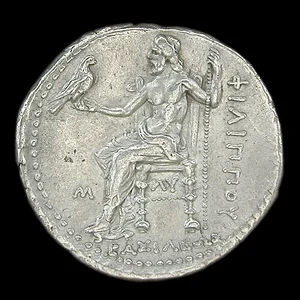
Alexander II of Macedon
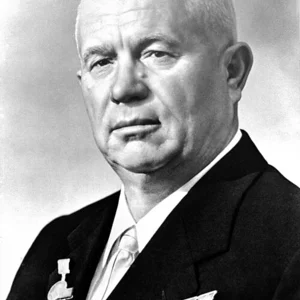
Nikita Khrushchev
1894 — 1971
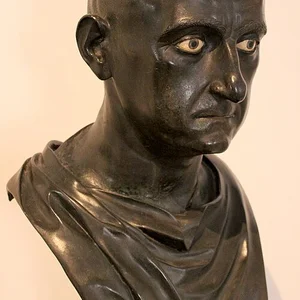
Scipio Africanus
234 av. J.-C. — 182 av. J.-C.
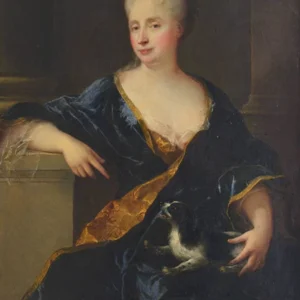
Anne Thérèse de Marguenat de Courcelles, marquise de Lambert
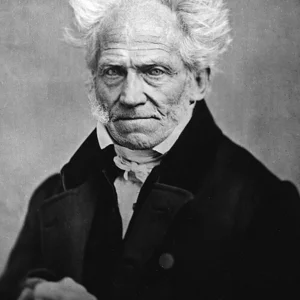
Arthur Schopenhauer
1788 — 1860
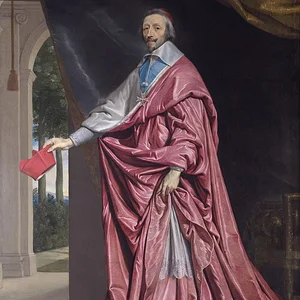
Cardinal de Richelieu
1585 — 1642