 flip
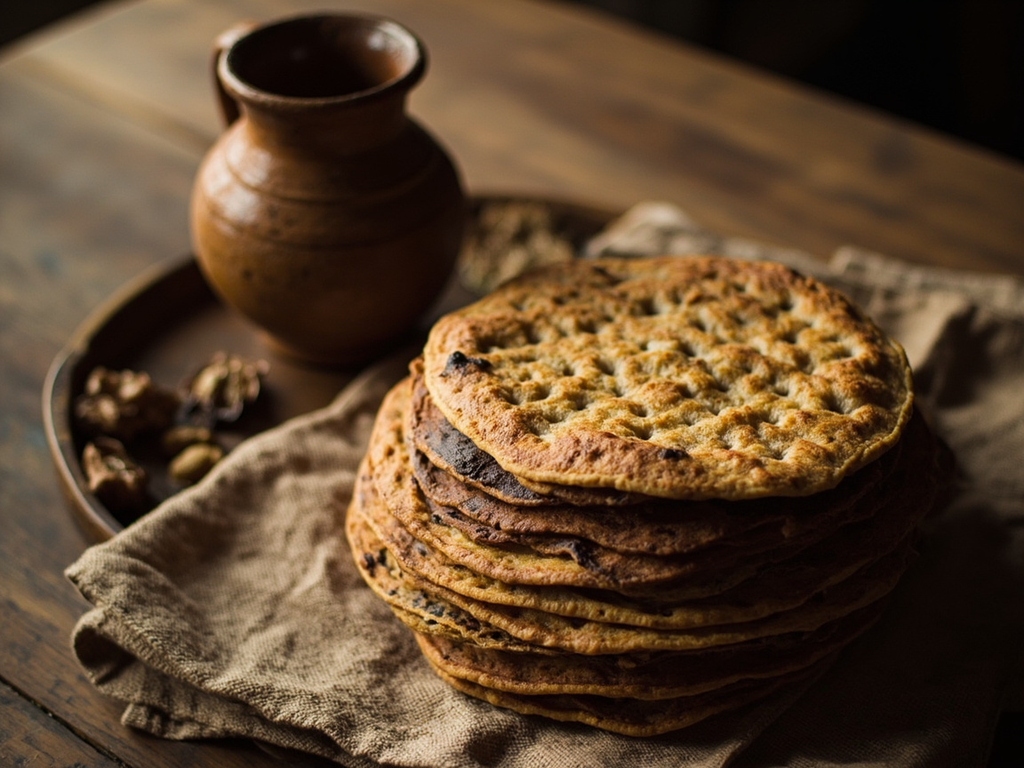
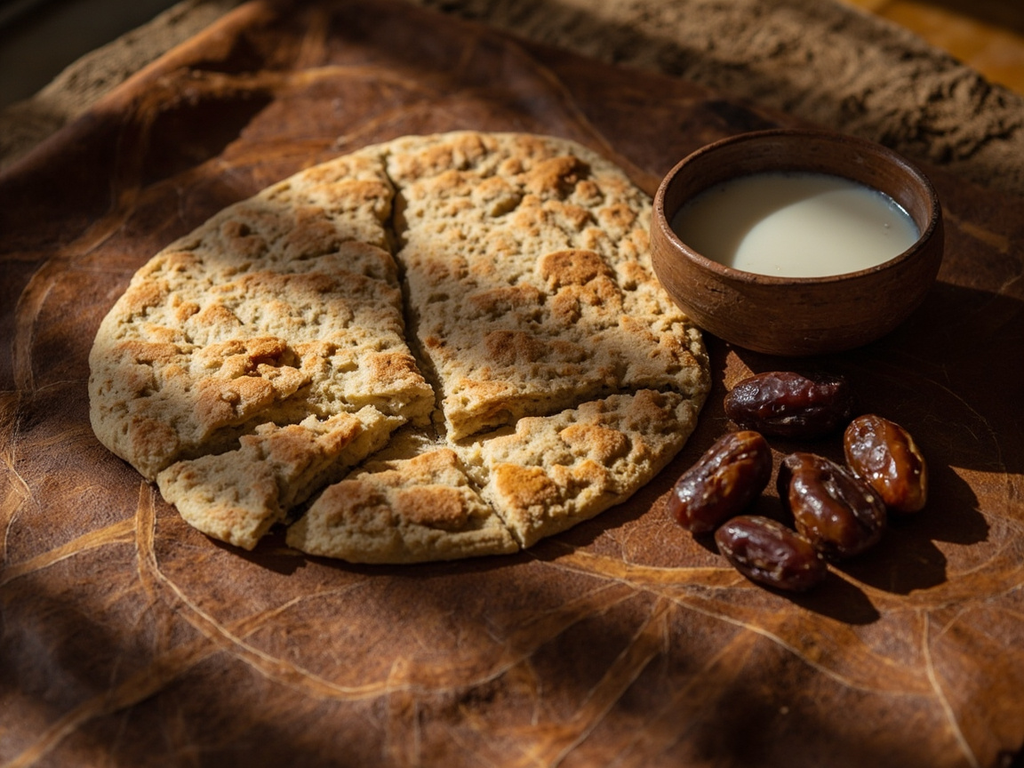
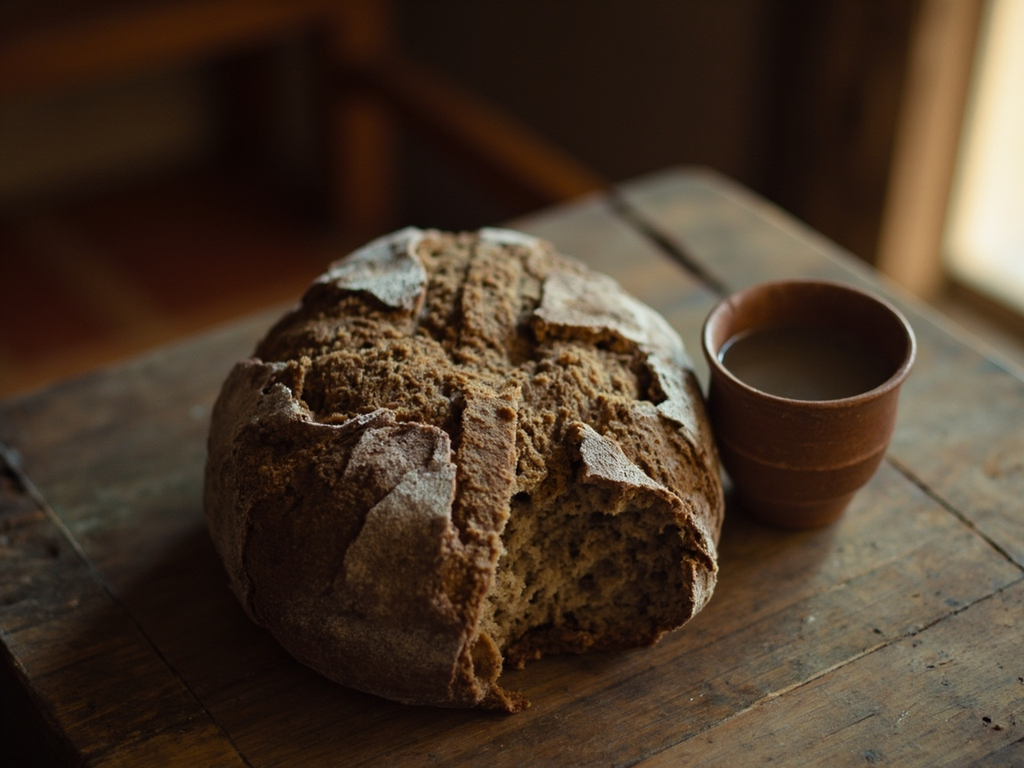
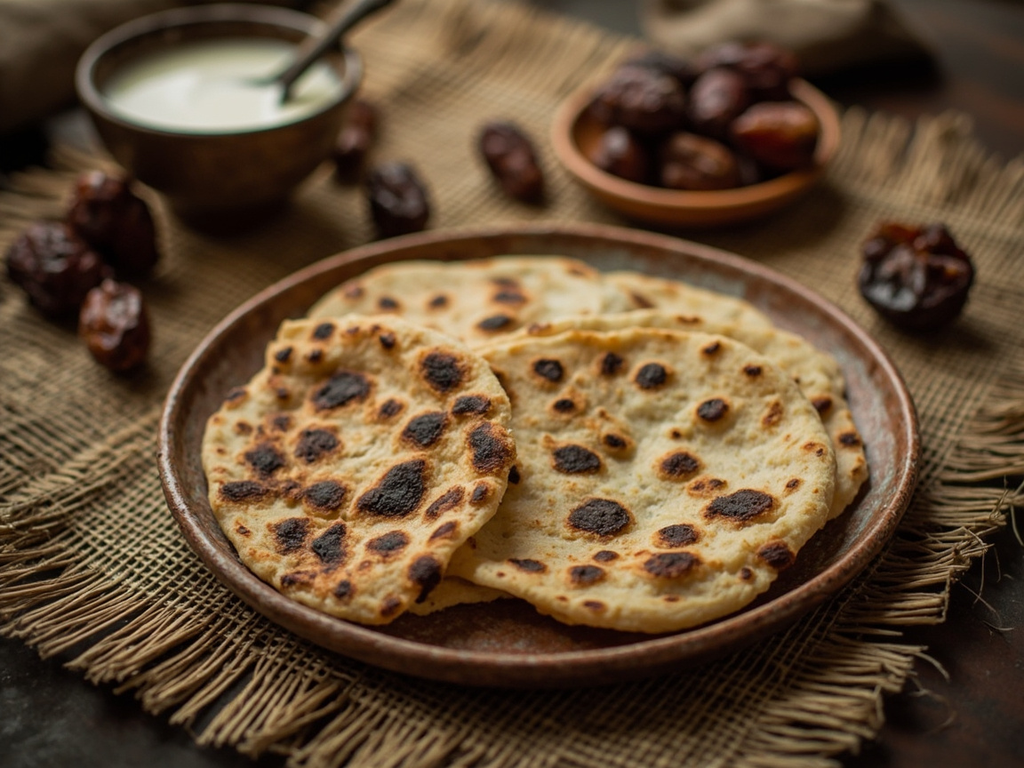
flipKhubz sha'īr — barley flatbread on the stone
Khubz sha'īr — barley flatbread on the stone
Why this dish? Aisha reported that the Prophet's family never ate their fill of barley bread two days in a row, and that the household sometimes went weeks without lighting a fire. This humble flatbread is the very bread of her austere table, the foundation of all Medinan frugality.
Whole barley flour, water, salt, kneaded and baked as a flatbread on a hot stone or against the wall of a clay oven. Dense, with a hint of bitterness, it is the daily bread that is broken, dipped, and shared.
Do you want to know what we truly ate? Barley bread, and rarely to satiety. I would knead wholemeal flour with water and a little salt, without sifting — the barley of the rich would have been bolted, ours kept its bran. I spread it with my palm and baked it on the hot stone. Two days in a row eating our fill of this bread? That did not happen during my husband's lifetime. And yet, broken and soaked in milk, this flatbread seemed a grace to us.
- •Whole barley flour (daqīq sha'īr) — unsifted (bread base)
- •Water — for the dough (binder)
- •Salt — a pinch (flavor)
Khubz sha'īr — barley flatbread on the stone
Whole barley flour, water, salt, kneaded and baked as a flatbread on a hot stone or against the wall of a clay oven. Dense, with a hint of bitterness, it is the daily bread that is broken, dipped, and shared.
Why this dish? Aisha reported that the Prophet's family never ate their fill of barley bread two days in a row, and that the household sometimes went weeks without lighting a fire. This humble flatbread is the very bread of her austere table, the foundation of all Medinan frugality.
Do you want to know what we truly ate? Barley bread, and rarely to satiety. I would knead wholemeal flour with water and a little salt, without sifting — the barley of the rich would have been bolted, ours kept its bran. I spread it with my palm and baked it on the hot stone. Two days in a row eating our fill of this bread? That did not happen during my husband's lifetime. And yet, broken and soaked in milk, this flatbread seemed a grace to us.
Ingredients (period version)
- Whole barley flour (daqīq sha'īr) — unsifted (bread base)
- Water — for the dough (binder)
- Salt — a pinch (flavor)
Ingredients
- Whole barley flour — 300 g (base)
- Warm water — about 180 ml (binder)
- Salt — 1 tsp (flavor)
- A drizzle of olive oil (optional, for softness) — 1 tbsp (softness)
Method
- Mix barley flour and salt; gradually add water until a soft, non-sticky dough forms.
- Knead for 5 minutes; let rest 20 minutes under a cloth.
- Divide and roll into thin flatbreads, 0.5 cm thick.
- Heat a stone, griddle, or cast-iron pan dry over high heat.
- Cook each flatbread for 2–3 minutes per side, until it puffs and browns in spots.
- Stack under a cloth to keep soft; serve with dates, milk, or broth.
How it was made : Without leavening or modern ovens, these flatbreads were baked on the malla (heated stone or sand) or against the wall of a clay oven (tannūr). Unsifted barley, more bitter and rustic than wheat, was the people's grain; white wheat bread was a rare luxury in Medina.
The contemporary twist : Sprinkle the hot flatbread with za'atar and a drizzle of olive oil: the Medinan barley bread as a Levantine street-food twist.
Sources : Sahīh al-Bukhārī, hadiths of Aisha on barley bread and the frugality of the prophetic household · Studies on breads and ovens (tannūr) of ancient Arabia
Aisha · Charactorium