 Flip the card
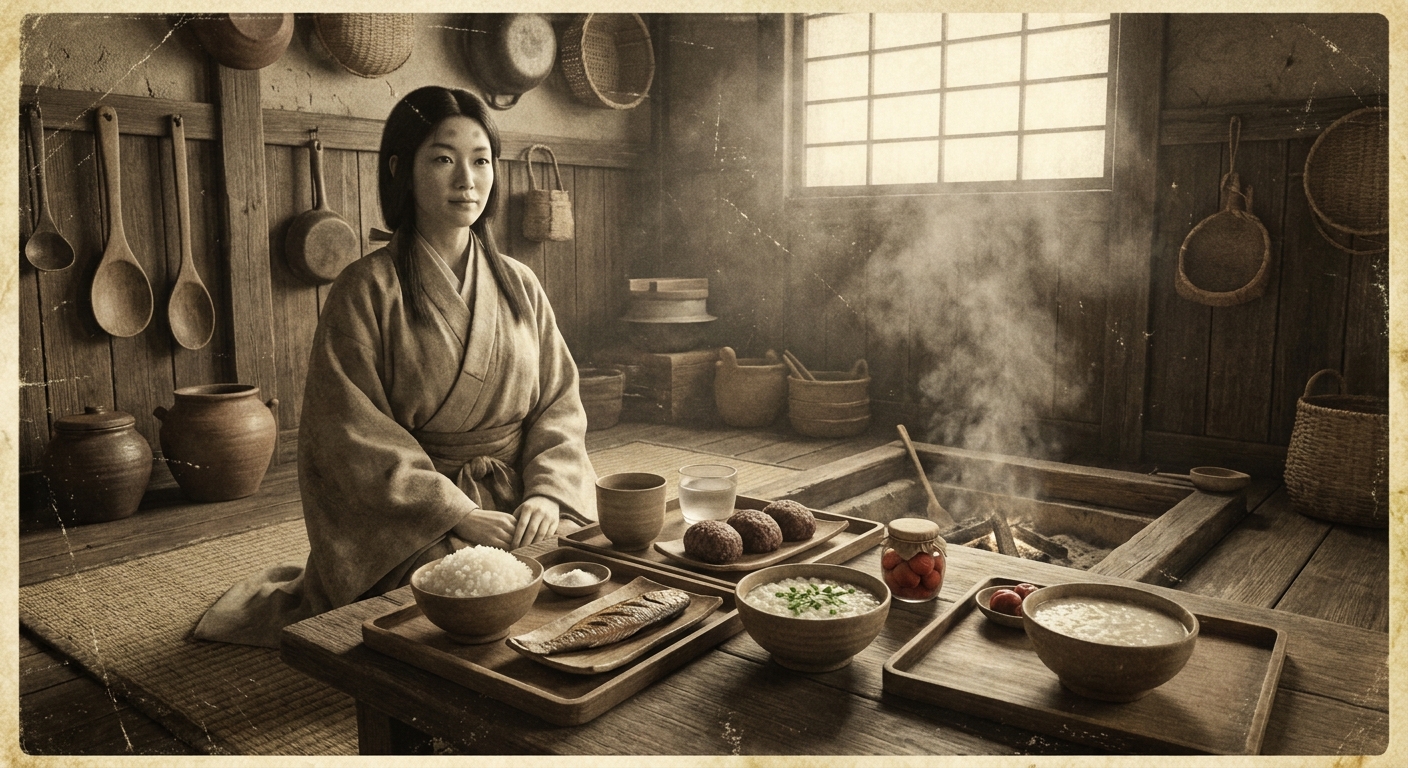
Amaterasu at the table
On the menu
Shinsen (神饌) — the table of the kami
In Shinto tradition, the meal is not divided into starter/main/dessert: food offerings (shinsen) are arranged on light wood trays (sanbō) in a ritual order from purest to most elaborate — first purifying water and salt, then cooked rice, sake, fish and seaweed from the sea, finally mountain vegetables and fruits. Each dish is placed, never tasted before the goddess: it honors Amaterasu, source of light and giver of rice. At the Grand Shrine of Ise, this sacred meal (omike) has been prepared twice daily for over fifteen hundred years.
Signature : Sacred rice (ine) and purifying salt (shio)
Amaterasu is, in the myths, the one who gave humans the celestial rice paddies: steamed white rice is the queen offering, always accompanied by sea salt that purifies and sake born from the same grain. Rice, salt, sake: the gustatory trinity of every Shinto table.
click to flip back
Amaterasu at the table
5 period recipes
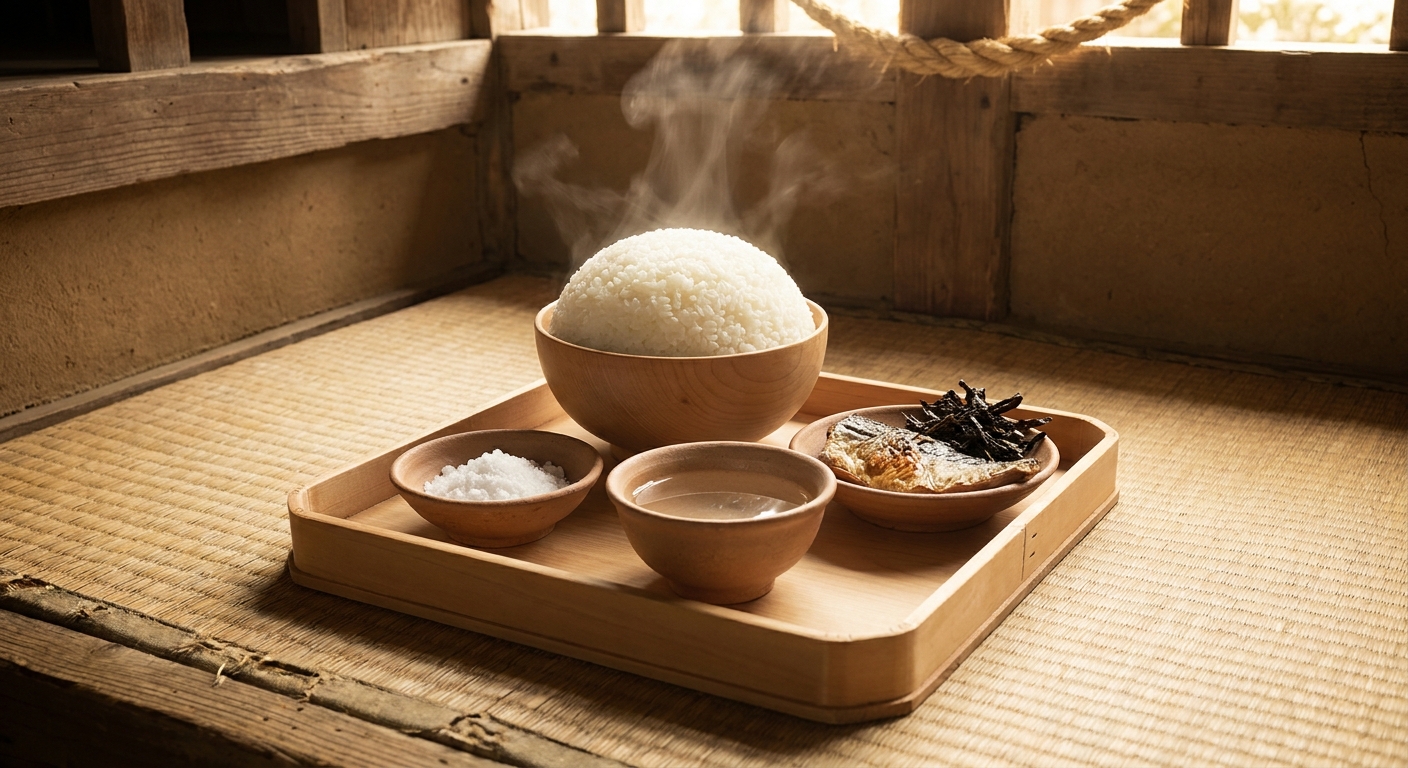 Offering
Omike — steamed rice and offerings of the sea and mountains
Shinsen (sacred offering arranged on sanbō)
🍄 🧂· 1 h (including resting)
View the recipe
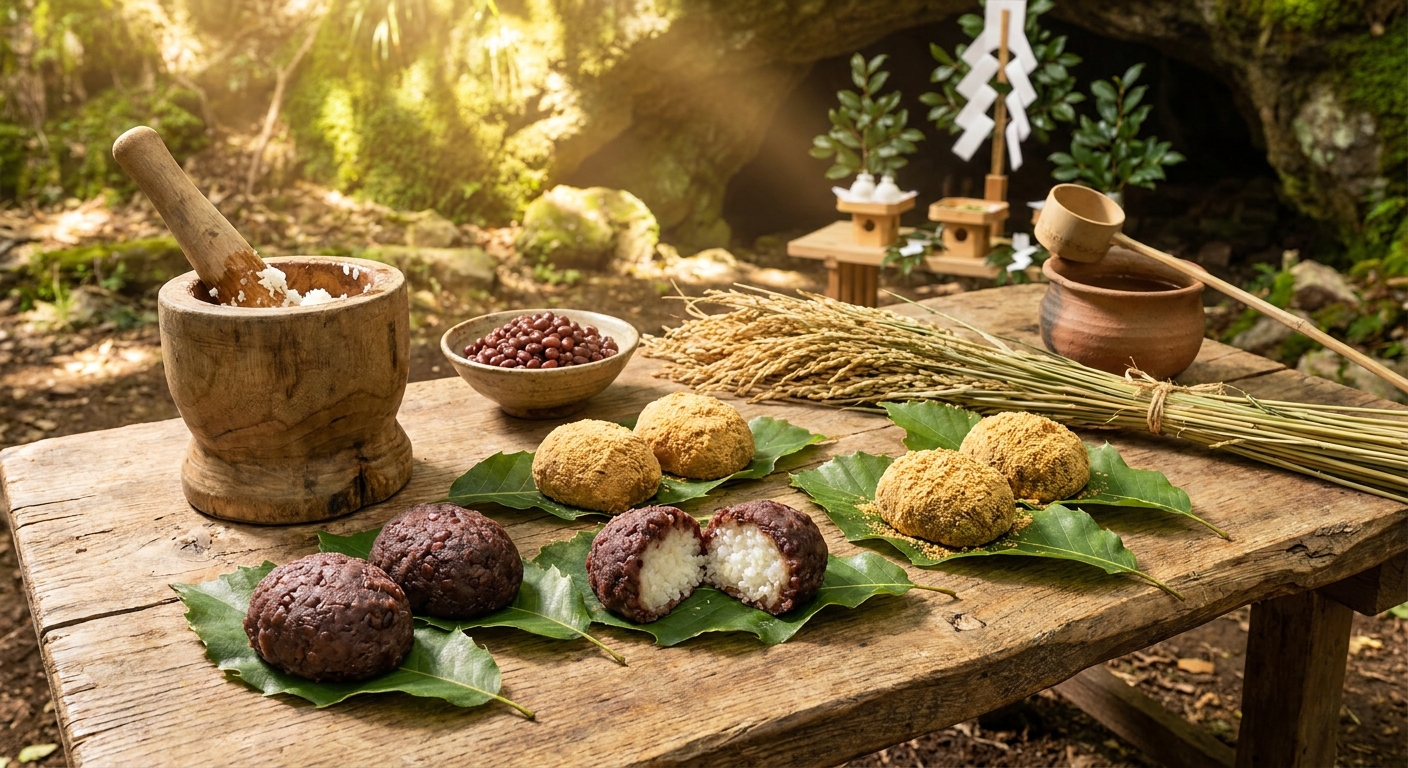 Festive
Botamochi — pounded rice wrapped in azuki paste
Festive offering wagashi (sweetness of auspicious days)
🍯· 1 h 30 (excluding soaking)
View the recipe
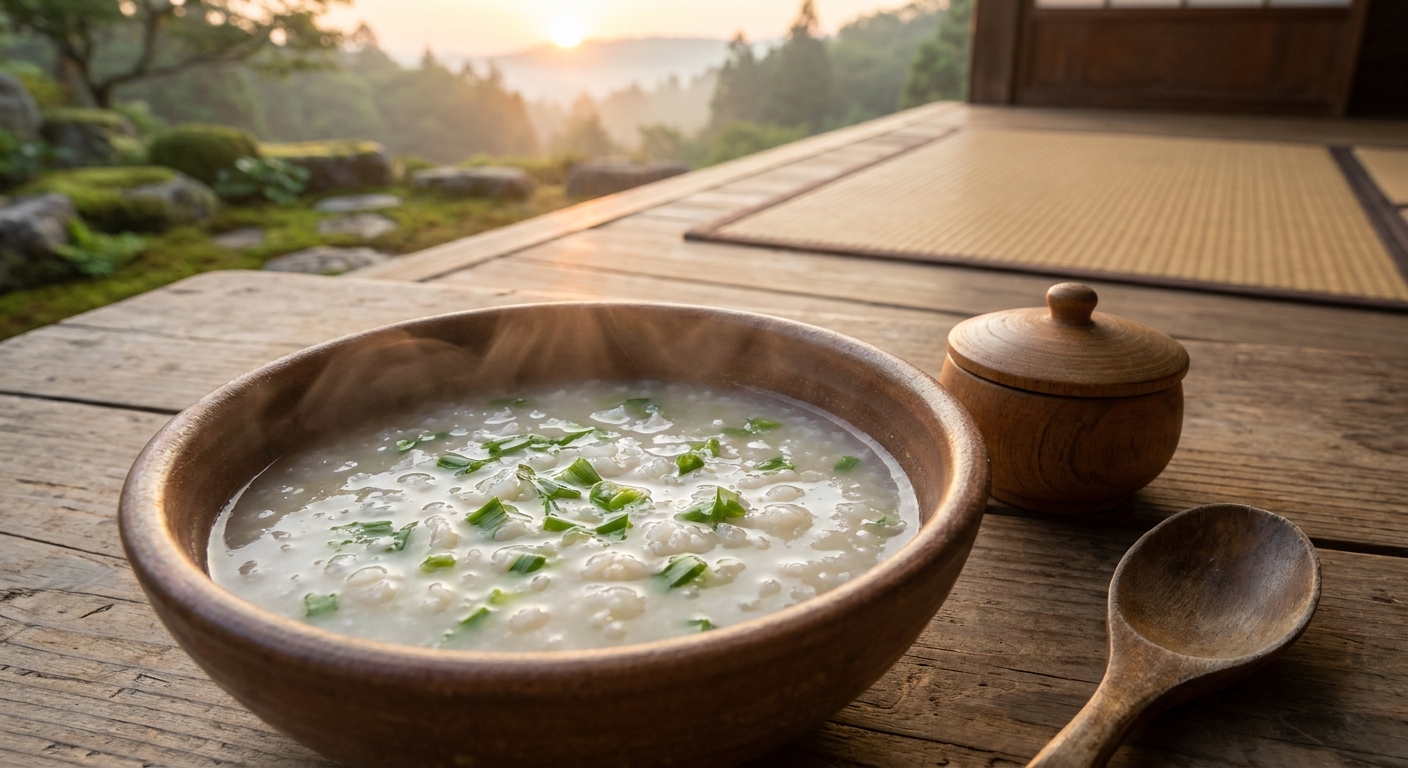 Everyday
Nanakusa-gayu — rice porridge with green herbs
Kayu (everyday household porridge)
☕ 🍄· 1 h
View the recipe
 Preserving
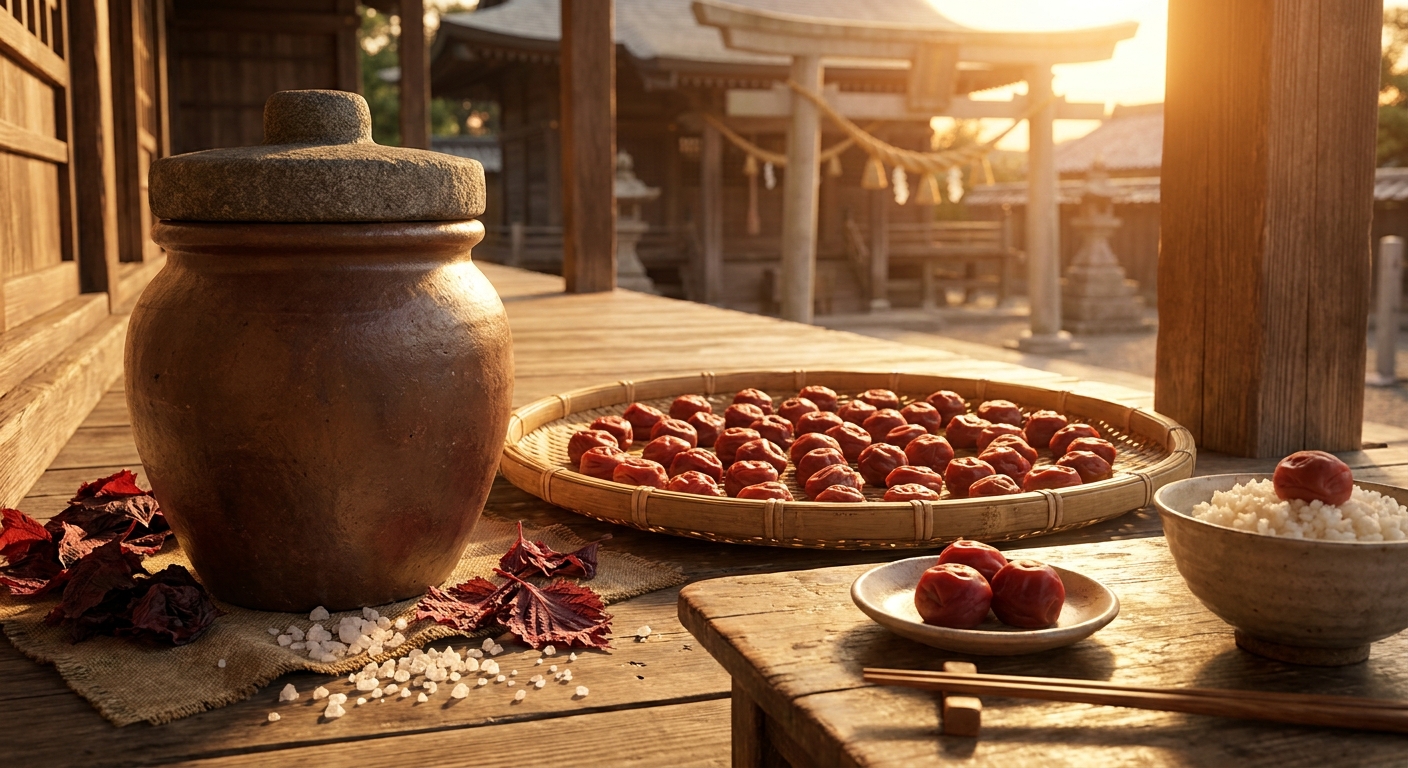
Umeboshi — salted plums from the pantry
Tsukemono of preservation (household tangy reserve)
🍋 🧂· Preparation 30 min + several weeks of maturation
View the recipe
 Drink
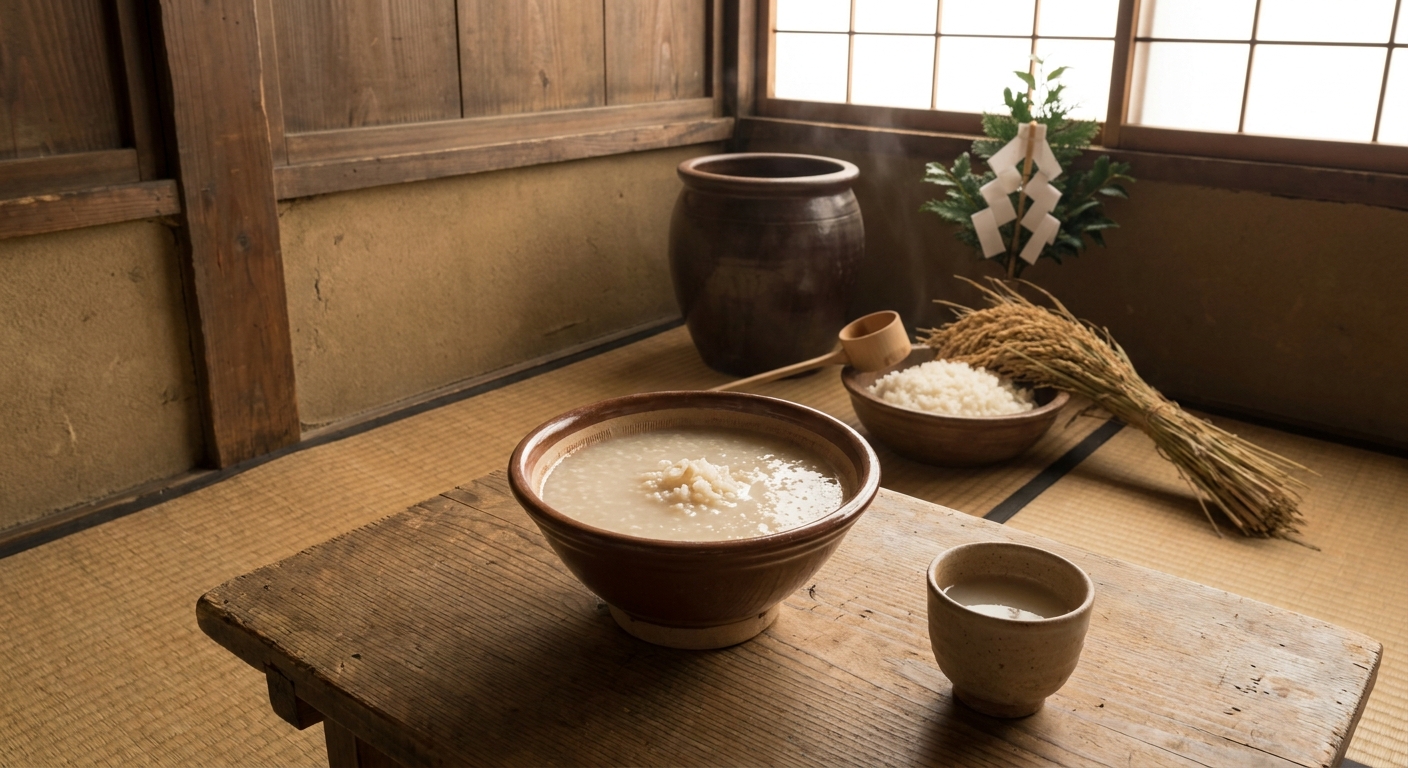
DrinkAmazake — sweet fermented rice drink
Ritual drink (sweet sake of offerings and vigils)
🍯 🫙· 30 min + 8 to 10 h fermentation
View the recipe