 flip
flipBotamochi — pounded rice wrapped in azuki paste
Botamochi — pounded rice wrapped in azuki paste
Why this dish? Pounded mochi are the food of great festivals and rites of joy. When celebrating the sun goddess — as she was celebrated to lure her out of the cave — rice is pounded into a shiny cake, a symbol of abundance and recovered light.
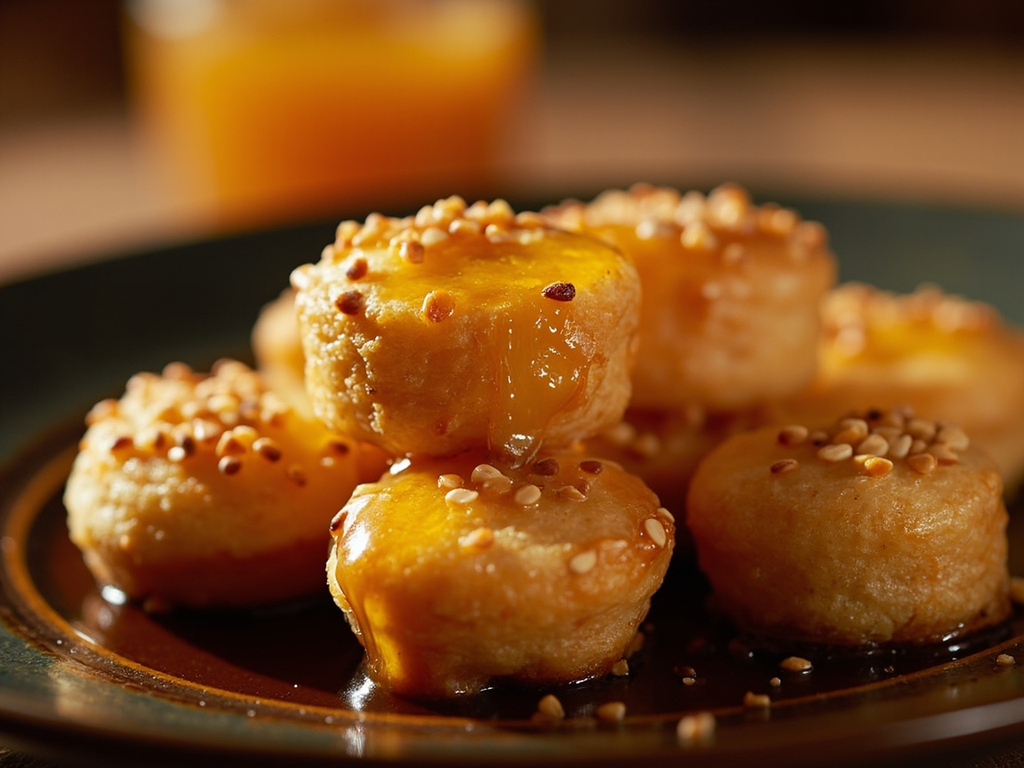
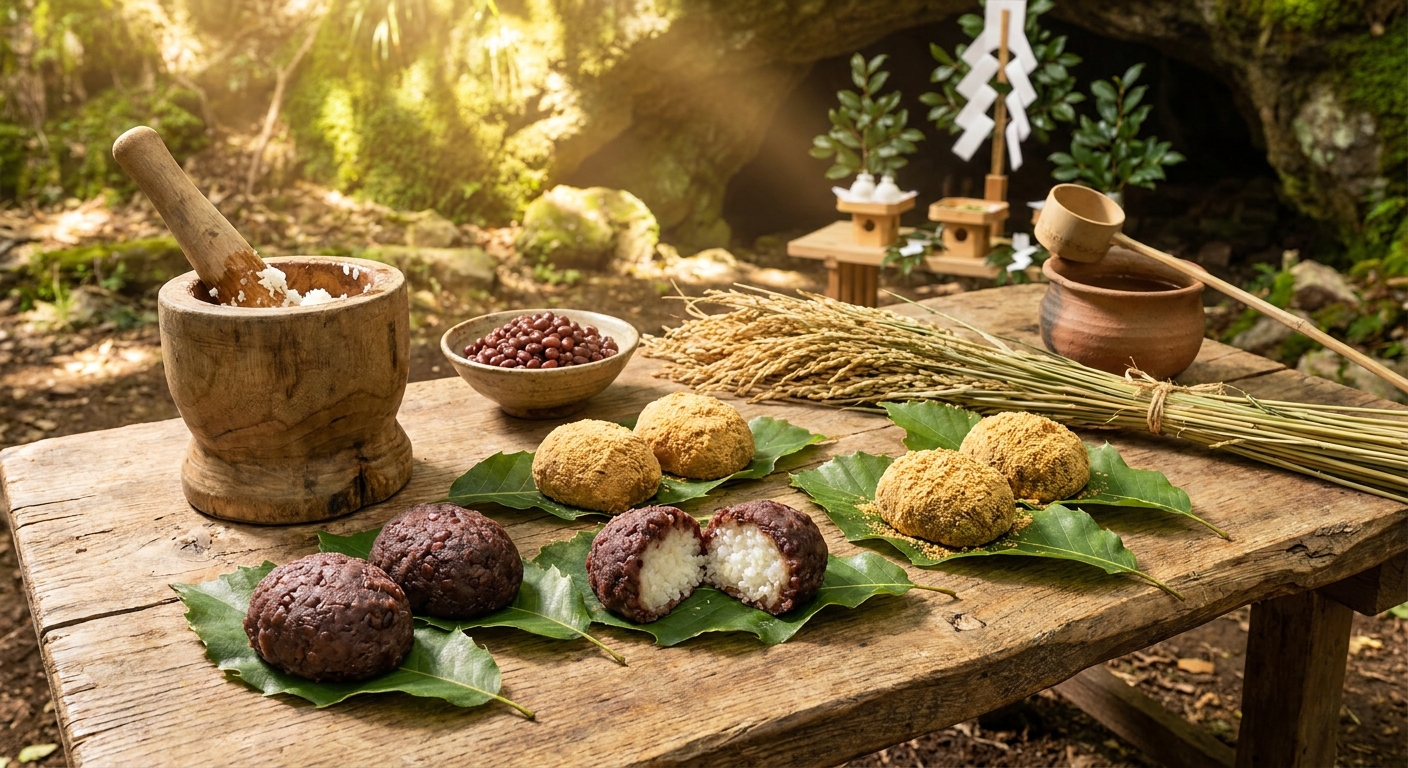
Balls of half-pounded glutinous rice, warm, wrapped in a sweet paste of azuki beans the color of twilight. Soft inside, melting outside.
Do you remember the night I hid deep in the cave, and the world grew cold? The gods celebrated, danced and laughed until I opened the stone door. Here is the sweetness of joyful days: rice pounded in the mortar, rolled in the dark bean paste, sweet as the return of my brightness. Eat it warm, and let your heart rejoice as the eight million kami rejoiced.
- •Glutinous rice (mochigome) — one measure (pounded base)
- •Azuki beans — two handfuls (coating paste)
- •Amazura (sweet vine syrup) or honey — to taste (period sweetness)
- •Sea salt — a pinch (balance)
Botamochi — pounded rice wrapped in azuki paste
Balls of half-pounded glutinous rice, warm, wrapped in a sweet paste of azuki beans the color of twilight. Soft inside, melting outside.
Why this dish? Pounded mochi are the food of great festivals and rites of joy. When celebrating the sun goddess — as she was celebrated to lure her out of the cave — rice is pounded into a shiny cake, a symbol of abundance and recovered light.
Do you remember the night I hid deep in the cave, and the world grew cold? The gods celebrated, danced and laughed until I opened the stone door. Here is the sweetness of joyful days: rice pounded in the mortar, rolled in the dark bean paste, sweet as the return of my brightness. Eat it warm, and let your heart rejoice as the eight million kami rejoiced.
Ingredients (period version)
- Glutinous rice (mochigome) — one measure (pounded base)
- Azuki beans — two handfuls (coating paste)
- Amazura (sweet vine syrup) or honey — to taste (period sweetness)
- Sea salt — a pinch (balance)
Ingredients
- Japanese glutinous rice (mochigome) — 250 g (base)
- Dried azuki beans — 200 g (paste (anko))
- Sugar — 120 g (sweetness (replaces amazura))
- Salt — 1 pinch (enhancer)
Method
- Soak the azuki overnight, cook in water until tender, add sugar and a pinch of salt, mash into a thick paste (anko) and let cool.
- Steam the glutinous rice, then pound it coarsely with a pestle: it should retain some whole grains ('hangoroshi' state).
- Form rice balls with moistened hands.
- Spread a spoonful of anko in your palm, place the rice ball on it and wrap completely.
- Serve warm the same day, placed on a small leaf.
How it was made : Before the arrival of cane sugar, sweetness came from amazura, a syrup extracted from a vine, or from the simple taste of the bean. Pounded rice cakes accompanied seasonal festivals and offerings to the kami long before historical times.
The contemporary twist : Roll a few in golden kinako (roasted soybean flour): a 'sun botamochi', a nod to Amaterasu's radiant face.
Sources : Tradition of mochi and ancient wagashi · Kojiki (712), episode of the heavenly cave (Ama no Iwato)
Amaterasu · Charactorium