
Goddess of the sun and major deity of Japanese Shinto, venerated as the legendary ancestor of the imperial family. According to Japanese mythology, she is the most important of the kami (spirits) in the Shinto pantheon.
Frequently asked questions
Key Facts
- Regarded as the supreme deity of the Shinto pantheon and mythological ancestor of the Emperor of Japan
- According to the Nihon Shoki and the Kojiki (8th-century chronicles), she concealed herself in a cave, plunging the world into darkness and causing the sun to vanish
- Her cult is celebrated at the Ise Grand Shrine, one of Japan's most important pilgrimage sites since at least the 1st century
- Represented by the sacred mirror (yata no kagami), one of the three Imperial Regalia of Japan
- Mythology describes her as the mother of Ame-no-Oshihomimi, father of the first legendary emperor Ninigi-no-Mikoto
Works & Achievements
As the goddess of the sun, Amaterasu is responsible for illuminating the world through her presence. Her withdrawal into a cave plunges everything into total darkness, demonstrating her central role in the Shinto cosmic order.
Amaterasu is venerated as the legendary direct ancestor of the Japanese imperial family. This mythological lineage establishes the sacred legitimacy of Japan's emperors.
The story of her withdrawal into a cave and her subsequent re-emergence is one of the founding myths of Shintoism. This episode symbolizes the death and rebirth of the sun — cycles essential to the cosmic order.
Amaterasu holds the central place in the Shinto pantheon as the supreme kami. She organizes the hierarchical structure of the divine spirits of Shintoism.
Amaterasu possesses and passes down the sacred mirror, one of the three Imperial Treasures of Japan. This object becomes a major symbol of imperial power and Shinto worship.
Her role as the principal deity of Shintoism underpins the organization of rituals and shrines — most notably the Grand Shrine of Ise, dedicated to her — establishing the religious foundations of ancient Japan.
Anecdotes
Amaterasu is the principal solar deity of Japanese Shinto, mentioned in the two oldest written texts of Japan: the Kojiki (712) and the Nihon Shoki (720). These mythological chronicles describe her founding role in the creation of Japan and establish the connection between the goddess and the Japanese imperial family, who consider themselves her direct descendants.
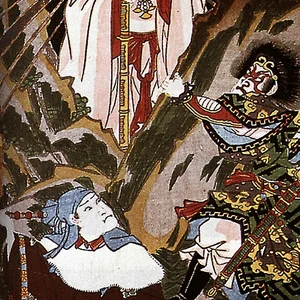
According to Japanese mythology as preserved in classical texts, Amaterasu retreated into a celestial cave after a quarrel with her brother Susanoo, plunging the world into darkness. The other kami had to devise a plan to lure her out: they staged a noisy celebration in front of the cave, piquing her curiosity and thus restoring light to the world.
The Grand Shrine of Ise (Ise Jingū), located in Mie Prefecture, Japan, is the most important shrine in the country and has been dedicated to Amaterasu since its construction in the 3rd century. The shrine remains a major pilgrimage site and symbolizes the central importance of the goddess in traditional Japanese spirituality.
In Shinto mythology, Amaterasu bestowed upon the first emperor of Japan three sacred objects: a mirror, a sword, and a jewel. These three imperial regalia (Yata no Kagami, Kusanagi, and Magatama) have remained symbols of Japanese imperial power throughout the centuries and still play a role in enthronement rituals today.
Primary Sources
Amaterasu Ōmikami, the great goddess who shines in the heavens, was born from the face of Izanagi when he purified himself after returning from the land of the dead. She is the sovereign of the heavens and of all kami, and her descendants rule over Japan.
The Great Sun Goddess Amaterasu Ōmikami dwells in the celestial palace of the High Heavens. She is the divine mother of the imperial lineage and the supreme symbol of legitimate power in Japan.
The rites and offerings made to Amaterasu Ōmikami at the Grand Shrine of Ise constitute the most important religious ceremony of the Japanese state.
Key Places
The most sacred Shinto shrine in Japan, dedicated to Amaterasu. It is the main place of worship for the goddess and houses her sacred mirror (Yata no Kagami), one of the three Imperial Treasures of Japan.
According to Japanese mythology, this is the heavenly realm where Amaterasu reigns — the dwelling place of the kami. It is the mythological seat of the sun goddess's divine power in the Shinto pantheon.
According to legend, Amaterasu withdrew into this cave after a quarrel with her brother Susanoo, plunging the world into darkness. This mythological story is one of the founding narratives of Shintoism.
The residence of the Japanese imperial family, who claim direct descent from Amaterasu according to Shinto tradition. The imperial lineage draws its legitimacy from this mythological connection to the goddess.
The legendary site where Ninigi-no-Mikoto, grandson of Amaterasu, is said to have descended from the heavens to found the Japanese empire. This location symbolizes the divine transmission of Amaterasu's power to the imperial line.
Typical Objects

A mythological polished bronze mirror considered one of the three Imperial Treasures of Japan. According to legend, Amaterasu used it to see her own reflection and emerged from her hiding place, making it a symbol of restored light and cosmic renewal.

One of the three Japanese Imperial Regalia, symbolizing the power and divine lineage of Amaterasu. This legendary sword represents the strength and authority of the imperial family, who are said to descend from the goddess.

A comma-shaped stone pendant and the third Imperial Treasure associated with Amaterasu. This object symbolizes virtue and wisdom, and forms part of the insignia of divine Japanese imperial power.

The distinctive gateway found at Shinto shrines, marking the entrance to sacred ground. This structure symbolizes the boundary between the mundane world and the divine realm where Amaterasu dwells.

A visual symbol of the sun and of Amaterasu's presence, depicted throughout Japanese art and symbolism. The red disc on the Japanese flag is a direct reference to this goddess of the sun.

The mythological cave where Amaterasu sealed herself away, plunging the world into darkness according to legend. This space symbolizes the cosmic cycle of light's disappearance and return.

A ritual Shinto rope used to mark off sacred spaces and represent the boundary between worlds. It commemorates the rope used to lure Amaterasu out of her cosmic retreat.
School Curriculum
Vocabulary & Tags
Key Vocabulary
Tags
Mythologie
Daily Life
Morning
Amaterasu, as the sun goddess in Shinto mythology, has no daily life in the historical sense. According to the myths, she resides in Takamagahara (the heavenly plain) and her primary role is to illuminate the world as she travels across the sky. In mythological accounts, she begins her day by emerging from the horizon, bringing light and life to all living beings.
Afternoon
Throughout the day, Amaterasu maintains cosmic order by spreading her divine light across the earthly world and the celestial realms. Her mythological activities include overseeing the proper workings of the universe and interacting with the other kami of the Shinto pantheon. Unlike humans, she knows no fatigue and remains perpetually active in the fulfillment of her divine duties.
Evening
At sunset, Amaterasu descends back into Takamagahara according to Shinto cosmogony. This transition marks the passage into night and symbolizes the eternal cycle she sustains. In the myths, her celestial movements are never interrupted, though one major episode recounts her withdrawal into a cave, plunging the world into temporary darkness.
Food
As a deity, Amaterasu does not eat as humans do. According to Shinto practice, she receives symbolic offerings of food and drink (sake, rice, fruits) at the shrines dedicated to her, particularly at the Grand Shrine of Ise. These offerings represent reverence and gratitude toward the goddess rather than actual sustenance.
Clothing
Amaterasu is typically depicted wearing richly adorned celestial robes and ornaments, befitting the supreme deity of the Shinto pantheon. Her appearance includes sacred and royal elements, often featuring symbols of the sun and divine power. In Shinto iconography, she bears the insignia of her status as a primordial goddess and ancestor of the imperial family.
Housing
Amaterasu resides in Takamagahara, the divine heavenly plain in Shinto mythology, a realm free from the physical limitations of the earthly world. On earth, she is honored primarily at the Ise Shrine (Ise Jingū), one of the most sacred religious sites in Japan, where she has been venerated for over a thousand years. Though without a physical dwelling in the human sense, her spiritual presence inhabits Shinto shrines throughout Japan.
Historical Timeline
Period Vocabulary
Visual Style
Un style visuel inspiré de l'art japonais traditionnel Heian, fusionnant techniques ukiyo-e et iconographie bouddhiste. La représentation privilégie une aura dorée radieuse, une lumière céleste diffuse et des éléments Shinto sacrés, avec des dégradés lumineux et une richesse ornementale caractéristique des motifs textiles anciens.
Sound Ambience
Une ambiance sonore sacrée et apaisante évoquant un temple shinto à l'aube, mêlant les sons rituels de la tradition japonaise aux bruits naturels d'une nature bénéfique, créant une atmosphère céleste et divine.
Liens externes & ressources
Références
Œuvres
Illumination du monde
Temps mythologiques
Fondation de la lignée impériale japonaise
Temps mythologiques
Mythe de la caverne céleste (Ama no Iwato)
Temps mythologiques
Établissement du panthéon shinto
Temps mythologiques
Transmission du miroir divin (Yata no Kagami)
Temps mythologiques
Légitimation du culte shinto
Temps mythologiques