 flip
flipHoney-glazed roast goose with figs and coriander
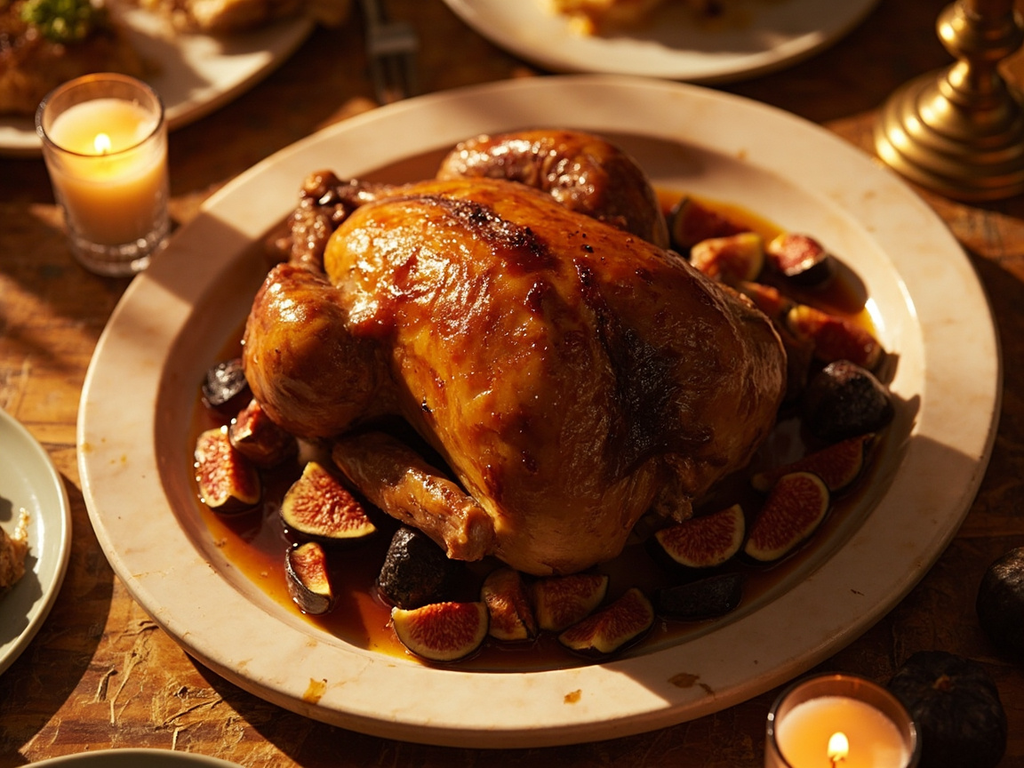
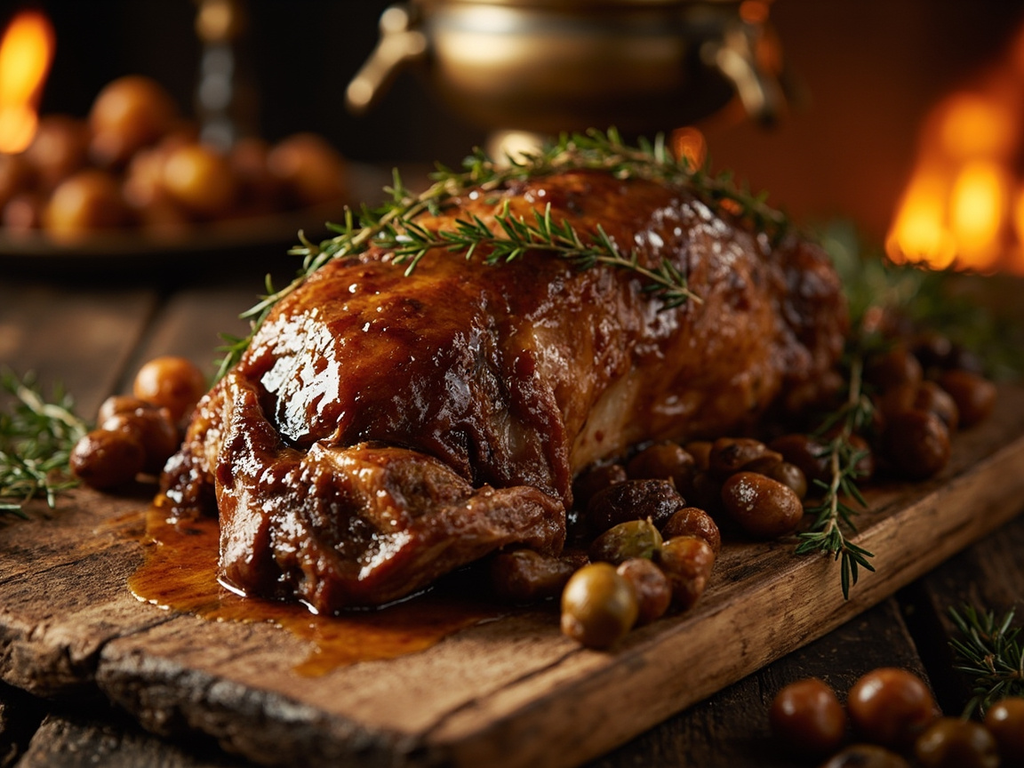
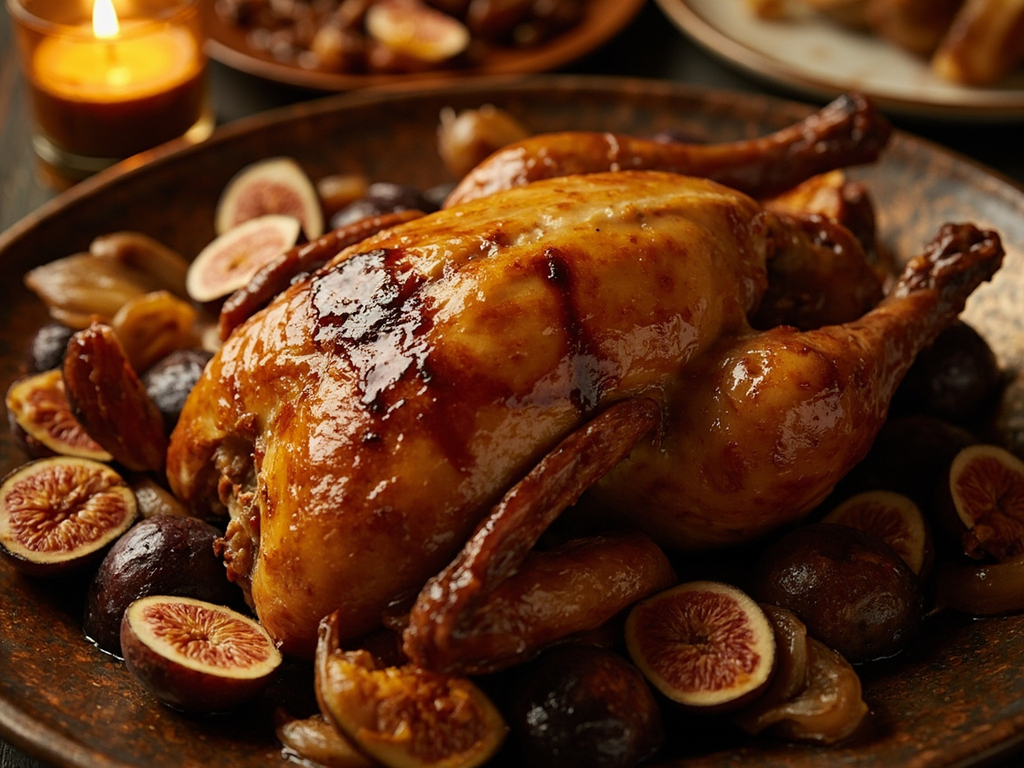
Honey-glazed roast goose with figs and coriander
Why this dish? The great receptions of Amenhotep III, immortalized in the tomb of his steward, featured processions of roast geese and ducks. The goose was the sacred bird of Amun, the god of Thebes whom the pharaoh honored with immense constructions at Karnak and Luxor.
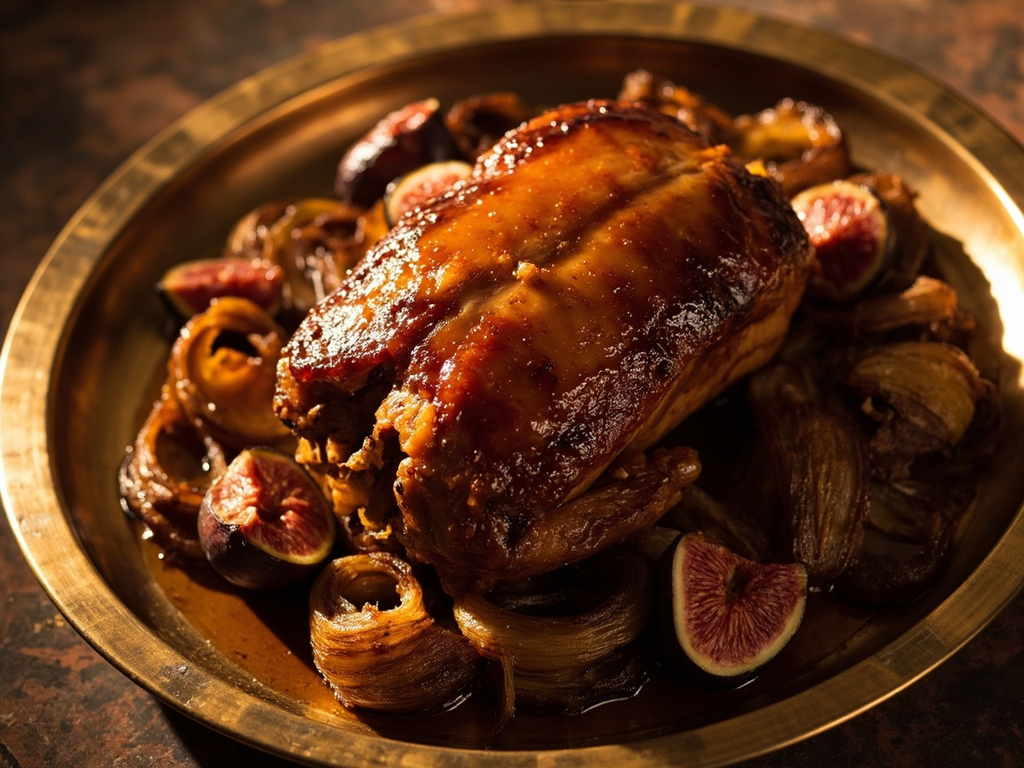
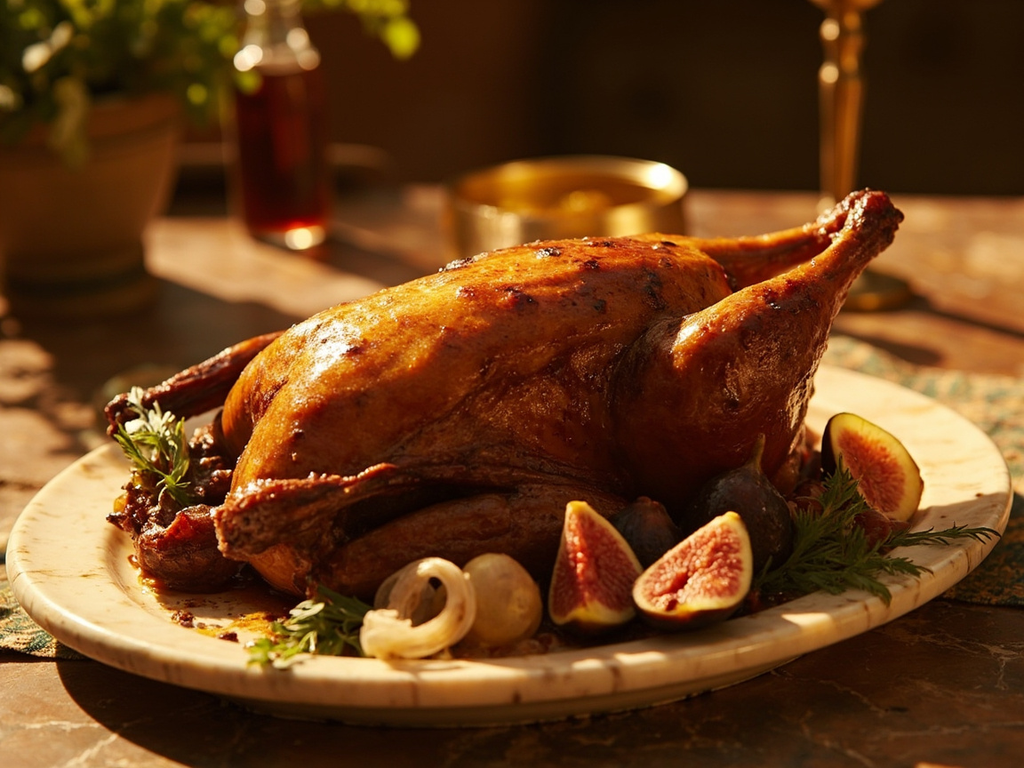
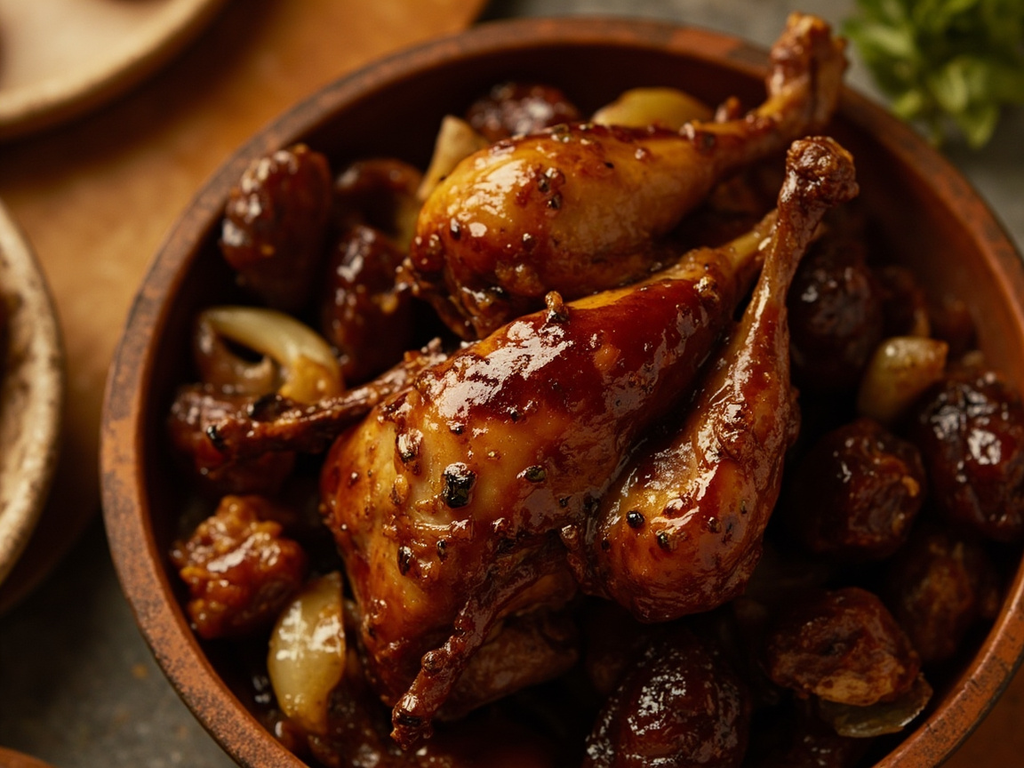
A honey-lacquered goose, scented with coriander and cumin, roasted until the skin crackles, accompanied by melting figs. The showpiece dish of a court banquet.
When my ambassadors from Babylon and Mitanni sat at my table, I had the goose of Amun roasted, glazed with honey until its skin shone like the gold of my workshops. It is perfumed with coriander and cumin, laid on burst figs, and the wine of the oases is poured. Let the foreigner depart knowing this: at the table of the dazzling Sun, even the birds are clothed in gold.
- •Fat goose — one, dressed (centerpiece)
- •Honey — generously (sweet lacquer)
- •Coriander and cumin seeds — crushed (flavor)
- •Fresh figs — a basketful (garnish)
- •Salt and onion — to taste (seasoning)
Honey-glazed roast goose with figs and coriander
A honey-lacquered goose, scented with coriander and cumin, roasted until the skin crackles, accompanied by melting figs. The showpiece dish of a court banquet.
Why this dish? The great receptions of Amenhotep III, immortalized in the tomb of his steward, featured processions of roast geese and ducks. The goose was the sacred bird of Amun, the god of Thebes whom the pharaoh honored with immense constructions at Karnak and Luxor.
When my ambassadors from Babylon and Mitanni sat at my table, I had the goose of Amun roasted, glazed with honey until its skin shone like the gold of my workshops. It is perfumed with coriander and cumin, laid on burst figs, and the wine of the oases is poured. Let the foreigner depart knowing this: at the table of the dazzling Sun, even the birds are clothed in gold.
Ingredients (period version)
- Fat goose — one, dressed (centerpiece)
- Honey — generously (sweet lacquer)
- Coriander and cumin seeds — crushed (flavor)
- Fresh figs — a basketful (garnish)
- Salt and onion — to taste (seasoning)
Ingredients
- Goose legs and breasts (or a whole duck ~2 kg) — for 4 (centerpiece)
- Honey — 4 tbsp (sweet lacquer)
- Coriander seeds — 1 tsp, crushed (flavor)
- Ground cumin — 1 tsp (flavor)
- Fresh figs — 8 (garnish)
- Onion — 1 large (base)
- Salt — to perfect seasoning (seasoning)
Method
- Rub the poultry with salt, crushed coriander and cumin; let rest for 1 hour.
- Place on a bed of sliced onion in a roasting pan, roast at 180 °C.
- Halfway through, brush generously with honey and baste with the juices every 15 minutes.
- 30 minutes before the end, add the figs cut in half around the meat.
- Finish at 210 °C for a few minutes to lacquer the skin; let rest before serving with the candied figs.
How it was made : Egyptians raised geese, ducks and cranes, force-fed for the tables of the rich (the earliest known force-feeding scenes are Egyptian). They were roasted on spits over embers; honey, highly prized and expensive, served as sweetener, preservative and festive glaze.
The contemporary twist : Arrange the roasted figs in a crown around the poultry and add a drizzle of pomegranate juice to the glaze for a ruby shine.
Amenhotep III · Charactorium