 flip
flipFul — Nile Fava Beans Simmered All Night
Ful — Nile Fava Beans Simmered All Night
Why this dish? Having become governor of Byzantine Egypt, Amr established his city at Fustat, on the edge of the Nile. The fava bean (ful) had been the people's meal since the pharaohs: it was left to cook all night on dying embers to be tender by morning. The master of Egypt ate as Egypt ate.
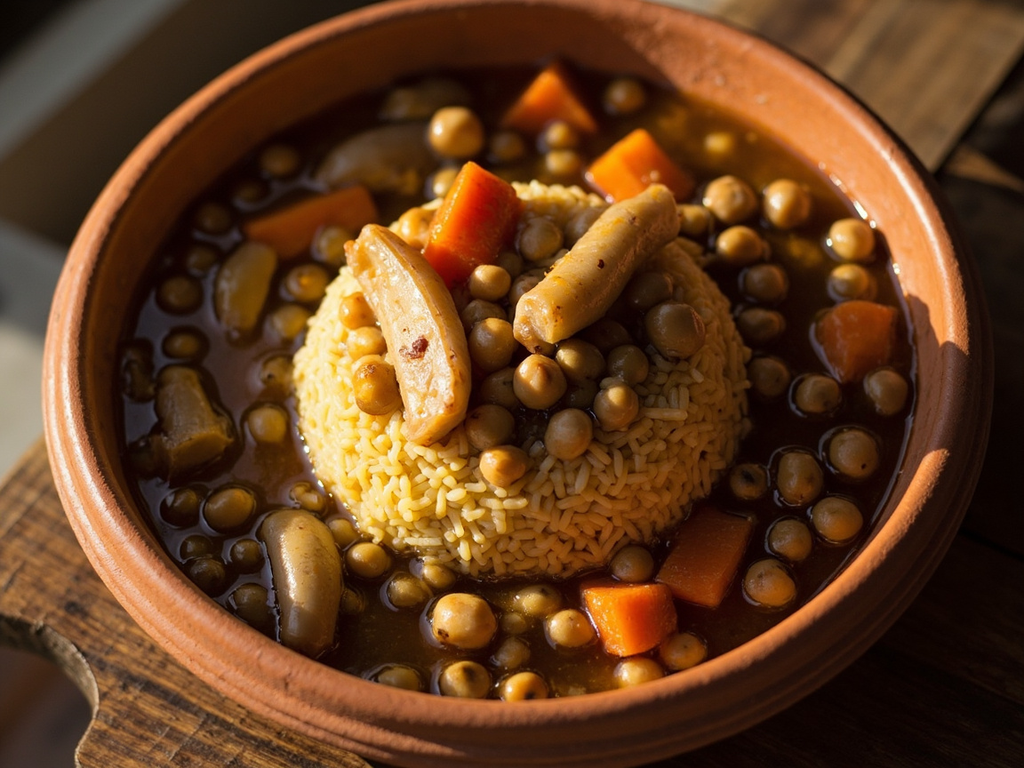
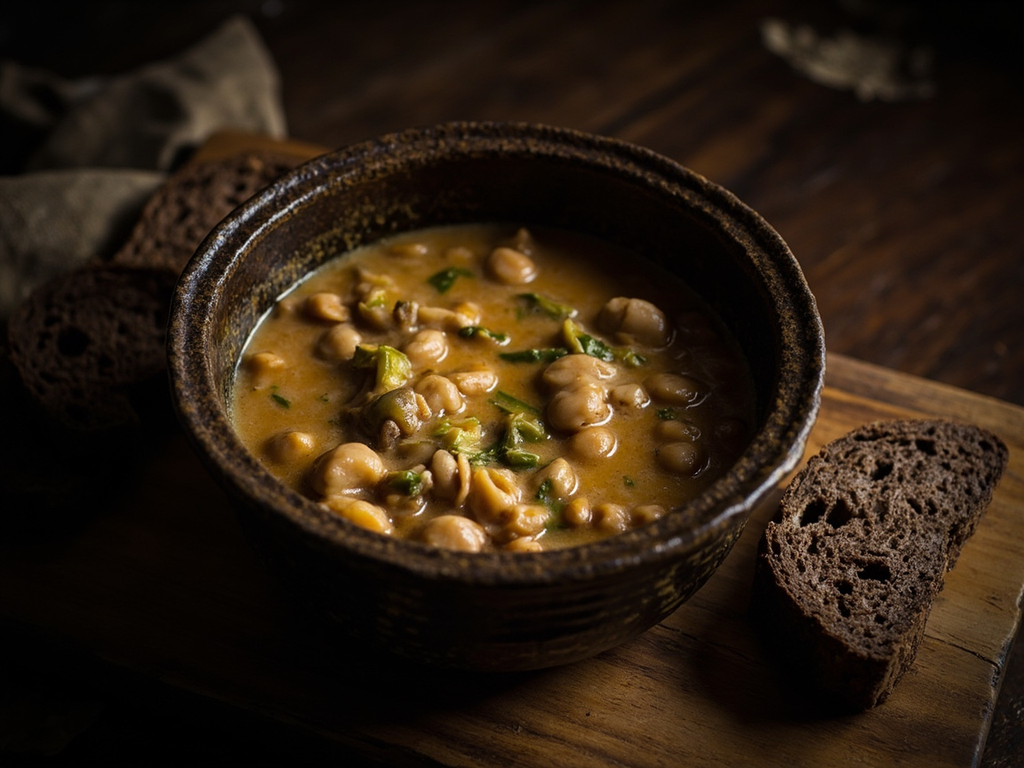
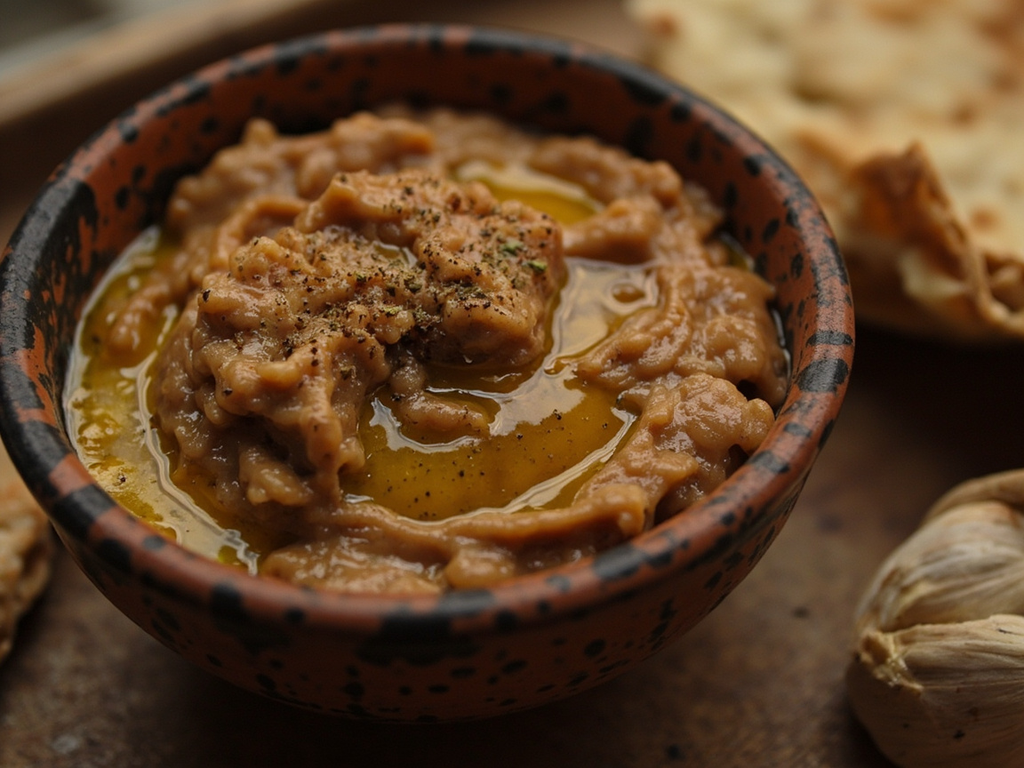
Brown fava beans cooked for hours until melting, coarsely mashed, drizzled with oil and spiced with cumin. A humble, nourishing dish that sticks to the stomach of worker and soldier alike.
Listen, you who pass by: I have led armies against the Romans, but in the morning, at Fustat, I eat what the Nile boatman eats. The pot of beans is buried in the hot ashes at evening, and the patience of the night does the rest — by dawn, the bean has become tender as the heart of a satisfied man. Pour the oil, throw a pinch of cumin, break the barley bread and dip your right hand. He who scorns the table of the poor has understood nothing of greatness.
- •Dried brown fava beans — two handfuls per guest (base)
- •Nile water — enough to cover generously (cooking liquid)
- •Oil (olive or sesame) — a drizzle (binder and flavor)
- •Cumin — a pinch (signature spice)
- •Salt — to taste (seasoning)
- •Garlic — a few cloves (aroma)
Ful — Nile Fava Beans Simmered All Night
Brown fava beans cooked for hours until melting, coarsely mashed, drizzled with oil and spiced with cumin. A humble, nourishing dish that sticks to the stomach of worker and soldier alike.
Why this dish? Having become governor of Byzantine Egypt, Amr established his city at Fustat, on the edge of the Nile. The fava bean (ful) had been the people's meal since the pharaohs: it was left to cook all night on dying embers to be tender by morning. The master of Egypt ate as Egypt ate.
Listen, you who pass by: I have led armies against the Romans, but in the morning, at Fustat, I eat what the Nile boatman eats. The pot of beans is buried in the hot ashes at evening, and the patience of the night does the rest — by dawn, the bean has become tender as the heart of a satisfied man. Pour the oil, throw a pinch of cumin, break the barley bread and dip your right hand. He who scorns the table of the poor has understood nothing of greatness.
Ingredients (period version)
- Dried brown fava beans — two handfuls per guest (base)
- Nile water — enough to cover generously (cooking liquid)
- Oil (olive or sesame) — a drizzle (binder and flavor)
- Cumin — a pinch (signature spice)
- Salt — to taste (seasoning)
- Garlic — a few cloves (aroma)
Ingredients
- Dried fava beans (ful medames) — 250 g (base)
- Water — 1.5 L (cooking liquid)
- Olive oil — 3 tbsp (binder and flavor)
- Ground cumin — 1 tsp (signature spice)
- Garlic — 2 cloves, crushed (aroma)
- Salt — 1 tsp (seasoning)
- Lemon juice (green or yellow) — 1/2 lemon (touch of acidity, to finish)
Method
- Soak the fava beans in cold water overnight.
- Drain, cover with fresh water and cook over very low heat for 3 to 4 hours (or 45 minutes in a pressure cooker), until they crush under the finger.
- Drain, reserving a little cooking liquid. Coarsely mash with a fork, without making a smooth purée.
- Stir in the crushed garlic, cumin, salt, and olive oil. Loosen with a little cooking liquid if needed.
- Serve warm, drizzled with oil and a squeeze of lemon, with bread for dipping.
How it was made : The fava bean has been cultivated in Egypt since antiquity. It was cooked slowly in earthenware jars (idra) buried in embers or left on the furnaces of public baths that heated water at night — hence the overnight cooking, still alive today.
The contemporary twist : Serve the ful in a small deep bowl, topped with a soft-boiled egg and a drizzle of cumin oil: the thousand-year-old Egyptian breakfast, from Governor Amr to the cafés of Cairo today.
Amr ibn al-As · Charactorium