The Curia Table According to the Liturgical Calendar
At the 12th-century papal court, meals were not divided into starter-main-dessert but were governed by the Church and the liturgical season. One distinguishes the *pulmentum* (the basic porridge or pottage of bread and legumes), the *ferculum* (the dish brought to table—fish on lean days, meat on fat days), and the final collation (fruits, cheese, honey sweets). Fasting days—Wednesday, Friday, Advent, Lent—banned meat; wine was always mixed with water according to the monastic custom inherited by the Roman curia.
Signature : Spices from the East and Verjuice
The wealth of a papal table was measured by spices arriving from the East through Italian ports—pepper, cinnamon, ginger, saffron, cloves—and by the acidity of verjuice (green grape juice) which replaced the rare lemon. These were markers of rank, of the medieval taste for pungent sweet-and-sour, and of the Mediterranean trade that Rome dominated.
Anastasius IV at the table
5 period recipes
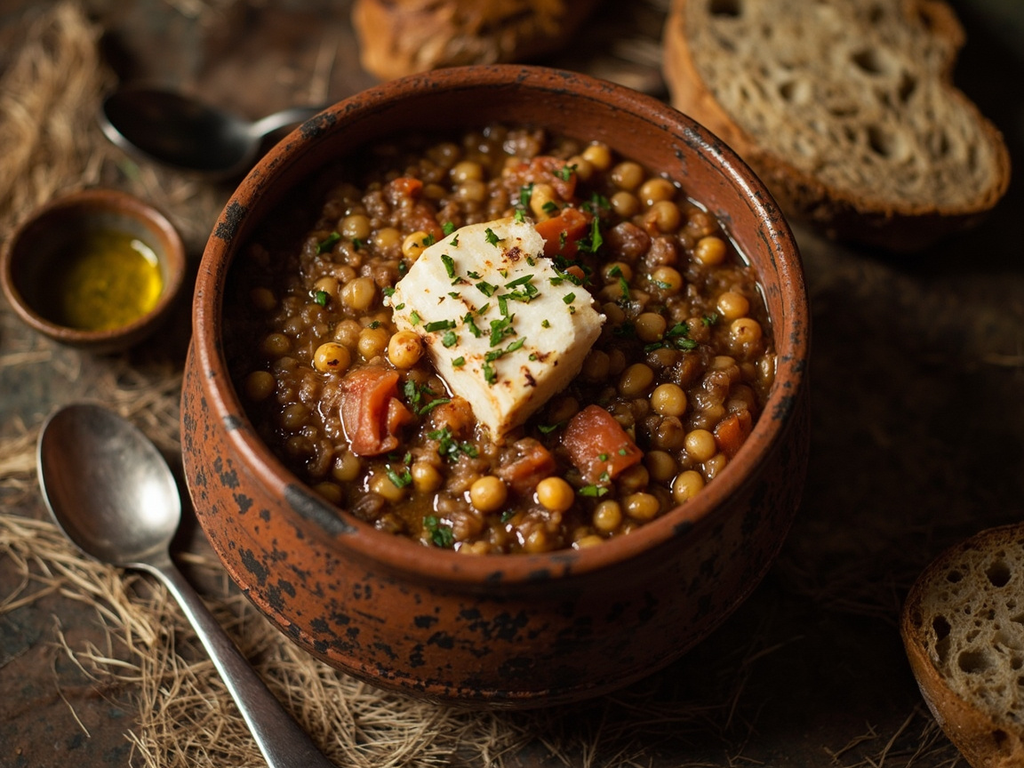 Everyday
Pulmentum of Chickpeas and Lentils with Lenten Fish
pulmentum (base pottage for lean days)
🧂 🍄· 2 h (plus soaking)
View the recipe
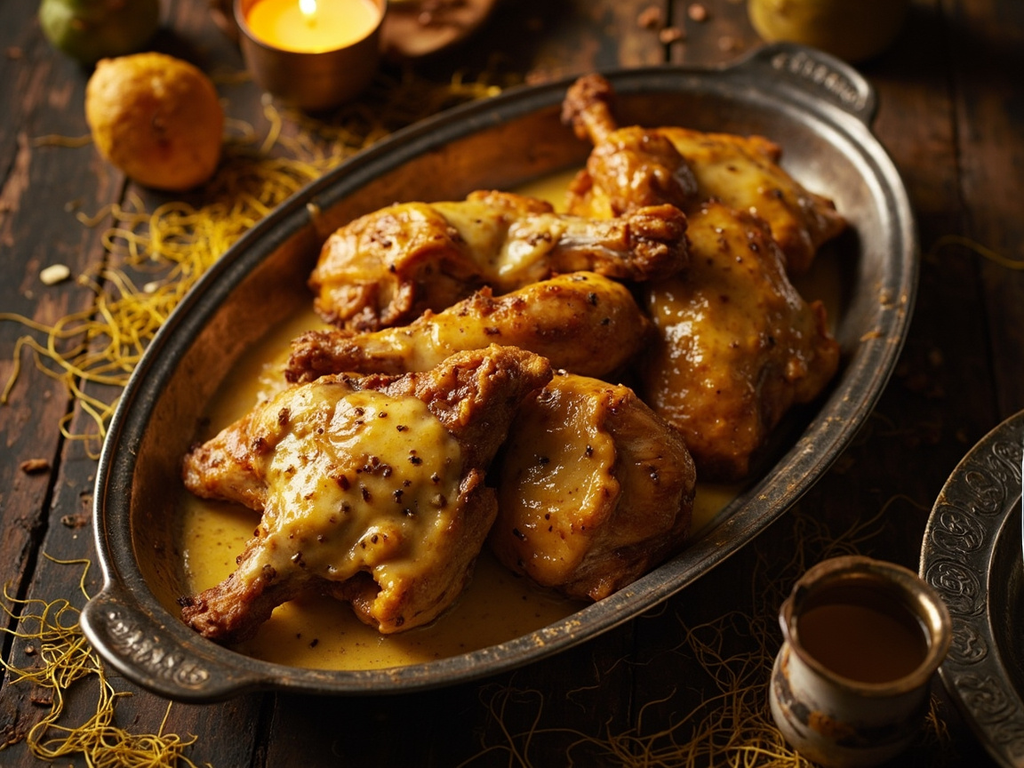 Festive
Saffron and Verjuice Roast Capon
ferculum (noble dish brought to table on fat days)
🌶️ 🍋· 1 h
View the recipe
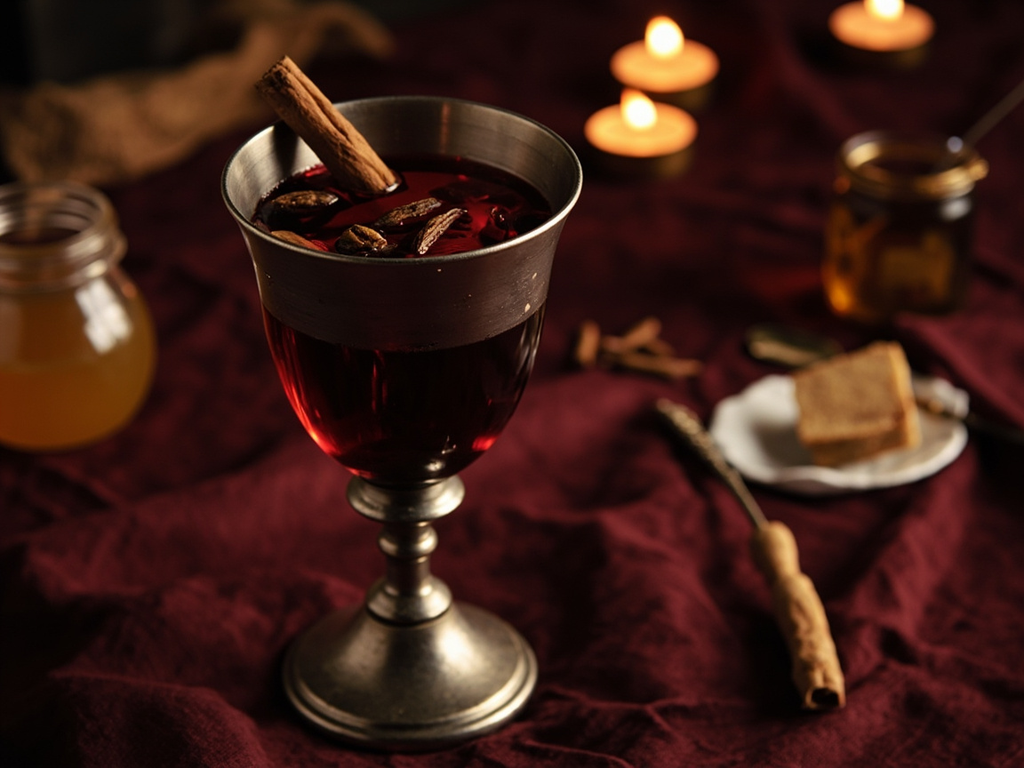 Drink
DrinkSpiced Wine Cut with Water (Curia Style)
table and after-dinner beverage
🌶️ 🍯· 20 min
View the recipe
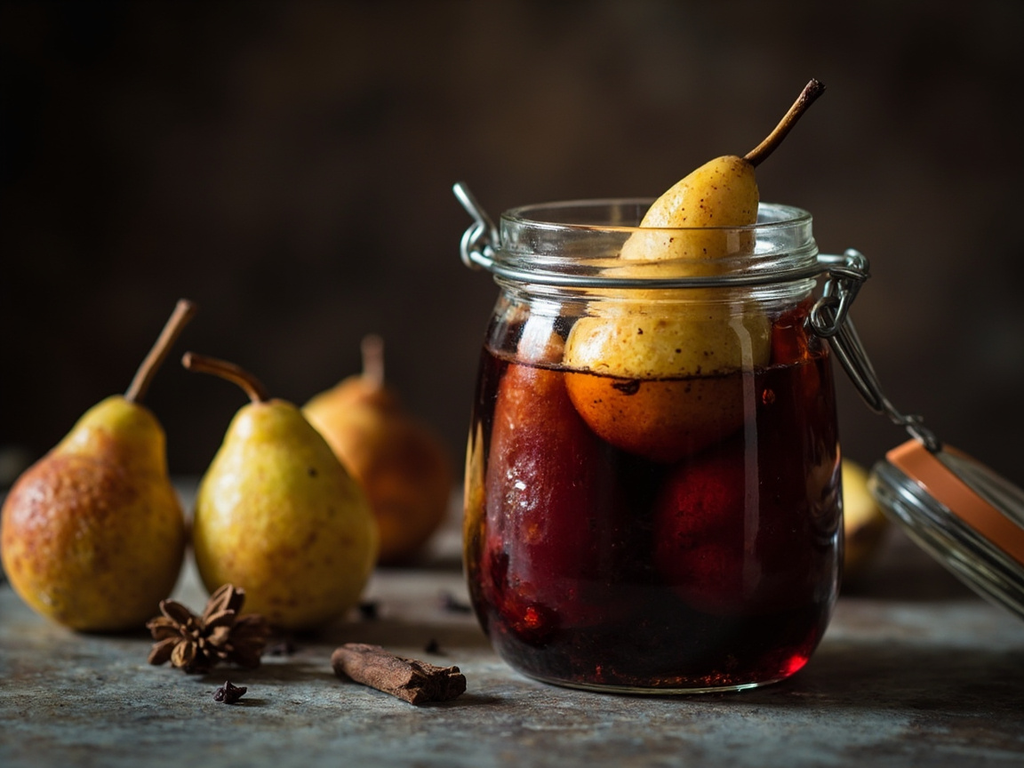 Preserving
Honey-Spiced Pears, Preserved for Winter
final collation and pantry preserve
🍯 🌶️· 50 min
View the recipe
 Remedy
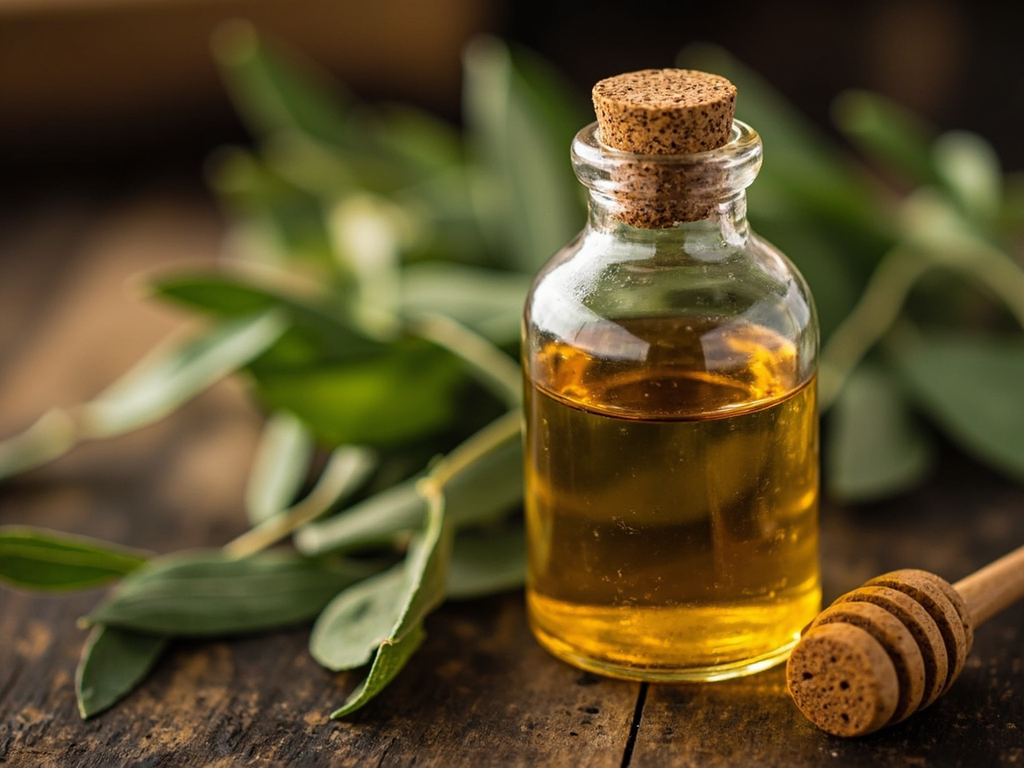
Sage Oxymel, Monastic Cellar Remedy
infirmary preparation (table remedy)
🍋 🍯· 30 min
View the recipe