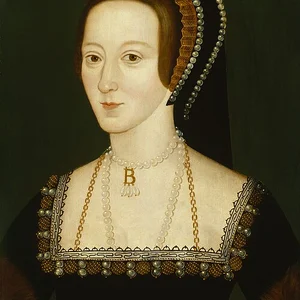

Byzantine princess (1083–c.1153), daughter of Emperor Alexios I Komnenos, Anna Komnene is one of the earliest female historians in recorded history. She is the author of the Alexiad, an epic narrative chronicling her father's reign and an invaluable testimony on Byzantium and the Crusades.
Anna Komnene
Anna Komnene
8 min read
Frequently asked questions
Famous Quotes
« Time in its irresistible course carries all things down into the abyss of oblivion.»
« I have often longed to record the actions of my father, yet hesitated, fearing I might appear to be glorifying my own family.»
Key Facts
- Born in 1083 in Constantinople, eldest daughter of Emperor Alexios I Komnenos
- Attempted to seize the throne upon her father's death in 1118, at the expense of her brother John II
- Confined to a monastery after the failure of her coup attempt
- Composed the Alexiad around 1148, a major historical source on the First Crusades as seen from Byzantium
- Regarded as one of the first female historians of the medieval world
Works & Achievements
A masterwork in fifteen books chronicling the reign of her father Alexios I Komnenos (1081–1118). It is one of the most important historical sources on Byzantium and the First Crusade, and one of the very few major medieval historical works written by a woman.
After the death of her husband in 1137, Anna took up his unfinished historical project and far surpassed it by writing the far more ambitious Alexiad. This original undertaking explains why she begins her own narrative exactly where Bryennios's Chronography left off.
Anecdotes
Anna Komnene was born in the Porphyra chamber, a room with purple marble walls reserved for imperial births at the palace of Constantinople. This privilege earned her the title of “Porphyrogenneta” (born in the purple), marking her place in the most sacred circle of the imperial family. This extraordinary birth shaped her entire life: she considered herself the legitimate heir to the throne, which led her to one of the greatest disappointments of her existence.
Passionate about learning from childhood, Anna Komnene received an exceptional education for a woman of her time: ancient Greek, Aristotelian philosophy, astronomy, medicine, and rhetoric. In the *Alexiad* she cites dozens of ancient authors — Homer, Thucydides, Plato — with an ease that commanded the admiration of her contemporaries. This encyclopedic knowledge was exceedingly rare in a woman of the twelfth century, and Anna never hesitated to take pride in it.
Upon the death of her father Emperor Alexios I in 1118, Anna attempted to redirect the succession in favor of her husband Nikephoros Bryennios rather than let the throne pass to her brother John II. The plot failed, and according to some sources, her husband himself refused to take part in the betrayal. She was exiled to a convent where she spent the last decades of her life writing the *Alexiad*, transforming her seclusion into a literary masterpiece.
The *Alexiad* is one of the few major historical works of the Middle Ages written by a woman. Anna describes with precision — and sometimes with contempt — the arrival of the Crusaders from the West, whom she considered crude, greedy, and arrogant, beginning with Bohemond of Taranto, whom she nonetheless portrays with an almost fascinated physical admiration. Her perspective as a cultivated Byzantine woman on the Franks provides a unique testimony about the First Crusade as seen from Constantinople.
Anna Komnene had originally planned to continue the historical work of her husband Nikephoros Bryennios, who died in 1137 and had left unfinished his *Chronographia* on the Komnenians. But once pen in hand, she far surpassed this initial project and wrote a far more ambitious work, the *Alexiad*, in fifteen books. She herself confessed in her preface that grief and the desire to vanquish oblivion had driven her to write.
Primary Sources
Time in its relentless flow carries all things into the abyss of oblivion; that is why history, like a noble bulwark, fights against time and resists its ruin. I have resolved, so that their memory shall not perish, to set down in writing the deeds of my father.
He was of such great height that he surpassed by nearly a cubit even the tallest of men. He was slender at the waist and flanks, broad of shoulder and chest, and in his whole body he was well-proportioned and vigorous.
The entire West, and all the barbarian peoples who dwell between the far shore of the Adriatic and the Pillars of Hercules, moved en masse, travelling with their whole families through Europe toward Asia.
A historical work in four books covering the reigns from 1057 to 1079, left unfinished at the author's death. Anna Komnene states in her preface that it was this incomplete manuscript that prompted her to take up the pen herself to recount her father's reign.
Key Places
Capital of the Byzantine Empire and birthplace of Anna Komnene. She lived there at the imperial court and witnessed the arrival of the crusaders; her entire adult life unfolded in this city, which she never left.
The main residence of the Komnenos family, where Anna grew up and received her education. It was here that she attended the audiences of crusader leaders who came to negotiate with her father Alexios I before crossing into Asia.
A convent founded by her mother Empress Irene Doukaina, where Anna Komnene was exiled after 1118. It was within this space of seclusion and prayer that she composed the entirety of the *Alexiad*.
A strategic port on the Adriatic Sea and the crusaders' entry point into Byzantine territory. Anna Komnene describes it in detail in the *Alexiad* during the passage of the Norman troops under Bohemond of Taranto.
A Syrian city captured by the crusaders in 1098 after a prolonged siege, described at length in the *Alexiad*. Anna analyzes the strained relations between the crusaders and the Byzantine Empire, which laid claim to the city.
Typical Objects

The primary writing instrument in the Byzantine world, the reed calamus served Anna to compose the Alexiad on sheets of parchment. The inkwell, often made of horn or precious metal, was the hallmark of the cultivated scholar.

Byzantine books took the form of codices (sheets sewn into quires), which scribes reproduced by hand. Anna Komnene had access to the great libraries of Constantinople and composed her manuscripts in careful Greek script.

As an imperial princess born in the purple, Anna wore at ceremonies a diadem set with precious stones and pearls. This mark of her royal birth lies at the heart of the identity she claims throughout the Alexiad.

The color purple, extracted from the murex (a Mediterranean shellfish), was reserved for the imperial family and stood as the sign of absolute power. Anna describes with precision in her writings the ceremonial adornments of the Byzantine court.

An astronomical measuring instrument used in Byzantine scholarly circles to calculate the position of celestial bodies. Anna, who had mastered astronomy, cites stars and constellations in her writings, attesting to her scientific education.

Icons depicting the Virgin or the saints were part of daily life in Byzantine palaces and monasteries. During her monastic retreat, Anna lived surrounded by these images of Orthodox devotion that gave rhythm to her hours of prayer.
School Curriculum
Vocabulary & Tags
Key Vocabulary
Tags
Daily Life
Morning
Anna rose at dawn to attend matins, as prescribed by the monastic rule. She then devoted the first hours to reading classical Greek texts — Homer, Aristotle, Thucydides — which she drew upon to forge the elaborate style of the Alexiad.
Afternoon
Afternoons were dedicated to writing: Anna composed with a reed pen, constantly refining her style to achieve the elegance of ancient Greek Atticism. She also received witnesses and informants to verify the military and diplomatic facts she was recounting, ever mindful of accuracy.
Evening
In the evening, after vespers, Anna would reread her chapters and reflect on the structure of her narrative. In the Alexiad she evokes her sleepless nights and the tears shed while writing about her deceased father, revealing an emotional depth rare in medieval historiography.
Food
At the imperial court, the diet was rich: lamb, fish from the Black Sea, vegetables, white wheat bread, Greek wine, and spiced dishes from the East. At the monastery, Anna followed a more austere regime: frequent fasts according to the Orthodox liturgical calendar, with vegetables, legumes, and fish on days of abstinence.
Clothing
As a princess, Anna wore gold-embroidered silk and purple, the distinctive adornments of the Byzantine imperial family. After her exile to the monastery, she donned the monastic habit, likely dark in color, while retaining the title and perhaps certain symbolic attributes of the Porphyrogenneta.
Housing
As a child, Anna lived in the magnificent Blachernae Palace, a palatial complex of golden mosaics, gardens, and private baths overlooking the sea and the walls of Constantinople. In exile, she resided in the monastery founded by her own mother — an austere space, yet one endowed with a library from which she drew extensively for her work.
Historical Timeline
Period Vocabulary
Liens externes & ressources
Références
Œuvres
L'Alexiade (Ἀλεξιάς)
v. 1148
Continuation de la Chronographie de Nicéphore Bryennios
v. 1138-1148