The Russian Meal: Zakuski, Soup, Main Course, and Tea from the Samovar
In cultured families of 19th-century Moscow, the meal unfolds in several stages. It begins with zakuski, small cold hors d'oeuvres (smoked fish, meats in aspic, pickles) set on the table to accompany the first drinks. Then comes a hearty soup served steaming hot, followed by a meat or stuffed pastry dish. The entire day, and especially the end of the meal, revolves around the samovar: black tea is brewed as a concentrate (zavarka) and diluted with boiling water, served with jams and sweets like kissel. It is a meal of sociability, slow, where conversation matters as much as eating.
Signature : Smetana and Dill
Sour cream (smetana), rich and tangy, coats almost everything: soup, pancakes, cold meats. Paired with fresh chopped dill, it is the signature flavor of the Russian table—an acidic freshness that balances the richness of the dishes and the cold outside.
Antonina Miliukova at the table
1848 — 1917
4 period recipes
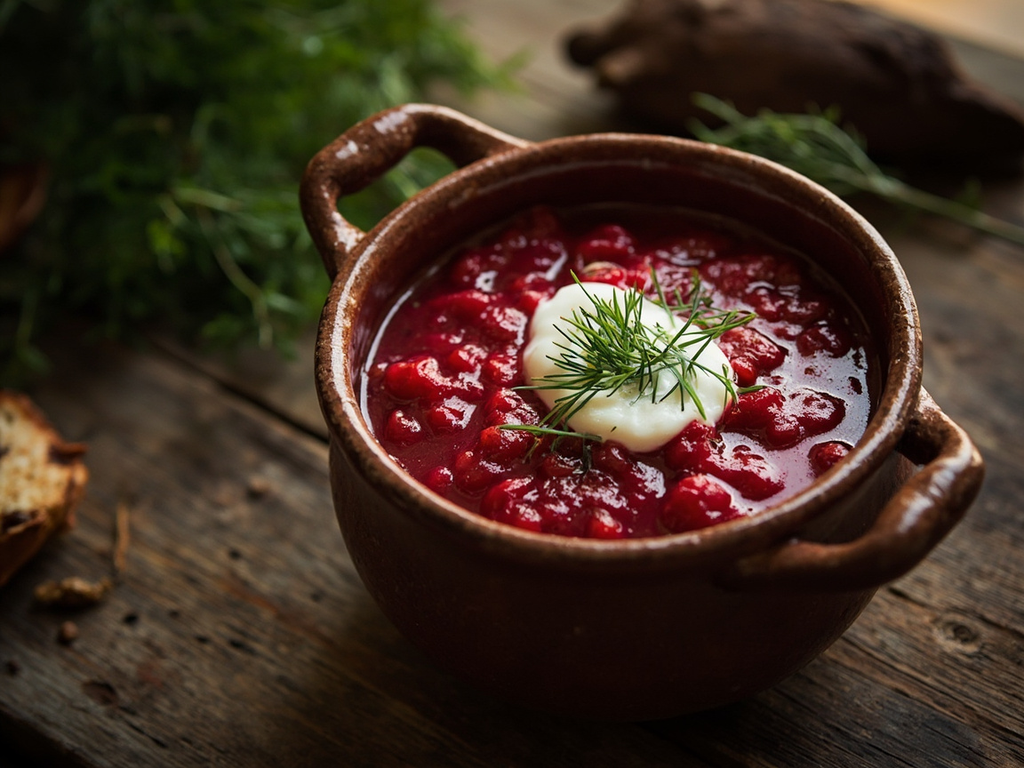 Everyday
Beet and Cabbage Borscht
Soup-staple (sup), the hot heart of the midday meal
🍋 🍄· 1 h
View the recipe
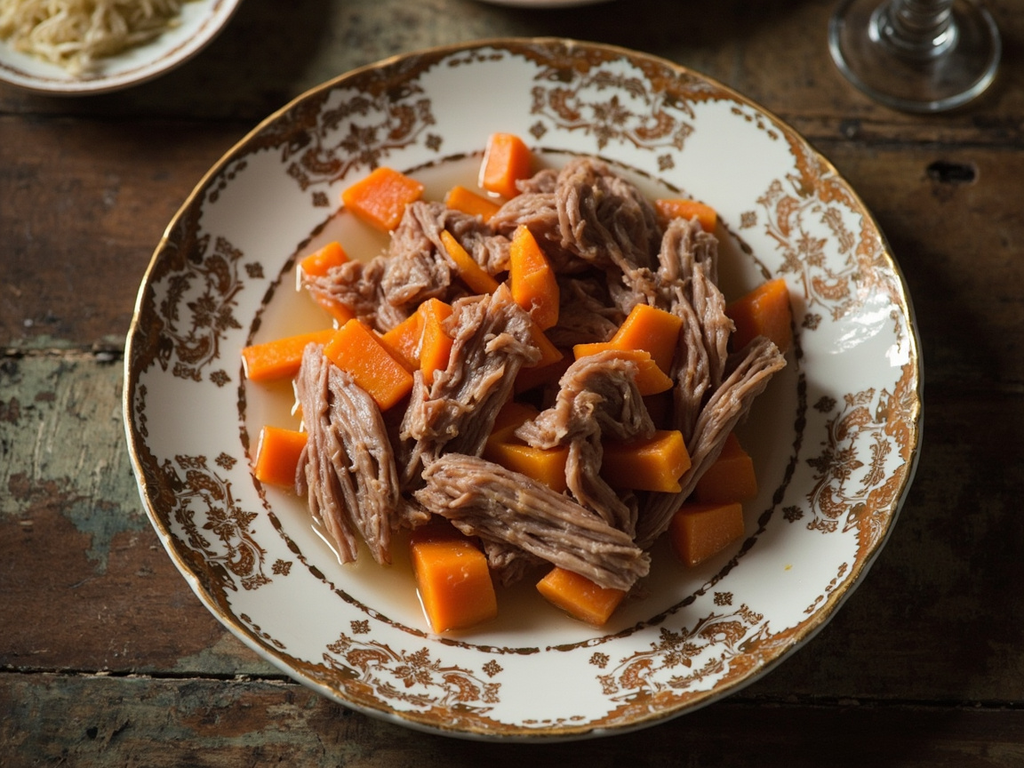 Festive
Holodets, Meat in Aspic
Cold zakuska, set on the welcoming table before the meal
🧂 🍄· 6 h + overnight set
View the recipe
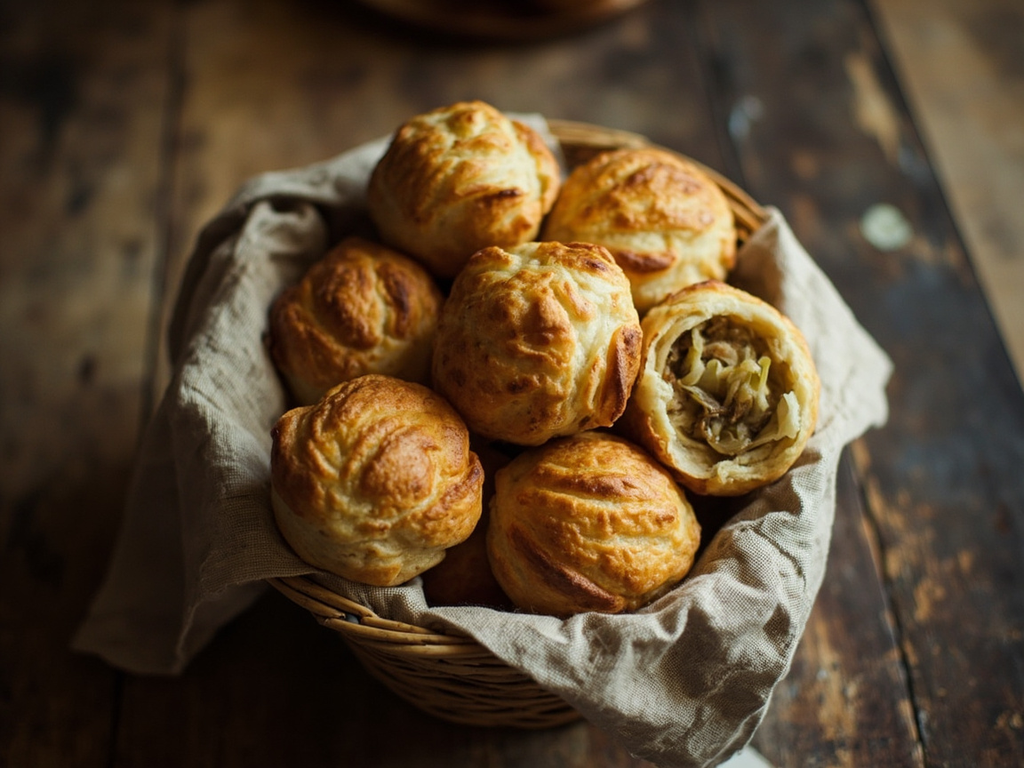 Travel
Cabbage Pirozhki
Stuffed small bread, snack to take along or offer with tea
🧂 🍄· 2 h (including rising)
View the recipe
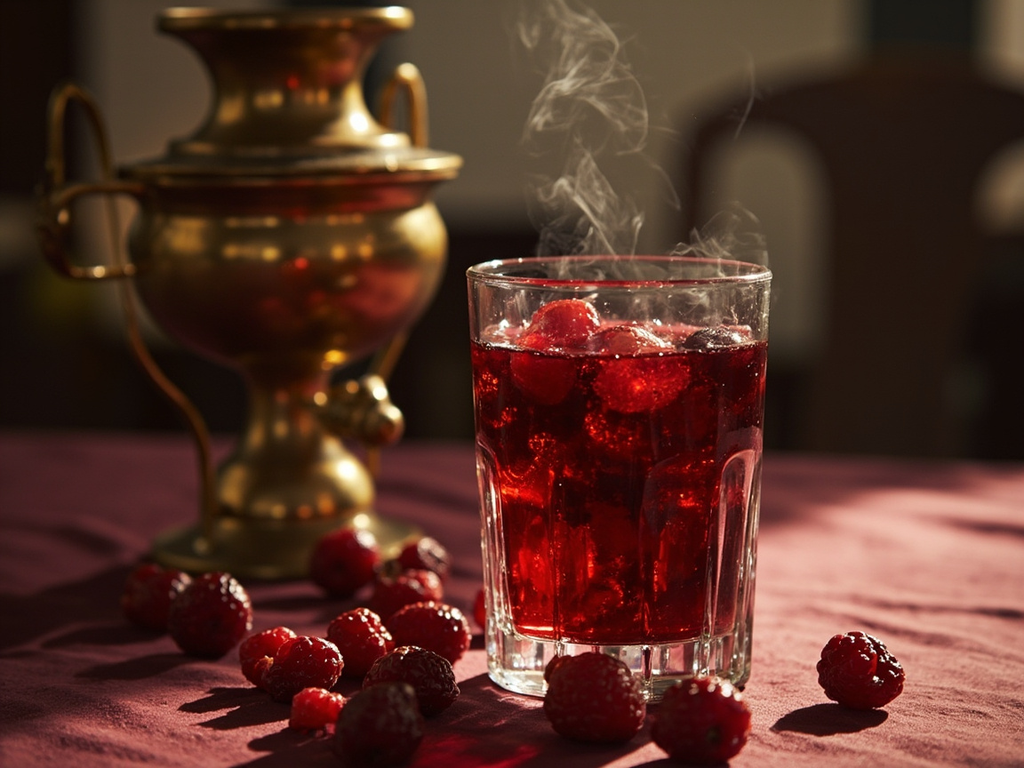 Drink
DrinkLingonberry Kissel
Sweet-drink end-of-meal treat, served warm or cool near the samovar
🍯 🍋· 25 min
View the recipe