 flip
flipBeet and Cabbage Borscht
Beet and Cabbage Borscht
Why this dish? Borscht was the daily soup on Russian and Ukrainian tables; Antonina spent time in Kamenka, in present-day Ukraine, where this ruby beet soup was the foundation of family meals.
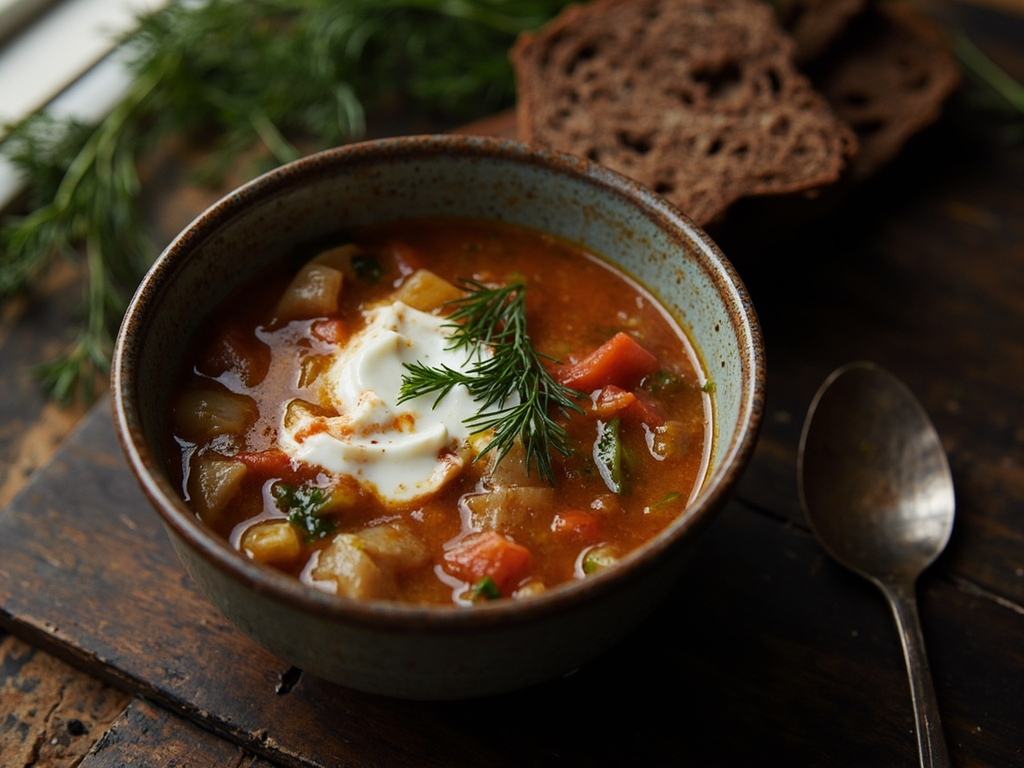
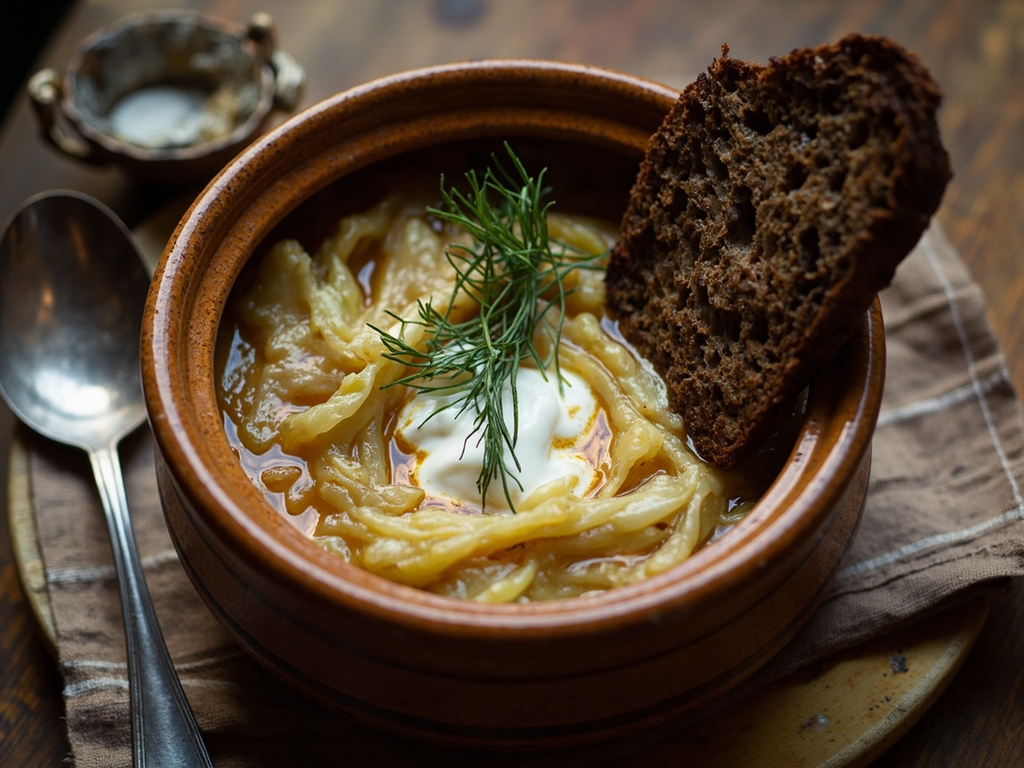
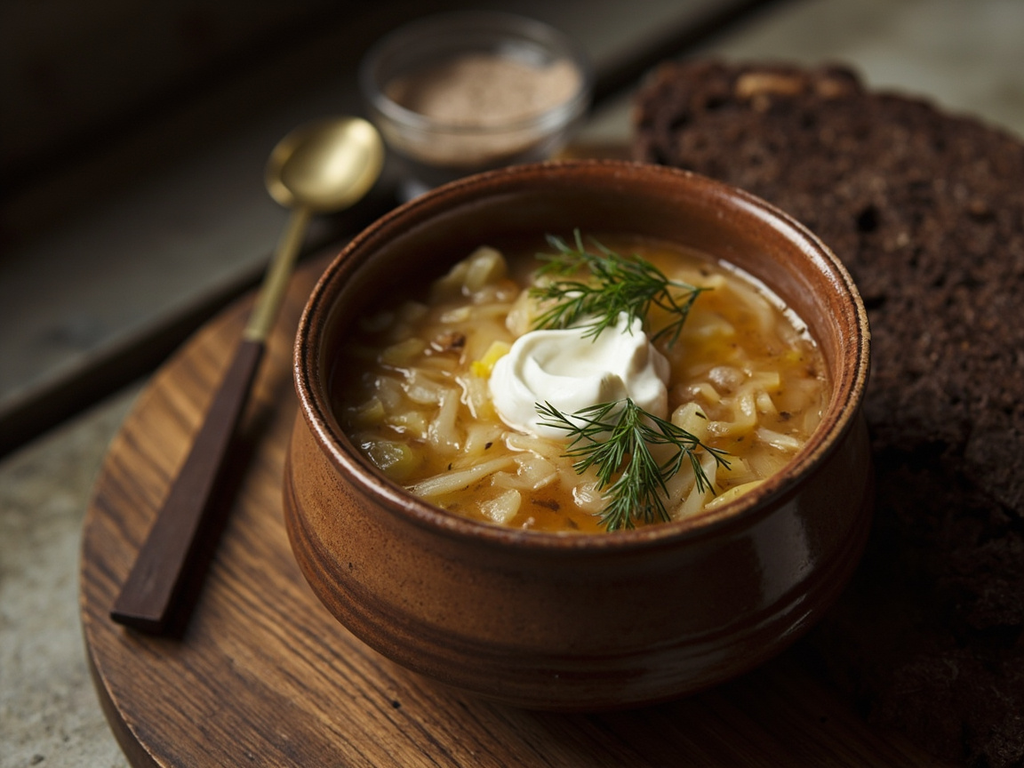
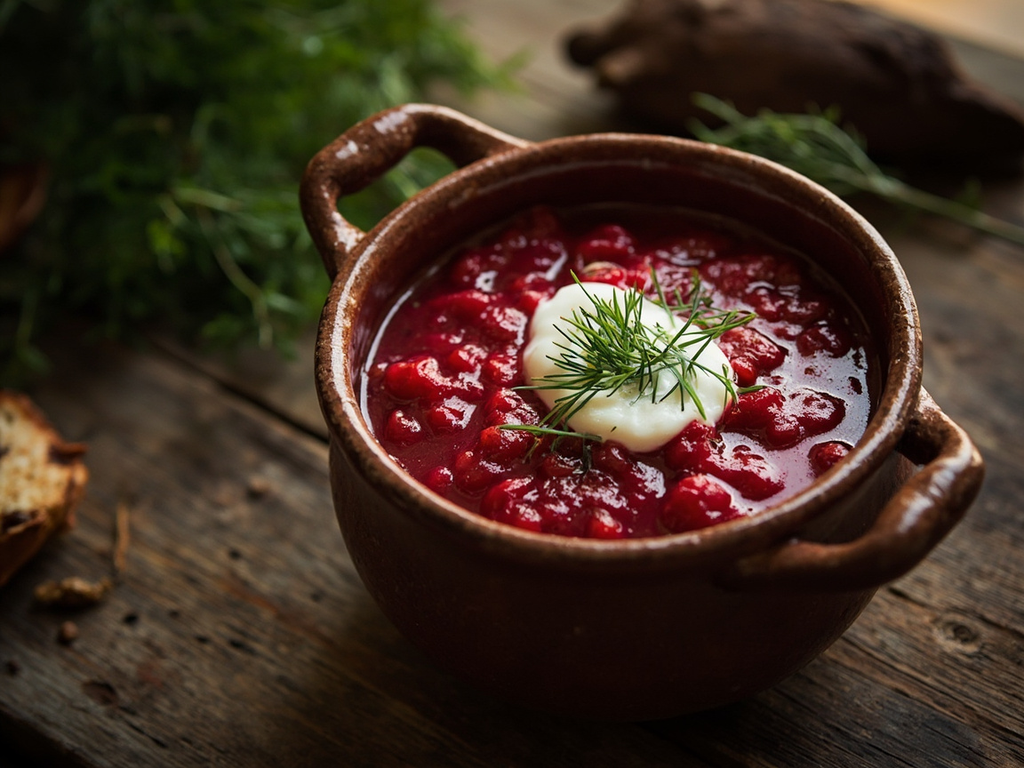
A deep, scarlet soup where beets provide color and gentle acidity, cabbage gives softness, all brightened with a splash of vinegar and crowned with a spoonful of smetana that melts into pink swirls.
Come closer with your bowl, please. In our home, borscht simmered from morning on the big stove, and the whole house smelled of beets and cabbage. My cook swore you needed a splash of vinegar at the end to wake up the color—otherwise the soup turns a sad brown, she said. You'll drop in a spoonful of smetana and some dill; that's how it's served in proper houses, and no respectable Russian table would be without it in winter.
- •Beets — a few, firm (color and sweet acidity)
- •White cabbage — half a head (softness and volume)
- •Beef broth — a large potful (umami base)
- •Onion and carrot — according to the basket (aromatic base)
- •Vinegar — a splash (awakens acidity and sets the red)
- •Smetana (sour cream) — one spoonful per bowl (richness and freshness)
- •Fresh dill — a handful (green fragrance)
Beet and Cabbage Borscht
A deep, scarlet soup where beets provide color and gentle acidity, cabbage gives softness, all brightened with a splash of vinegar and crowned with a spoonful of smetana that melts into pink swirls.
Why this dish? Borscht was the daily soup on Russian and Ukrainian tables; Antonina spent time in Kamenka, in present-day Ukraine, where this ruby beet soup was the foundation of family meals.
Come closer with your bowl, please. In our home, borscht simmered from morning on the big stove, and the whole house smelled of beets and cabbage. My cook swore you needed a splash of vinegar at the end to wake up the color—otherwise the soup turns a sad brown, she said. You'll drop in a spoonful of smetana and some dill; that's how it's served in proper houses, and no respectable Russian table would be without it in winter.
Ingredients (period version)
- Beets — a few, firm (color and sweet acidity)
- White cabbage — half a head (softness and volume)
- Beef broth — a large potful (umami base)
- Onion and carrot — according to the basket (aromatic base)
- Vinegar — a splash (awakens acidity and sets the red)
- Smetana (sour cream) — one spoonful per bowl (richness and freshness)
- Fresh dill — a handful (green fragrance)
Ingredients
- Raw beets — 500 g (color and sweet acidity)
- Shredded white cabbage — 300 g (softness and volume)
- Beef broth — 1.5 L (umami base)
- Onion — 1 (aromatic base)
- Carrot — 1 (aromatic base)
- Potato — 2 (body)
- Wine vinegar — 1 tbsp (acidity and color fixing)
- Thick crème fraîche or sour cream — to serve (richness and freshness)
- Fresh dill — 1 small bunch (green fragrance)
Method
- Coarsely grate the beets and carrot; slice the onion, cabbage, and potatoes.
- Sauté the onion and carrot in a little butter, add the beets and a splash of vinegar to preserve the color.
- Pour in the hot broth, add potatoes then cabbage, and simmer gently for 40 minutes.
- Adjust salt and vinegar at the end: the soup should be distinctly tangy.
- Serve piping hot with a spoonful of sour cream and plenty of chopped dill.
How it was made : Borscht was cooked in a large cast-iron pot on the Russian stove (pechka), which retained heat for hours. Each household had its own version; in the countryside, they added bacon or beans, in town a good piece of boiling beef. Vinegar—or fermented beet juice (beet kvass)—was the trick to keep the red bright.
The contemporary twist : Serve it in warm shot glasses as an appetizer, topped with a quenelle of dill-whipped sour cream, for a modern take on zakuski.
Antonina Miliukova · Charactorium