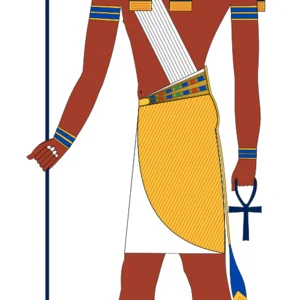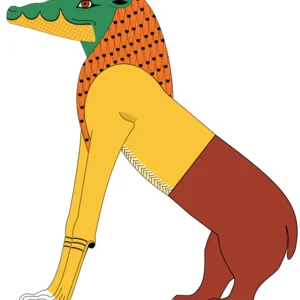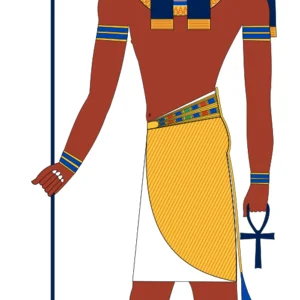

Anubis is the funerary god of ancient Egypt, depicted with a black jackal's head. He is the protector of the dead and of cemeteries, and guides souls into the afterlife.
Anubis
Anubis
8 min read
Frequently asked questions
Key Facts
- Anubis is the oldest funerary god worshipped in Egypt, venerated since the Old Kingdom (around 2686 BCE)
- He is associated with mummification and the embalming of the bodies of pharaohs and dignitaries
- Depicted with the black head of a jackal, a symbol of decomposition and regeneration
- He presides over the weighing of the heart during the judgment of the dead in the Book of the Dead
- His cult gradually gave way to that of Osiris, who succeeded him as the principal god of the dead
Works & Achievements
Anubis became the principal god responsible for protecting the dead and their burial grounds in Egyptian mythology. This role made him one of the most important deities in the Egyptian funerary cult.
According to mythology, Anubis discovered and taught the techniques of mummification by embalming his father Osiris. This practice became central to Egyptian civilization.
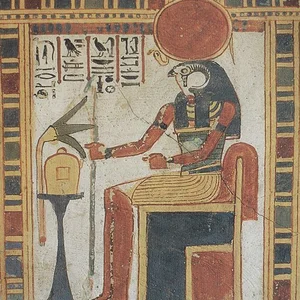
The image of Anubis with the head of a jackal became one of the most recognizable symbols of ancient Egyptian religion, appearing in temples, tombs, and religious texts.
Anubis presided over the judgment of souls in the afterlife, where the heart of the deceased was weighed against the feather of Ma'at. This role made him an essential guide on the journey after death.
Major temples were built in honor of Anubis, most notably at Abydos and Cynopolis, where religious festivals and funerary rituals were held in his name.
Anecdotes
Anubis was originally the most powerful funerary god in Egypt before Osiris surpassed him during the New Kingdom. The ancient Egyptians honored him as far back as the First Dynasty (around 3000 BCE), making him one of the oldest deities in the Egyptian pantheon. His importance was such that the priests who mummified the dead wore jackal masks in his honor during funerary rituals.
Anubis's Egyptian name, 'Inpu', literally means 'one who is in a state of decay' or 'he of the burial place.' This direct association with decomposition shows that the ancient Egyptians recognized the natural role of jackals, which scavenged around cemeteries — turning a threat into a form of divine protection.
In the Book of the Dead, an Egyptian religious text dating from the New Kingdom, Anubis guides the deceased through the Duat (the underworld) and presides over the ceremony of the 'Weighing of the Heart.' This scene, depicted on many funerary papyri, underscores Anubis's crucial role in judging the soul after death.
The main temple of Anubis was located at Cynopolis (Hardai in ancient Egyptian), in Upper Egypt, where worshippers came to venerate the god and seek his protection for their deceased loved ones. Each year, special festivals were held there to honor this guardian of the realm of the dead.
Artistic depictions of Anubis always show a black jackal or a man with a jackal's head, because black symbolized regeneration and new life to the Egyptians. This color did not reflect the natural jackal's coat, but rather the mystical and spiritual transformation that the god embodied.
Primary Sources
Anubis is he who presides over the Hall of the Dead. It is he who welcomes the souls of deceased pharaohs and guides them toward eternity. Anubis, the great funerary god, watches over all the cemeteries of the land of Egypt.
Homage to you, Anubis, lord of the Sacred Hall, guardian of all the deceased. You are the protector of embalmers and the one who weighs the hearts of the dead at the moment of divine judgment.
Anubis, son of Osiris, foremost of the Westerners, he who dwells in the Sacred Tomb. All the dead of Egypt revere him and implore his protection for their passage into the afterlife.
Glory to you, Anubis, master of the necropolis, he who leads righteous souls to their eternal dwelling places. You are the guide of the dead and the hope of all who fear death.
Key Places
A major center of Anubis worship in Upper Egypt, home to an important temple dedicated to the funerary god. Abydos was also a key pilgrimage site for funerary rituals and mummification.
A vast necropolis near Memphis where a temple of Anubis once stood and statues of the god have been discovered. Saqqara was a major center for mummification and the cult of the dead.
A city in Upper Egypt associated with the worship of jackals and Anubis, whose Greek name means 'city of the dog.' It was an important center of veneration for the funerary god.
The ancient capital of Egypt where Anubis was venerated as the protector of necropolises and funerary practices. Memphis housed temples and schools of mummification.
A funerary temple housing chapels dedicated to Anubis in the Valley of the Kings. This site was where mummification rituals and the protection of royal deceased were carried out.
The great royal necropolis of Thebes where Anubis was invoked as guardian and protector of pharaonic tombs. The priests of Anubis performed the major funerary rites here.
Typical Objects

A stone or wooden coffin in which the deceased's body was placed. As god of the dead, Anubis was closely associated with the protection of sarcophagi and the mummification process.

Linen strips used to wrap mummified bodies. These bandages were essential to the embalming ritual overseen by Anubis in his role as protector of the dead.

A funerary vessel designed to hold the internal organs of the mummified deceased. The four canopic jars were placed in the tomb under the protection of Anubis and the funerary deities.

A small protective object carved or modeled in the likeness of Anubis in his black jackal form. Egyptians wore these amulets to gain the protection of the funerary god.

A collection of magic spells and instructions written on papyrus to guide the deceased through the afterlife. Anubis is invoked within it as a psychopomp tasked with leading souls toward divine judgment.

A symbolic instrument used to weigh the heart of the deceased against the feather of Ma'at (truth). Anubis presides over this crucial weighing, which determines the soul's eternal fate.

Substances burned during funerary rituals to purify the space and honor the dead. These offerings were essential to the ceremonies presided over by Anubis in cemeteries and tombs.
School Curriculum
Vocabulary & Tags
Key Vocabulary
Tags
Mythologie
Daily Life
Morning
Anubis, having no daily life in the human sense, is depicted in Egyptian mythology as a deity dwelling among necropoles and tombs. The Egyptian priests who served his cult began their day with purification rituals and offerings at funerary temples. These morning practices were intended to honor the god and ensure the protection of the deceased.
Afternoon
Priests devoted to the cult of Anubis spent their afternoons preparing bodies for embalming, a sacred practice known as mummification. They performed mummification rituals in specialized workshops, reciting magical incantations to guide the soul of the deceased on its journey. These religious and practical duties were regarded as direct acts of service to the god Anubis.
Evening
In the evening, priests performed illumination ceremonies in tombs and cemeteries, the sacred domains of Anubis. They tended the altars and ensured that offerings of food and incense remained in place for the well-being of the souls of the dead. These nocturnal practices reflected Anubis's deep association with darkness and the realm of the dead.
Food
Priests of the Anubis cult followed a strictly regulated diet governed by Egyptian religious law, including bread, beer, onions, and fish. They also ate fruits such as figs and dates, and consumed meat during religious festivals. These foods were sometimes placed in tombs as offerings to the deceased, serving as provisions for the afterlife.
Clothing
Priests of Anubis wore garments of pure white linen, a symbol of ritual purity and holiness. During funerary ceremonies, many donned a mask depicting the jackal's head, thereby embodying the god himself. This sacred attire set them apart socially and underscored their role as intermediaries between the world of the living and the world of the dead.
Housing
Priests of Anubis lived near necropoles and funerary temples, in modest dwellings built from mud brick. Their homes were situated close to the tombs to allow constant oversight of the cemeteries and the performance of daily rituals. These living spaces combined residential and administrative functions within the funerary cult.
Historical Timeline
Period Vocabulary
Visual Style
Un style graphique inspiré de l'art funéraire égyptien ancien, associant les formes géométriques des hiéroglyphes aux contrastes forts entre les ombres noires profondes et les reflets dorés, rappelant les peintures murales des tombeaux pharaoniques et la solennité du culte des morts.
Sound Ambience
Une ambiance sonore mystique et solennelle évoquant les temples funéraires de l'Égypte antique, mêlant chants rituels profonds, tambours cérémonials et bruits de pierre, créant une atmosphère spirituelle propice au culte d'Anubis et à la communion avec l'au-delà.
Liens externes & ressources
Références
Œuvres
Fonction de protecteur des morts
À partir du Moyen Empire (vers 2055 av. J.-C.)
Invention de la momification
Mythologiquement associée aux débuts de la civilisation pharaonique
Représentation iconographique en tant que chacal noir
Tout au long de la période pharaonique
Jugement des âmes (Psychostasie)
Particulièrement durant le Nouvel Empire (vers 1550-1077 av. J.-C.)
Culte et temples dédiés
Du Moyen Empire au Nouvel Empire