 Flip the card
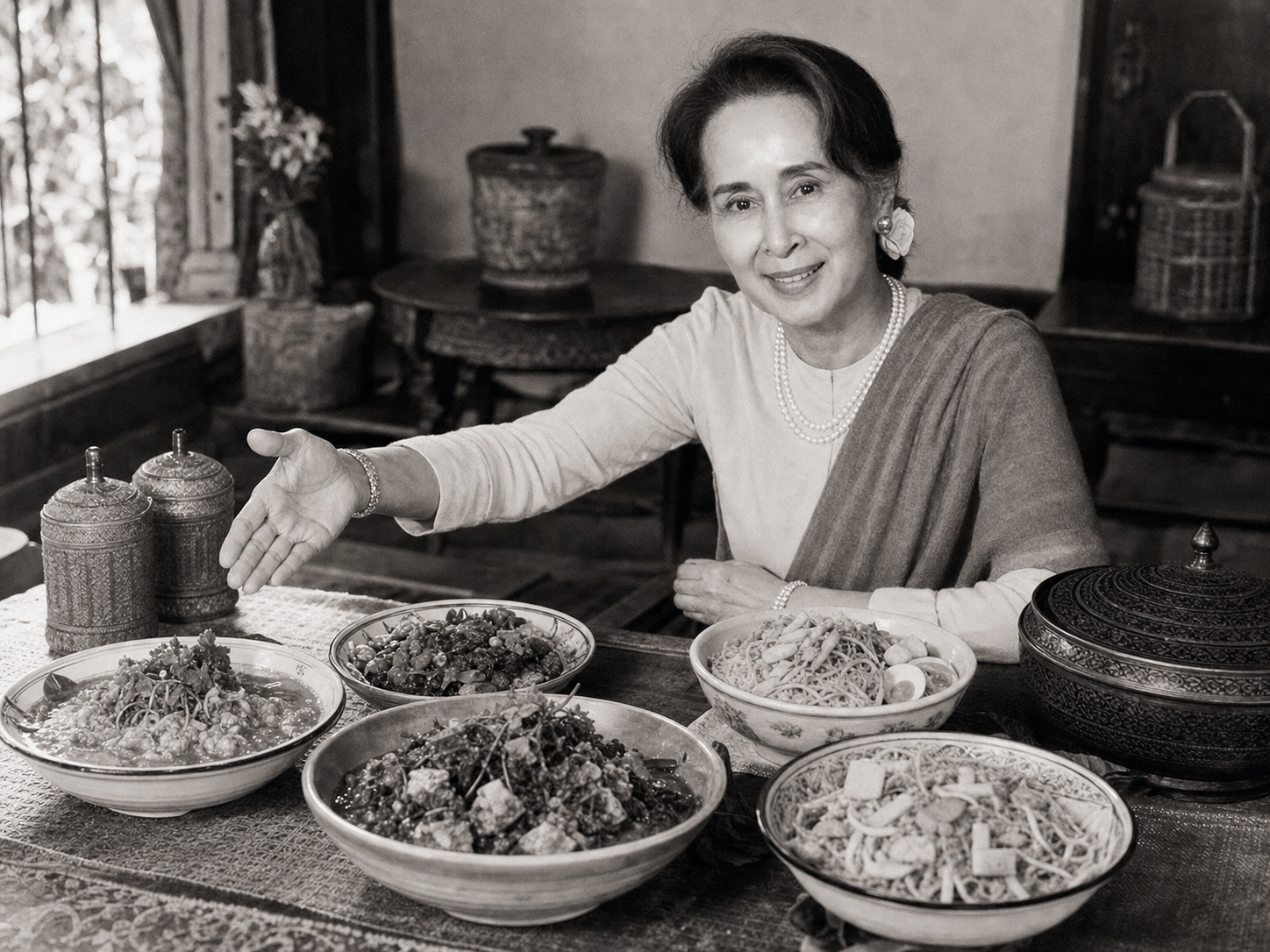
Aung San Suu Kyi at the table
1945 — ?
On the menu
Htamin and hin — rice at the center of the table
The Burmese meal is organized around a large dish of rice (htamin) placed in the middle of the table, surrounded by several small shared bowls: one or two curries (hin) of fish or vegetables, a clear soup (hin gyo), a salad (thoke), and spicy or fermented condiments that each person measures to their taste. Courses are not served sequentially: everything arrives together and everyone helps themselves. Mornings and street food have their own universe of noodles and broths. Nothing truly ends without a fermented tea leaf offered as a sign of hospitality.
Signature : Lahpet — fermented tea
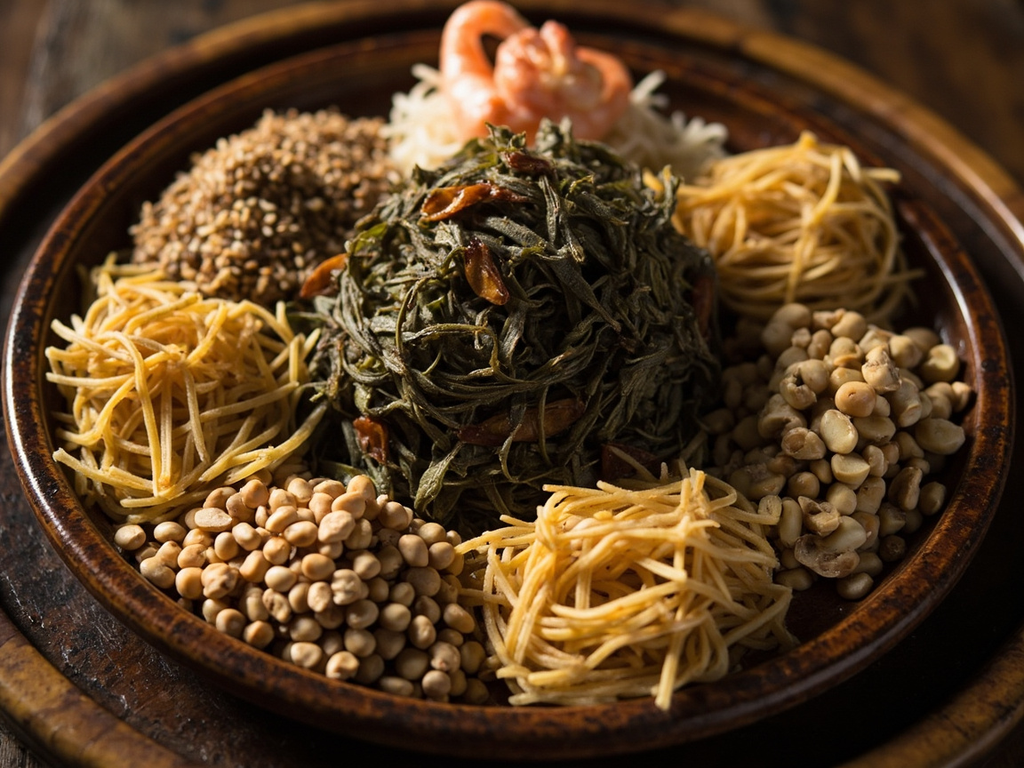
Unique to the Burmese world: young tea leaves are steamed, then pressed and fermented for several months. They are eaten, not drunk. Tangy, bitter, slightly astringent, lahpet seals agreements, welcomes guests, and punctuates festivities. It is the signature flavor of every Burmese table.
click to flip back
Aung San Suu Kyi at the table
1945 — ?
5 period recipes
 Everyday
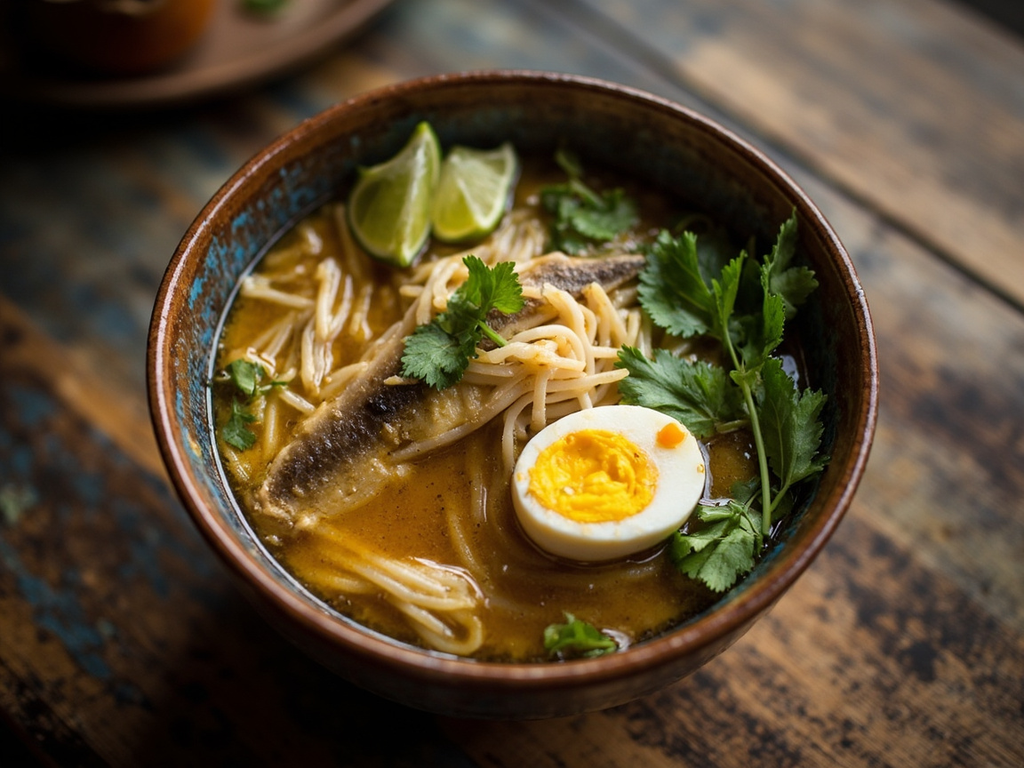
Mohinga — fish noodle soup
Morning broth (the national breakfast dish)
🧂 🍄· 1 h
View the recipe
 Offering
Lahpet thoke — fermented tea leaf salad
Welcome thoke (the gesture of hospitality offered to guests)
🫙 ☕ 🍋· 20 min
View the recipe
 Everyday
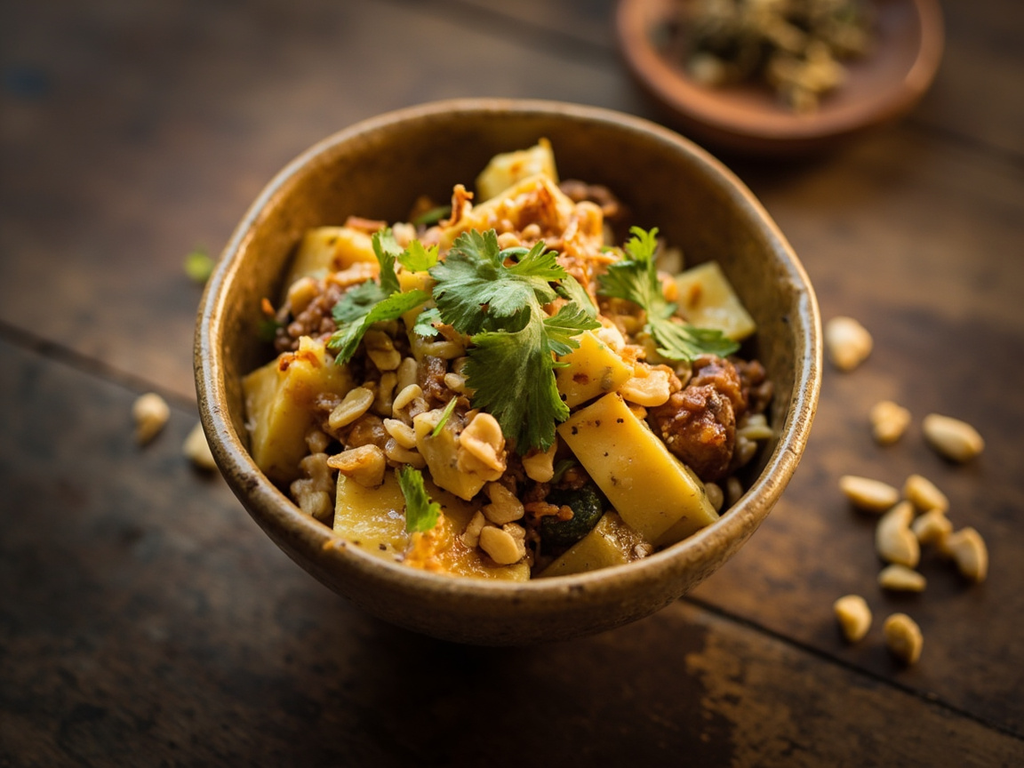
Tohu thoke — Shan chickpea 'tofu' salad
Daily vegetarian thoke (the frugal everyday dish)
🍋 🧂· 30 min + rest
View the recipe
 Festive
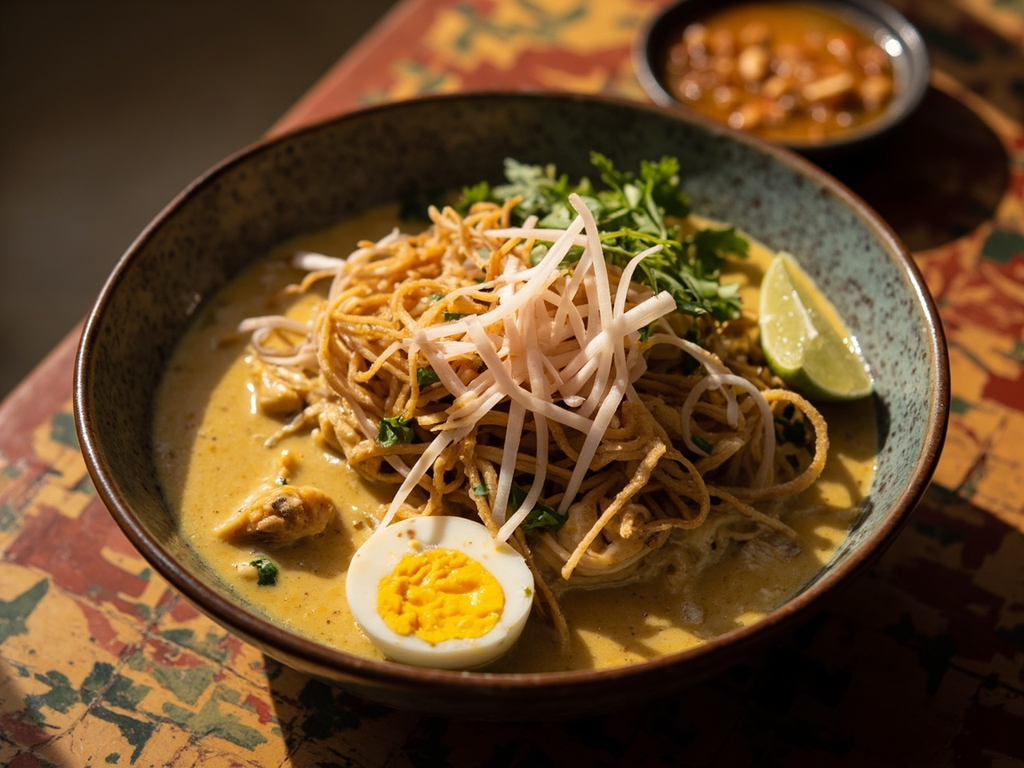
Ohn no khao swè — chicken and coconut milk noodles
Festive hin (the great shared dish for occasions)
🧂 🍄· 50 min
View the recipe
 Preserving
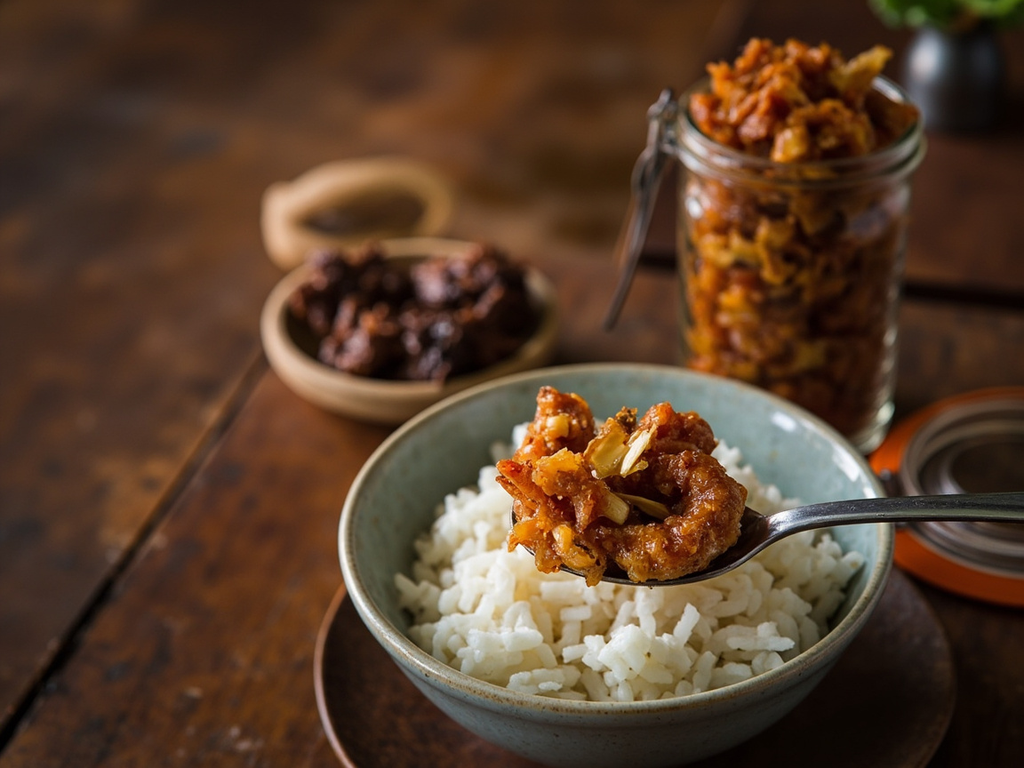
Balachaung — crispy dried shrimp condiment
Pantry condiment (the small reserve that accompanies rice)
🌶️ 🍄 🧂· 35 min
View the recipe