 flip
flipLahpet thoke — fermented tea leaf salad
Lahpet thoke — fermented tea leaf salad
Why this dish? Offering lahpet is the quintessential Burmese gesture of hospitality; it also seals reconciliations. For a woman who made patience and dialogue the heart of her struggle, this tea that is eaten between adversaries as well as friends deeply resembles her.
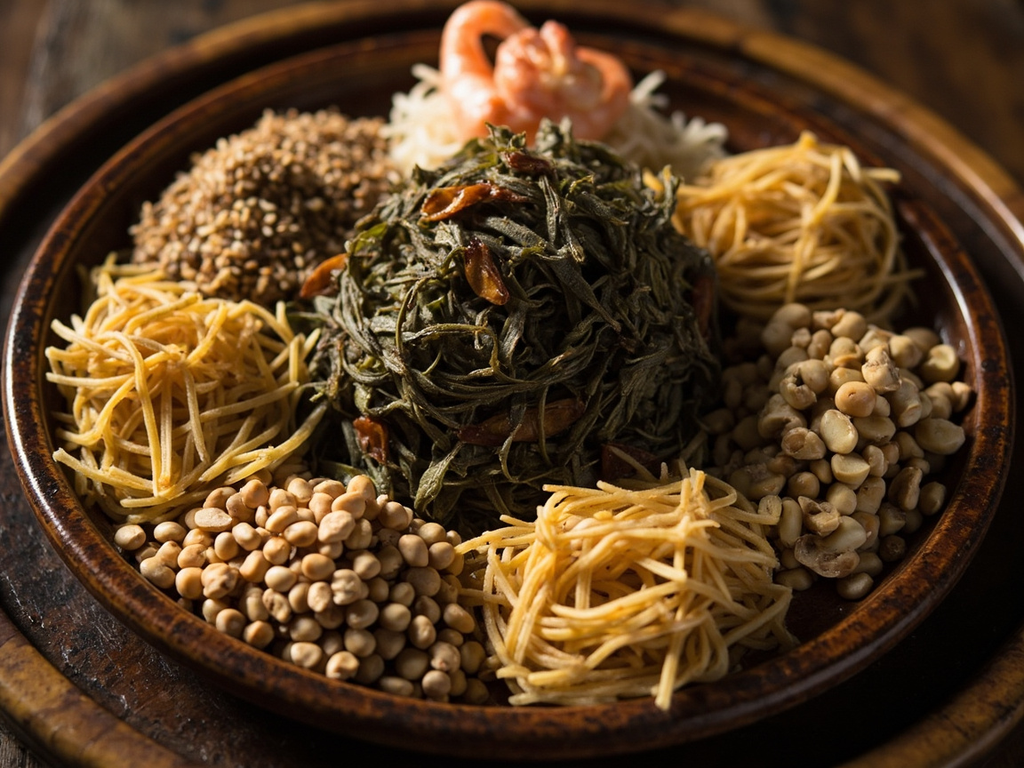
A small mound of slightly bitter fermented tea surrounded by roasted peanuts, crispy fried garlic, sesame seeds, crunchy split peas, and dried shrimp, mixed at the table.
When a visitor crosses the threshold, we offer lahpet: it is our way of saying that the table is open and the heart as well. Mix it gently with your fingertips or a spoon, the slightly bitter tea, the crunchy peanuts, the golden garlic, the squeeze of lime. At home, we shared this tray even in the darkest hours, because no house arrest can take away your right to welcome with dignity. Taste without haste: the bitterness passes, the friendship remains.
- •Fermented tea leaves (lahpet) — a pressed portion (fermented base)
- •Roasted peanuts — a handful (crunch)
- •Fried garlic — as much as desired (aroma)
- •Dried shrimp — a spoonful (umami)
- •Roasted sesame seeds — a pinch (roundness)
Lahpet thoke — fermented tea leaf salad
A small mound of slightly bitter fermented tea surrounded by roasted peanuts, crispy fried garlic, sesame seeds, crunchy split peas, and dried shrimp, mixed at the table.
Why this dish? Offering lahpet is the quintessential Burmese gesture of hospitality; it also seals reconciliations. For a woman who made patience and dialogue the heart of her struggle, this tea that is eaten between adversaries as well as friends deeply resembles her.
When a visitor crosses the threshold, we offer lahpet: it is our way of saying that the table is open and the heart as well. Mix it gently with your fingertips or a spoon, the slightly bitter tea, the crunchy peanuts, the golden garlic, the squeeze of lime. At home, we shared this tray even in the darkest hours, because no house arrest can take away your right to welcome with dignity. Taste without haste: the bitterness passes, the friendship remains.
Ingredients (period version)
- Fermented tea leaves (lahpet) — a pressed portion (fermented base)
- Roasted peanuts — a handful (crunch)
- Fried garlic — as much as desired (aroma)
- Dried shrimp — a spoonful (umami)
- Roasted sesame seeds — a pinch (roundness)
Ingredients
- Fermented tea leaves (lahpet, from Asian grocery) — 100 g, rinsed and squeezed dry (fermented base)
- Unsalted roasted peanuts — 50 g (crunch)
- Crispy fried garlic — 2 tbsp (aroma)
- Fried split peas — 2 tbsp (crunch)
- Crumbled dried shrimp — 1 tbsp (umami)
- Sesame seeds, tomato, shredded cabbage, lime, oil — garnishes (freshness and binder)
Method
- Briefly rinse the fermented tea and squeeze dry, then mix with a drizzle of oil.
- Place the tea in the center of a plate and surround with separate piles: peanuts, fried garlic, split peas, dried shrimp, sesame.
- Add finely shredded cabbage and tomato around the edge.
- At serving, squeeze lime and mix everything at the table in front of the guests.
- Taste and adjust acidity with more lime if needed.
How it was made : Young tea leaves from the Shan highlands were steamed, kneaded, then pressed into bamboo baskets buried or weighted with stones to ferment for several months. This process preserved the tea all year and made it a festive and peace-making dish.
The contemporary twist : Presented as a 'flavor wheel' on a slate, each garnish in its own compartment, so children can compose their own balance of bitter, salty, and crunchy.
Aung San Suu Kyi · Charactorium