 flip
flipMohinga — fish noodle soup
Mohinga — fish noodle soup
Why this dish? Mohinga is the morning meal of all Burma, sold on every street corner in Yangon. Humble, nourishing, and deeply popular, it embodies the ordinary table that Daw Suu shared with her people, far from official pomp.
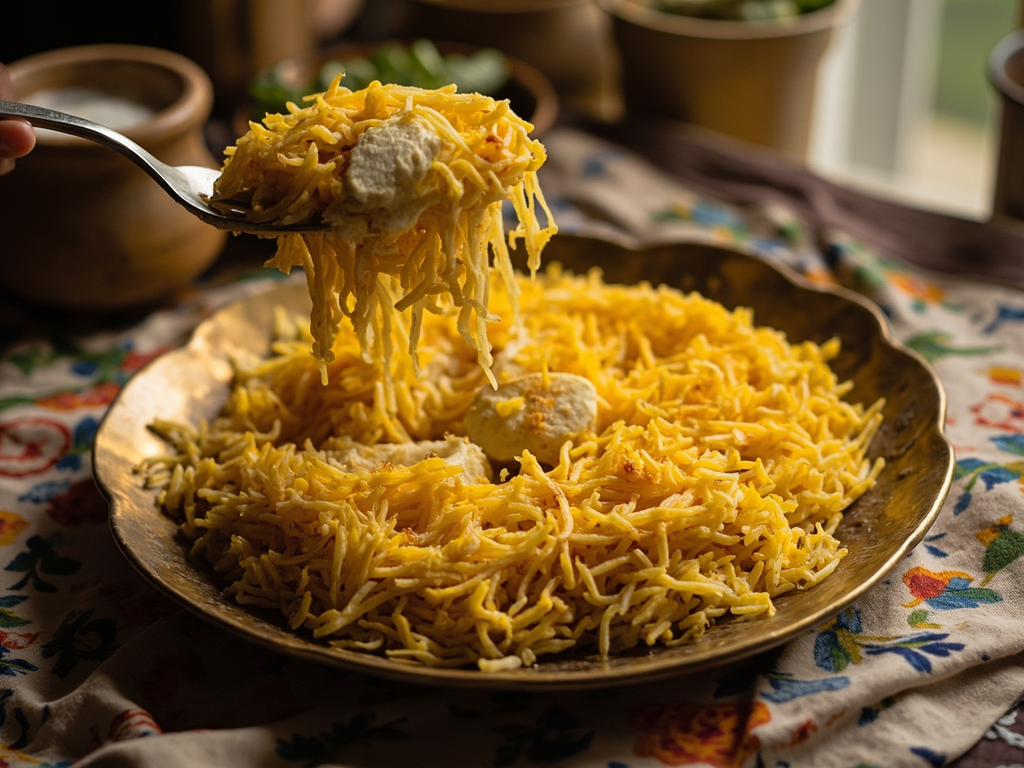
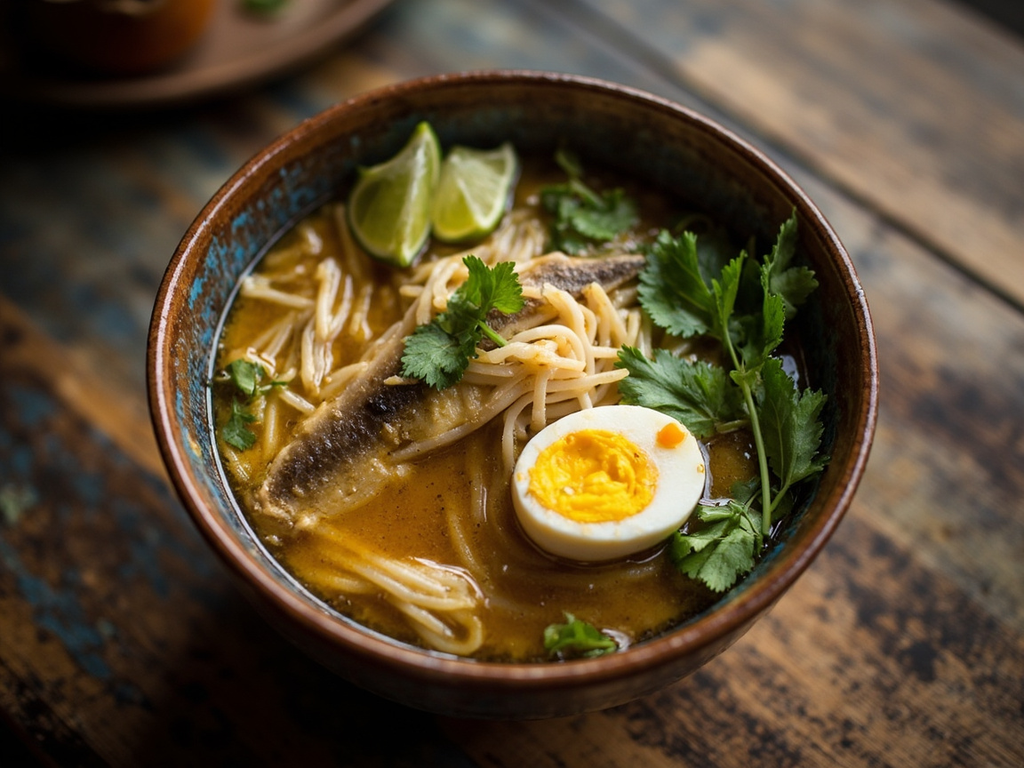
A golden broth of catfish perfumed with lemongrass and banana trunk core, poured over thin rice vermicelli, and garnished with boiled egg, coriander, and a squeeze of lime.
Allow me to offer you this bowl, as we do at home from dawn. In Rangoon, the vendor would pass along University Avenue and the whole neighborhood would awaken to the scent of lemongrass. I advise you to squeeze a little lime at the last moment and add the chili yourself, to your measure: a meal, you see, is governed like a country, with patience and without excess. Eat it very hot, that is how it comforts.
- •River catfish — a fine fish (base of broth)
- •Banana trunk core — a portion, sliced (texture and body)
- •Lemongrass — a few stalks (aroma)
- •Ngapi (fermented fish paste) — a spoonful (umami)
- •Roasted chickpea flour — a handful (broth thickener)
- •Rice vermicelli — as much as desired (starch)
Mohinga — fish noodle soup
A golden broth of catfish perfumed with lemongrass and banana trunk core, poured over thin rice vermicelli, and garnished with boiled egg, coriander, and a squeeze of lime.
Why this dish? Mohinga is the morning meal of all Burma, sold on every street corner in Yangon. Humble, nourishing, and deeply popular, it embodies the ordinary table that Daw Suu shared with her people, far from official pomp.
Allow me to offer you this bowl, as we do at home from dawn. In Rangoon, the vendor would pass along University Avenue and the whole neighborhood would awaken to the scent of lemongrass. I advise you to squeeze a little lime at the last moment and add the chili yourself, to your measure: a meal, you see, is governed like a country, with patience and without excess. Eat it very hot, that is how it comforts.
Ingredients (period version)
- River catfish — a fine fish (base of broth)
- Banana trunk core — a portion, sliced (texture and body)
- Lemongrass — a few stalks (aroma)
- Ngapi (fermented fish paste) — a spoonful (umami)
- Roasted chickpea flour — a handful (broth thickener)
- Rice vermicelli — as much as desired (starch)
Ingredients
- Firm white fish fillets (pollock, cod) or catfish — 500 g (base of broth)
- Lemongrass — 3 stalks, crushed (aroma)
- Ginger and garlic — 1 piece + 4 cloves (aromatics)
- Fermented shrimp/fish paste (ngapi or nuoc-mam if unavailable) — 1 tbsp (umami)
- Chickpea flour — 3 tbsp, roasted (thickener)
- Turmeric, onion, shallot — 1 tsp + 2 (aromatic base)
- Thin rice vermicelli — 300 g (starch)
- Boiled eggs, coriander, lime — 4 eggs + garnishes (garnish)
Method
- Poach the fish in water with lemongrass, ginger, and turmeric, then flake it, reserving the broth.
- Sauté onion, garlic, and shallot, add fermented paste and flaked fish.
- Pour in the broth, thicken with chickpea flour dissolved in water, and simmer for 20 minutes.
- Cook the vermicelli, divide among bowls, and ladle the boiling broth over.
- Garnish with boiled egg, coriander, fried onion, and serve with lime wedges and chili on the side.
How it was made : Traditionally, river catfish and tender banana trunk core were used, a free and abundant ingredient. Roasted chickpea flour gave the broth its characteristic velvety consistency, without cream or fat.
The contemporary twist : Served as a 'mohinga bar': broth in a large pitcher and garnishes (crispy lentil fritters, fried garlic cloves) in small ramekins for DIY assembly.
Aung San Suu Kyi · Charactorium