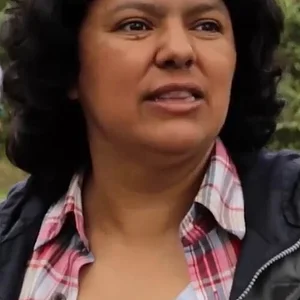

Honduran environmental activist of Lenca origin, co-founder of COPINH (Civic Council of Popular and Indigenous Organizations of Honduras). Winner of the Goldman Environmental Prize in 2015, she was assassinated in 2016 for her fight against the Agua Zarca dam.
Berta Cáceres(1971 — 2016)
Berta Cáceres
Honduras
8 min read
Frequently asked questions
Famous Quotes
« Wake up! Wake up, humankind! We're out of time.»
« The Gualcarque River has called upon us, as have other territories, and we must answer their call.»
Key Facts
- 1971: born in La Esperanza, Honduras
- 1993: co-founded COPINH to defend the rights of the Lenca people
- 2015: awarded the Goldman Environmental Prize, the world's highest environmental honor
- 2016: assassinated at her home on March 2, after years of threats linked to her opposition to the Agua Zarca dam
- 2021: CEO of the company DESA convicted for his role in the assassination
Works & Achievements
Organization created to defend the political, territorial, and cultural rights of the Lenca peoples of Honduras; COPINH is today a landmark reference for indigenous struggles in Central America.
A grassroots mobilization that forced international funders (FMO, Voith Hydro) to withdraw from the project and led to the dam's permanent abandonment — an emblematic victory against extractivism in indigenous territory.
A speech broadcast worldwide calling on humanity to "awaken" in the face of nature's destruction; a landmark text of the international environmental movement, translated into dozens of languages.
Grassroots education led by COPINH to inform villages about ILO Convention 169, the right to free prior and informed consent, and available legal recourse — a lasting tool for community empowerment.
Berta Cáceres built a network of local, national, and international organizations to document and denounce the criminalization of environmental activists in a country ranked among the world's most dangerous for this cause.
Anecdotes
Berta Cáceres grew up in La Esperanza in a politically engaged family: her mother, Austra Berta Flores, a midwife and activist, welcomed Salvadoran refugees fleeing the civil war of the 1980s. This early contact with injustice and displacement forged Berta's political conscience from childhood.
In 2013, Berta Cáceres organized Lenca communities to physically block access to the construction site of the Agua Zarca dam on the río Gualcarque, a river sacred in Lenca cosmogony. Her peaceful but determined resistance ultimately forced German giant Voith Hydro and Dutch bank FMO to withdraw from the project — a rare victory against extractivism in Central America.
When accepting the Goldman Environmental Prize in 2015 — the world's highest honor for grassroots environmental activists — Berta Cáceres quoted revolutionary Rosa Luxemburg: 'Awaken! Awaken, humanity!' Her speech, broadcast worldwide, made her an icon of indigenous and environmental resistance.
Despite dozens of documented death threats and several assassination attempts, Berta Cáceres consistently refused to leave Honduras. She was murdered in her home in La Esperanza on the night of March 2–3, 2016. Her death triggered a wave of international outrage and accelerated the definitive abandonment of the Agua Zarca dam.
In 2021, David Castillo, president of the company DESA tasked with building the dam, was found guilty as a co-perpetrator of the murder by a Honduran court. This conviction, the result of years of legal struggle led by the Cáceres family and COPINH, remains a rare victory for environmental justice in Latin America.
Primary Sources
Wake up! Wake up, humanity! There is no more time. Our consciences are shaken by the fact that we must reconcile with nature in order to guarantee life. The Gualcarque River has called out to us, as have others, and we must heed that call.
We, the Lenca peoples of Honduras, declare our inalienable right to our lands, our waters, and our forests. We demand that the Honduran State respect ILO Convention 169 and guarantee our right to prior, free, and informed consultation.
In 2014, at least 101 environmental defenders were killed worldwide. In Honduras, a country of 8 million people, the per capita murder rate of environmental activists exceeds that of any other country in the world.
The Commission grants precautionary measures in favor of Berta Cáceres Flores, defender of the rights of indigenous peoples in Honduras, in view of the serious and imminent threats to her life and physical integrity.
The indigenous Lenca peoples paid a heavy price for their resistance to the 2009 coup. Our leaders are criminalized, our lands seized, our rights violated in the name of a development that benefits only multinational corporations.
Key Places
Birthplace of Berta Cáceres, capital of the Intibucá department and heart of the Lenca territory. Home of COPINH, it is where she lived, campaigned for over twenty years, and was assassinated on March 3, 2016.
A sacred river in Lenca cosmology, believed by tradition to be inhabited by protective spirits. Site of the Agua Zarca dam project, it was the main stage of the resistance organized by Berta Cáceres from 2013 to 2016.
The Honduran capital where Berta Cáceres argued before government bodies, pursued legal cases, and met with representatives of national and international human rights organizations.
Venue of the Goldman Environmental Prize ceremony in April 2015, where Berta Cáceres delivered a landmark speech before the international community and emerged as a global environmental icon.
A predominantly Lenca department of Honduras and the main arena of COPINH's work. Its forests, rivers, and rural communities were at the heart of every legal and activist battle fought by Berta Cáceres.
Typical Objects
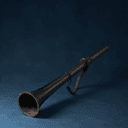
A central tool of community mobilizations, Berta Cáceres used it during road blockades and Lenca gatherings to rally crowds and coordinate resistance actions against extractivist projects.

The traditional garment of Lenca women, which Berta wore at her public appearances and community ceremonies, asserting her indigenous identity in the face of those who sought to erase Lenca culture.

The legal text that Berta Cáceres carried with her and constantly cited in her advocacy; it recognizes the right to prior consultation of indigenous peoples and was the central legal weapon of COPINH.

She meticulously recorded community testimonies, dates of threats and violations, building an evidentiary file essential for legal appeals and reports to international NGOs.

A modern tool of activism: Berta Cáceres used it to document violations in real time, alert Global Witness and Amnesty International, and coordinate COPINH actions across Lenca villages.

The daily food of Lenca families in Intibucá, but also a political symbol: corn, the foundation of Mesoamerican civilization, represented for Berta the food and cultural sovereignty that extractivism threatened.
School Curriculum
Vocabulary & Tags
Key Vocabulary
Tags
Daily Life
Morning
Berta rose before dawn, often woken by urgent calls from Lenca communities reporting threats or incidents in the field. After black coffee and black bean tortillas, she held meetings at the COPINH headquarters in La Esperanza with community delegates who had sometimes walked for several hours to get there.
Afternoon
Her afternoons alternated between legal work — drafting appeals, coordinating with lawyers specializing in indigenous rights — and trips to Lenca villages to facilitate assemblies, gather testimonies, and train local activists. She was in constant communication with international NGOs such as Global Witness and Amnesty International.
Evening
Berta often came home late in the evening. She devoted time to her four children and to training young COPINH members. Despite receiving dozens of threats, she refused to go into hiding and lived in her modest house in La Esperanza as a sign of trust in her community.
Food
Her diet was that of Lenca farming families in Intibucá: corn tortillas, black beans, rice, garden vegetables, and occasionally chicken at large community gatherings. Corn, the cornerstone of Mesoamerican civilization, held a spiritual and political dimension for her — a symbol of the sovereignty that extractivism was threatening.
Clothing
Berta wore brightly colored clothing, often the traditional embroidered *huipil* of Lenca women at public events. These clothing choices were deliberately political: an assertion of indigenous identity in the face of economic and political actors who sought to render it invisible.
Housing
She lived in a modest concrete-block house with a corrugated metal roof in La Esperanza, similar to the homes of working-class Honduran families. This simplicity was consistent with her commitment — it was in that same house that she was assassinated on the night of March 2–3, 2016.
Historical Timeline
Period Vocabulary
Liens externes & ressources
Références
Œuvres
Cofondation du COPINH
1993
Campagne de résistance au barrage Agua Zarca
2013-2016
Discours du Prix Goldman pour l'environnement
2015
Programme de formations aux droits autochtones dans les communautés lencas
1993-2016
Réseau de protection des défenseurs environnementaux au Honduras
2000-2016
Rechercher
See also
Related Characters
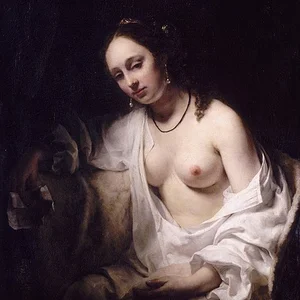
Bathsheba
1008 av. J.-C. — 936 av. J.-C.

Desmond Tutu
1931 — 2021
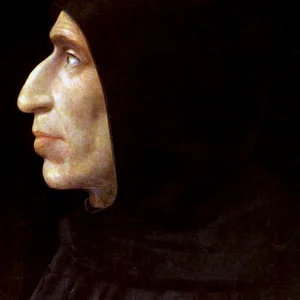
Girolamo Savonarola
1452 — 1498
Abbé Henri Grégoire
1750 — 1831
Leonora Galigaï
1568 — 1617
Louis II de Bourbon, prince de Condé