
Bathsheba is a figure from the Old Testament, wife of Uriah the Hittite and later of King David after Uriah's death. As the mother of Solomon, she played a decisive role in the royal succession by interceding with David to ensure her son would inherit the throne of Israel.
Frequently asked questions
Key Facts
- Her story is told in the Second Book of Samuel (chapters 11–12), around the 10th century BCE.
- King David summons her while she is still the wife of Uriah the Hittite, one of his officers.
- David arranges for Uriah to be placed at the front of the battle so that he will be killed, in order to marry Bathsheba.
- The prophet Nathan confronts David over his wrongdoing through the parable of the ewe lamb.
- She is the mother of Solomon, who would succeed David as king of Israel (1 Kings 1).
Works & Achievements
This narrative cycle, sometimes considered the oldest court narrative from antiquity, recounts the succession intrigues surrounding David. Bathsheba is a central figure whose actions directly determine the political destiny of Israel.
The most decisive political act associated with Bathsheba: her intercession with the aging David secured Solomon's coronation during his own lifetime, averting civil war and establishing the dynastic line at the heart of Jewish and Christian messianism.
Attributed to David as a prayer of repentance after Nathan confronted him for his wrongdoing against Bathsheba and Uriah, this psalm is one of the most celebrated texts in Jewish and Christian liturgy, still sung to this day.
In the Gospel of Matthew, Bathsheba is the only woman identified by her marital relationship ('the wife of Uriah') in the genealogy of Jesus, marking her role in the Davidic lineage considered foundational to Christian messianism.
Anecdotes
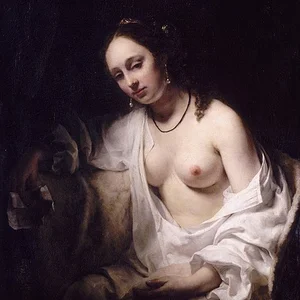
One spring evening, at a time when kings customarily went off to war, David caught sight from the terrace of his palace of a woman of great beauty bathing below. She was Bathsheba, wife of Uriah the Hittite, one of his most loyal warriors. David had her brought to him, and she became pregnant. That night changed the destiny of Israel.
To conceal his wrongdoing, David recalled Uriah from the front, hoping he would spend the night with his wife and believe the child was his. But Uriah, faithful to his warrior's code, refused to return home while his comrades were still fighting. Confronted with this act of honor that stood in stark contrast to his own conduct, David sent a letter ordering his general to place Uriah at the front line of battle so that he would be killed.
The prophet Nathan came to David after Uriah's death and told him the parable of a rich man who, though he owned many flocks, had stolen the only lamb of a poor man to offer it to a traveler. David grew furious at this imaginary man, and Nathan then said to him: "Thou art the man!" This is one of the earliest examples in literary history of prophetic speech being used to denounce the abuse of power.
When David grew old and his son Adonijah was preparing to seize the throne, Bathsheba played a decisive political role. Advised by the prophet Nathan, she went before David to remind him of his promise to crown Solomon. Thanks to her intervention, Solomon was anointed king of Israel while his father was still alive, definitively setting aside Adonijah's claim.
Having become queen mother at Solomon's accession, Bathsheba occupied a throne placed at the king's right hand, according to the account in the book of Kings. This position of gebirah — the "great lady" or queen mother — granted her an official status and genuine authority at court. Her trajectory, from a woman who was desired and taken to a figure of real power, has captivated generations of readers, theologians, and artists down to the present day.
Primary Sources
In the evening, David arose from his bed and walked on the roof of the king's house. From there he saw a woman bathing, and the woman was very beautiful. David sent and inquired about the woman, and one said, 'Is this not Bathsheba, the daughter of Eliam, the wife of Uriah the Hittite?'
Bathsheba went in to the king in his chamber. The king said, 'What do you wish?' She answered him, 'My lord, you swore to your servant by the LORD your God, saying: Solomon your son shall reign after me, and he shall sit on my throne.'
Have mercy on me, O God, according to your steadfast love; according to your abundant mercy blot out my transgressions. Wash me thoroughly from my iniquity, and cleanse me from my sin. For I know my transgressions, and my sin is ever before me.
Jesse was the father of King David. And David was the father of Solomon, by the wife of Uriah.
Key Places
It was from the terrace overlooking the City of David that the king caught sight of Bathsheba bathing. This place marks the starting point of the story that shook the royal court and shaped the dynastic succession of Israel.
Bathsheba lived in the royal apartments of Jerusalem, first as David's wife and then as Solomon's queen mother. It was within these walls that her decisive intercession on behalf of her son's coronation played out.
It was near this spring at the foot of the City of David that Solomon was anointed king by the high priest Zadok and the prophet Nathan, following his mother Bathsheba's intervention. This anointing established him as the legitimate and divinely recognized successor to David.
It was at the siege of the Ammonite city of Rabbah that Uriah, Bathsheba's first husband, was sent to his death on David's orders. This battlefield stands as a symbol of one upright man's sacrifice to conceal a king's transgression.
Typical Objects
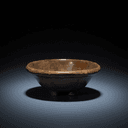
According to the biblical text, it was during her ritual purification bath that Bathsheba was spotted by David from his rooftop terrace. This basin of living water symbolizes ritual purity, but in her story, it becomes the starting point of a dynastic tragedy.
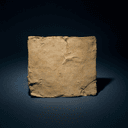
David entrusted Uriah himself with the letter ordering General Joab to place him at the front of the battle so that he would be killed. This document becomes the symbol of royal betrayal — the act most harshly condemned by the prophet Nathan.
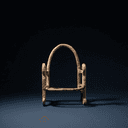
In the Book of Kings, when Solomon receives Bathsheba, he has a throne placed at his right hand for her to sit upon. This seat of honor symbolizes the role of the gebirah — the queen mother vested with official authority at the royal court of Israel.
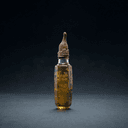
The high priest Zadok anointed Solomon at Gihon with sacred oil taken from the Tabernacle, thus fulfilling the promise secured by Bathsheba. This royal anointing conferred divine legitimacy upon the succession that her intercession had made possible.
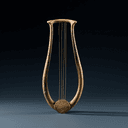
Inseparable from the palace world in which Bathsheba lived, the harp accompanies David's psalms, including the celebrated Psalm 51 sung in repentance after his sin. It symbolizes the poetic, musical, and spiritual dimensions of the court of Jerusalem.

As queen mother, Bathsheba had access to the political decisions of the palace. The cylinder or stamp seal, used to authenticate royal decrees, represents the power she was able to share in order to defend the rights of her son Solomon.
School Curriculum
Vocabulary & Tags
Key Vocabulary
Tags
Daily Life
Morning
Bathsheba rises before dawn for her ritual ablutions and the first morning prayers according to Israelite tradition. As queen mother under Solomon, she oversees the palace servants and receives the first news of the kingdom brought by royal messengers.
Afternoon
In the afternoon, Bathsheba may be consulted by dignitaries who hope for her intercession with the king. She oversees the management of palace resources, attends to religious matters befitting her rank, and maintains ties with the Temple clergy. Audiences follow a strict protocol.
Evening
In the evening, she attends royal banquets seated at Solomon's right hand, or retires to the women's quarters depending on the occasion. Evening gatherings are marked by music, the recitation of psalms, and wisdom poetry. An oil lamp illuminates moments of prayer or quiet reflection before sleep.
Food
The royal table is plentiful: spelt or barley bread, legumes, olives and olive oil, figs, dates and pomegranates, sheep's cheese, fish from the Jordan or the sea, and roasted lambs and kids for special occasions. Judean wine, diluted with water as was customary, accompanies meals.
Clothing
Bathsheba wears robes of fine linen and wool dyed indigo or Tyrian purple. A white linen head veil marks her rank and piety. Gold jewelry — bracelets, pendants, seal-engraved rings — completes her court attire. The queen mother is distinguished by her embroidered garments and tanned leather sandals.
Housing
She resides in the royal apartments of the Jerusalem palace, built from dressed stone and cedar wood imported from Phoenicia. The rooms, cool and adorned with embroidered hangings and colored floor tiles, open onto inner courtyards. A terrace overlooking the city provided a place for bathing and contemplation.
Historical Timeline
Period Vocabulary
Visual Style
Style des enluminures médiévales byzantines : figures hiératiques sur fond doré, architecture de pierre chaude de Jérusalem, drapés de lapis-lazuli et d'ivoire, lumière d'huile sacrée et attributs royaux de la cour de David.
Sound Ambience
L'ambiance sonore du palais royal de Jérusalem au Xe siècle av. J.-C. : entre psalmodie religieuse, vie de cour feutrée et silence des terrasses de pierre dominant la ville de David.
Liens externes & ressources
Références
Œuvres
La Succession Narrative (2 Samuel 9–20, 1 Rois 1–2)
Xe–VIe siècle av. J.-C.
Intronisation de Salomon (1 Rois 1)
v. 970 av. J.-C.
Psaume 51 — Miserere
Tradition davidique, Xe siècle av. J.-C.
Généalogie messianique (Matthieu 1, 1–17)
Ier siècle apr. J.-C.