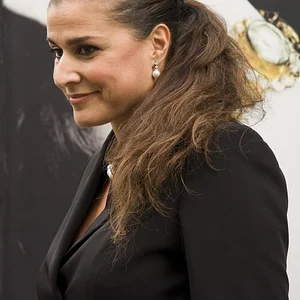

Italian mezzo-soprano born in 1966 in Rome, Cecilia Bartoli is one of the greatest opera singers of her generation. A specialist in baroque and classical repertoire, she has brought to light many forgotten works by Vivaldi, Salieri, and Agostino Steffani.
Cecilia Bartoli(1966 — ?)
Cecilia Bartoli
Italie
8 min read
Frequently asked questions
Key Facts
- Born on June 4, 1966, in Rome, into a family of opera singers
- Launched her international career in the 1980s with Mozartian roles
- Released a Vivaldi album in 1999 that helped spark renewed interest in the Venetian composer
- Appointed artistic director of the Opéra de Monte-Carlo in 2012
- Introduced audiences to the work of Agostino Steffani with the album 'Mission' (2012)
Works & Achievements
First major rediscovery album, devoted to forgotten Vivaldi arias drawn from the Turin manuscripts. Selling over a million copies, it launched the trend for musical resurrection albums and revealed a previously unknown side of Vivaldi.
An album devoted to works by Handel and Alessandro Scarlatti that the Catholic Church had banned in the 18th century. Bartoli champions the rehabilitation of music unjustly condemned by papal censorship.
A landmark album devoted to the repertoire of the Baroque castrati, accompanied by a 120-page documentary book. It won a Grammy Award and reignited public debate about the extraordinary voices of the Baroque era.
An album unveiling the work of composer-diplomat-bishop Agostino Steffani (1654–1728), who had fallen into complete obscurity. Bartoli's musicological research brought this overlooked Baroque genius back to light, earning her a Grammy Award in 2014.
By taking the helm of the Opéra de Monte-Carlo, Bartoli created a rare model: a world-renowned singer who also runs an opera house, steering its programming toward the Baroque and the rediscovery of forgotten works.
From the very start of her career, her Rossini recordings revealed an extraordinary command of bel canto and exceptional vocal agility, laying the foundation for her status as a global authority in this repertoire.
Anecdotes
At nineteen, Cecilia Bartoli sang a Rossini aria on the set of the Italian television show “Fantastico” in 1985. The great conductor Herbert von Karajan noticed her and, impressed by her exceptional voice, invited her to the Salzburg Festival. It was the starting point of a meteoric international career.
To prepare her Vivaldi album in 1999, Bartoli personally traveled to the National University Library of Turin, where thousands of the composer’s unpublished manuscripts are held. There she discovered magnificent arias that had never been recorded or performed since the 18th century, bringing an entirely forgotten Vivaldi back to life.
For her album “Sacrificium” (2009), dedicated to the castrati, Bartoli had to develop an extraordinary vocal technique to perform a repertoire written for voices of superhuman agility. She spent years mastering dizzying ornaments and extreme notes that very few singers in the world are capable of reaching.
While exploring European music archives, Bartoli came across the fascinating case of Agostino Steffani (1654–1728): a brilliant composer, diplomat, and Catholic bishop who had been completely erased from musical memory. Her album “Mission” (2012) uncovered a musical continent ignored for three centuries and earned her a Grammy Award in 2014.
Since 2012, Cecilia Bartoli has held two remarkably rare roles simultaneously: she is both the artistic director of the Opéra de Monte-Carlo and an active international opera singer. She selects productions, chooses artists, and shapes the programming — all while continuing to perform on the world’s greatest stages.
Primary Sources
The approximately 450 autograph musical pieces by Vivaldi held in Turin form the largest collection of the composer's manuscripts in the world. Cecilia Bartoli drew on this material for her album The Vivaldi Album (1999), bringing to light arias that had been forgotten since the 18th century.
The Steffani holdings contain both political letters addressed to European courts and operatic scores composed for the Dukes of Bavaria and Hanover. Bartoli drew on these documents to restore the forgotten work of the composer-bishop in her album Mission.
«These men sacrificed their bodies to serve music of incomparable beauty. It falls to us to honor them by bringing their works back to life.» Bartoli explains her musicological and human approach to the castrato repertoire.
«I realized that absolute geniuses like Vivaldi or Steffani had simply vanished from concert programs. It was essential to make them heard again.» She describes her research method in European musical archives.
Key Places
Cecilia Bartoli was born on June 4, 1966 in Rome, into a family of opera singers. It was in this city that she grew up, studied at the Conservatorio di Santa Cecilia, and took her first steps on stage.
It was in Salzburg that Karajan opened the doors of international fame to her. Bartoli returns regularly for baroque and Mozartian productions that remain benchmark recordings.
The venue of her international debut in 1988, the Zurich Opera House became her primary artistic home. There she collaborated with conductors such as Nikolaus Harnoncourt and built the core of her baroque repertoire.
Since 2012, Bartoli has served as its artistic director, transforming the institution into a showcase for the baroque repertoire and musicological rediscovery, while continuing to perform there as a singer.
It was in this archival collection that Bartoli discovered hundreds of Vivaldi's autograph manuscripts, enabling her to prepare her groundbreaking 1999 album and breathe new life into works unheard since the 18th century.
In 1992, Bartoli made her American debut there, immediately winning over critics and audiences alike. This legendary hall marked her entry into the highly exclusive circle of opera artists with a worldwide reputation.
Typical Objects

Bartoli prepares her roles using critical editions that she covers with handwritten notes: ornamentation markings, dynamics, breath marks. These scores are a testament to her work as a musicologist as much as a performer.

Essential for any professional singer, the humidifier protects the vocal cords during air travel or in theaters with dry atmospheres. Bartoli systematically carries one on all her travels.
The baroque repertoire roles that Bartoli loves call for period costumes: corsets, crinoline dresses, powdered wigs. These sumptuously recreated outfits contribute to the faithful re-creation of the 17th–18th century world.
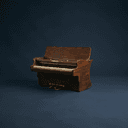
To prepare baroque repertoire, Bartoli often rehearses with a harpsichord rather than a modern piano, in order to train her ear to the sonorities and unequal temperament of period instruments.

In her musicological research, Bartoli accumulates photocopies and digital scans of manuscripts unearthed in archives in Turin, Munich, Vienna, and London. These documents, sometimes three centuries old, are the raw material for her rediscovery albums.

Bartoli systematically listens to and compares historical recordings — including 78 rpm records from the early 20th century — to understand the evolution of performance traditions and forge her own stylistic vision.
School Curriculum
Vocabulary & Tags
Key Vocabulary
Daily Life
Morning
Cecilia Bartoli begins her day with gentle, progressive vocal exercises, often accompanied on piano or harpsichord by her rehearsal pianist. These vocalises, practiced since childhood under her mother's guidance, last one to two hours and form the irreplaceable foundation of her technique.
Afternoon
Afternoons are devoted to stage rehearsals in theaters, studio recording sessions, or — during the preparation phases of a new album — research in libraries and musical archives. She works with musicologists to decipher and edit early scores.
Evening
On performance nights, Bartoli follows a strict ritual: vocal warm-up, focused concentration, period costume and makeup. After the show, she avoids lengthy receptions to protect her voice, preferring small dinners with the orchestra musicians.
Food
Like most professional opera singers, Bartoli follows a careful diet, avoiding foods that irritate the vocal cords (alcohol, strong coffee, dairy products before singing). She favors a light Mediterranean cuisine, close to the Roman culinary tradition of her childhood.
Clothing
On stage, she wears elaborate period costumes — eighteenth-century silk gowns, corsets, powdered wigs — designed by the workshops of major opera houses. In everyday life, she adopts a sober and elegant style, befitting an institution director accustomed to professional circles.
Housing
Bartoli divides her life between Monaco, where she directs the Opera, and Zurich, a city she has adopted through her many collaborations with the local opera house. Her residences reflect her status as an international artist in perpetual motion between Europe's great operatic capitals.