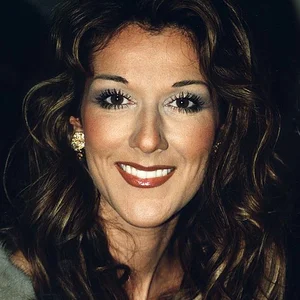

Céline Dion is a Quebec singer born on March 30, 1968, in Charlemagne, Canada. Discovered by the public as a teenager, she became one of the best-selling artists in the history of pop music. Her international career symbolizes the global reach of the French-speaking world and the influence of Quebec culture on the world stage.
Céline Dion(1968 — ?)
Céline Dion
Canada
8 min read
Frequently asked questions
Famous Quotes
« Life is what you make of it.»
« I've been singing since I was very little. It's my way of communicating with the world.»
Key Facts
- Born on March 30, 1968, in Charlemagne, Quebec, Canada, the youngest of 14 children
- Won the Eurovision Song Contest in 1988 representing Switzerland with the song Ne partez pas sans moi
- The Titanic (1997) soundtrack featuring My Heart Will Go On brought her worldwide fame
- Has sold over 200 million records worldwide, making her one of the best-selling artists in history
- Las Vegas residency (A New Day..., 2003–2007): a record-breaking run of over 700 performances
Works & Achievements
An album entirely written by Jean-Jacques Goldman, it became the best-selling French-language album in history with over 10 million copies sold. It established Céline Dion as a major figure in international French-language music.
An English-language album honored with two Grammy Awards, including Album of the Year. It cemented her status as a leading pop artist in the United States and the United Kingdom.
The iconic theme song from James Cameron's film Titanic, awarded an Oscar, a Grammy, and a Golden Globe. It became one of the best-selling singles in the history of pop music.
A collaborative album featuring Barbra Streisand, Luciano Pavarotti, and the Bee Gees, sold over 31 million copies worldwide, showcasing Céline Dion's remarkable ability to connect with audiences across the globe.
Her first album following the birth of her son René-Charles, marking her triumphant return to the international stage after a two-year hiatus and launching her Las Vegas era.
Her most recent major English-language studio album, accompanied by a record-breaking world tour that was cut short by the pandemic and then by her illness. It stands as a testament to her artistic perseverance in the face of adversity.
Anecdotes
Céline Dion is the fourteenth and youngest child of a musical family from Charlemagne, Quebec. At age 12, she recorded a demo tape with her mother and brother and sent it to manager René Angélil. So moved by her voice, Angélil mortgaged his own home to finance the young singer's first album.
In 1988, Céline Dion represented Switzerland at the Eurovision Song Contest with 'Ne partez pas sans moi' and won by a single point over the United Kingdom's entry. This triumph opened the doors of the French-speaking European market to her.
To break into the English-speaking market, Céline Dion made the bold decision to take an eighteen-month break starting in 1990 to learn English and refine her vocal technique. This determined effort paid off with her first all-English album, 'Unison', in 1990, launching an international career unprecedented for a French-speaking artist.
The song 'My Heart Will Go On', composed by James Horner for James Cameron's 1997 film Titanic, was initially turned down by Céline Dion, who felt it was too melancholic. She eventually recorded it in a single take, almost by chance, and it went on to become one of the best-selling singles in music history, with over 18 million copies sold.
Primary Sources
I was born into a family where music was everywhere. My father played the accordion, my mother sang, my brothers and sisters formed a band. Music was our common language.
I am proud to be Québécoise, proud to sing in French and to have carried the French language to every stage in the world.
When I sing, I don't think about the stadiums or the millions of records. I think about the person in the back row who needs this song tonight.
A New Day... has begun. Céline Dion will take up residence at Caesars Palace for a three-year residency beginning in March 2003, in a venue specially built for her.
Key Places
Céline Dion's hometown, a small municipality in the Lanaudière region where she grew up in a large family of amateur musicians. It was here that her vocation was born.
The venue for Céline Dion and René Angélil's lavish wedding in 1994, broadcast live on Quebec television and a symbol of the artist's deep connection to her French-Canadian roots.
Home of the legendary residency 'A New Day...' (2003–2007), for which a purpose-built 4,000-seat theater was constructed. The residency redefined the concept of the Las Vegas show.
An iconic stage for her early performances in France during the 1980s, and later the scene of her triumphant return as an established Francophone star — a symbol of her dual Franco-Québécois identity.
During her 'Taking Chances' tour (2008), Céline Dion performed before 55,000 spectators in Tokyo, demonstrating her global reach far beyond Francophone and Anglophone markets.
Typical Objects

An essential tool for Céline Dion, she holds the microphone with both hands during her powerful vocal climaxes — a gesture that has become her visual signature on stage.

Céline Dion is renowned for her spectacular outfits by leading fashion designers (Christian Dior, Alexander McQueen, Valentino), reflecting her status as a global icon of both fashion and music.

Present on virtually every concert stage she performs on, the piano is the central instrument in her song arrangements and has been part of her musical training since childhood.

The cassette recorded at age 12 by Céline with her family and sent to René Angélil is the symbolic object of her beginnings, preserved as a testament to the origins of her extraordinary career.

Céline Dion has won five Grammy Awards, including Record of the Year for 'My Heart Will Go On' in 1999; these honors reflect her recognition by the American music industry.

With over 200 million albums sold worldwide, her platinum records symbolize the exceptional commercial success of a French-speaking artist on international markets.
School Curriculum
Vocabulary & Tags
Key Vocabulary
Tags
Daily Life
Morning
At the height of her career, Céline Dion begins her days with a strict vocal regimen: steam inhalations, vocal warm-up exercises with her coach, and enforced silence to protect her voice. She eats a light breakfast, often fruit and cereal, in her hotel suites or at her Las Vegas residence.
Afternoon
Afternoons are devoted to stage rehearsals, meetings with her artistic team, and set-list preparation. When not on tour, she takes care of her children and oversees her Cœur de Pirate Foundation, which supports charitable organizations.
Evening
On concert nights, preparation takes several hours: hair, makeup, dressing in couture gowns, and final vocal warm-ups. On nights without a show, she dines quietly with family, placing great importance on her private life, which she shields from media pressure.
Food
Céline Dion follows a carefully managed diet to protect her voice and maintain her stage energy: she avoids dairy products before concerts, favors anti-inflammatory foods, and drinks large amounts of warm water. She enjoys traditional Québécois cuisine — poutine, tourtière — when she returns to Canada.
Clothing
On stage, Céline Dion wears exclusively haute couture designs (Dior, Valentino, Chanel, Versace), often long gowns with trains or structured pantsuit ensembles. In her private life, she favors a much more relaxed but always polished style, gradually establishing herself as a fashion icon from the 2010s onward.
Housing
Throughout her career, Céline Dion has lived in a lavish villa on Jupiter Island in Florida, a permanent suite at Caesars Palace in Las Vegas, and her family home in Laval, Quebec. These spaces reflect her dual identity: global superstar and a woman deeply attached to her Québécois roots.
Historical Timeline
Period Vocabulary
Visual Style
Esthétique glamour et émotionnelle, entre grand spectacle américain des années 1990-2000 et chaleur identitaire québécoise — grandes scènes illuminées, robes somptueuses et atmosphère cinématographique.
Sound Ambience
L'univers sonore de Céline Dion oscille entre la chaleur familiale d'un foyer québécois et le faste des grandes scènes mondiales — arènes assourdies, orchestres symphoniques et studios d'enregistrement feutrés des années 1990-2000.