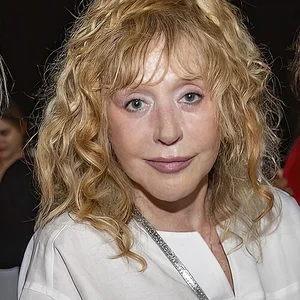

Alla Pugacheva (born 1949) is the most famous pop singer of the Soviet Union and Russia. Nicknamed "the Primadonna," she dominated the Soviet and then Russian music scene for over forty years. Her career illustrates mass culture and the entertainment industry under a communist regime.
Alla Pugacheva(1949 — ?)
Alla Pugacheva
Russie
7 min read
Frequently asked questions
Key Facts
- Born on April 15, 1949, in Moscow, USSR
- Winner of the Grand Prix at the Soviet Song Eurovision Contest in 1975 with the song "Harlequin"
- People's Artist of the USSR — honorary title awarded in 1985
- Has sold hundreds of millions of records across the USSR and Russia
- Remains one of the most popular artists in the Russian-speaking world at the end of the 20th century
Works & Achievements
The song with which Pugacheva won the Grand Prix at the Sopot Festival. This track marked her explosive entrance onto the international stage and defined her theatrical, expressive stage persona.
One of Pugacheva's greatest hits, inspired by a Latvian poem. The song transcended the borders of the USSR and became a symbol of Soviet pop music worldwide.
A Soviet musical film in which Pugacheva plays a fictional version of herself. The film brought her image to audiences across the USSR and marked her transformation into a national cultural icon.
A landmark double album released by the state label Melodiya and pressed in millions of copies. It established her status as the "Primadonna" of Soviet song.
A major concert held at the Kremlin Palace of Congresses, billed as a farewell show after more than forty years of performing. The televised event was watched by tens of millions of Russians.
A bold statement posted on social media openly criticizing the war in Ukraine. This unexpected political stance from Russia's most beloved artist reverberated around the world.
Anecdotes
In 1975, Alla Pugacheva won the Grand Prix at the International Song Festival in Sopot, Poland, performing the song 'Harlequin' in Russian. Her exuberant, theatrical performance shocked Soviet audiences accustomed to more restrained acts, yet immediately captivated the crowd — marking the beginning of an unprecedented international fame for a Soviet artist.
At the height of her celebrity in the 1980s, Alla Pugacheva received thousands of fan letters every day from across the USSR. The Soviet postal service created a special category for her mail, and entire teams of employees were mobilized to sort through mountains of envelopes addressed simply 'To Pugacheva, Moscow.'
In 1991, as the USSR was collapsing, Pugacheva founded her own production company, 'Alla,' becoming one of the first Soviet artists to seize the opportunities of the market economy. She understood before many others that music could now be a genuine private industry rather than a state service.
In 2022, Alla Pugacheva issued a public statement criticizing the war in Ukraine, calling for her husband to be removed from the list of 'foreign agents.' This courageous gesture — extraordinarily rare from such an iconic public figure — sent shockwaves through Russian society and illustrated the tension between popular culture and political power.
Primary Sources
"I sing so that people remember they have a soul. Song is not a luxury — it is a fundamental human need."
"I don't sing what I'm told to sing. I sing what I feel. That is my only rule."
"I ask to be recognized as a foreign agent of my country, as I believe my fellow citizens are dying for illusory reasons."
"I grew up in a kommunalka, a shared kitchen with five families. That is where I learned what it means to move people with a song — we sang together, through sorrows and joys."
Key Places
The large concert hall built for the 1980 Moscow Olympics hosted Pugacheva's legendary concerts before audiences of 35,000. These events were moments of national communion in late Soviet society.
It was in Sopot, on the Baltic Sea, that Pugacheva won the Grand Prix in 1975 with "Harlequin," earning international recognition that was rare for a Soviet artist of the time.
A historic venue for Soviet variety music in Moscow, this was one of the first major theatres where Pugacheva performed early in her career and developed her stage style.
The Kremlin's Palace of Congresses, built under Khrushchev, hosted the most prestigious concerts of the Soviet era. Pugacheva performed several landmark shows there, including a farewell concert in 2010.
The main concert hall of Leningrad/Saint Petersburg, the Oktyabrsky has been one of the essential stops on Pugacheva's Soviet tours since the 1970s.
Typical Objects

Manufactured in the USSR by the LOMO factory in Leningrad, this microphone was the ubiquitous stage tool in Soviet concert halls during the 1970s–1980s. Pugacheva used it throughout her first major nationwide tours.

The state label Melodiya was the sole record publisher in the USSR. Pugacheva's albums, pressed in millions of copies, were distributed across the entire Soviet bloc and became prized collector's items among her fans.

Pugacheva is renowned for her spectacular outfits, often created by Soviet costume designers or smuggled in from the West. Her sequined gowns and colourful wigs stood in sharp contrast to the ideological austerity championed by the regime.

A symbol of everyday life in the USSR, this telephone was the instrument through which state organisers (Goskontsert) booked her tours and set her fees, while also monitoring her contacts abroad.

The reel-to-reel tape recorder, along with the cassette, was the primary channel for unofficial music distribution in the USSR. Recordings of Pugacheva circulated widely outside official networks, amplifying her popularity far beyond state-imposed quotas.

Official concert posters published by the state agency Goskontsert were the only authorised promotional medium for Soviet artists. Pugacheva's posters, instantly recognisable for her theatrical silhouette, plastered the Morris columns of Moscow and Leningrad.
School Curriculum
Vocabulary & Tags
Key Vocabulary
Tags
Daily Life
Morning
During tour periods, Alla Pugacheva starts her day around 10 or 11 a.m., after nights extended by post-concert celebrations. She has a strong black tea — a staple of Soviet culture — and reviews her rehearsal schedule provided by Goskoncert, the state agency that organized and controlled artistic tours.
Afternoon
Afternoons are devoted to rehearsals with the State Variety Orchestra (VIA), costume fittings with the theater workshops, and the rare interviews granted to the official Soviet press. She also works on new songs at the piano in her dressing room or at her Moscow apartment.
Evening
The evening is the centerpiece of her life: the concert, ritually preceded by a period of solitary focus backstage. After the show, she joins musicians, troupe members, and official guests for the late dinners typical of Soviet artistic circles, often accompanied by vodka and zakuski.
Food
Like most Soviet citizens, Pugacheva lived in an era of food shortages and rationing. Her everyday diet included black bread, soups (borscht, solyanka), canned meat, and potatoes. On tour, artists sometimes enjoyed privileged access to the buffets of Intourist hotels reserved for foreigners and the elite.
Clothing
On stage, Pugacheva wore spectacular, provocative outfits for the era — sequined gowns, furs, extravagant wigs — that scandalized Soviet morality. In daily life, she adopted the fur coats and leather boots characteristic of Moscow's cultural nomenklatura, far removed from the drab clothing of the ordinary citizen.
Housing
Pugacheva lived in a well-appointed apartment in a building reserved for artists recognized by the Soviet state, in a residential neighborhood of Moscow. These apartments, allocated by the Composers' Union or the Ministry of Culture, were spacious by Soviet standards but modest by Western ones.
Historical Timeline
Period Vocabulary
Visual Style
Le style visuel de Pougatcheva allie l'esthétique des grandes salles de concert soviétiques — rideaux de velours rouge, décors dorés — à ses costumes de scène extravagants et colorés, tranchant sur la sobriété grise du quotidien soviétique.
Sound Ambience
L'univers sonore d'Alla Pougatcheva mêle l'acoustique des grandes salles de concert soviétiques, les orchestres de variété d'État et les applaudissements rythmés d'un public de masse en URSS.